

Plato’s Concept Of Democracy & Present-Day India
By Rohan Kuddus/Anindya Rudra
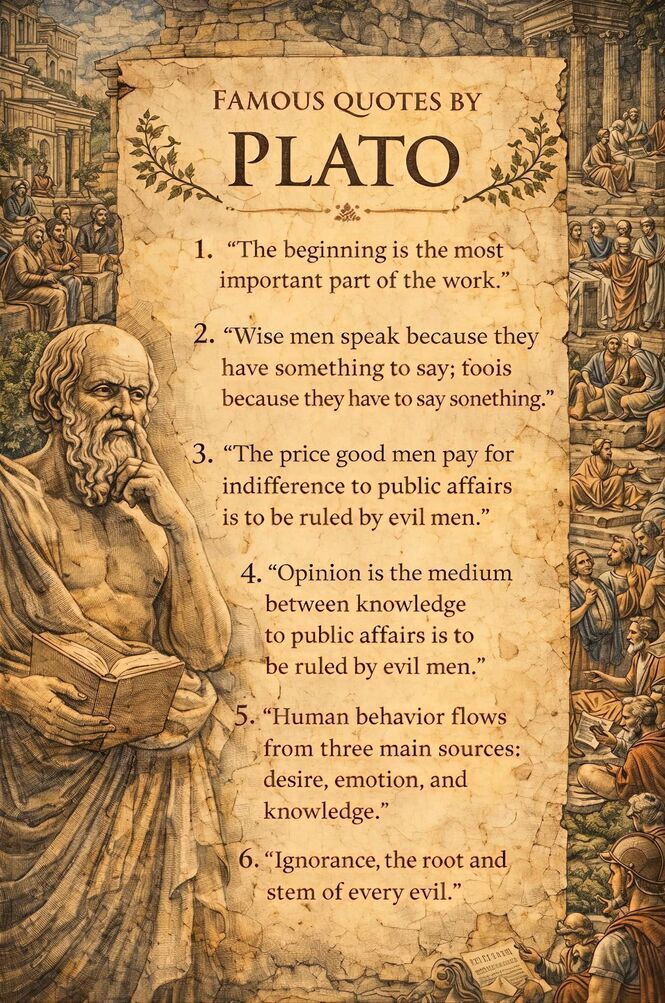
Plato’s profound disdain for democracy was rooted in his belief that it is an inherently unstable system, often degenerating into a mob rule that sacrificed wisdom for popularity, and truth for emotional gratification. It seems that the ancient Greek philosopher rightly realised the real essence of mass psychology. In The Republic, he argued that the crowd is not led by reason, but by emotion, appetite and the loudest voice, rendering them susceptible to manipulation and demagoguery.
In this context, Plato used a wonderful political metaphor – The Ship of State. Once, a ship was in distress in the middle of the sea, with the seafarers facing a storm. As submerged rocks surrounded the ship, every sailor wanted to take control of the ship in order to rescue the vessel, although no one was a skilled navigator. In such a situation, they decided to hold an election to elect their captain who could save them. Interestingly, the person who won the election was the one who could bluster loudly and convince others with his magic words. However, the poor soul who could navigate by the stars (a skill known as celestial navigation) remained neglected after being branded an elitist. As expected, the ship capsized.
Through this metaphor, Plato compared the governance of a political society to steering a ship, illustrating why a democracy without wisdom is dangerous. He argued that only trained experts should lead a government as governing is a 𝑠𝑘𝑖𝑙𝑙, and not a popularity contest. When leaders are chosen for their charming personality, instead of competence; a civilisation eventually crashes (or the ship drifts). Plato’s warning still stands: A state led by self-interested amateurs is doomed to lose direction, waste resources and fail.
According to Plato, the true face of democracy is a charming, but anarchic form of government that ultimately degenerates into tyranny. He viewed democracy not as a noble political system, but as a mob rule or tyranny of the crowd driven by chaotic desires rather than wisdom or justice. In this system, heads are counted, but not weighed.
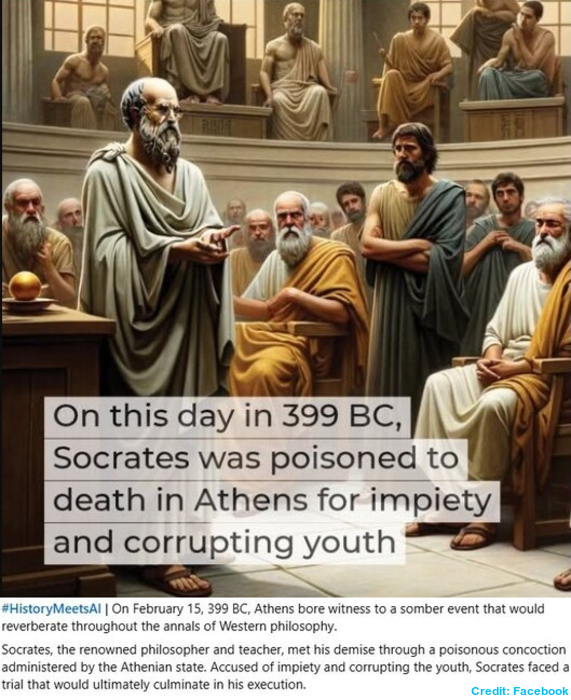
It is worth remembering that Socrates was sentenced to death in BC 399 by a jury of roughly 500 Athenian citizens, a classic example of a democratic, yet mob-influenced, verdict. The jury consisted of 501 male citizens and the initial guilty vote was relatively close: around 280 voted to convict, while 221 voted to acquit. On that day, mathematical numbers solely defeated the truth. The trial, as well as execution, of Socrates is a cornerstone event in Western history, widely viewed as a profound irony – a triumph of democratic process over intellectual inquiry.
Plato’s philosophical works, particularly The Republic, reflect a deep-seated concern that power in the hands of the ignorant, rather than just the immoral, is the most destructive force in a state. He used to believe that truth is an objective that can be attained through knowledge, and not by votes. Plato feared that democracy equates truth with the majority opinion, which is often mistaken and easily manipulated by skilled orators.
Plato further warned that democracy “craves for liberty as its drink” and eventually becomes drunk with it. In Book VIII of The Republic, he mentioned that the spirit of liberty knows no authority, leading people to ignore all rules – written or unwritten – to satisfy their desires. Therefore, the society becomes “full of variety and disorder“, where every individual does whatever they please, disrupting social cohesion. As one can easily manipulate the masses, they fall for demagogues – sycophants or drones – who flatter the people to gain power. These politicians whip up emotions, promising to redistribute wealth (often by robbing the rich to feed the mob). They also present themselves as champions of the people, creating a fake image of protection, which masks their own selfish desire for power. And when people crave for a little peace, it is precisely then that extreme autocracy presents itself under the guise of public opinion.
Plato was not in fabour of punishing the common person, but was deeply concerned that the masses were being deceived by falsehoods and shadows – a phenomenon he illustrated through the Allegory of the Cave. He mentioned that the ideal state (Kallipolis) should be governed exclusively by Philosopher-Kings or individuals who have undergone rigorous, life-long training to possess the necessary knowledge, virtue and wisdom to administer the country. In other words, mere popular support or political ambition cannot (and should not) replace specialised knowledge.
You may also like: The End Of A Profound Intellectual Era
Despite 24 centuries of human progress (since Plato’s era), the sea remains as turbulent as before. However, it (read state) has become increasingly imperilled with the passage of time.
Transcreated by Koushik Das
প্লেটোর গণতন্ত্র ও ভারতবর্ষ
রোহন কুদ্দুস/অনিন্দ্য রুদ্র
রোহন কুদ্দুস কয়েকদিন আগে লিখেছিলেন। ২০২৬ পশ্চিমবঙ্গ রাজ্য বিধানসভার ভোটের ঠিক আগে আগে অথবা ভোট হয়ে গেছে কিন্তু তখনও রেজাল্ট আসেনি এইরকম একটা সময়। নামকরণ আমার করা। মনে হলো এই লেখাটা আমার ফেসবুকের টাইমলাইনে থাক। নির্বাচনের ফলাফল বেরোনোর পরে এই কথাগুলো আরো বেশি করে মনে পড়ছে।
You may also like: Impact Of Bengal Poll On India’s Security Policy
প্লেটো গণতন্ত্র পছন্দ করতেন না। কারণ তিনি ‘জনতা’র মনস্তত্ত্ব বুঝতে পেরেছিলেন। তিনি একটি চমৎকার রূপক ব্যবহার করেছিলেন – ‘দ্য শিপ অফ স্টেট’। মাঝসমুদ্রে একটি জাহাজ বিপদে পড়েছে। সামনে ঝড়, চারদিকে ডুবোপাহাড়। এদিকে জাহাজের নাবিকরা তর্কে মত্ত। প্রত্যেকে নাবিকই হাল ধরতে চায়, কিন্তু জাহাজ চালানো সম্পর্কে কারও বিশেষ ধারণা নেই। তারা তখন ভোটের আয়োজন করল।
You may also like: Degeneration!
সেই ভোটে কে জিতল? যে গলাবাজি করতে পারে আর বাকিদের মিষ্টি কথায় তুষ্ট করতে পারে। যে নক্ষত্র দেখে পথ চিনতে পারে সে বেচারা তখন অবহেলিত, বিদ্রূপের শিকার। তাকে ‘এলিটিস্ট‘ তকমা দিয়ে একপাশে সরিয়ে রাখা হল। ফলাফল যা হওয়ার তাই হল – জাহাজ ডুবল।
You may also like: The ‘Suez Moment’ Of US
প্লেটোর মতে, এটাই গণতন্ত্রের আসল চেহারা। এখানে প্রজ্ঞার চেয়ে জনপ্রিয়তা বেশি গুরুত্ব পায়। মনে রাখা দরকার, এথেন্সের মানুষ গণতান্ত্রিক ভোটের মাধ্যমেই সক্রেটিসকে মৃত্যুদণ্ড দিয়েছিল। সত্য হেরে গিয়েছিল কেবল গাণিতিক সংখ্যার কাছে।
প্লেটো স্বৈরতন্ত্রের চেয়েও বেশি ভয় পেতেন ক্ষমতার হাতে থাকা অজ্ঞতাকে। কারণ, যখন ভোটের মাধ্যমে সত্য নির্ধারিত হয় এবং হাততালির মাধ্যমে নেতৃত্ব বাছাই করা হয়, তখন রাষ্ট্র যোগ্যতা খোঁজা বাদ দিয়ে শুধু জনপ্রিয়তা খুঁজতে থাকে।
প্লেটো সতর্ক করেছিলেন, শুরুতে আসে নীতিহীন স্বাধীনতা। এরপর দক্ষতার জায়গা দখল করে নেয় মানুষের সাধারণ মতামত। এরপর আসে চাটুকার রাজনীতিবিদদের দাপট, যারা অবাস্তব সব স্বপ্ন দেখায়। স্বভাবতই সমাজে যখন চরম বিশৃঙ্খলা তৈরি হয়, তখন মানুষ একটু শান্তির জন্য মরিয়া হয়ে ওঠে। আর ঠিক তখনই জনমতের মুখোশ পরে হাজির হয় চরম স্বৈরতন্ত্র।

প্লেটো গণবিরোধী ছিলেন না, তিনি ছিলেন বিভ্রম-বিরোধী। প্লেটোর মতে, রাষ্ট্র চালানো উচিত তাদেরই যাদের দেশ পরিচালনার সঠিক প্রশিক্ষণ আছে। প্লেটোর প্রায় আড়াই হাজার বছর পরেও সমুদ্র আগের মতোই উত্তাল আছে; কেবল আমাদের রাষ্ট্র নামক জাহাজটি আরও বিপন্ন হয়ে পড়ছে সময়ের সাথে।

Meanwhile,








Boundless Ocean of Politics on Facebook
Boundless Ocean of Politics on Twitter
Boundless Ocean of Politics on Linkedin
Contact us: kousdas@gmail.com

 ISMC
ISMC
