

Stablecoins – Worse Than Eurodollar
The threat that so-called stablecoins represent for bank credit, which the Executive Intelligence Review (EIR) has long warned of, is becoming more and more evident, leading both the banking lobby and Central Banks to sound the alarm. The latest to do so is the European Central Bank (ECB), via its Chairperson Christine Madeleine Odette Lagarde.
Speaking at a Spanish Central Bank event on May 8, 2026, Lagarde warned that “in the Eurozone where banks remain the dominant source of credit to the real economy, large-scale deposit substitution (money invested in stablecoins rather than deposited in the bank) would weaken lending to firms and the transmission of monetary policy“. She stressed: “In the US, where firms have broad access to capital markets, this effect may matter less: a contraction in bank lending could potentially be more easily absorbed.”
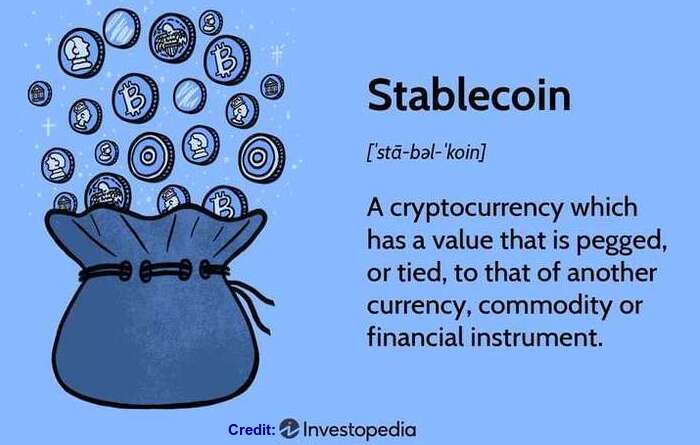
A crucial question now is whether US regulators will allow stablecoins to carry an interest on deposits. This is seen as potentially attracting deposits from banks into more remunerative stablecoin accounts. One argument used by the stablecoin lobby, including US Treasury Secretary Scott Kenneth Homer Bessent, is that it would reshore the huge amount of capital which is now invested in the Eurodollar market and create a demand for short-term US Treasuries. It is calculated that some 25% of the Eurodollar market could thus be moved, satisfying two years of issuance of Treasuries at the current rate, and stabilising the US debt.
This may be true, but the flip side of the coin is the destruction of bank credit, a necessary pillar, together with government credit, of a healthy economy. Even under the current system of universal banks where financial trading and speculation is dominant, banks still devote a portion of their deposit-based activity to loans to households and businesses.
Take the example of Deutsche Bank, an institution certainly not known for prudent policies: its so-called “trading-related assets” amount to EUR 500-550 billion, and its loans to EUR 480 billion. So, while speculating on stocks and derivatives, DB somehow maintains touch with the real economy, the lower curve in Lyndon LaRouche’s famous “typical collapse function”. If customers are lured into stablecoins, it will erode the basis for bank credit, which is deposits. Loans to the economy will be reduced and bank stability ultimately jeopardised.
Although the current system based on independent central banks is of an oligarchical nature, and was correctly exposed as such by LaRouche, the oligarchy is now pushing a mutation of its own system into an even worse one. The crisis opened by this mutation offers a choice: if the banking system is to survive, it has to go back to a regulated, Glass-Steagall-like system of bank separation. Such a reform would save commercial banks, while sinking the entire speculative part of the financial system, including the utopian stablecoin/crypto faction.

Read: Euro Stablecoins could become the EU’s best defense against Dollar dominance
This article was first published in Executive Intelligence Review (EIR) Strategic Alert weekly newsletter (Volume 40, No. 20) on May 14, 2026.
Meanwhile,











Boundless Ocean of Politics on Facebook
Boundless Ocean of Politics on Twitter
Boundless Ocean of Politics on Linkedin
Contact us: kousdas@gmail.com

 ISMC
ISMC
