

Indian, Pakistani Doctors Fighting For A Common Cause
The International Paediatric Association (IAP), a non-governmental organisation with a membership of 145 National Paediatric Societies from 140 countries, held a conference in Mexico City on May 9-11, 2025. Six Indian and five Pakistani doctors issued a joint statement during the conference that was published by the British Medical Journal on May 28. The statement strongly condemned the April 22 Pahalgam terror attack that claimed lives of 28 innocent tourists in India and also the hijacking of a passenger train carrying more than 400 people from Quetta to Peshawar on March 11. The event that took place in Balochistan sent shock waves across Pakistan and was strongly condemned by the UN as a heinous terrorist act. It may be noted that the Baloch Liberation Army (BLA) claimed responsibility for hijacking of the Jaffar Express. At the same time, doctors reminded the international community that both India and Pakistan were facing severe public health crises.
According to doctors from the two neighbouring countries, India and Pakistan have created a dangerous situation by constantly ignoring the social determinants of health, as well as climate change. They mentioned in the joint statement that countless people in both countries lack access to a proper healthcare system and overall development. Doctors are of the opinion that governments of the two countries would have to reduce (socio-economic) differences between various groups in order to ensure social justice. Unfortunately, both New Delhi and Islamabad continue to strengthen their defence sector and nuclear arsenal, instead of addressing those issues.
According to doctors, an entire generation is growing up with distorted interpretations of history, false values and an unprecedented sense of ultra-nationalism. In the joint statement, the paediatricians mentioned: “As healthcare professionals, we must highlight the dangers of prolonged conflict and its hindrance of efforts to improve the daily lives of our people. The risk of a cataclysmic nuclear exchange – by accident or design – is real and threatens the world. Although we recognise that the process of reconciliation is primarily political, alternative narratives can promote intergovernmental dialogue and confidence building measures.” They added: “Child mortality rates in both countries are far higher than their counterparts in other regions and rates of childhood and adolescent undernutrition are among the highest in the world. This underscores the importance of tackling jointly the myriad challenges of social determinants and poverty in the region. India and Pakistan face enormous problems related to climate change and air pollution, and the emerging challenge of non-communicable diseases. These are priority areas that need attention and resources, as well as regional coordination.” They stressed: “As paediatricians and healthcare professionals, we raise our collective voices against conflict and its consequences. We owe this to our people and future generations.“
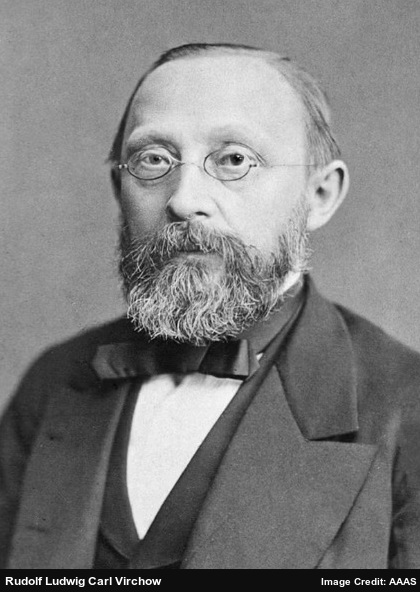
The statement issued by doctors is undoubtedly an exceptional one especially after the Operation Sindoor, a brief armed conflict between India and Pakistan that began on May 7, 2025 as India launched missile strikes on Pakistan. New Delhi stated that the operation was in response to the Pahalgam terrorist attack in Indian-administered Kashmir on April 22, 2025 in which 26 civilians were killed. While India accused Pakistan of supporting cross-border terrorism, Pakistan denied the allegation. Interestingly, the doctors have always taken an anti-war stance. Rudolf Ludwig Carl Virchow (October 13, 1821 – September 5, 1902), a German physician, anthropologist, pathologist, prehistorian, biologist, writer, editor and politician who is popularly known as the Father of Modern Pathology, once said: “Medicine is a social science, and politics nothing but medicine at a larger scale.” He used to believe that medical science, as a part of sociology and a science of people, should have a responsibility to identify social problems and to solve them.
An International Brigade (1936-39) was formed in Spain to fight against the fascist and dictatorial government of General Francisco Franco (December 4, 1892 – November 20, 1975). Various renowned authors, artists and intellectuals, such as Ernest Miller Hemingway (July 21, 1899 – July 2, 1961), joined the Brigade. An ambulance was sent to the International Brigade on behalf of the Indian National Congress Party at the initiative of Pandit Jawaharlal Nehru (the first Prime Minister of India), Mulk Raj Anand and V K Krishna Menon. Such was the global spectrum of anti-fascist resistance in the 20th Century.
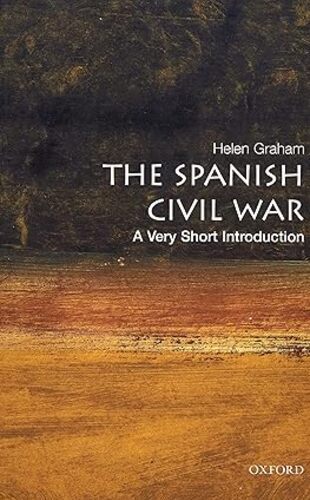
In her 2005 publication The Spanish Civil War: A Very Short Introduction, Helen Graham mentioned that the fascist coup in Spain could be compared to Mussolini‘s coup in Italy (1922) and Hitler‘s rise to power in Germany (1933). Similar social, political and cultural changes took place in Spain. Freedom-loving people, including medical practitioners, from 86 countries and colonies joined the International Brigade. As per an article published in the Journal of Medical History (2022), the number of doctors who joined the Brigade from Poland was 56, followed by 39 from Germany, 36 from the US, 26 from Hungary, 25 from France and 25 from Romania. Renowned Canadian thoracic surgeon Norman Bethune, too, was a member of this Brigade.
The New York Times published a lengthy report on October 9, 2024 in which 65 doctors, nurses and paramedics described what they witnessed in Gaza. They highlighted the brutal consequences of the Israel-Hamas War, saying that they did not want to experience the killings of innocent children in future.
Shamim-ur-Rahman and Ganapati Mudur co-authored an article that was published in the British Medical Journal (BMJ) in 2002. In that article, the authors claimed that the Indian and Pakistani doctors were jointly campaigning against a nuclear war. The anti-war stance of doctors and medical organisations in various countries is quite strong. One may recall that the Nobel Peace Prize was awarded to the International Physicians for the Prevention of Nuclear War (IPPNW) in 1985. With this, the Nobel Committee recognised IPPNW, formed by a group of US and Soviet physicians in 1980, for its efforts in “spreading authoritative information and creating an awareness of the catastrophic consequences of atomic warfare“.

The 1999 Nobel Peace Prize was awarded to Médecins Sans Frontières “in recognition of the organisation’s pioneering humanitarian work on several continents“. After accepting the award on December 10, 1999, spokesperson of the organisation Dr James Orbinski reportedly said: “Humanitarian action is more than simple generosity, simple charity. It aims to build spaces of normalcy in the midst of what is profoundly abnormal.“

Doctors continue to oppose war, risking their lives, across the globe. Eleven paediatricians from India and Pakistan proved it yet again in Mexico.
Boundless Ocean of Politics on Facebook
Boundless Ocean of Politics on Twitter
Boundless Ocean of Politics on Linkedin
Contact us: kousdas@gmail.com

 ISMC
ISMC Boundless Ocean Of Politics