

‘Economic Interdependence Can Ensure Peace’
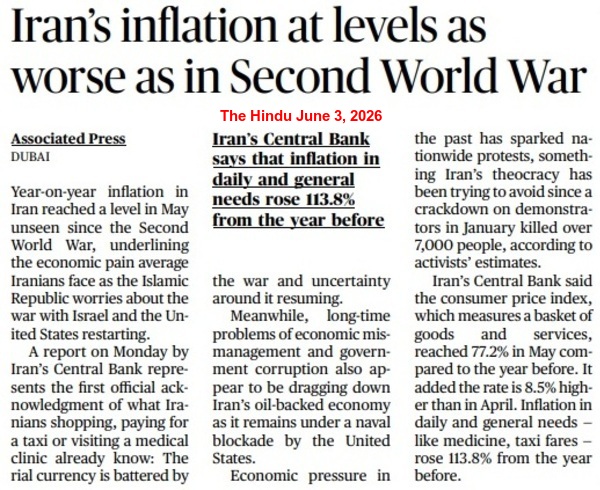
The EIR Emergency Roundtable Dialogue on The Iran War and the Controlled Disintegration of the World Economy outlined a policy to resolve the Iran War and to address the regional crisis on May 15, 2026.
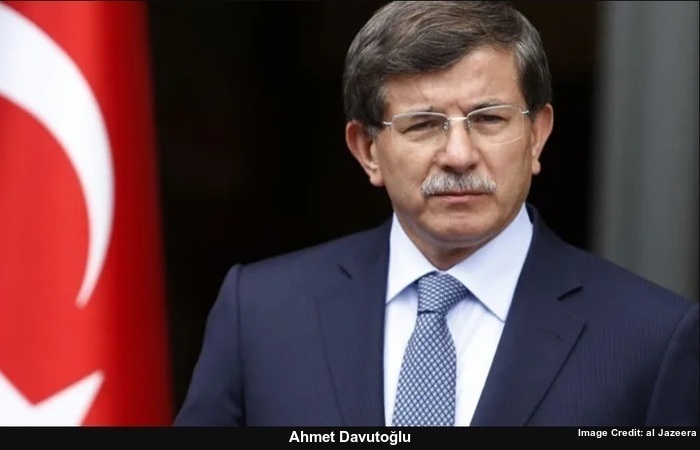
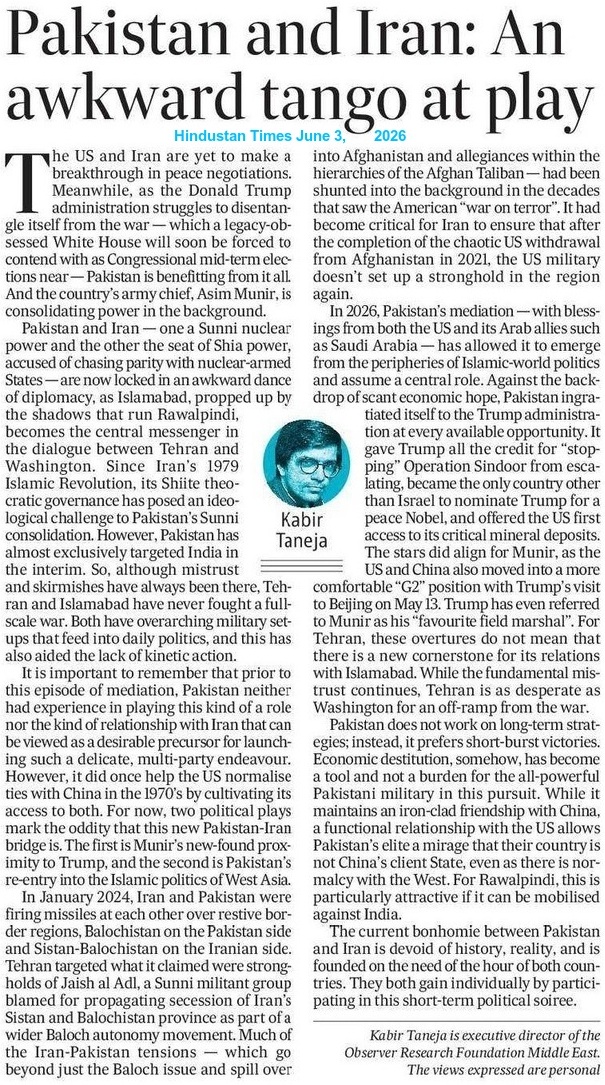
Former Prime Minister of Turkey Ahmet Davutoğlu posited that the US-Iran negotiations alone could not resolve the crisis, arguing that only “a comprehensive regional framework” could produce sustainable peace. He claimed that four converging issues would be addressed, stressing: “Progress on any one front is unlikely without parallel movement on the others.”
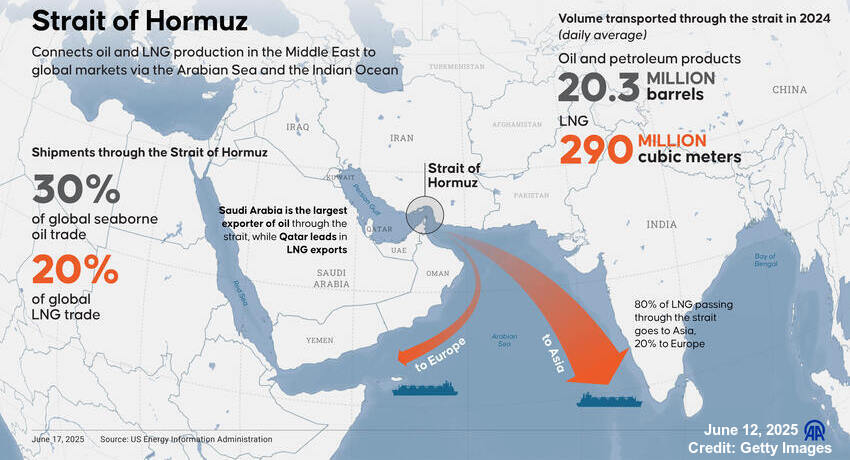
The Strait of Hormuz: Form a coalition of trusted intermediaries, such as Turkey, Pakistan, Malaysia and Indonesia to administer the Strait under a UN Security Council mandate.
Nuclear arrangements: Establishment of a new agreement whereby Iran would deposit enriched uranium in Turkey in exchange for fuel for civilian use, reaffirm its commitment not to pursue nuclear weapons, and have its right to peaceful nuclear energy formally recognised by the US. Over time, the region would move toward freedom from nuclear weapons, “including those held by Israel”.
It should be noted that this was the basis for the 2010 Tehran Agreement, which Davutoğlu helped mediate, along with Brazil and the International Atomic Energy Agency (IAEA). However, it was rejected by then US President Barack Obama. Notably, Brazilian President Luiz Inácio Lula da Silva recently handed his US counterpart Donald John Trump a copy of this agreement during his May 7, 2026 visit to Washington DC.
Regional security architecture: A multilayered structure of confidence-building and regional security, evolving toward “a Middle Eastern equivalent of the 1975 Helsinki Accords”.
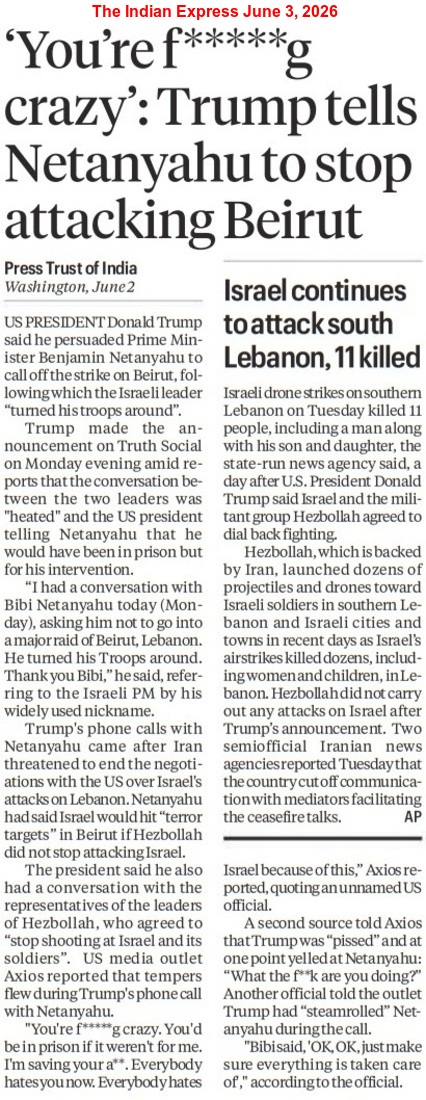
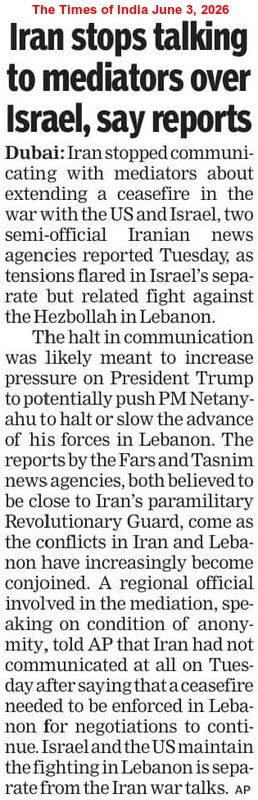
Palestine: Israel would be offered integration into the architecture – full diplomatic normalisation and formal guarantees – in exchange for recognising Palestinian Statehood and ending military operations in Lebanon.
Following the presentation by Professor Davutoğlu, Helga Zepp-LaRouche – the widow of American political activist Lyndon LaRouche and the founder of the LaRouche Movement‘s Schiller Institute, as well as the German Bürgerrechtsbewegung Solidarität Party – proposed that the expanded Oasis Plan for the economic development of the region as a whole be added to it and complement the initiative. The four governments mentioned by Davutoğlu could put such a perspective on the table.
Meanwhile, the former Turkish Prime Minister stated: “I fully agree. The best way of peace is economic interdependency. There is no other way. You can sign peace plans, you can make many declarations, but the best way of peace is economic interdependency. Whenever you have economic interdependency, nobody will be starting a war. So, economic interdependency means development.” According to Davutoğlu, the best response to this war is to create a sense of “regional belonging, supporting each other”. He further said: “And I fully share your opinion; and we can bring these proposals together, a geopolitical solution framework, as well as a developmental, visionary project together.”
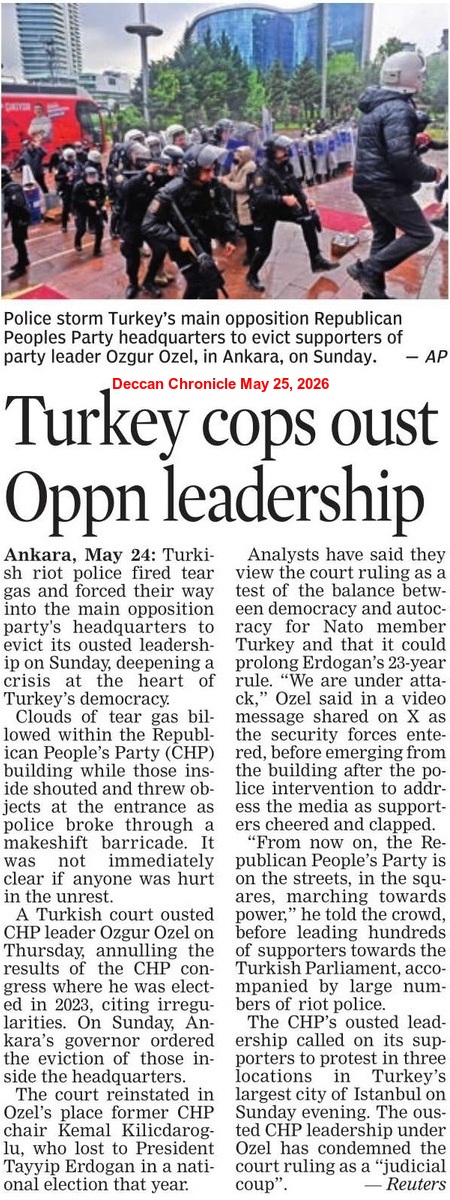
Davutoğlu is currently the head of the Future Party and a member of the National Parliament of Turkey. Prior to forming the party, he served as the Prime Minister and also the head of the Justice and Development Party (AKP) from 2014 to 2016. He had also served as Minister of Foreign Affairs from 2009 to 2014 and Chief Adviser to Recep Tayyip Erdoğan, the then Prime Minister, from 2003 to 2009. Holding a Doctorate in Political Science and International Relations, Davutoğlu worked as a teacher at universities in Malaysia and Turkey. He has been a strong advocate of Eurasian political and economic cooperation.
This article was first published in Executive Intelligence Review (EIR) Strategic Alert weekly newsletter (Volume 40, No. 21) on May 21, 2026.
Meanwhile,
Boundless Ocean of Politics on Facebook
Boundless Ocean of Politics on Twitter
Boundless Ocean of Politics on Linkedin
Contact us: kousdas@gmail.com

 ISMC
ISMC
