

An Emerging Economic System
Dedicated to my teachers Dipti Ray & Dr Prabhas Ray who live alone in Kolkata, India.
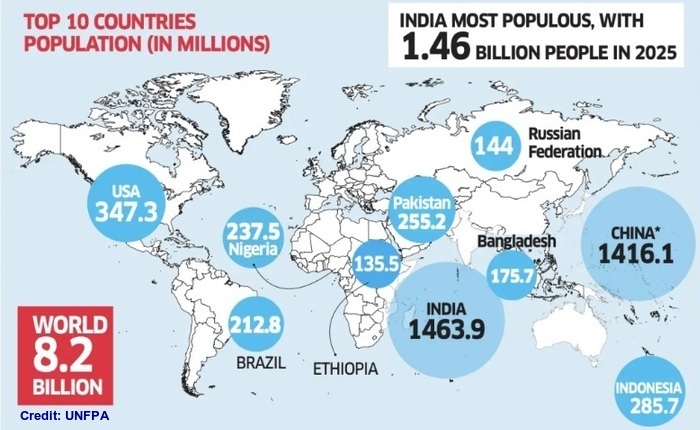
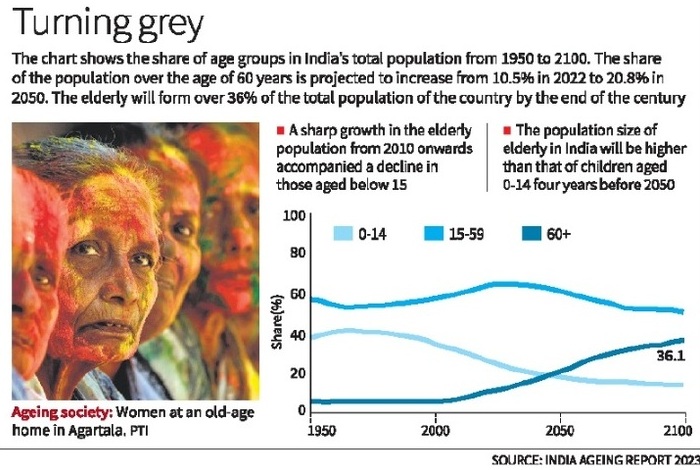
The United Nations Population Fund (UNFPA) projections have hinted that India’s elderly population (aged 60 and above) will more than double from roughly 149 million in 2022 to approximately 347 million by 2050. By this time, seniors are expected to make up 20.8% of the total population of the South Asian nation. Interestingly, there is no universally agreed-upon definition for the term elderly in the 21st Century as technological advancements, especially the improvement in living standards and the enhancement of medical services, help people to transcend the limitations of physical (or chronological) age, regardless of their socio-economic strata. However, the modern technology hardly helps a person to overcome problems related to her/his mental age. Social psychologists have observed that a vast number of elderly people experience severe mental isolation. This loneliness epidemic affects older adults across India, from bustling metropolitan areas to small towns and villages.
It is a fact that the feeling of loneliness has no connection to being alone. Loneliness is an emotional state of feeling disconnected or unseen, rather than a physical state of being alone. One can experience deep loneliness in a crowded room, if her/his relationships lack emotional depth. Conversely, being alone – often called solitude – can be a peaceful and restorative experience. However, the scenario is different in India. The number of elderly people who are living alone (or are compelled to do so) is steadily on the rise there mainly because of demographic shifts and youth migration. Over 15 million seniors reside by themselves and nearly 75% of them are women. This growing phenomenon, often termed Solo Ageing, is driven by both forced circumstances and a desire for independence. In India, the majority of senior citizens live in solitude not only physically, but also mentally, as well as socially.
Social psychologists have expressed serious concern about social aging as individuals, in this state, gradually withdraw themselves from social interaction, do not venture out of their homes unless absolutely necessary, refrain from speaking with neighbours, distance themselves from social gatherings, and become even lonelier. Although it is claimed that social media allow individuals to find their chosen families and build supportive networks, such platforms merely create superficial engagement loops designed to harvest user data. Hence, elderly people spend extensive time on social media without a reduction in loneliness.
In such a situation, a new economic system – the Loneliness Economy – is gradually taking shape. The core arrangement of this economy, which is determined to erase loneliness, relies on selling convenient, individualistic substitutes for community and connection. The Loneliness Economy – often referred to as the Guilt Economy – thrives on the emotional vulnerability and isolation of the modern consumer. This phenomenon exploits the personal shame associated with isolation, monetising the universal need for connection through products and services that offer temporary, transactional relief. Although the Loneliness Economy, which refers to the booming, multi-billion-dollar marketplace of goods, services and digital platforms, is designed to monetise or mitigate social isolation, it generates profit by making isolation a manageable, highly profitable consumer experience, instead of resolving the root causes of the problem.
There is a social cause behind the sense of guilt, as well. Loneliness is often misunderstood as a Western problem in India, leading to deep social stigma. It is taken for granted that the closely knit social and familial bonds, which have historically been the hallmark of Indian life, have not changed in the slightest, even in the 21st Century. Of course, traditional collective structures, like joint families, remain deeply embedded in the Indian cultural identity. However, it is not correct to view loneliness as a personal moral failure or a symptom of abandoning community values. The fact is that social and familial bonds in India have undeniably evolved in the 21st Century, adapting to urbanisation, digital connectivity and changing economic roles. Sociologists observe that the foundational human experiences of community, like companionship, closeness and interaction, and deep connection have shifted from being effortless byproducts of daily life into deliberate, sometimes costly, pursuits.
Loneliness is constantly transforming the nature of consumption and enjoyment. It fundamentally reshapes how people consume, shifting the market from basic utility and luxury toward the purchase of connection and community. Products and services now serve as emotional infrastructure, where consumers pay for belonging rather than just goods. A vast ecosystem of products, as well as services, has emerged centred around the care of elderly people living alone. Developers of high-end and senior-living residences increasingly market a companionship lifestyle to counter urban isolation. By packaging social clubhouses, concierge-led social calendars and micro-communities, they promise a built-in support system where residents can easily socialise while enjoying their independent living spaces. In other words, emotional wellness is being ensured in exchange for money.
Children who are compelled to live far away, leaving their elderly parents alone, also fall victim – directly or indirectly – to a sense of guilt. That is precisely why they, too, try to keep their parents well from a distance by sending food and gifts via app(lication)-based technology, booking tickets for movies or travel, and installing surveillance cameras for the security of their parents. This may perhaps fulfil material needs, but what about the absence of loved ones?
In India, the basic problem is that urgent issues, such as the loneliness and mental well-being of the elderly, lack adequate state priority. Modern psychological and gerontological research strongly suggests that loneliness and old age are not mutually inclusive. A large section of Indian youth spends the entire day engaging with the latest technology, and many of them hardly speak to anyone else. The concept of generation gap is an eternal truth. However, the advent of technology has now rendered this gap virtually insurmountable by introducing new communication barriers, with younger generations, or digital natives, adapting to new communication tools and platforms intuitively. On the other hand, older generations face a steeper learning curve, leading to fragmented communication styles.
Therefore, awareness is essential. Members of a society must ensure that the social practice of mutual connection and dialogue is restored as soon as possible.
Meanwhile,







Boundless Ocean of Politics on Facebook
Boundless Ocean of Politics on Twitter
Boundless Ocean of Politics on Linkedin
Contact us: kousdas@gmail.com

 ISMC
ISMC
