

The Rough Road Ahead For Trump
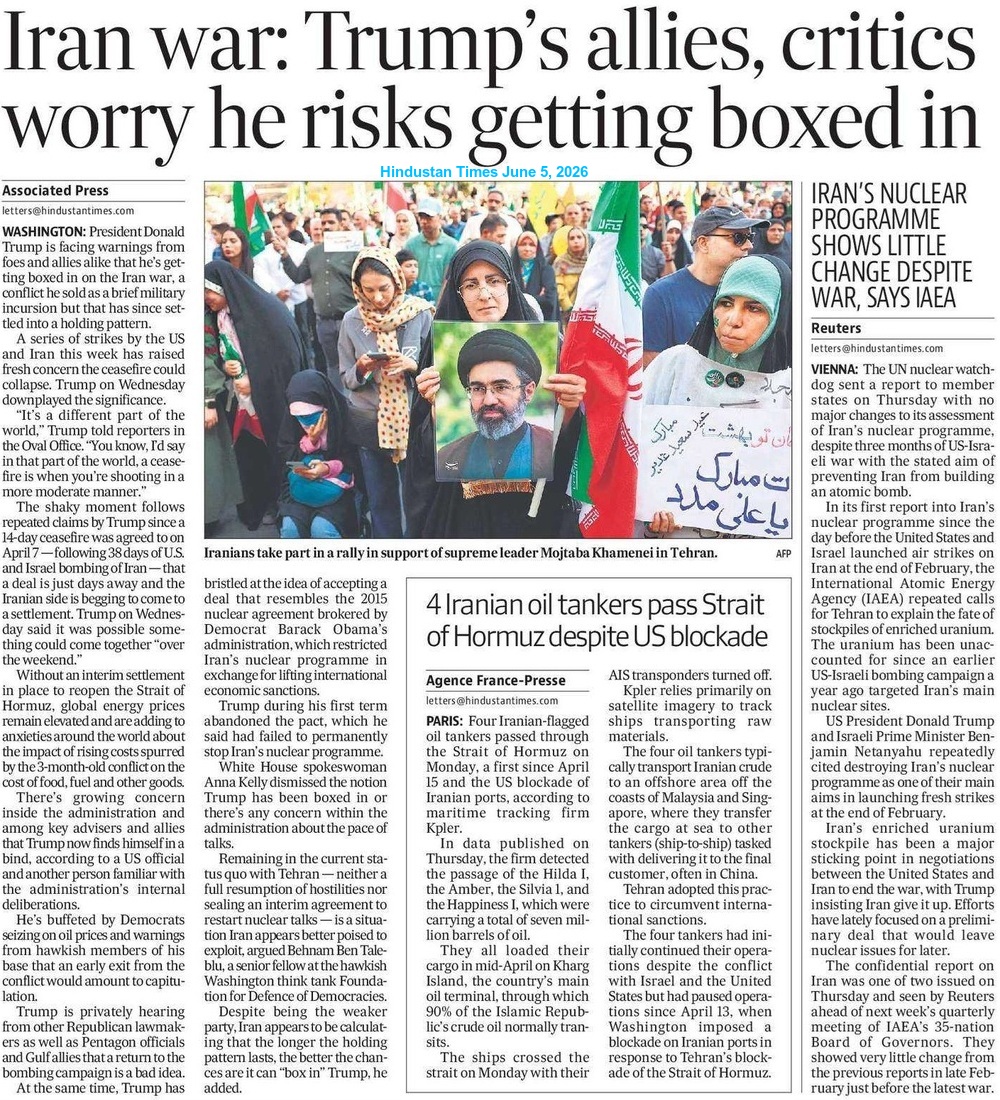
In what may be seen as a severe political blow to President Donald John Trump, the US House of Representatives voted on June 3 2026 to end the war in Iran. In a rare first, the Lower House of the US Congress also issued an order to immediately withdraw Armed Forces from the Islamic Republic. According to political analysts, President Trump suffered a setback in his military campaign against Iran following the passage of this resolution in the House of Representatives.
The 215-208 vote, mostly a symbolic one, marked a new period of Congressional unease with the conflict in the Middle East amid an impasse in peace negotiations. Strikes in the region have continued in recent days in spite of the White House’s assertion to lawmakers that hostilities have ended. Interestingly, four Republicans joined with Democrats to support the resolution asserting the legislative branch’s war authority and blocking further hostilities in the region. It came a couple of weeks after the US Senate advanced a similar measure.
Gregory Meeks, the Democratic Representative from New York and a top Democrat on the House Foreign Affairs Committee, introduced the resolution in April 2026. On June 3, 215 votes were cast in favour of his proposal, while 208 votes went against it. Four Republicans – Thomas Massie, Brian Fitzpatrick, Tom Barrett and Warren Davidson – broke ranks to approve the resolution that is a largely symbolic rebuke directing the President to end hostilities with Iran. Resentment within President Trump’s party is visibly brewing, with the House of Representatives passing the resolution.
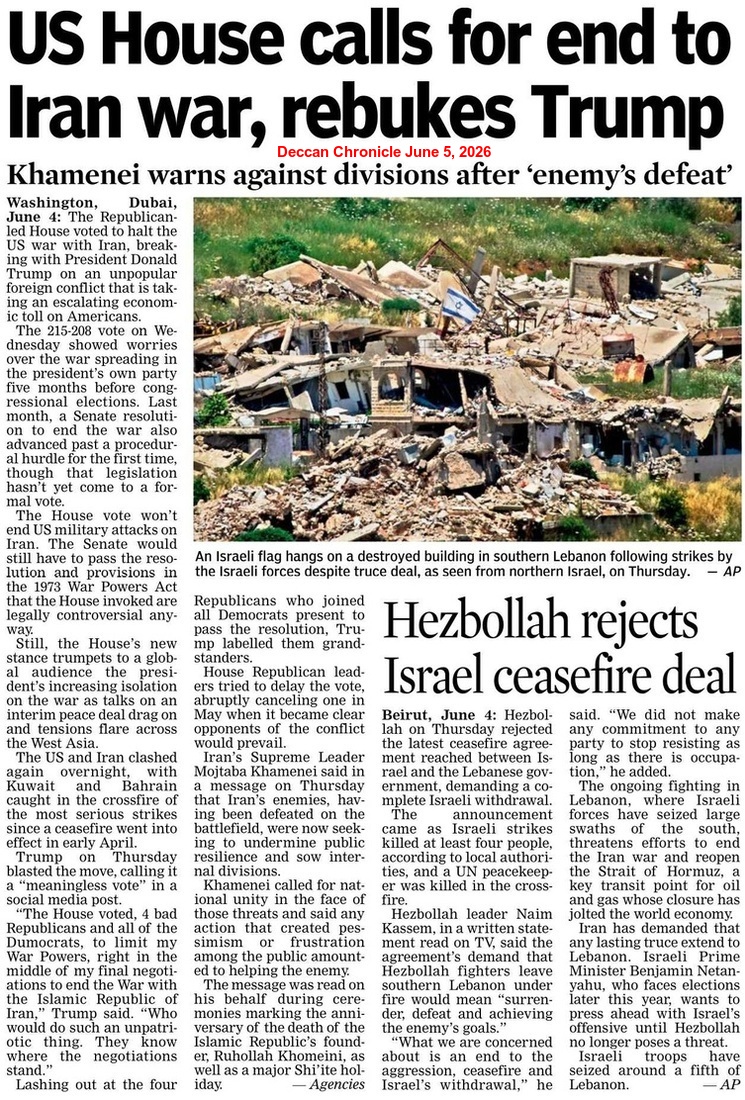
The concurrent resolution has reportedly directed the President to remove US Armed Forces from hostilities with Iran, unless the Congress declares war or specifically authorises the use of military force. It may be noted that the Lower Chamber passed the resolution in an actionable rebuke of the Trump Administration‘s war strategy. As it is a concurrent resolution, it requires approval from both the House and the Senate. Such resolutions do not go to the President for signature and lack the full force of law. However, they certainly carry immense political weight.
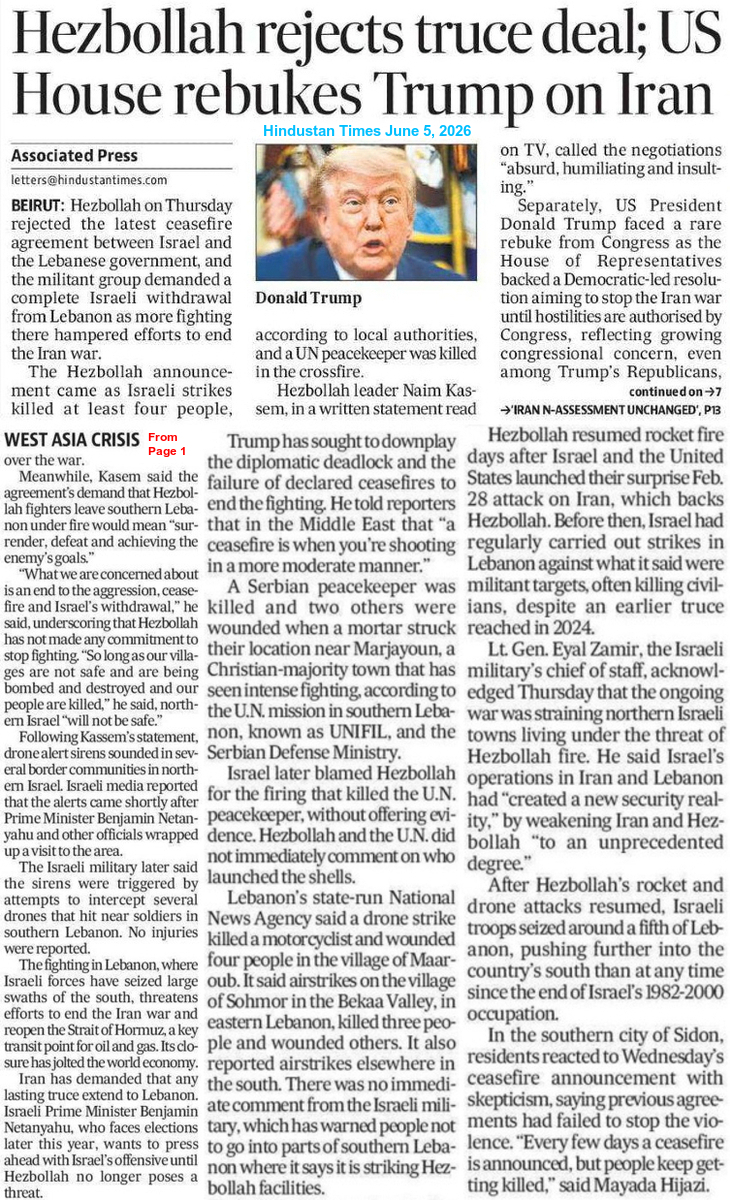
Incidentally, the US and Israel launched a military operation against Iran on February 28, 2026. The fragile West Asia ceasefires are under severe strain as the region grapples with multi-front escalations. Despite prior diplomatic truces, the situation remains highly volatile because of expanded Israeli operations in Lebanon, continued Hezbollah rejections of proposed deals and renewed US-Iran military exchanges. Democrats have strongly opposed President Trump’s military operations in West Asia, arguing that the strikes and ongoing hostilities lack constitutional authorisation from the US Congress. They have consistently pushed to invoke the War Powers Act (of the President) to halt the escalating conflict.
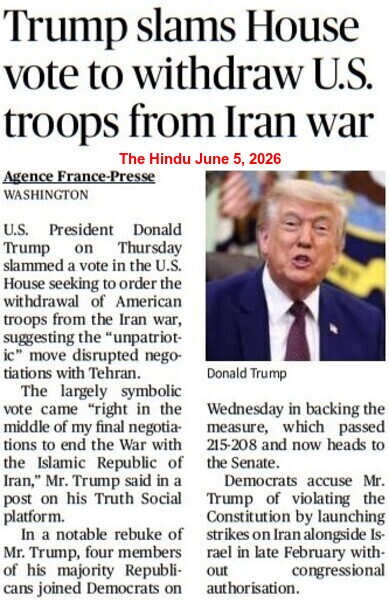
President Trump has seemingly come under immense pressure following the passage of this resolution. However, experts have opined that the war in West Asia would not come to an end so easily. The resolution must clear the Senate, the Upper House of the US Congress, to become law. The Senate’s vote on this resolution will dictate whether the Congress can check executive military actions.
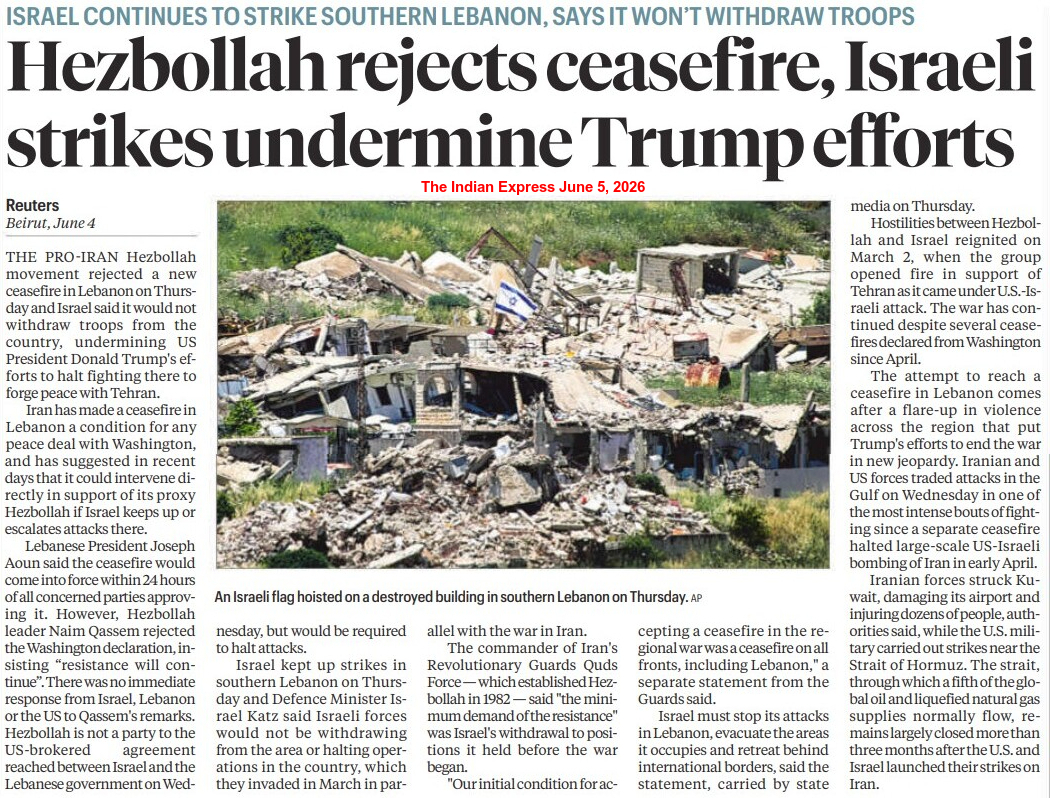
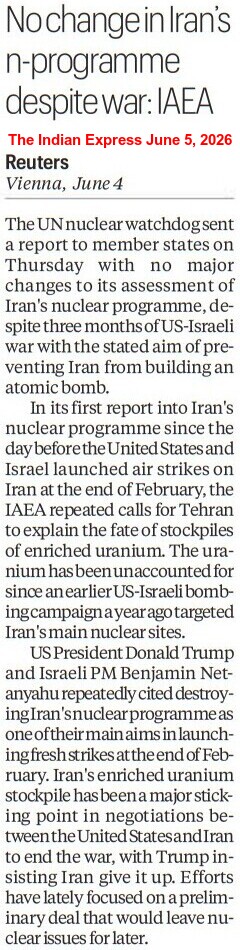
Meanwhile, the overall pace of the US-Iran War has slowed significantly, though it continues through a dynamic mix of diplomacy and targeted operations. The military campaign has evolved into a war of attrition, featuring localised self-defence strikes and indirect negotiations, in recent times, rather than the rapid, heavy bombardments seen early in the conflict. President Trump has confirmed that the US is in advanced, late-stage negotiations with Iran following a tentative agreement reached by negotiators to extend the fragile ceasefire by 60 days and launch new talks over the Iranian nuclear programme. According to the US President, negotiations with Tehran are going “very well“, and an agreement to extend the ceasefire and reopen the Strait of Hormuz could be reached within the coming week.
Meanwhile,


Boundless Ocean of Politics on Facebook
Boundless Ocean of Politics on Twitter
Boundless Ocean of Politics on Linkedin
Contact us: kousdas@gmail.com

 ISMC
ISMC
