

On The Brink Of All-Out Regional War
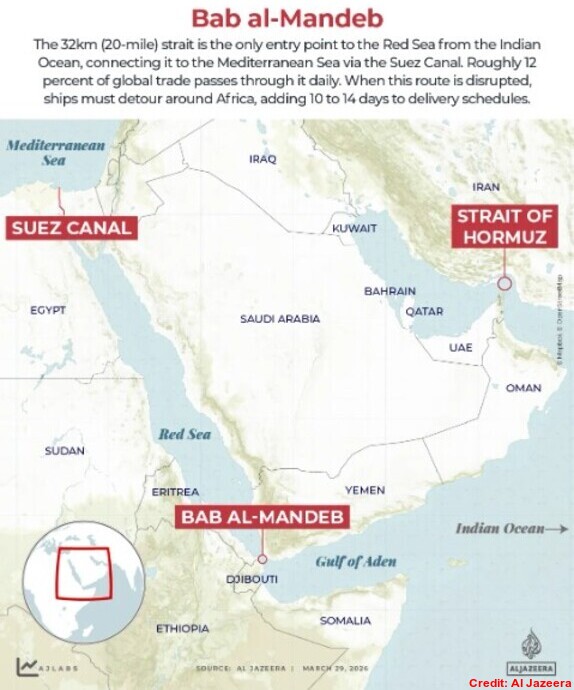
With the September 10-13, 2026 surprise seizure of control of the Bab al-Mandeb Strait by the Houthis, which controls the passage from the Indian Ocean to the Red Sea and from there to the Suez Canal, another huge portion of global sea traffic has been disrupted, if not stopped altogether. There is scrambling in capitals around the world over how to address the new crisis situation.
Bab al-Mandeb is one of the busiest maritime chokepoints in the world, with almost 9% of all global seaborne trade passing through it, including 20% of both cars and containers and some 15% of crude and refined oil products. Furthermore, the effect of the closure of the Strait of Hormuz, the near-total stoppage of Russian and Ukrainian grain and fertiliser exports through the contested Black Sea and the shape of a meltdown of massive proportions of the world’s physical economy begins to come into focus.
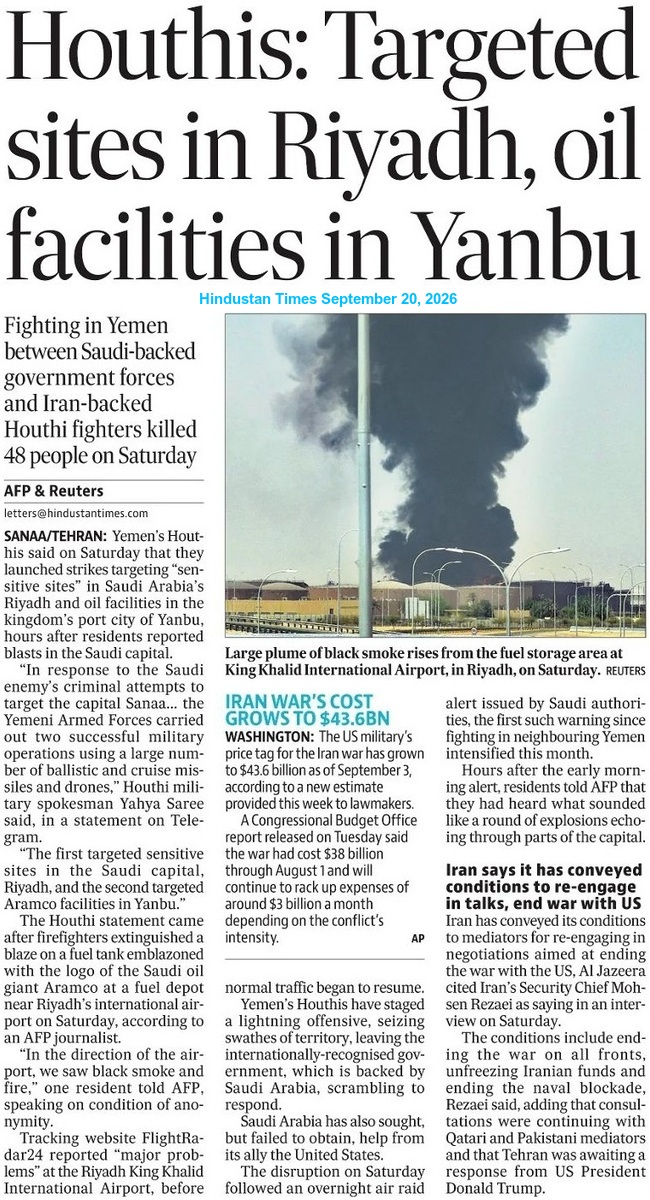
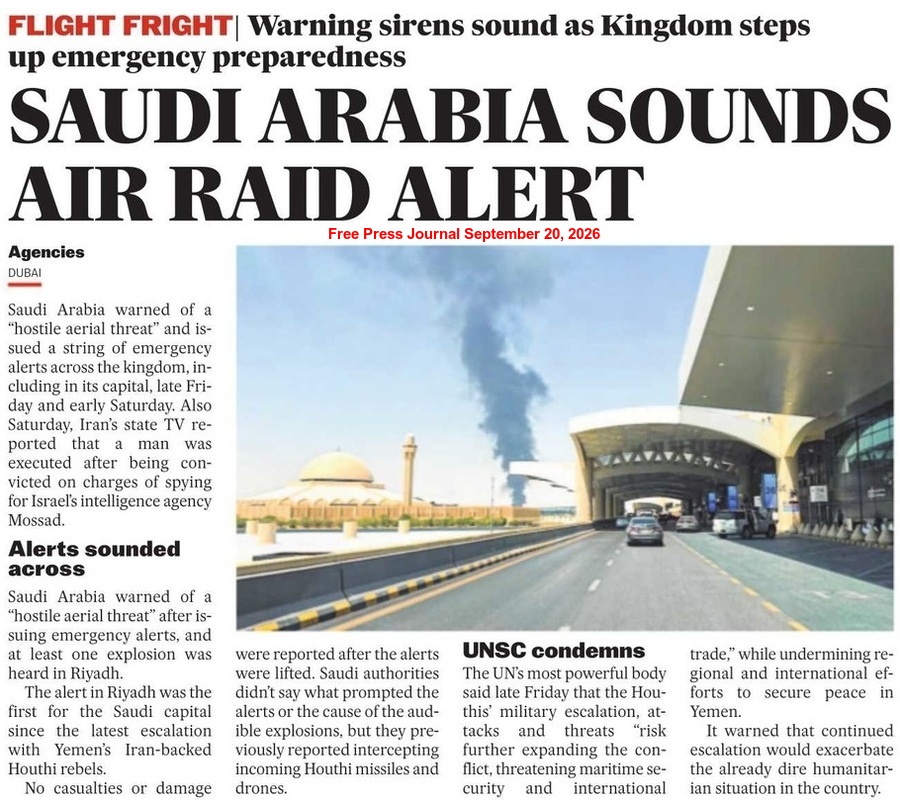
The war party crews in Washington DC, London and Tel Aviv have leapt into immediate action. US CENTCOM confirmed that Admiral Brad Cooper called an urgent closed-door meeting of the military Chiefs of Staff of Israel, Saudi Arabia, Egypt and numerous Gulf states in Germany to discuss military steps for reopening Bab al-Mandeb, including Israeli offers to help Saudi Arabia against Iran – who are allies of the Houthis. British Prime Minister Andy Burnham is also considering jumping into the fray with military help.
This is a recipe for generalised warfare throughout Southwest Asia – on Russia’s southwestern flank – in a strategic context in which the US has just announced that it has begun an arms race in space, while introducing a change in nuclear doctrine to promote the use of tactical nuclear weapons for supposedly limited nuclear war – an oxymoron, if ever there was one. However, an alternative to the growing probability of nuclear war is also starting to come into focus.
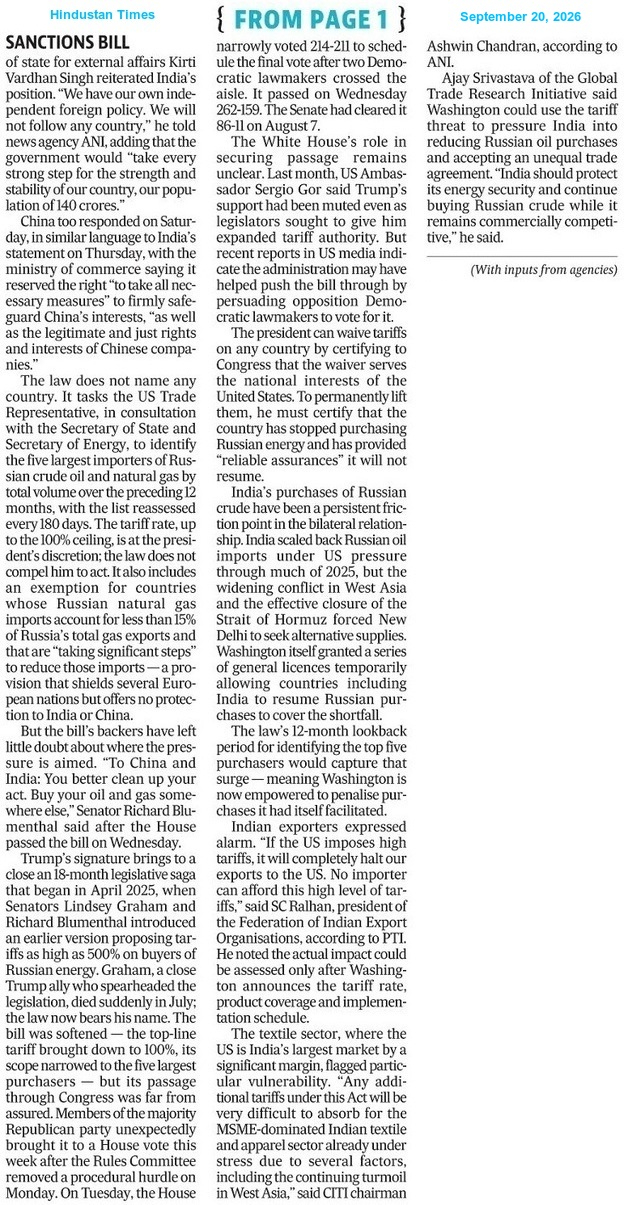
The September 12-13, 2026 BRICS Summit more than held its own against London-Washington DC efforts to fracture that grouping, which represents half the world’s population, as did the SCO Summit a couple of weeks earlier. Serious discussions were held, as Russian Foreign Minister Sergey Lavrov stated that discussion was held “regarding the creation of alternative payment platforms, settlement and depository mechanisms, a reinsurance mechanism, an investment platform and a grain exchange“.
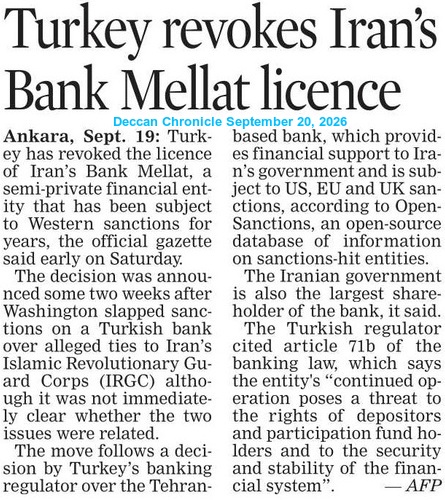
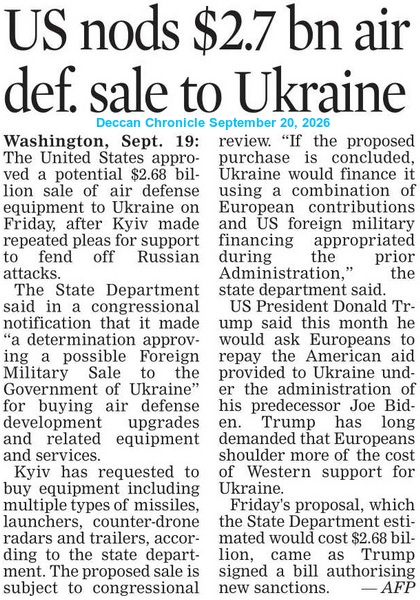
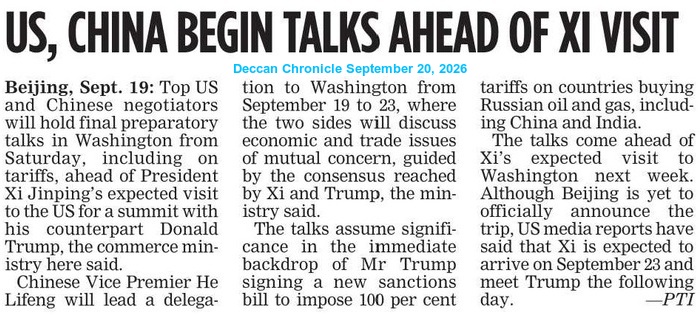
More is scheduled for September, including the crucial September 24, 2026 meeting between Chinese President Xi Jinping and US President Donald John Trump at the White House, where President Xi will continue to offer the US the opportunity to work together on infrastructure and other major projects in the Global South, which would be beneficial to all parties. In preparation for that trip, Chinese Foreign Minister Wang Yi met his Iranian counterpart Abbas Araghchi, telling the latter that Beijing was “willing to strengthen dialogue and cooperation with Iran, and safeguard Iran’s legitimate rights and interests“. This is a message that Xi is expected to deliver personally to President Trump when they meet, in the face of US threats and demands that all nations must cut off economic ties with the Islamic Republic as decreed by the Treasury Department’s Operation Economic Outcast. President Xi will also present his US counterpart with options for the peaceful resolution of the entire West Asia crisis and that of Ukraine, as well.
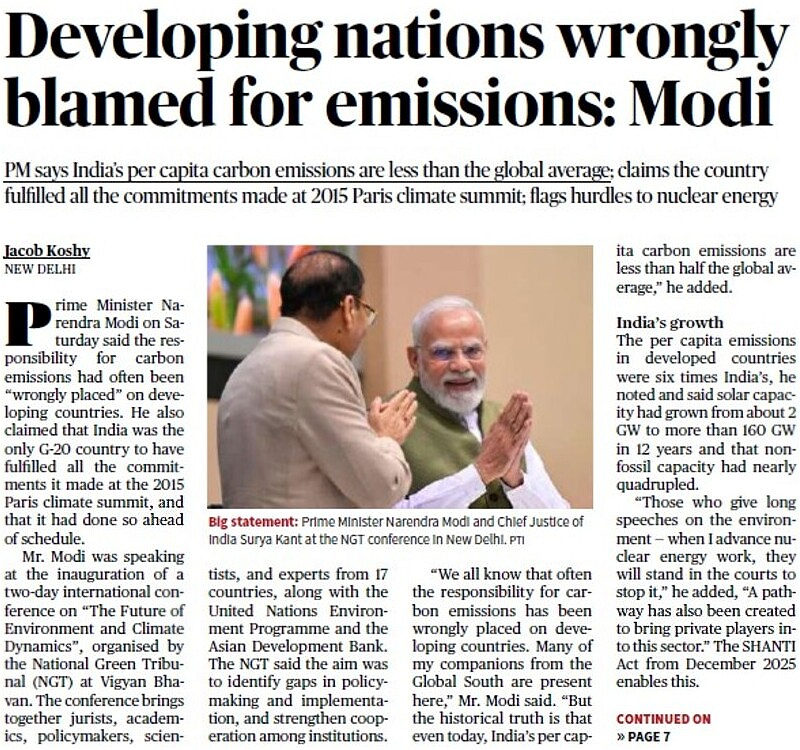
Wang Yi also met Celso Amorim, the Special Adviser to Brazilian President Luiz Inácio Lula da Silva, on September 16, 2026 for related discussions. Brazil is a founding member of the BRICS, as are Russia, India, China and South Africa. On his way to China, Amorim also stopped in New Delhi, the host of the 18th BRICS Summit, for strategic discussions with the Narendra Modi Government.
When the UN General Assembly begins its annual high-level General Debate on September 22, 2026 as is traditional, the opening speech will be delivered by the Brazilian President Lula. Useful alternatives to onrushing global warfare, options based on the concept that development in the new name for peace, could well be placed on the global agenda at that time, and in the deliberations that follow.
Boundless Ocean of Politics received this article from the International Peace Coalition (IPC) on September 17, 2026.
Meanwhile,
Boundless Ocean of Politics on Facebook
Boundless Ocean of Politics on Twitter
Boundless Ocean of Politics on Linkedin
Contact us: kousdas@gmail.com

 ISMC
ISMC
