

‘Until Everyone Is Safe’
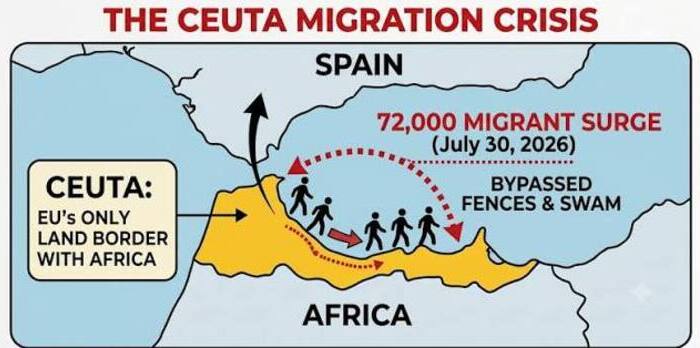
A video went viral worldwide on July 31, 2026, showing around 72,000 migrants, mainly young men and children, swimming across the maritime borders of Tarajal and Benzú from Fnideq, Morocco to the Spanish enclave of Ceuta. In June, a legal ruling by the Spanish Supreme Court circulated across various social media platforms, including TikTok, claiming that rapid, summary expulsions (known as hot returns or rechazos en frontera) could not be applied to individuals intercepted while swimming into Ceuta or Melilla. Although the ruling was a procedural one and did not mean that migrants who swam to Ceuta would be granted entry or allowed to stay permanently; it encouraged countless people to leave Morocco for Spain. Many of them received serious injuries on their way to Ceuta, while nearly 100 perished.
Due to the sudden arrival of the vast number of migrants, the shelters in Ceuta faced severe strain, leading to extreme overcrowding, resource shortages and immense pressure on emergency services. The situation prompted the local government of Ceuta, led by Regional President Juan Jesús Vivas, to declare a humanitarian emergency. Meanwhile, the Spanish Army and Coast Guard installed a 500mt (1,640ft) pneumatic floating barrier off the coast of Tarajal beach in Ceuta to block the heavily utilised sea route. When approximately 70,000 people were sent back under a bilateral agreement, the Moroccan Police used tear gas and water cannons to control the crowd, and also provided the helpless people with shelters. This tragic incident represents the most dangerous and deadly incursion at the borders of the European Union (EU).
Meanwhile, World Refugee Day was observed on June 20, 2026, with the theme Until Everyone Is Safe to honour the resilience of displaced people and advocate for universal protection. Moreover, 2026 marks the 75th anniversary of the 1951 Refugee Convention that was officially adopted on July 28, 1951. Hence, the UN made clear that “until the lives of every person on Earth are safe, none of us is completely safe in a true sense“.
In the post-Second World War era, the demands regarding the protection of the minimum Human Rights of asylum seekers were articulated in the first Refugee Convention of 1951 which formally established the core international legal framework for protecting refugees. Signed on January 31, 1967 in New York and entering into force on October 4, 1967, the 1967 Protocol Relating to the Status of Refugees removed the temporal and geographical restrictions of the original 1951 Refugee Convention. If the 1951 Refugee Convention is considered as a guiding principle or roadmap for the reintegration of displaced people into the mainstream, the question remains: How are these uprooted individuals faring after 75 long years?
According to the UNHCR Global Trends Report, the number of refugees worldwide stands at approximately 41.6 million. Also, tens of millions are living a nomadic life in their own countries. The UNHCR report has further mentioned that a large majority – roughly 65-70% – of the world’s refugees and people in need of international protection do originate from a small group of major crisis-affected countries and territories, including Venezuela, Syria, Ukraine, Afghanistan, Sudan and Palestine. Interestingly, low- and middle-income nations host about 68% of the world’s refugees. Countries, like Turkey, Colombia, Pakistan, Uganda, Iran and Bangladesh, consistently rank as top hosting nations, accommodating large populations displaced by crises.
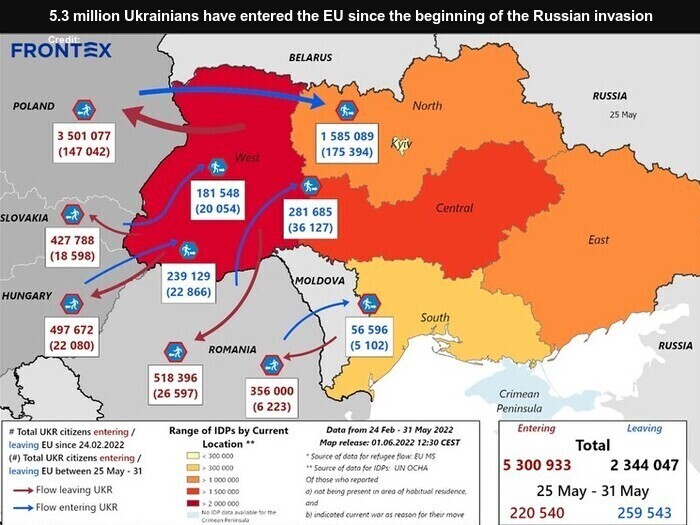
The global refugee situation is currently complex and multifaceted. Since the beginning of the Ukraine-Russia War in 2022, nearly 5.9 million Ukrainian citizens have sought refuge in countries, such as Germany, Poland, the Czech Republic, the UK, Spain, Italy and Romania, while around 3.7 million have been internally displaced. As the Ukrainian Government prohibits men aged 18 to 60 from leaving the country as per the martial law implemented at the beginning of the 2022 Russian invasion, women and children account for 75-80% of the total refugees. Approximately 57% of working-age Ukrainian refugees (aged 20-64) have found employment in European countries. However, they are doing blue-collar jobs despite being highly educated mainly because of language barriers and the lack of institutional recognition for their degrees.
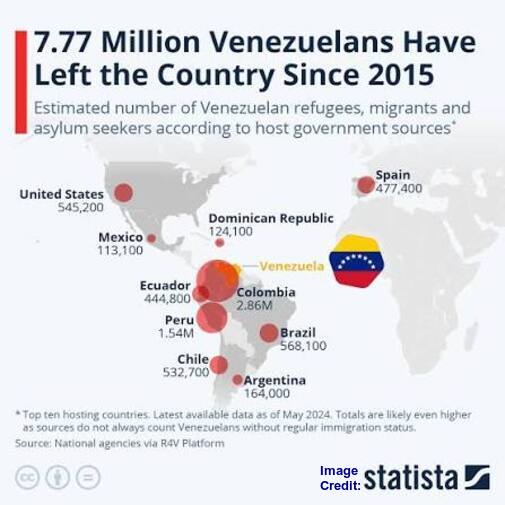
In South America, approximately 7.9 million people have fled Venezuela, driven by an oil-dependent economy, government repression, political violence and inflation, since 2014 and sought refuge in Colombia, Peru, Brazil, Ecuador, Chile and the US. This is one of the largest displacement and migration crises in the world. Two earthquakes in 2026 made the situation worse, with several thousand Venezuelans living as internally displaced persons in their own country.
As far as Africa is concerned, Sudan and the Democratic Republic of Congo are experiencing a bloody refugee crisis. The civil war in Sudan has forcibly displaced over 14 million people, with around nine million remaining internally displaced within the country, since April 2023. Around four million people have taken refuge in Chad, South Sudan, Egypt, the Central African Republic and Ethiopia to save their lives. Nearly 19.5 million people in Sudan face acute food insecurity, driven by ongoing conflict, active sieges and restricted humanitarian access. An armed conflict over the control of mineral resources, driven by a deadly mix of ethnic tensions, weak governance and the lucrative trade of minerals (like coltan, gold and tin), has been ongoing in eastern Congo for the past three decades. Nearly 5.8 million Congolese displaced within the country face severe shortages of food, clean water and medical care, as they are crammed into spontaneous camps or hiding in dense forests for safety. Meanwhile, 1.2 million refugees fled to neighbouring countries, like Uganda, Burundi, Rwanda, Tanzania and Zambia, stretching regional humanitarian resources to their absolute limits. Congo is the only nation to appear on every single edition of the Norwegian Refugee Council‘s (NRC) annual list of the world’s most neglected displacement crises over the past decade.
The situation is somewhat similar in West Asia. The Syrian Civil War displaced more than 12 million people, splitting them between refugees in various countries, like Turkey, Lebanon, Jordan, Germany and Sweden, and those displaced inside Syria. The prolonged displacement of millions of Syrian refugees across West Asia has fuelled severe economic strain, public resentment and intense political pressure, especially in Turkey and Lebanon, and they are being sent back. Also, approximately 5.9 million Palestinian refugees are registered with the UN Relief and Works Agency for Palestine Refugees in the Near East (UNRWA) across its areas of operation. They are staying in 58 refugee camps in the West Bank, Jordan, Lebanon and Syria. Over 90% of Gaza’s population has been displaced by Israeli military operations since the Israel-Hamas conflict escalated in October 2023. The UNRWA has claimed that Palestinian refugees are deprived of basic needs, with roughly 1.4 million people facing severe food insecurity and fragile conditions, as war rages on in Gaza. On November 21, 2024, the International Criminal Court (ICC) issued arrest warrants for Israeli Prime Minister Benjamin ‘Bibi’ Netanyahu and former Defence Minister Yoav Gallant over the war crime of using starvation as a method of warfare. The Gaza crisis is a major test of the effectiveness of international law.
The refugee crisis is alarming in South Asia, as well. The total Rohingya refugee population in Bangladesh and surrounding regions has grown to approximately 1.2 million in 2026 from 750,000 in 2017. The UN has labelled the Rohingyas living in Bhasan Char as the ‘world’s most persecuted minority group. Bhasan Char is a remote silt island in the Bay of Bengal where the Government of Bangladesh has relocated over 30,000 Rohingya refugees from the overcrowded camps in Cox’s Bazar. The global displacement of Rohingya refugees spans several countries, with Pakistan (300,000), Saudi Arabia (200,000), Malaysia (150,000) and India (40,000) serving as major destinations outside of Bangladesh. After the Government of Myanmar stripped the Rohingyas of their citizenship in 1982, no country, including Bangladesh, granted them international legal protection or legal refugee status; as all the host countries are not signatories to the 1951 Refugee Convention. Only the signatories provide foreign nationals with formal legal refugee status or international legal protection.
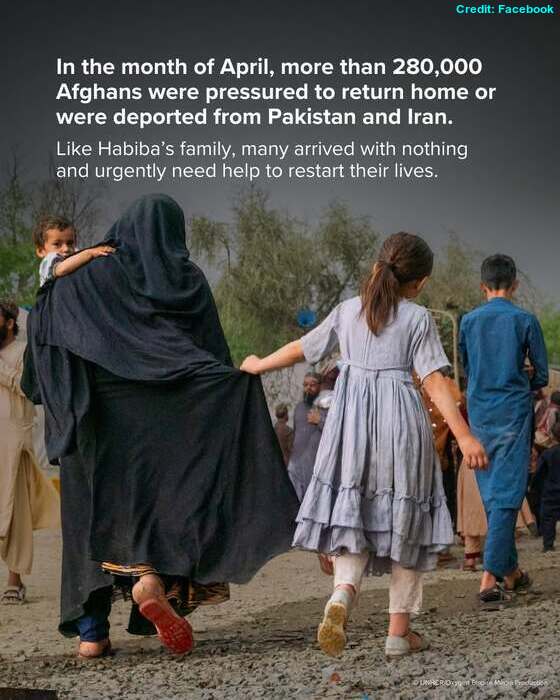
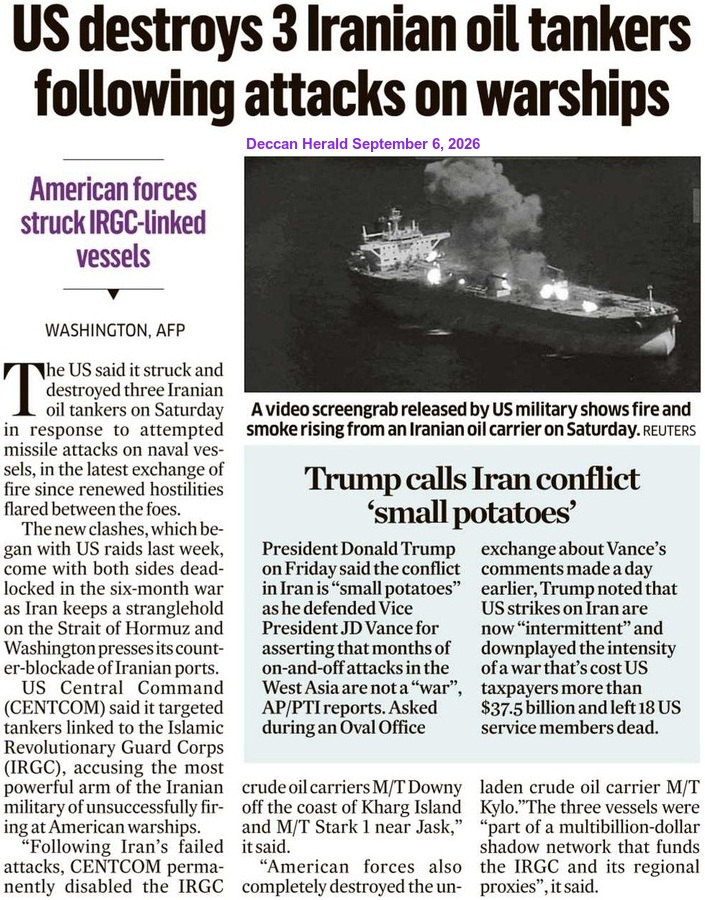
The condition of Afghan refugees is also dire. Over four decades of war (the Soviet invasion, civil war, the US war and the Taliban’s seizure of power in 2021) has driven approximately 6.4 million people across international borders, apart from forcing four million to remain internally displaced. Neighbouring Iran and Pakistan have historically sheltered approximately 90-95% of the global Afghan refugee population. Now, they are deporting unregistered Afghans en masse to their home country, where there are no basic provisions for survival. Both Islamabad and Tehran have pointed to national security and border control in order to justify the crackdowns.
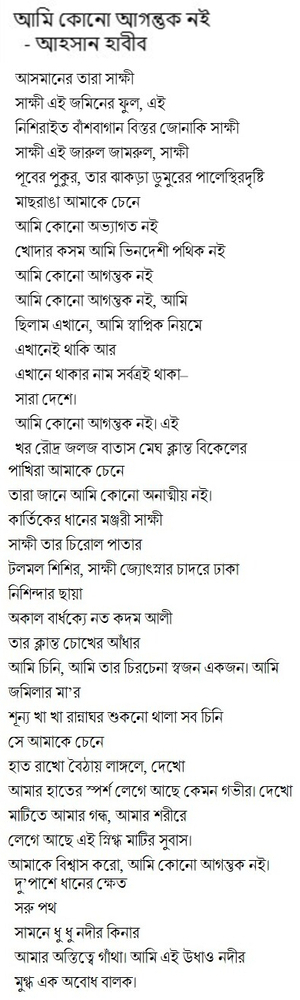
The refugee crisis is not merely a matter of statistics; but the anguish of millions losing their homes and the tale of an indomitable human struggle for survival. Once, eminent Bangladeshi poet Ahsan Habib (February 2, 1917 – July 10, 1985) wrote: “The scent of this gentle earth clings to my body…” (Verse: আমি কোনো আগন্তুক নই/I’m Not Any Stranger; 1977). There is no greater agony than leaving behind the familiar soil with nothing in possession.
Meanwhile,
Boundless Ocean of Politics on Facebook
Boundless Ocean of Politics on Twitter
Boundless Ocean of Politics on Linkedin
Contact us: kousdas@gmail.com

 ISMC
ISMC
