

Revenge Of The Himalayas
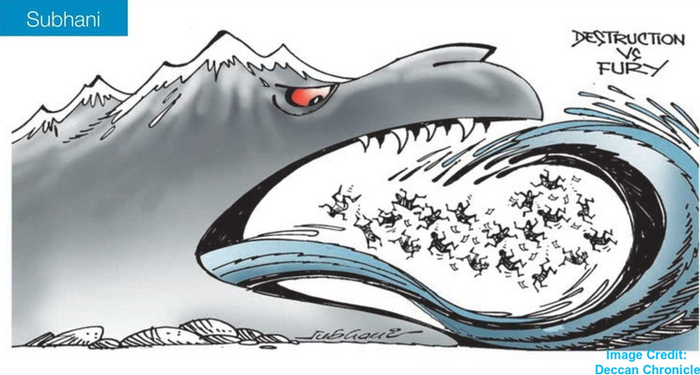
Mountainous regions face severe risks from flash floods, earthquakes and avalanches, which can devastate communities instantly mainly because of steep terrain and fragile ecosystems. Nepal is extremely unfortunate to have to witness the combined effects of all these disasters at once on August 26, 2026. The danger is not over yet. Instead, the Himalayan country is bracing for another round of flooding as water begins to overflow from a lake formed by the recent avalanche in Tibet.
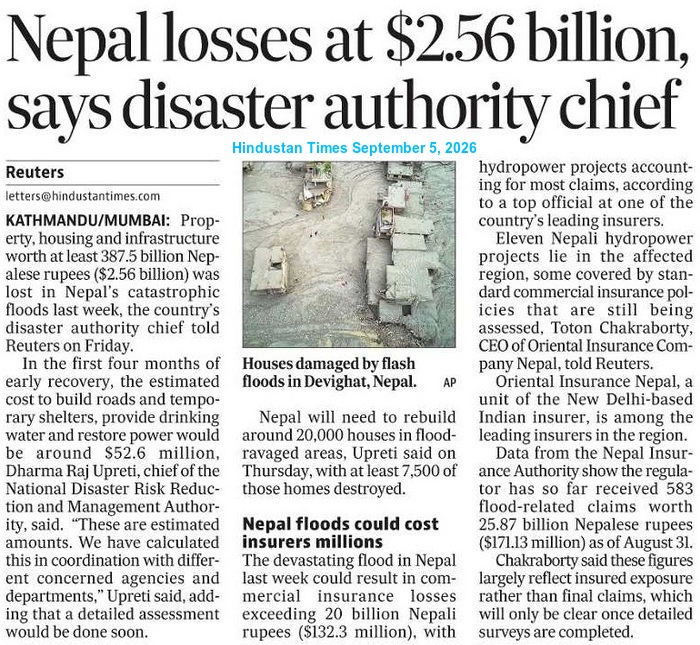
A glacier collapsed in the Langtang region of Nepal near the China border on August 26, triggering an ice and rock avalanche. It apparently entered the Lhende Khola, a tributary of the Bhote Koshi River, where it caused or contributed to a temporary blockage. When it burst, a catastrophic flash flood travelled almost 100km downstream. The videos of the disaster do not immediately appear real. The global community has seen towering waves of muddy water crashing with furious speed into the area surrounding the immigration centre, instantly swallowing up high-rise buildings, roads and stationary vehicles. The scene looks like a technological trick, the kind often seen on a movie screen.
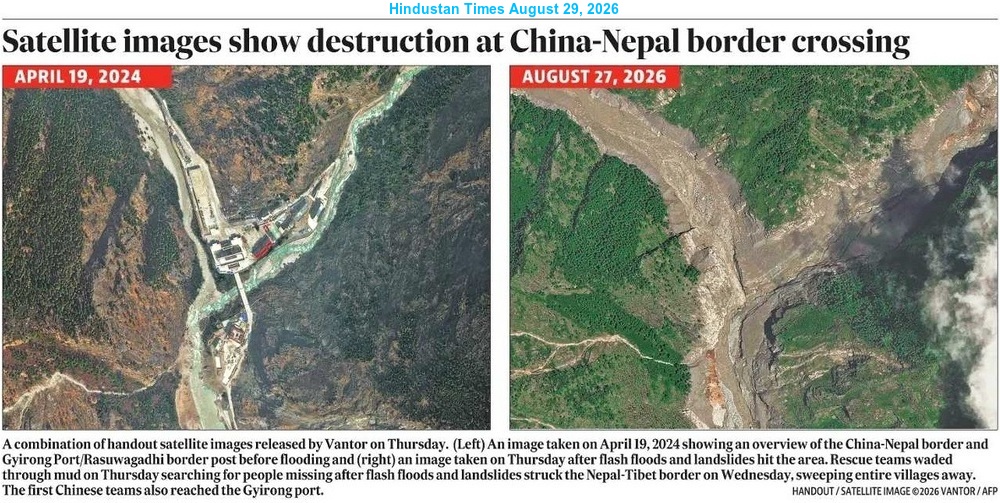
The harrowing truth is that there is not a shred of imagination in this. It is all stark reality. The Himalayan mountain range is warming at twice the global average, accelerating a dangerous environmental crisis. Recent catastrophic events, like the massive August 2026 flash floods along the Nepal-China border, highlight how rapidly this fragile ecosystem is destabilising. At any moment (even on a bright, seemingly calm day), nature can unleash its ferocious fury and sweep everything away in an instant.
Various explanations have emerged regarding why such a horrific disaster occurred. Once the initial shock subsides, the international community might be able to move a few steps beyond the stage of speculation and identify the definite cause. However, one should acknowledge right away that experts have repeatedly issued warnings for a long time regarding the Himalayan mountain range. It has been proven true over the past few years.
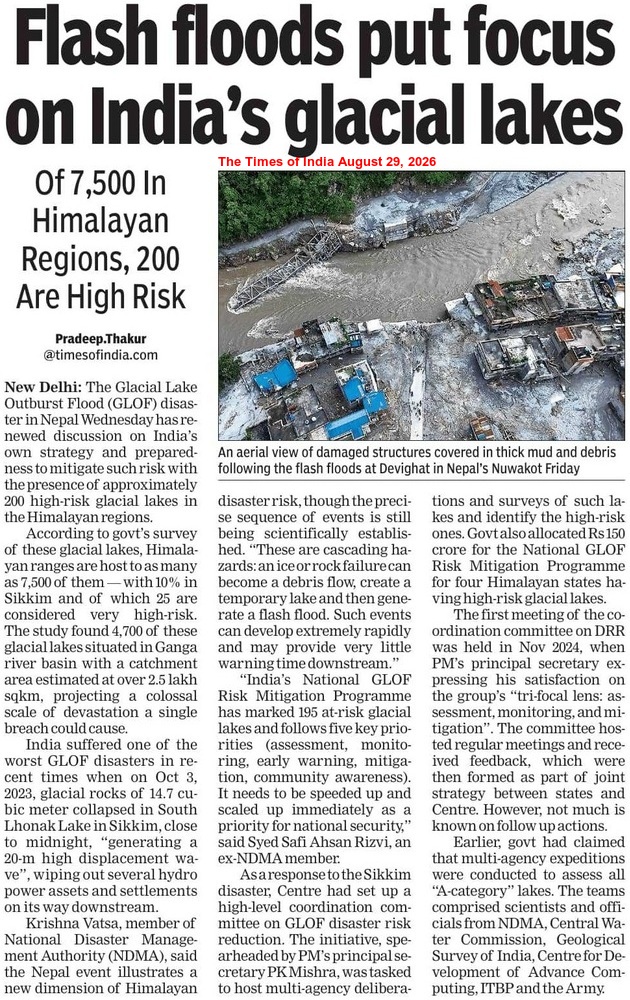
Unprecedented glacial melting caused by global warming has made this mountain range vulnerable. The glacial melting is capable of completely obliterating vast areas in a single strike. And, there is likely no other way left to escape that grave danger. Hence, Nepal, Sikkim, Bhutan and the northern part of neighbouring India have repeatedly experienced the terrifying reality of mountain rivers suddenly surging into well-ordered human settlements in recent times. Technology captures how an entire settlement reduces to a mud-caked, desolate and ruined landscape within a matter of hours.
The Himalayan tsunami will not only rock Nepal. Sooner or later, other neighbourhoods in this particular region may also be destroyed in a similar fashion. Families will lose everything and many will suffer in ways most of us could never fully imagine. The administrations of the concerned countries, provinces and districts will limit themselves to assessing the extent of damage, counting the dead and injured, and determining the amount of compensation; as they no longer have the capacity to prevent such a disaster.
It is a fact that humans lack the capacity to prevent a natural disaster of this magnitude, especially given that many experts are emphasising the collapse of a massive section of a glacier onto the valley as the cause. However, the concerned authorities have not taken any measures to prevent it. On the other hand, the construction of multi-story buildings and roads right along the banks – practically encroaching upon the river itself, futile attempts to control the flow of mountain rivers by erecting dams haphazardly, and decimating forests have increased the frequency, as well as intensity, of disasters in the Himalayan region.
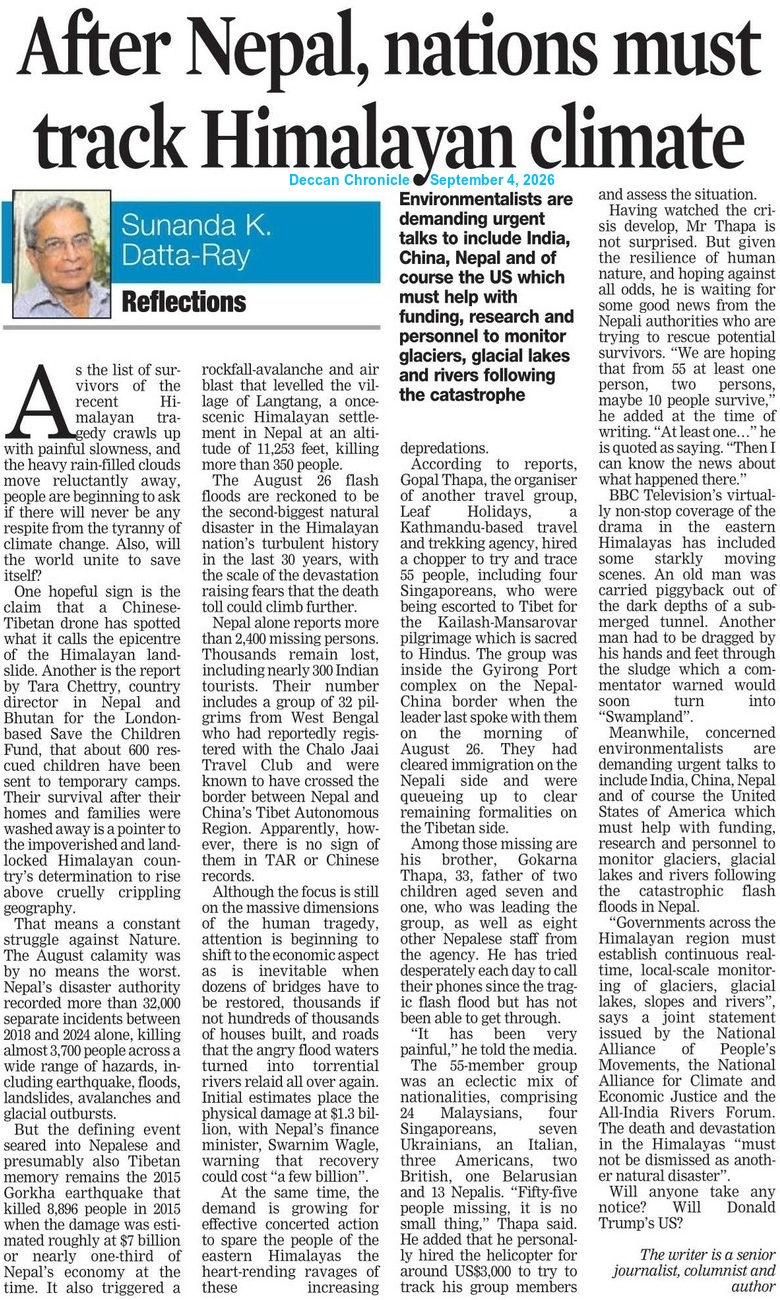
These human activities are largely responsible for the increasingly terrifying nature of the disasters occurring every year across Nepal, Sikkim, Bhutan and northern India. Hundreds of lives continue to pay the price for this foolishness, and will continue to do so in the future.
Meanwhile,

Boundless Ocean of Politics on Facebook
Boundless Ocean of Politics on Twitter
Boundless Ocean of Politics on Linkedin
Contact us: kousdas@gmail.com

 ISMC
ISMC
