

‘Russia Has Crossed The Rubicon’
Speaking at the International Peace Coalition (IPC) meeting of May 8, 2026, former UN Weapons Inspector William Scott Ritter Jr said that, based on the impression he had from a meeting at the Russian Embassy, Moscow crossed the Rubicon in respect to Europe, especially Germany. At the Victory Day celebration, the atmosphere was the most militant he had ever experienced from the Russians, stressed Ritter.
The theme of the private discussions was Unconditional surrender and the end of Nazism, and they drew a clear parallel between Nazi Germany and Ukraine. Russian Ambassador to the US Alexander Nikitich Darchiev, “in a speech which was certainly cleared with Moscow because it was a public address to a foreign audience, used words that are unlike anything I have heard a Russian diplomat say,” stated Ritter.
In Ritter’s view, the will to avoid any escalation, whih has characterised Russian policy so far, is gone because the Europeans have created a safe space in which long-range strike weapons can be produced and then handed over to the Ukrainians, who rapidly fire them at strategic targets inside Russia, using corridors over Poland and the Baltic states, and now the Caspian Sea and Kazakhstan.
Thus, it is now only a question of time before a war between Europe and Russia breaks out, believes Ritter. And when it does break out, Europe has no defence against Moscow. The Russians produce 1000 drones a day, and use half of them. The other half is stockpiled. It means that Russia can sustain weeks of drone attacks on Europe, against which Europe has no defence.
One should add to this assessment that another element – which worries not only Russia, but even Germany’s allies – is Berlin’s rearmament drive. International media have started to cover the growth of the German military industry, driven by Rheinmetall, a company which is rapidly replacing Volkswagen as the largest employer. Reports on automotive factories that are being converted to military production are read with concern, as is the German leaders’ intention to make his country the strongest military power in Europe. Above all, one year later, the much-touted defence-driven recovery of the economy has still not materialised.
On the contrary, official data published by the German Economy Ministry show that industrial production stagnated in the first quarter, despite the massive increase of the defence sector. Indeed, the 120,000 jobs lost by the manufacturing sector in 2025 cannot be compensated by the 5,000-6,000 jobs created by Rheinmetall and the other defence sector industries.
Therefore, Germany is at a crossroad: Either its leaders understand that a Military Keynesianism leads to a dead-end and move to a real recovery plan, or they might force Moscow to act preemptively in order to stop what they see as a resurgence of Nazism.
This article was first published in Executive Intelligence Review (EIR) Strategic Alert weekly newsletter (Volume 40, No. 20) on May 14, 2026.
Meanwhile,
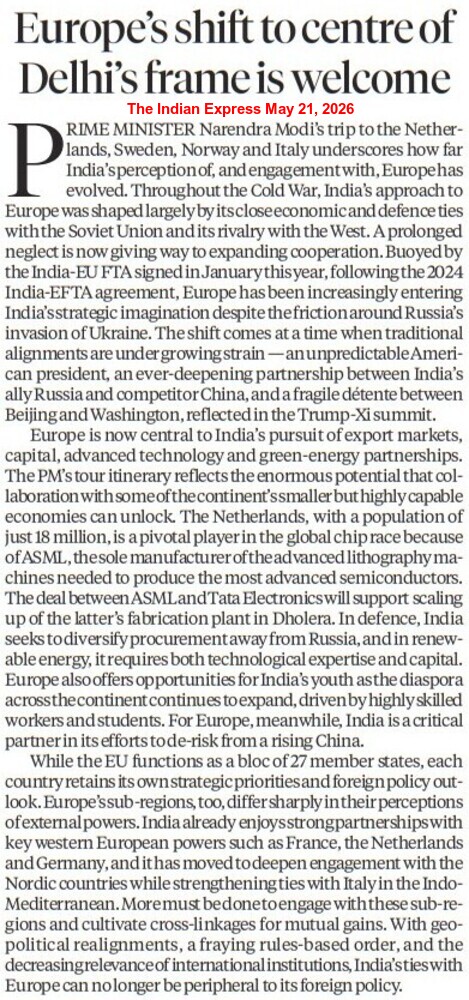
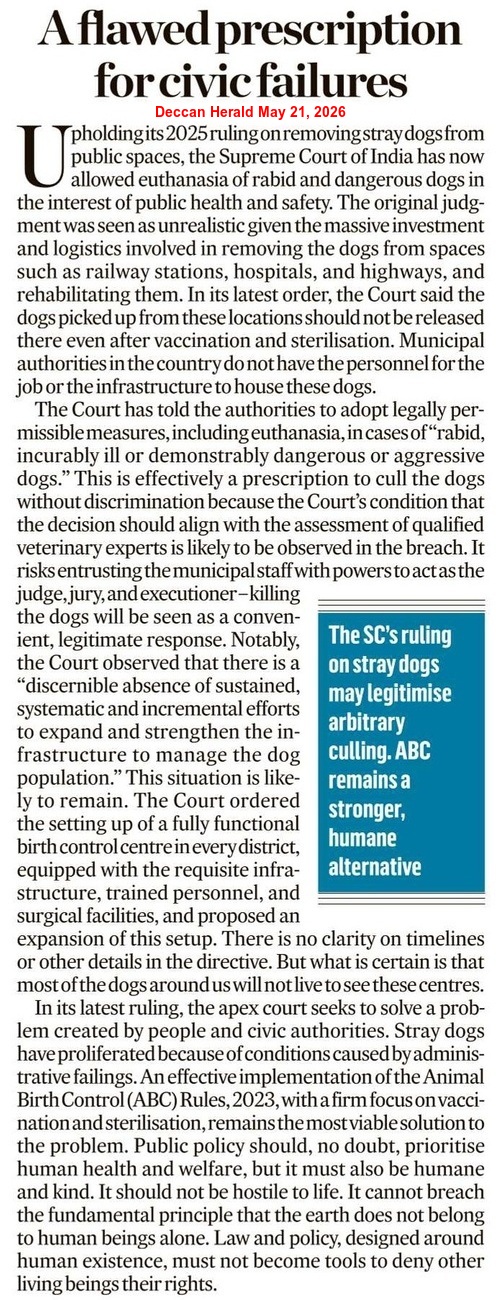
Unfortunately, in India…
Boundless Ocean of Politics on Facebook
Boundless Ocean of Politics on Twitter
Boundless Ocean of Politics on Linkedin
Contact us: kousdas@gmail.com

 ISMC
ISMC
