

Opportunity Beyond The Alliance
The geopolitical situation deteriorated in the Persian Gulf region on May 1, 2026, with the United Arab Emirates (UAE) officially leaving both the Organisation of the Petroleum Exporting Countries (OPEC) and OPEC+ alliances. It may be noted that OPEC+ is an alliance of the OPEC and 10 major non-OPEC oil-producing nations, most notably Russia. Formed in 2016, the 22-member coalition coordinates global crude oil production targets to stabilise energy markets and influence global oil prices. The departure (of the UAE) from the global oil cartel is a move with far-reaching consequences that would not only rearrange multiple global equations, but could potentially destabilise them, as well. The exit has already weakened Saudi dominance, apart from triggering short-term market volatility, which would reshape trade equations for major importers.
The UAE’s decision to withdraw from OPEC and OPEC+ is driven by a combination of economic, strategic and security factors. Earlier, Abu Dhabi sought greater independence in making production-related decisions, bypassing cartel limits. Initially, the Emirates set a goal to achieve a production capacity of five million barrels per day (BPD) by 2030. Later, the state-owned Abu Dhabi National Oil Company (ADNOC) decided to achieve the target by the end of 2027. The move could have increased the global supply of oil rapidly, which would certainly lower prices in the global market. However, the UAE was held to a strict baseline quota of roughly 3.4 million BPD under the OPEC+ system. According to Abu Dhabi, it is unjust.
Over the years, the West Asian nation invested heavily to increase its maximum production capacity. Remaining in the cartel meant keeping a significant portion of that infrastructure idle to comply with collective OPEC cuts, ultimately constraining revenue. Now, the UAE, with a more diversified economy, can balance its National Budget at significantly lower oil prices than many other producers, removing its incentive to throttle supply.
Moreover, the image of the UAE as a safe destination for trade, investment and tourism has been severely damaged because of the US-Iran conflict. The top political leadership in Abu Dhabi believes that increasing oil production would shift the landscape.
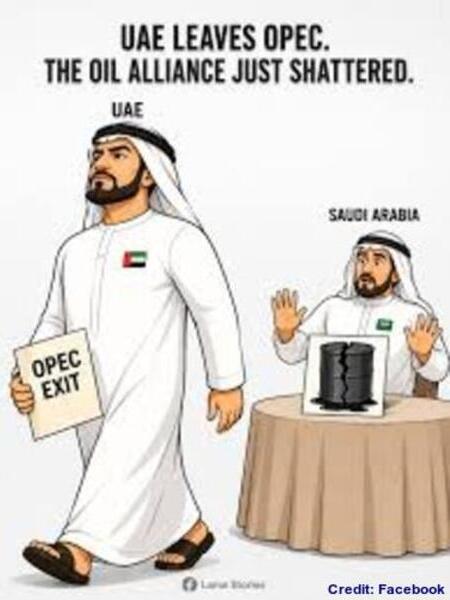
Notably, the conflict between Iran and the US has not only disrupted energy supplies, but also exposed deep divisions among Gulf countries. Relations between Abu Dhabi and Riyadh, the so-called leader of OPEC+, have deteriorated in recent times due to conflicts in Sudan, Somalia and Yemen.
Furthermore, the UAE has viewed Islamabad’s soft stance toward Tehran (acting as a mediator in the conflict) with deep disapproval particularly in light of the defence pact between Saudi Arabia and Pakistan, as well as Iran’s aggressive actions against the Arab nations. The Emirati leaders have stressed on the contradiction between Pakistan’s role as a mediator and its close defence ties with Saudi Arabia. They view Tehran’s aggressive actions against Gulf nations as a critical threat, making the softer, balancing approach of Islamabad highly contentious in the region.
At the same time, the UAE’s deepening alignment with the US and Israel has significantly sharpened lines of conflict in the Gulf, particularly by making the Federation of seven Emirates (Abu Dhabi, Dubai, Sharjah, Ajman, Umm al-Quwain, Ras al-Khaimah and Fujairah) a direct focal point of Iranian retaliation.
In fact, Saudi Arabia has started taking various initiatives to establish itself as a major regional player, apart from safeguarding the territorial integrity of Arab states. Riyadh no longer relies exclusively on traditional Western alliances. By adopting transactional sovereignty, it maintains strategic autonomy, balancing relations with the US, China and other global powers to maximise regional leverage. According to political analysts, the US-Iran conflict has prompted regional monarchies to carefully balance their historical security reliance on Washington DC against the immediate threat of Iranian retaliation.
Under these circumstances, the UAE’s historic withdrawal from OPEC and OPEC+ would fundamentally fracture Gulf unity and dismantle the decades-old pillar of regional solidarity. Rather than a mere technical dispute over production quotas, the exit has exposed profound, competing geopolitical visions between Abu Dhabi and Riyadh. A fragmented Arab World would also pave the way for the UAE’s ambitions to expand its regional dominance. Experts are of the opinion that the current turmoil in West Asia has created a strategic vacuum, which Abu Dhabi has aggressively leveraged through pragmatic diplomacy, vast sovereign wealth and a highly capable military in an attempt to cement its influence across the Middle East and the Horn of Africa.
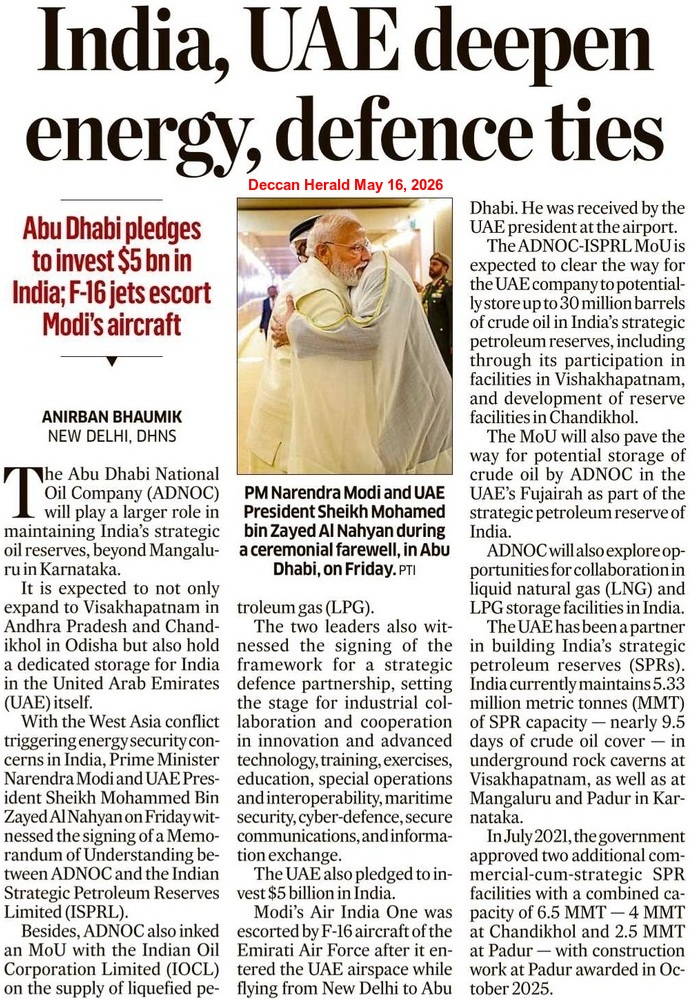
For India, the current scenario could present a strategic opportunity. As the world’s third-largest oil importer, the South Asian nation would benefit from increased supplies and competitive prices. In other words, proximity (with the UAE) holds a special utility.
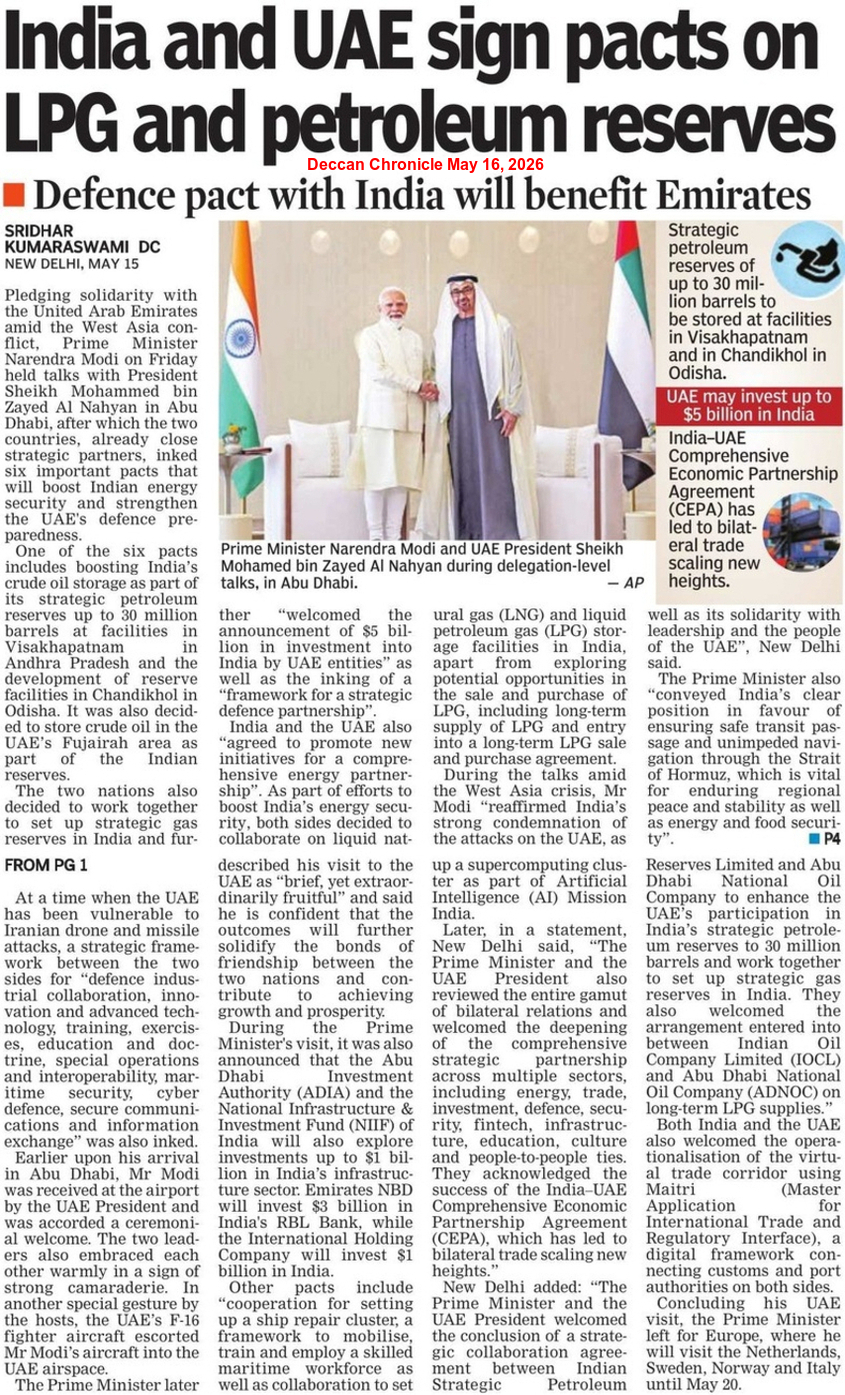
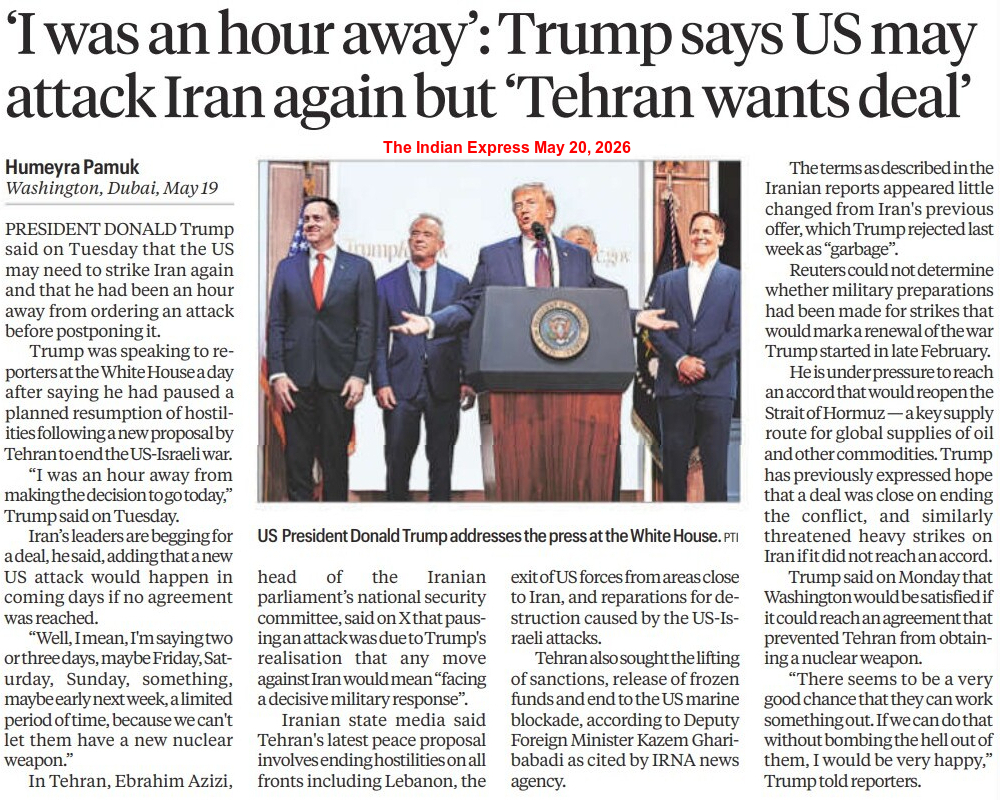
However, the risk factors should not be overlooked. The situation in the Strait of Hormuz could heighten oil price volatility in the coming days. Therefore, the prudent course of action would be to continue diversifying energy sources and to move rapidly towards eco-friendly fuels, alongside finalising long-term supply agreements. This balanced approach would help India to safeguard its immediate economic and energy security while driving the critical low-carbon innovations required for long-term sustainability.
Meanwhile,
Unfortunately, in India…



Boundless Ocean of Politics on Facebook
Boundless Ocean of Politics on Twitter
Boundless Ocean of Politics on Linkedin
Contact us: kousdas@gmail.com

 ISMC
ISMC
