

‘You Started This Mess, You Deal With It’
World Leaders To Trump: ‘You Started This Mess – You Deal With It’
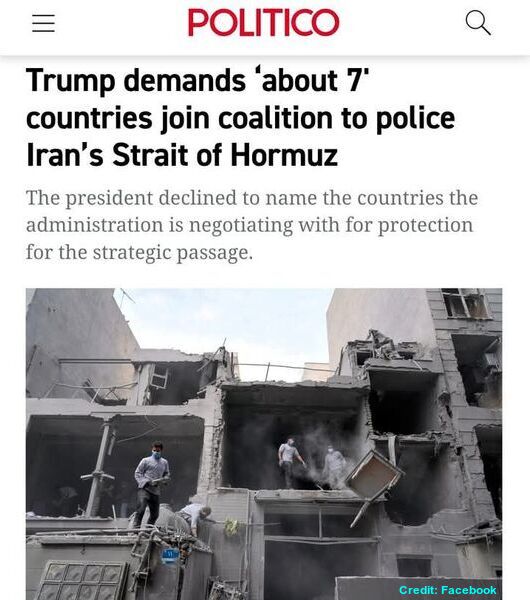
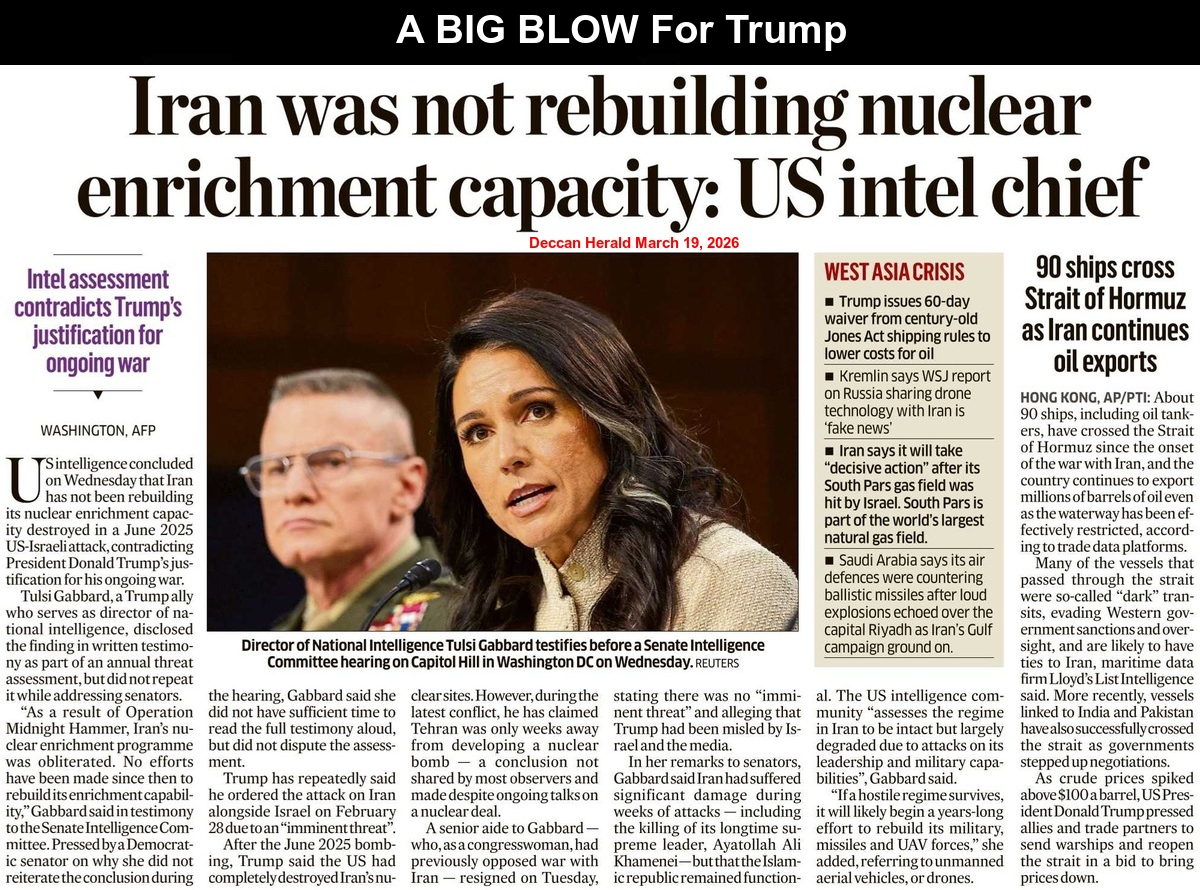
President Donald John Trump spent days bragging that the US had already “won” his disastrous war and telling allies: “We didn’t need them.” Now that the consequences of his reckless decisions are crashing down, he is suddenly begging the rest of the world to bail him out. There’s just one problem: They are not interested.
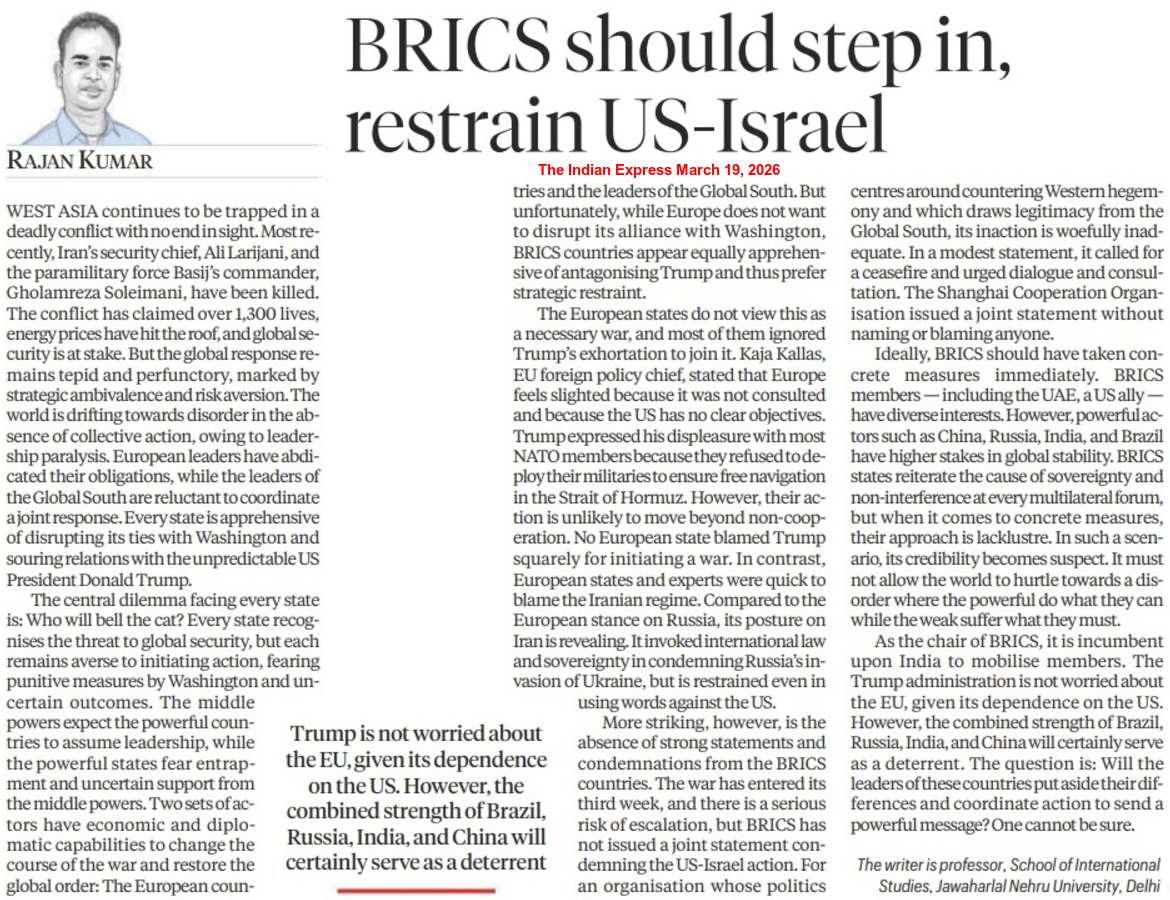
One after another, world leaders are making it clear they are not rushing to rescue President Trump’s failing operation in the Strait of Hormuz. Trump does not want this information out there, so be sure to spread it far and wide.
Japan’s Prime Minister Sanae Takaichi shut the idea down directly, stressing: “We have not made any decisions whatsoever about dispatching escort ships. We are continuing to examine what Japan can do independently and what can be done within the legal framework.” Australia has also made it clear that they are staying out. “We won’t be sending a ship to the Strait of Hormuz. We know how incredibly important that is, but that is not something that we have been asked or that we are contributing to,” said Catherine Fiona King, the Minister for Infrastructure, Transport, Regional Development and Local Government. South Korea has signalled no commitment either, saying: “We will communicate closely with the US regarding this matter and make a decision after careful review.”
Even Britain, one of the US’ closest allies, is distancing itself from Trump’s war. Prime Minister Sir Keir Rodney Starmer said that he would not be “drawn into the wider Iran War” while discussing alternative approaches to shipping security.
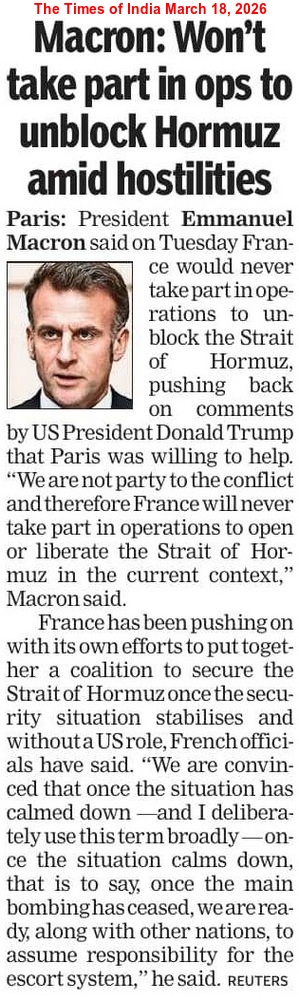
Across Europe, the response has been even colder. Boris Pistorius, the Defence Minister of Germany, delivered perhaps the most blunt response. He stated: “What does Trump expect from a handful of European frigates that the powerful US Navy cannot do? This is not our war; we have not started it.” Italy has claimed that diplomacy is the answer, while Greece has announced that it would not participate in military operations. The European Union (EU) is discussing its existing naval mission, but is not expected to expand it to the Strait.
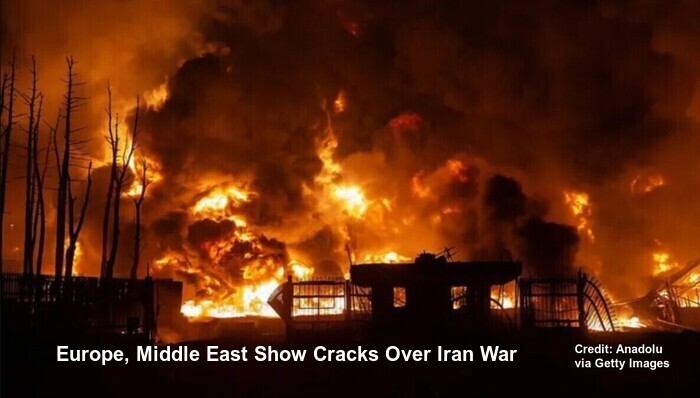
The US President started this reckless war, alienated allies for years, bragged he did not need anyone’s help, and now that the situation is spiralling, he is begging the same countries he insulted to rescue him. And, they are saying no.
This is what happens when a President spends years insulting allies, threatening NATO partners, and bragging that the US can go it alone. When the crisis hits, the relationships that used to form the backbone of US global leadership are gone. Trump broke them. Now, he wants them back – right when he needs help. The world is not buying it.
Putin Warns Starmer
Russian President Vladimir Vladimirovich Putin has issued a strong warning following reports that Britain deployed Eurofighter Typhoon fighter jets in Qatar. The Russian strongman told British Prime Minister Starmer: “Think carefully before you act! Every action has consequences.“
President Putin issued the statement after Prime Minister Starmer supported stronger military cooperation in the region. The British Prime Minister previously announced that he would send four additional Typhoon jets to join its squadron in Qatar in response to the growing conflict in West Asia. As expected, Russia considers the move as increasing Western military activity in the region. Analysts are of the opinion that the situation reflects broader geopolitical tensions, involving Europe, the Middle East and global security alliances.
‘Arab Leaders Fear Trump More Than They Fear Allah’
Sergey Viktorovich Lavrov, the Foreign Minister of Russia, has strongly criticised the Arab leaders for backing US military actions against Iran. He issued a statement, mentioning: “Many Arab leaders seem to fear Donald Trump more than they fear Allah.” The statement reflects a complex sentiment regarding the influence of US foreign policy on regional leadership.
The perspective suggests that the pragmatic realities of international relations, military alliances and economic stability often dictate the actions of sovereign states. Under the current administration, the maximum pressure or highly transactional style of diplomacy has created an environment where regional leaders must navigate high-stakes decisions that directly impact their respective national security and regime longevity. For many, the immediate political or economic consequences of opposing US interests are perceived as a more tangible, pressing threat than traditional religious or ideological mandates.
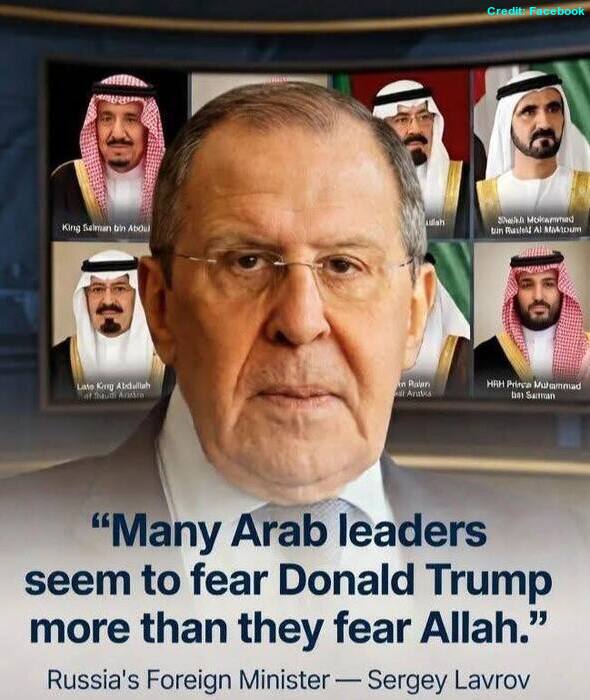
Ultimately, it underscores the tension between spiritual values and the cold, hard calculations of global realpolitik.
Nordic Countries To Arrest Netanyahu
The diplomatic isolation of Israeli Prime Minister Benjamin ‘Bibi’ Netanyahu has reached a critical peak as all five Nordic countries – Denmark, Finland, Iceland, Norway and Sweden – have collectively announced that they would arrest him if he enters their land or airspace. The unprecedented move effectively serves a major blow to the trans-Atlantic flight path, with reports indicating that there are “no airspaces available” for the Israeli Prime Minister to reach New York.
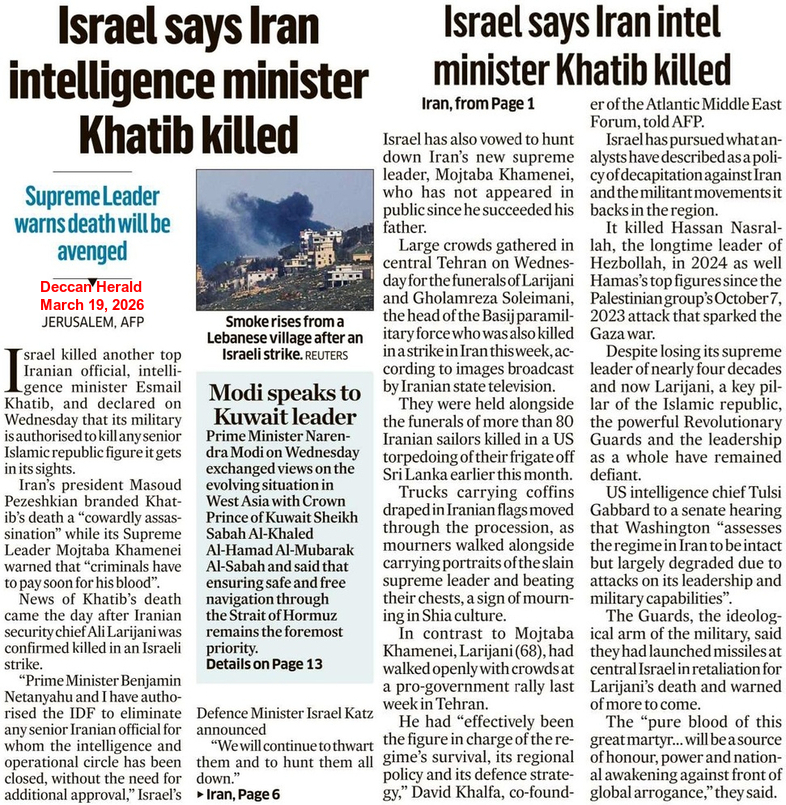
This legal blockade follows intensifying global pressure and a series of high-stakes military escalations in the Middle East. While Israel has vowed to target “every” new leader appointed by Iran, it now faces severe judicial pushback from traditional European partners. The Nordic announcement coincides with Sweden’s broader national shift toward Total Defence, which recently included allocating USD 150 million to local communities for emergency stockpiling in case of full-scale war.
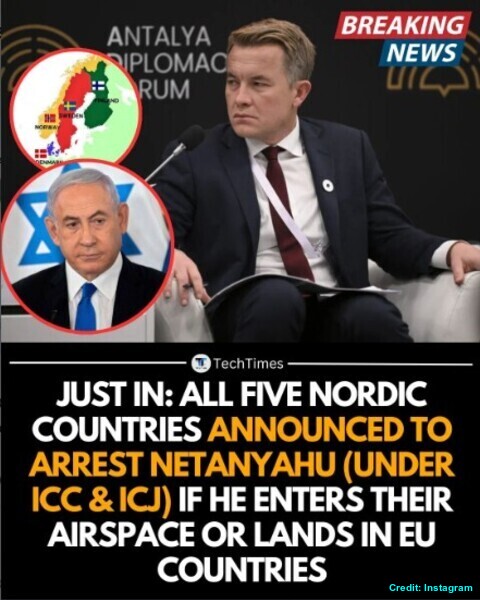
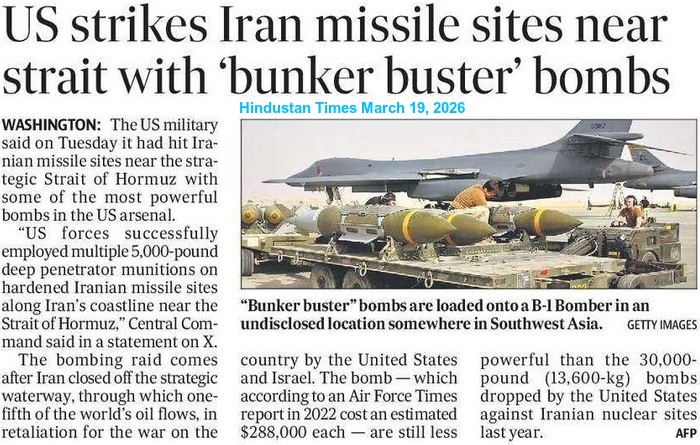
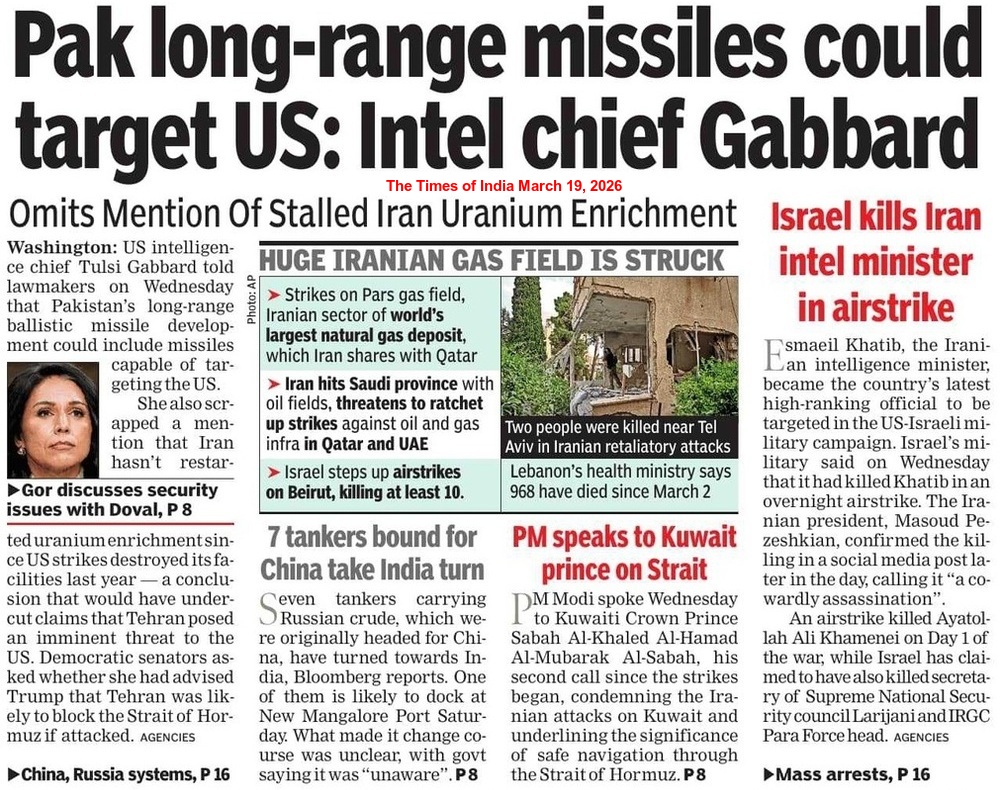
The grounding of Netanyahu’s diplomatic travel comes as the region is already reeling from the “worst global energy crisis since the 1970s” and the launch of massive missile waves under Iran’s new Supreme Leader, Ayatollah Mojtaba Hosseini Khamenei. Simultaneously, the Pentagon has declared that US forces have been “unleashed” to complete their missions, highlighting a widening rift between American military objectives and European legal stances.
Historically, such an arrest threat against a sitting Head of State by an entire Regional Bloc is virtually unheard of and signals a total breakdown in standard diplomatic immunity. With major powers, like China, already calling for Israel’s disarmament to prevent a Third World War, the move by the Nordic nations further complicates any path toward a negotiated ceasefire.
As the global energy market struggles with the closure of the Strait of Hormuz and skyrocketing Russian oil profits, the physical restriction of top Israeli leadership adds a new volatile layer to an already fractured international order.
When Larijani Made Dramatic Allegation
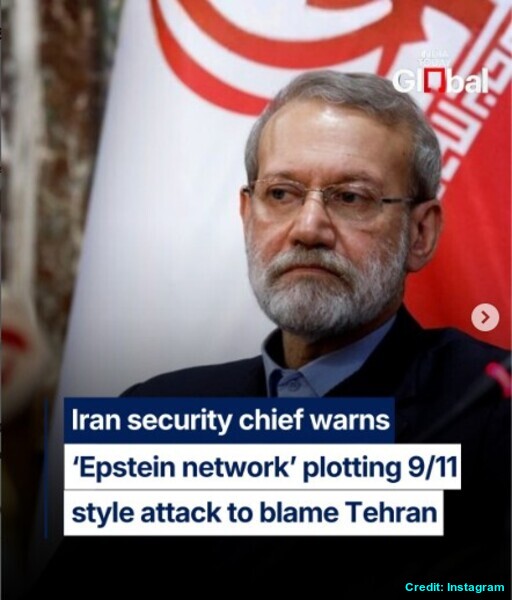
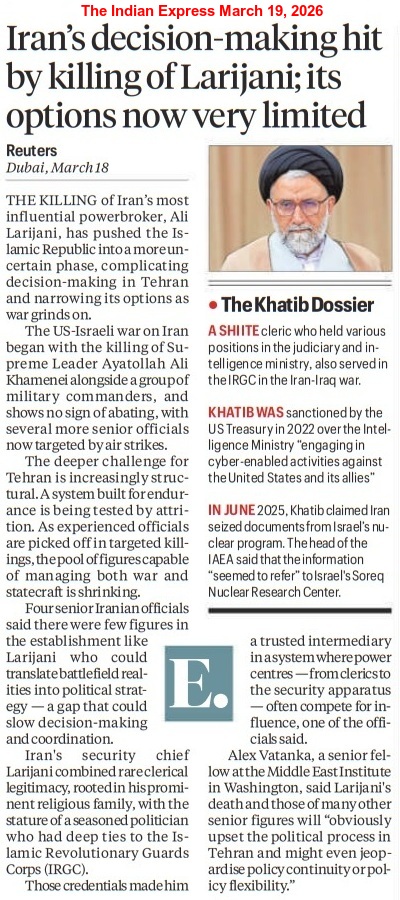
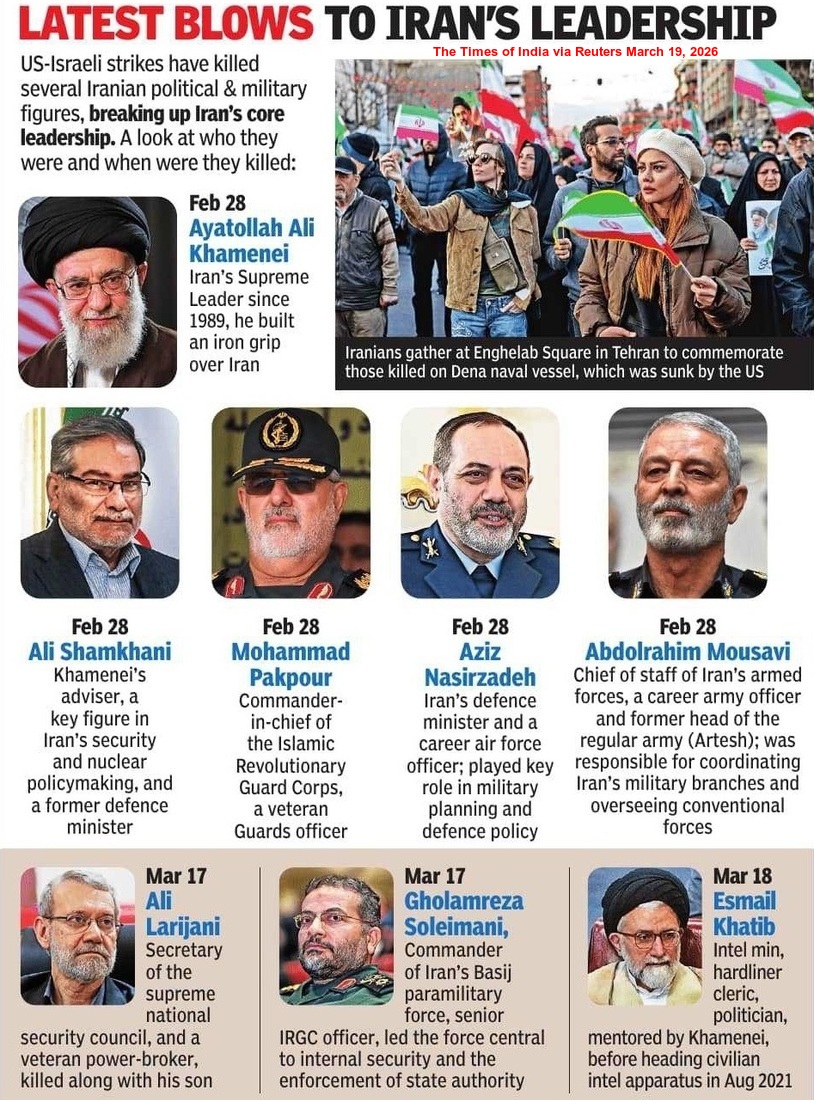
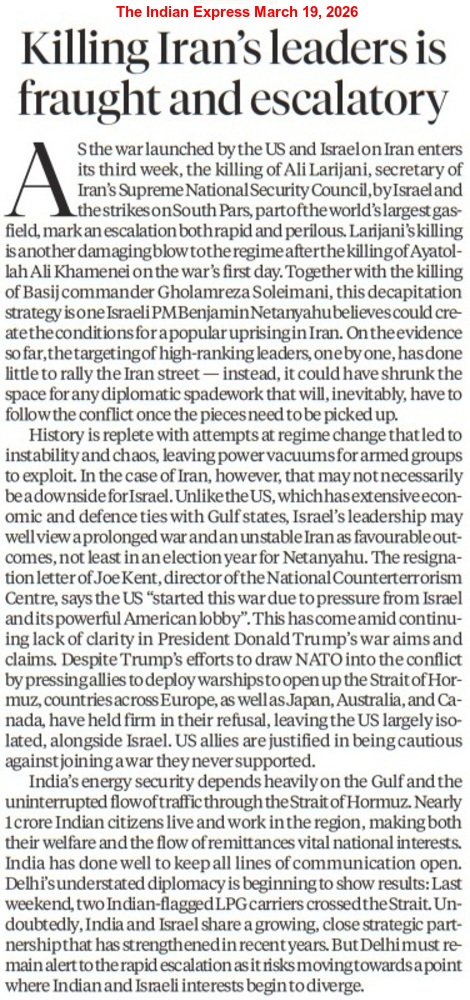
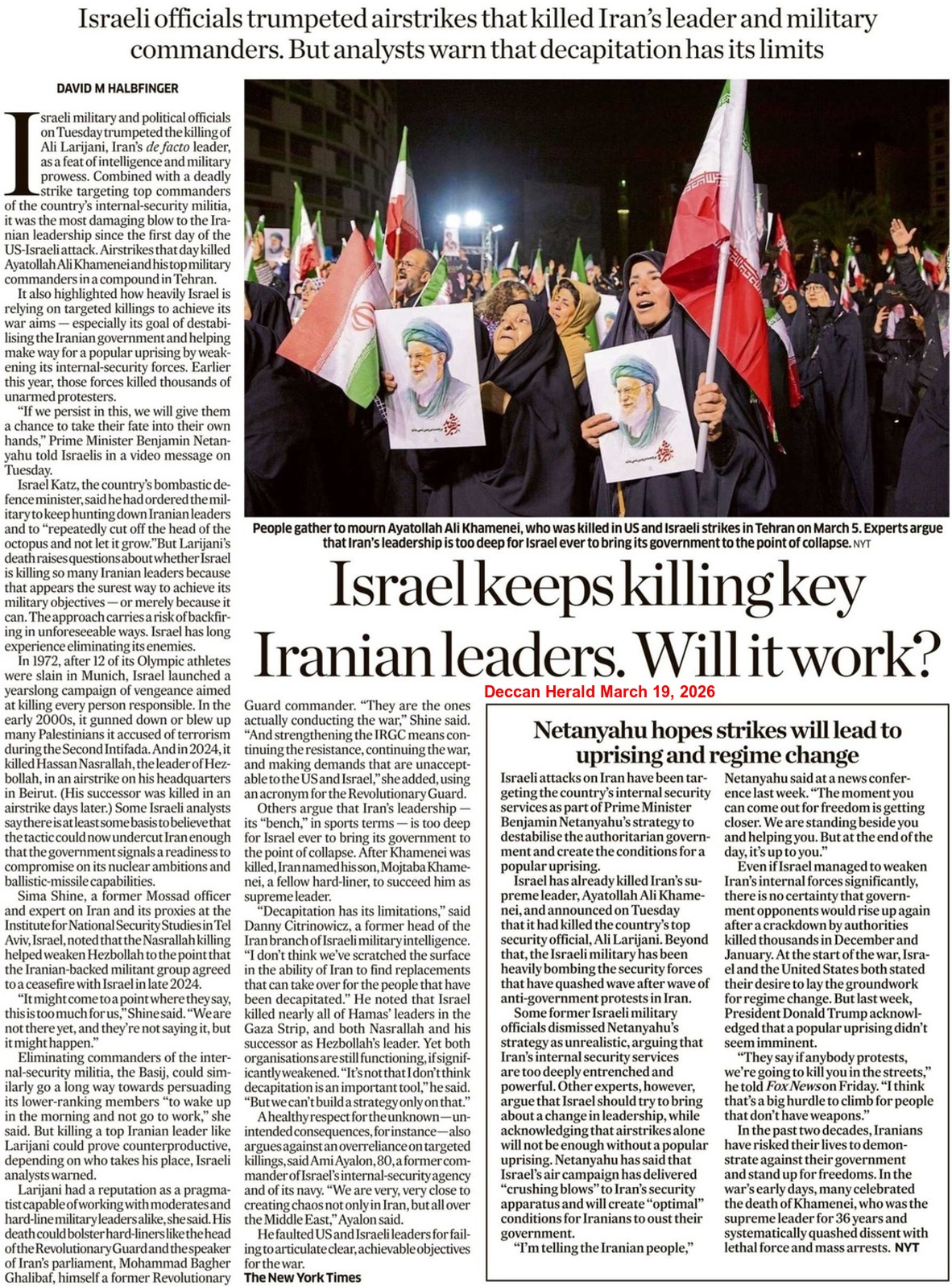
Ali Ardashir Larijani, the Secretary of Iran’s Supreme National Security Council who was killed in an Israeli airstrike on March 17, 2026, recently made a dramatic allegation, claiming that associates linked to the network of Jeffrey Edward Epstein were planning to stage a 9/11-like incident in order to blame Iran.
In a statement, Larijani mentioned: “I have heard that the remaining members of Epstein’s network have devised a conspiracy to create an incident similar to 9/11 and blame Iran for it. Iran fundamentally opposes such terrorist schemes and has no war with the American people. We are defending our country against an aggression launched by the US and Israel. Iran stands tall in doing so in order to teach the aggressors a lesson.“
Saudi Blasts Israel For Pushing Region Towards Destruction
In a sharp escalation of diplomatic rhetoric, Prince Faisal bin Farhan bin Abdullah, the Foreign Minister of Saudi Arabia, has issued a blistering condemnation of Israel, holding the Jewish State responsible for long-term “killing and destruction” across the Middle East. His comments, focussing specifically on the impact of military actions in Gaza, mark a significant departure from previous efforts to find common ground in regional security.
The minister’s statement directly accuses Israel of being the primary driver of regional instability. This hardening of the Saudi position comes at a critical juncture in 2026, as the conflict with Iran continues to stress regional alliances and disrupt global energy markets. By publicly aligning with the international outcry over humanitarian conditions in Gaza, Riyadh is signalling that its patience with current Israeli military strategy has reached its limit.
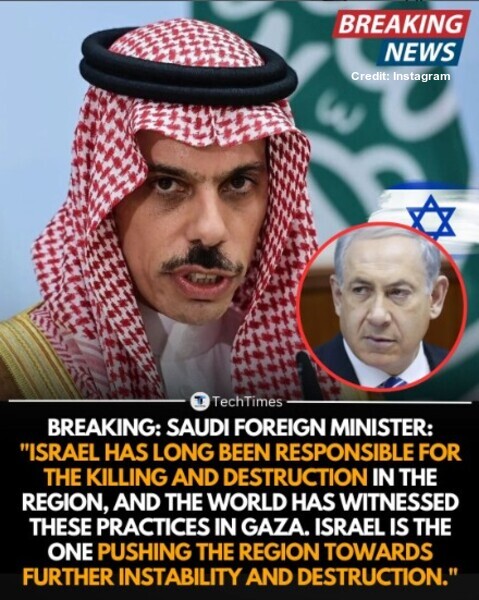
This diplomatic broadside follows reports of massive Israeli personnel losses and significant threats to its strategic scientific community during the recent waves of Iranian retaliation. Analysts suggest that Saudi Arabia may be distancing itself from a direct coalition to avoid being drawn into what the Foreign Minister describes as a cycle of “further instability and destruction“.
The global community is closely monitoring whether this verbal condemnation would be followed by a formal cooling of diplomatic or security cooperation. For a region already on the brink of a total energy crisis, the public rift between two of its most powerful actors adds a dangerous layer of unpredictability to the 2026 landscape.
With inputs from MeidasTouch, Tech Times & India Today.
Meanwhile,
Boundless Ocean of Politics on Facebook
Boundless Ocean of Politics on Twitter
Boundless Ocean of Politics on Linkedin
Contact us: kousdas@gmail.com

 ISMC
ISMC Boundless Ocean Of Politics