

Trapped…
Unready, Unfunded & Alone
Operation Epic Fury: What the Networks are Not Telling You
By Mark A Shryock
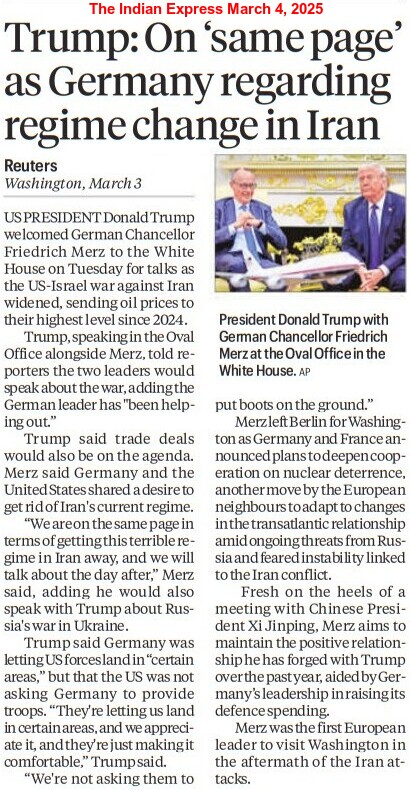
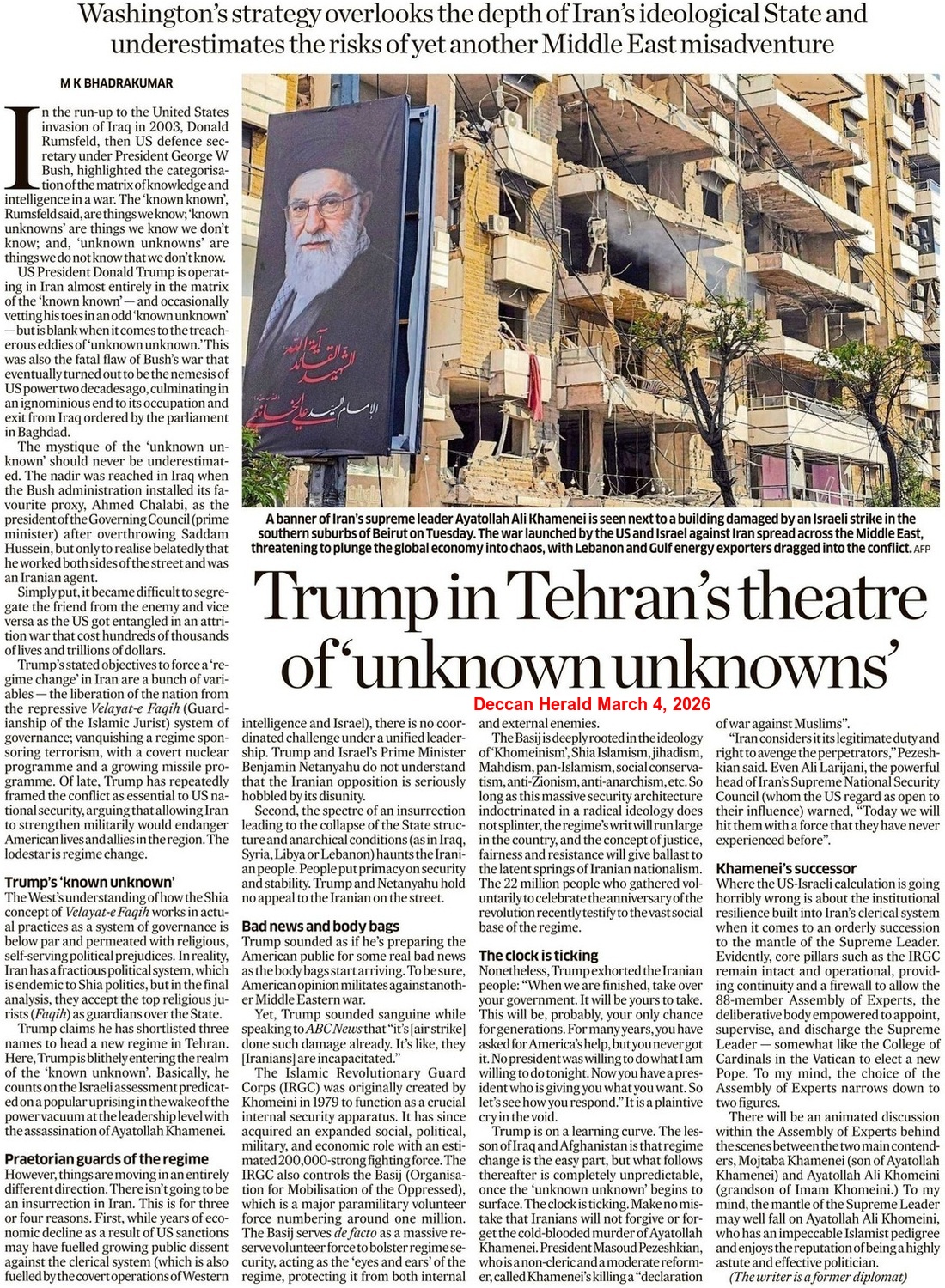
While the mainstream networks broadcast Pentagon-approved footage of precision air strikes and degraded capabilities, the raw data coming out of the theatre tells a completely different story. What is unfolding inside Iran right now is not a war the US is winning. It is a trap – financial, biological and strategic – and we are walking directly into it.
To understand why Iran will never surrender, why they are hitting airports and energy terminals and moving toward the desalination plants, why they are pulling Hezbollah, the Houthis and every militia they have left into this fight simultaneously, one has to understand what happened in the 24 hours before the first bomb fell.
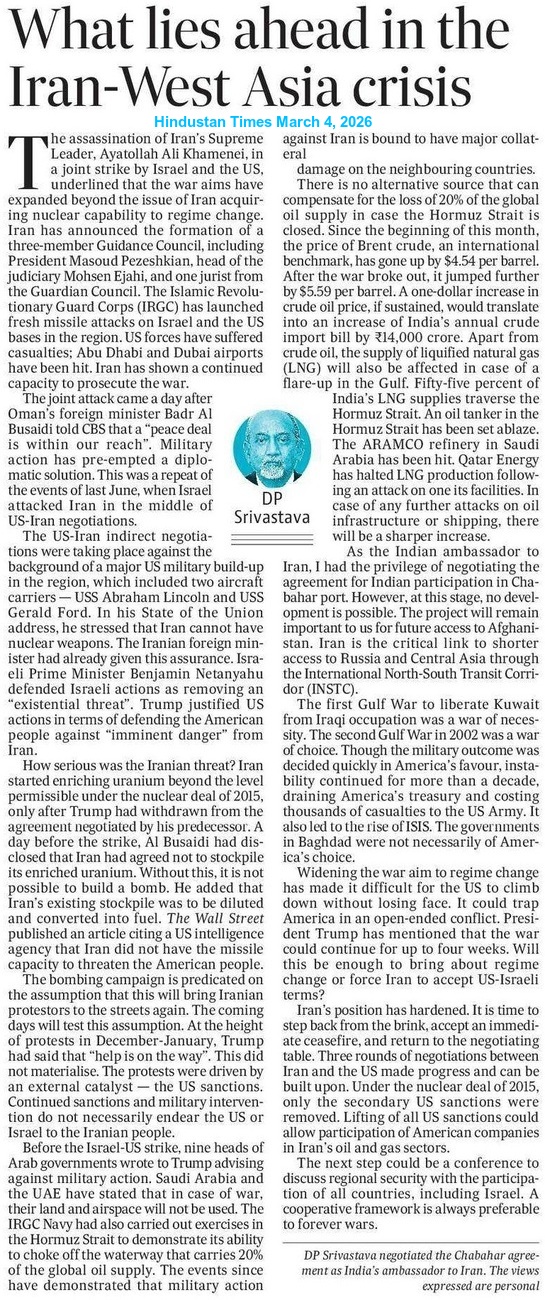
On the morning of February 27, 2026 – a day before Operation Epic Fury launched, Oman’s Foreign Minister Badr Al-Busaidi sat down with CBS News anchor Margaret Brennan on Face the Nation and described in specific detail what Iran had just agreed to at the negotiating table in Geneva. Not vague promises. Specific, verifiable, historic concessions. Iran agreed to zero stockpiling of enriched uranium, meaning no accumulated material that could ever be converted into a weapon. Iran agreed to full, unrestricted access for International Atomic Energy Agency (IAEA) inspectors at every nuclear site. The Islamic Republic also agreed to irreversibly downgrade its existing stockpiles to the lowest possible level, converting them to fuel that could never be weaponised again. Al-Busaidi told Brennan plainly: “A peace deal is within our reach.” He said that technical talks were already scheduled for Vienna the following Monday. A fourth round of negotiations with Steve Witkoff and Jared Kushner was being arranged for the week after that. The channel was open. The framework was on the table. The deal was days away.
Trita Parsi of the Quincy Institute for Responsible Statecraft noted that for Oman, a nation known for absolute diplomatic caution, to go public on American national television was itself extraordinary. Oman does not have a grandstand. Al-Busaidi going on Face the Nation was a message, not a press appearance. The message was: Diplomacy is working. Give it the space it needs.
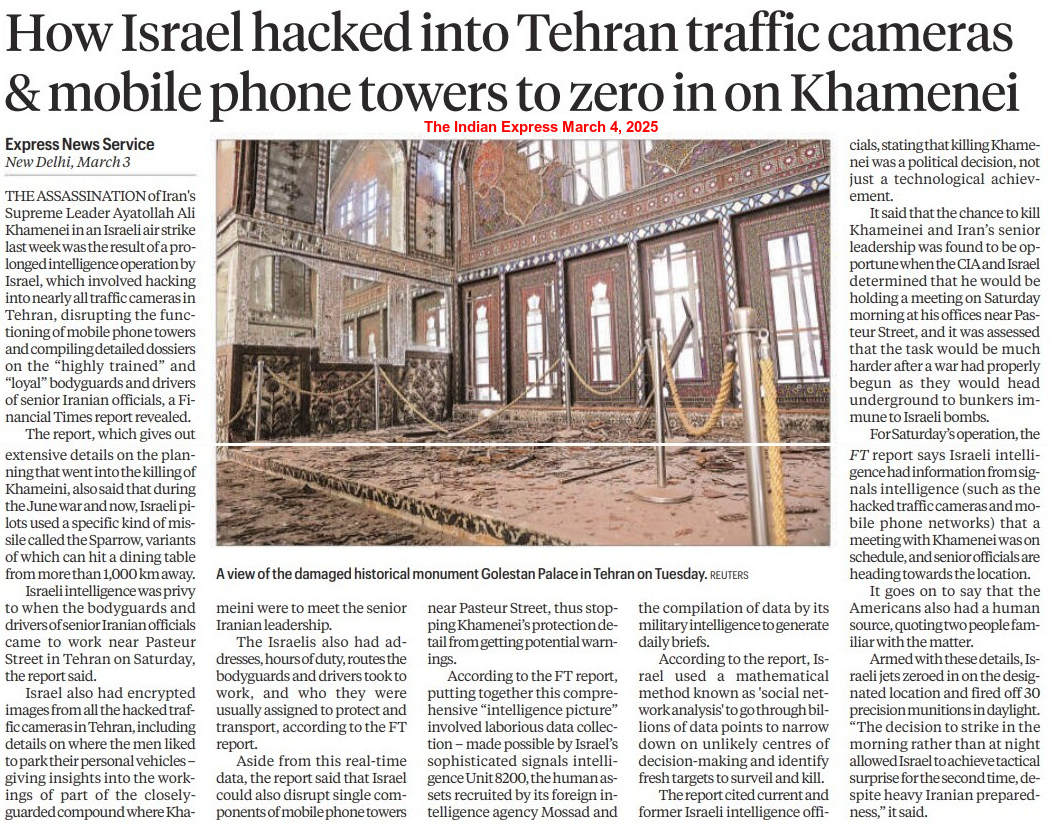
Within hours of that broadcast, the bombs fell anyway. No address to the US Congress. No public intelligence briefing. No explanation of why the deal on the table was insufficient. A post on Truth Social, and then 200 Tomahawk missiles. Joshua Scheer, writing for ScheerPost on February 28, 2026, documented the timeline precisely: The central justification for war – which Iran refused to give up its nuclear programme – was being diplomatically neutralised in real time. What was preempted was not a nuclear breakout. It was a breakthrough.
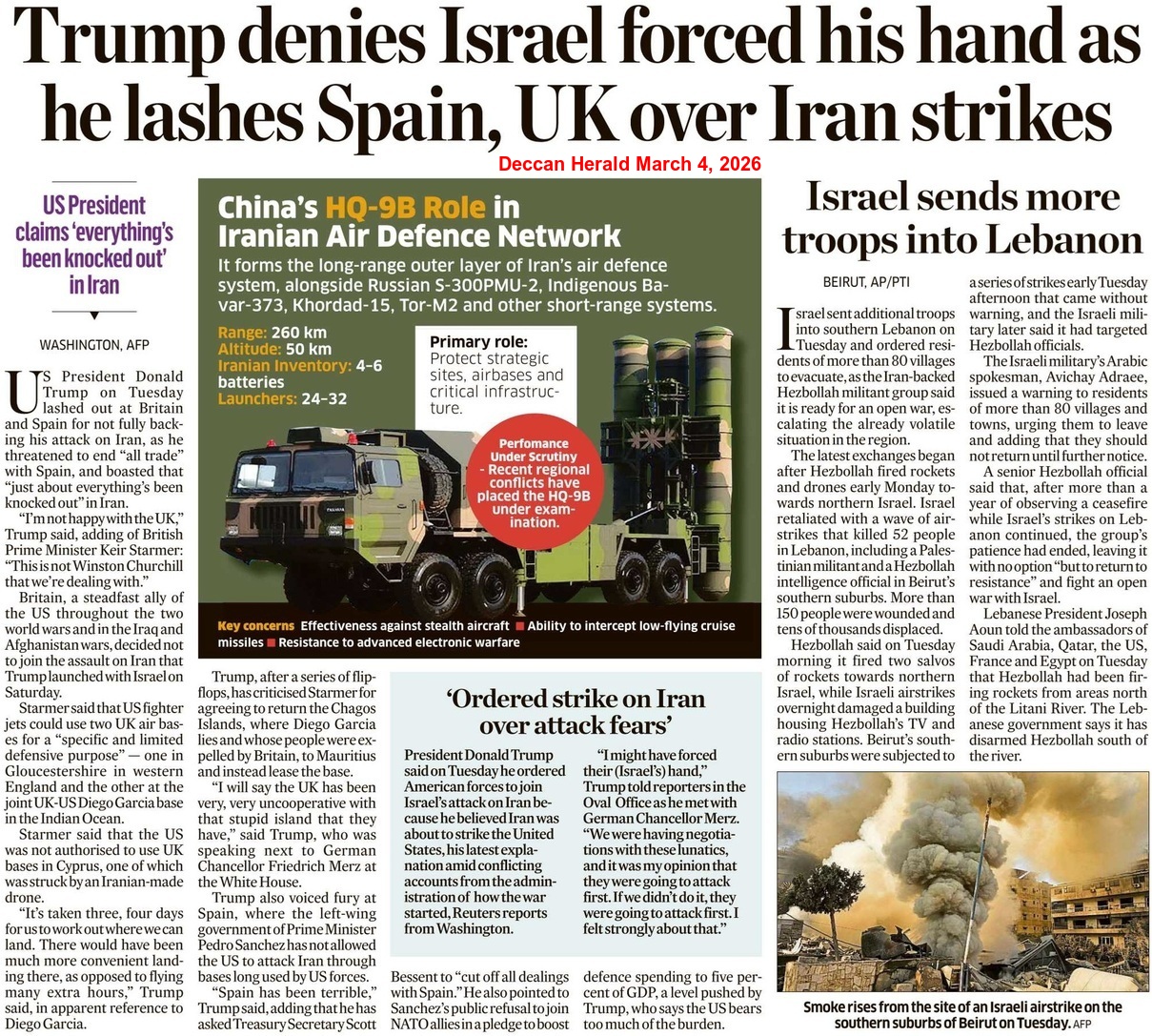
There is something else the networks are not telling you. According to Wikipedia’s documented timeline of the 2025-2026 Iran-United States negotiations, while American diplomats were sitting across from Iranian diplomats in Geneva, the USS Gerald R Ford carrier group was already sailing toward the Iranian coast. The military buildup was happening simultaneously with the peace talks. Iran knew it. Their Foreign Minister Abbas Araghchi said publicly that even if Ayatollah Ali Hosseini Khamenei was killed, the government would not fall. “They can eliminate me, eliminate anyone. If they hit us, a hundred more like us will come up to run the country,” he stressed. Iranian President Masoud Pezeshkian issued a similar statement the same week. They said it because they already knew what was coming.
The US sat at the negotiating table, accepted Iran’s most significant nuclear concessions in history, watched Tehran agree to zero stockpiling and full IAEA verification – and then killed their Supreme Leader and launched the largest air campaign in the Middle East in a generation. That is the context for everything happening right now. That is why Iran is not seeking a ceasefire. That is why they are targeting the infrastructure that keeps the entire Gulf region alive. That is why they pulled every proxy they have left into this fight at the same moment. A regime that was willing to make a deal, watched the other side launch a war anyway, and lost its Supreme Leader in the opening hours is not a regime that believes surrender leads anywhere, but to a grave. They have nothing left to negotiate with and nothing left to lose. What comes next from Iran will not be de-escalation. It will be everything they have left.
One Man Saw All Of This Coming In 2024
Before a single bomb fell, before Donald John Trump was even elected to his second term, a Beijing-based Chinese-Canadian historian, named Jiang Xueqin, sat down in front of a camera on May 29, 2024 and mapped out exactly what you are watching right now.
Jiang Xueqin is not a cable news pundit. He is a Yale-educated historian, educator and geopolitical theorist who runs a YouTube channel, called Predictive History, where he applies structural historical analysis and Game Theory to forecast major world events. His May 2024 lecture was titled Why America Will Invade Iran and Lose. When he recorded it, Joe Biden was still President. Trump had not yet survived two assassination attempts. The lecture got almost no views. Now, as reported by Newsweek, his channel has gained over 100,000 subscribers in three days as reality catches up to everything he said.
In that lecture, Jiang made three specific predictions. He predicted that Trump would win the 2024 Presidential Election, the US would go to war with Iran and would lose that war. He also predicted that the defeat would permanently change the global order.
What Jiang understood that almost no analyst was willing to say out loud. It is that Iran is not fighting to survive this war. Iran is fighting to use this war. According to Jiang’s Game Theory breakdown, documented across multiple analyses now cited by Newsweek, Grunge and The Online Citizen, Iran sees the conflict as a calculated opportunity – to unify its fractured population under a nationalist banner, to expel US influence from the region permanently and to bleed the US financially and militarily until Washington DC has no choice, but to leave. Iran does not need to win on the battlefield. The Islamic Republic needs the US to stay long enough that the cost of staying becomes politically and financially impossible.
That is why they are willing to absorb the air campaign, have activated every proxy simultaneously and are moving toward the desalination plants. Iran is not trying to defeat the US military, but to trap it.
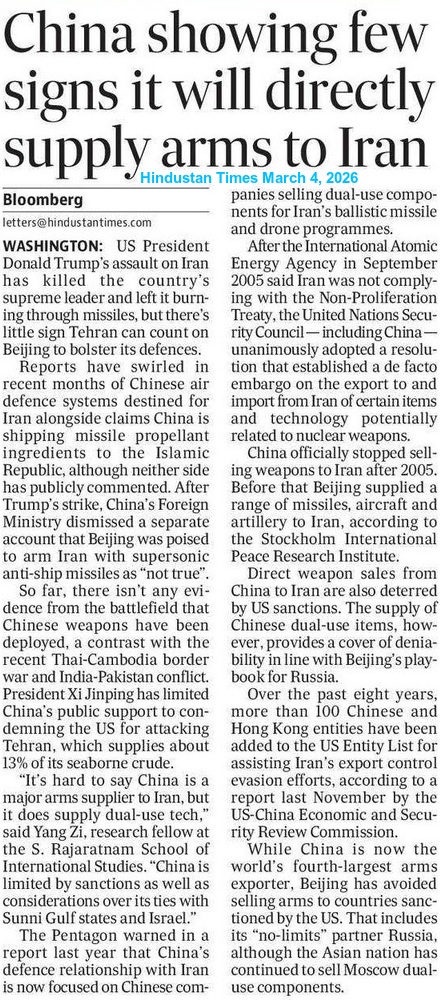
Jiang’s description of what a ground war in Iran would look like is chilling to read at Hour 72. He told his students that once US troops entered Iran’s mountainous terrain, they would not be soldiers. They would be hostages. “To win a war,” Jiang said, “you need to avoid encirclement, mass your forces and protect your supply lines. Iran’s geography makes all of this nearly impossible.” He estimated that controlling Iran would require at least three to four million soldiers, a number he called militarily and politically impossible for the US military that is already reliant on outsourced manufacturing and struggling with recruitment.
However, the piece of Jiang’s analysis that nobody in mainstream media is discussing is what he predicted would happen inside the US when the American soldiers start dying at scale in Iran. “The moment that Americans start dying in the Middle East,” Jiang told his students, “The moment they institute a draft, it will create chaos in America. People are going to stage protests, people are going to revolt.” He predicted that the resulting domestic division – between those defending the old American empire and those rallying behind Trump’s America First – would push the country toward civil conflict. And he also predicted that Trump, facing an unwinnable foreign war and domestic chaos simultaneously, would use both as justification to consolidate power and pursue a third term. A failed war, in Jiang’s analysis, does not end Trump. It gives him exactly the emergency he needs to make himself permanent.
Jiang recorded a follow-up video on June 22, 2025, the day after Trump launched the initial bombing campaign, and reaffirmed every prediction. “All three players – Trump, Israel and Iran – want the US to invade,” he said. Each for different reasons. Each with a different endgame. But all three have pulled in the same direction. That is the trap. And, we are 72 hours into walking into it.
The Math Of Bankruptcy
Iran is not trying to defeat the US Air Force in a conventional fight. They are executing a mathematical equation designed to drain the US Treasury dry, and the numbers prove it is working.
Iran is launching waves of LUCAS drones. Operation Epic Fury marks the first combat use of the Low-cost Unmanned Combat Attack System, according to US Central Command itself. A single LUCAS drone costs approximately USD 35,000 to build. That is roughly the price of a used Honda Civic. To shoot that cheap piece of metal out of the sky, US Central Command – the unified military command overseeing all American operations in the Middle East – is authorising the launch of defensive missiles that cost as much as a fully equipped hospital. The Centre for Strategic and International Studies, a prominent national security think-tank that tracks military expenditures and weapons procurement, documents the exact cost of that shield: Every THAAD interceptor fired costs between USD 12.7 million and USD 15.5 million. Every SM-3 missile costs up to USD 27.9 million. Even the standard Patriot PAC-3 MSE requires between USD 4 million and USD 12 million every time it leaves the tube.
Iran is throwing pennies. The US is burning stacks of hundred-dollar bills to block them. In just the first 40 hours of this conflict, US Central Command‘s own expenditure estimates show the military burned through between USD 6 billion and USD 10 billion. The offensive operations are accelerating that drain. Procurement data confirms the coalition launched over 200 Tomahawk cruise missiles at roughly USD 2 million each. B-2 stealth bombers are flying around the clock, and according to Air Force budget outlines, they cost American taxpayers between USD 150,000 and USD 203,000 for every single hour in the air. The US Navy is paying USD 13 million every day just to keep two carrier groups – the USS Abraham Lincoln and the USS Gerald R Ford – positioned in the region. Total daily theatre operations are hitting USD 40 million every 24 hours. The system is bleeding out by design.
Iran Wants a Ground War & They are Engineering One by Taking the Water
Draining the treasury is only the bait. The real objective – documented by defence analysts, regional experts and the evidence of where Iran is actually aiming its missiles – is to force US soldiers into the dirt. And the weapon they are using to do it is water.
Understand what Iran is doing and why. Iran’s Parliamentary Speaker Mohammad Bagher Ghalibaf said in a televised address after Khamenei’s killing: “You have crossed our red line and must pay the price. We will deliver such devastating blows that you yourselves will be driven to beg.” This is not bluster from a regime that believes it can win a conventional fight. This is the declaration of a government that knows it is falling and has decided to take as much of the region down with it as possible. Al Jazeera, citing multiple defence analysts, has reported that Iran’s doctrine has formally shifted since June 2025 toward what military specialists are calling Asymmetric Endurance, accepting the initial damage, preserving strike capability and using every remaining asset not to defeat the US militarily, but to force it into a ground commitment it cannot sustain financially or politically. The strategy is not to win, but to bleed.
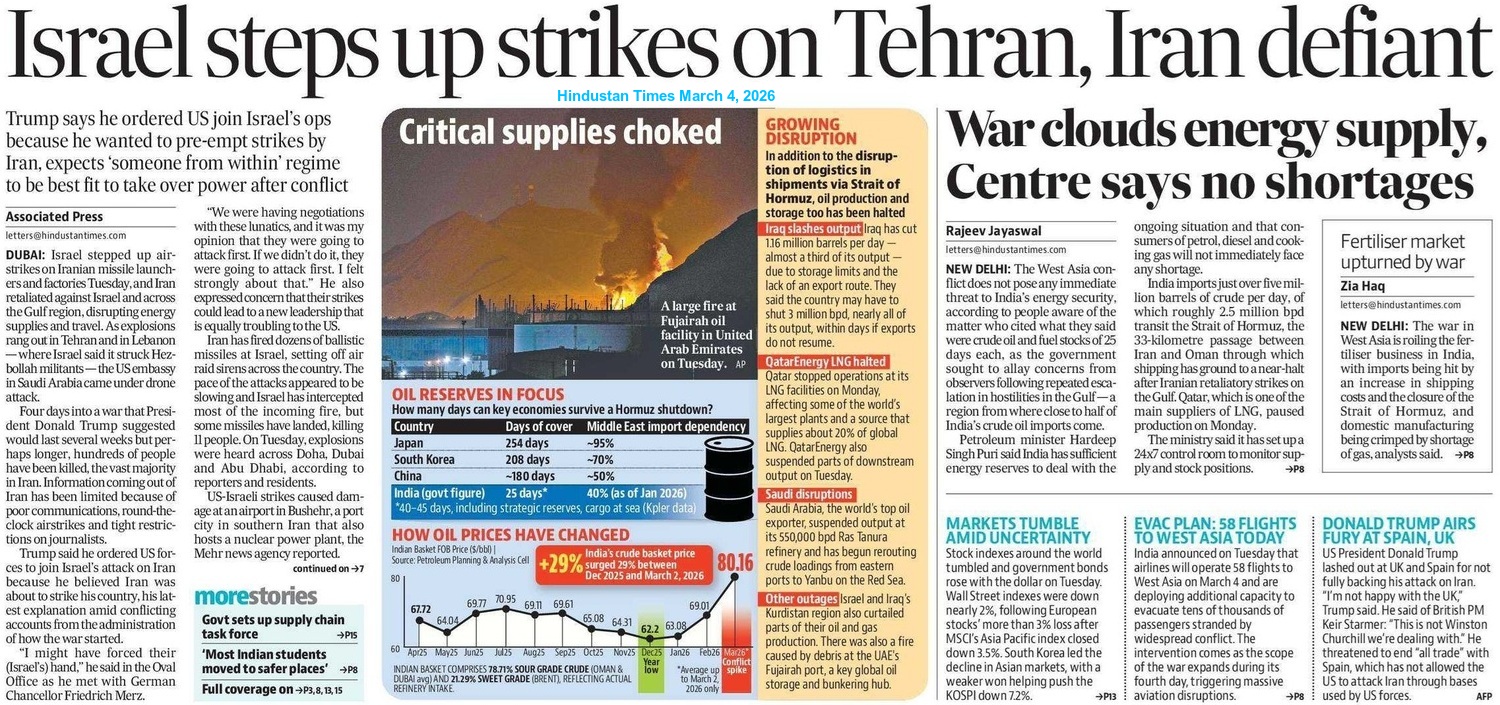
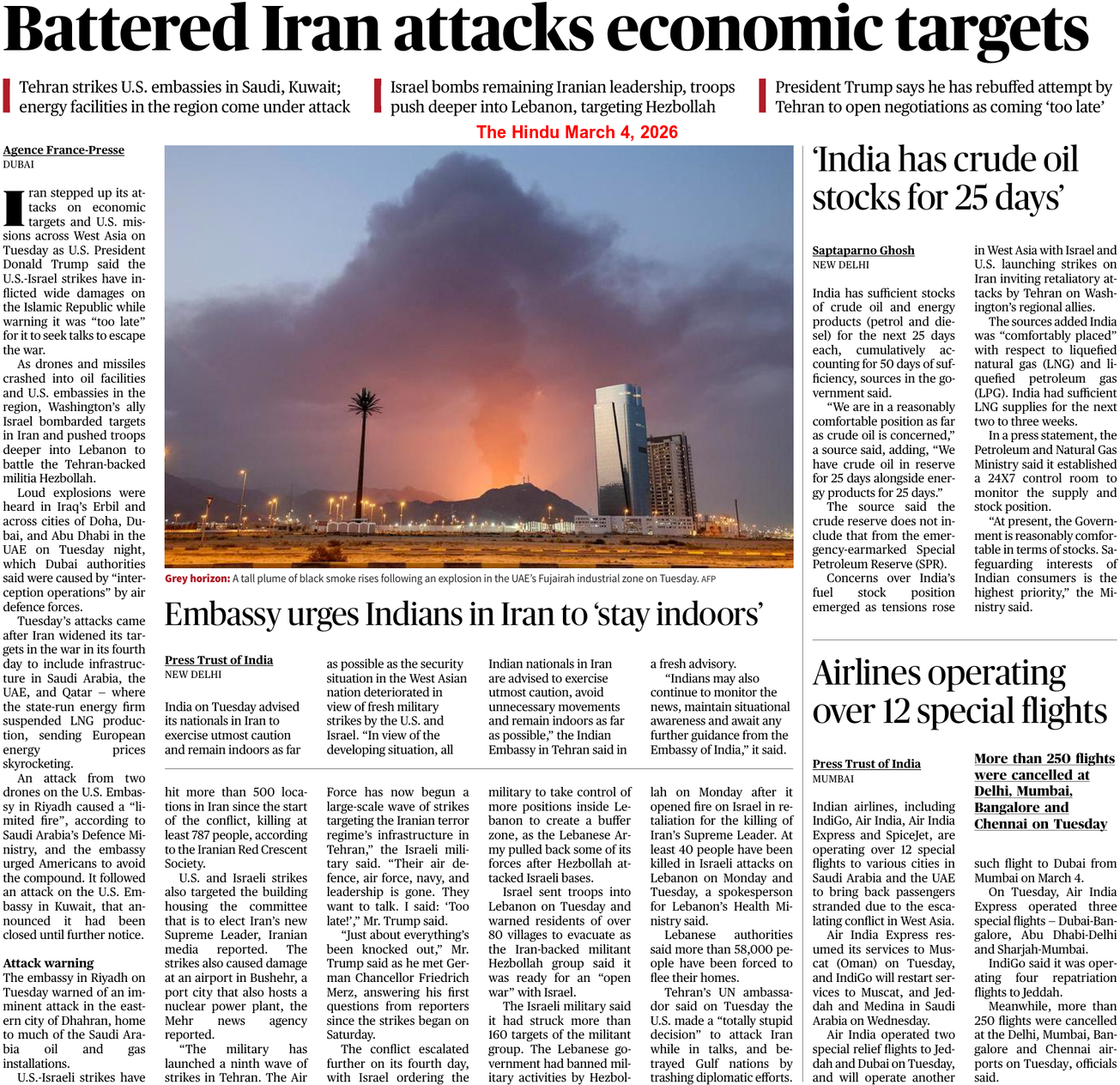
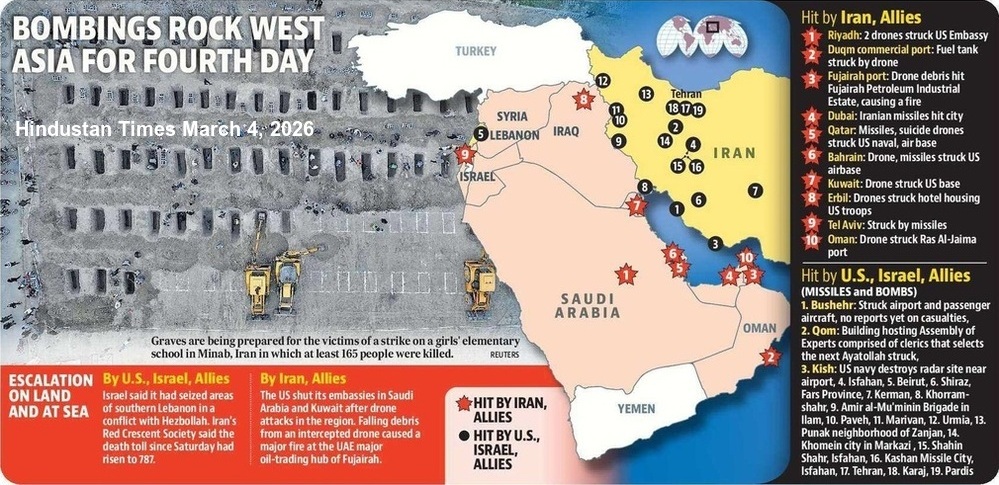
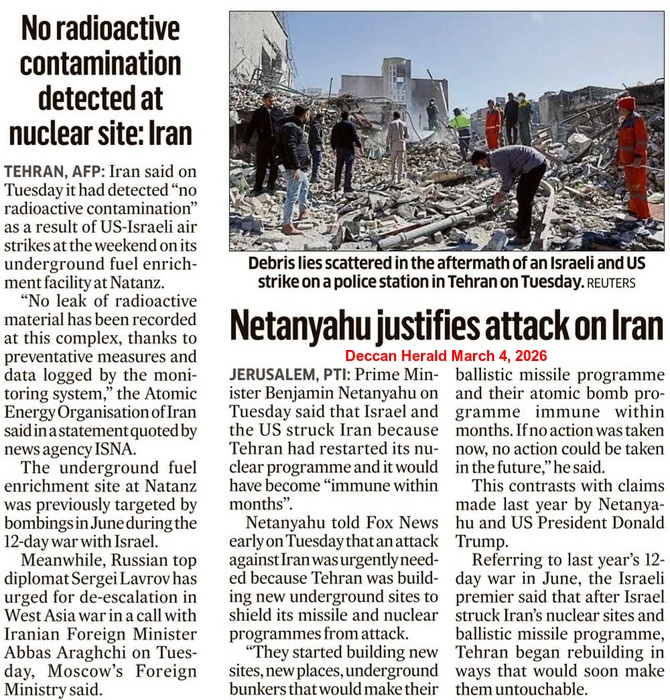
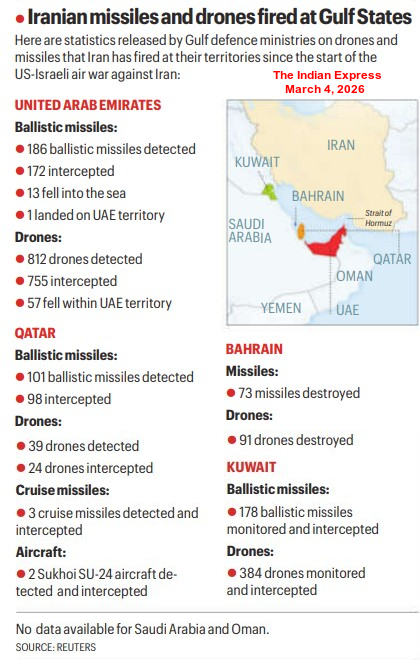
Iran is attacking the infrastructure that keeps the Gulf States functional specifically to force a collapse that drags American boots off the carriers and onto the ground. Kristian Coates Ulrichsen, a Gulf expert at Rice University’s Baker Institute, writing in The Conversation, documents Iran’s deliberate targeting of airports in Bahrain, Dubai, Abu Dhabi and Kuwait, hotels in Bahrain and Dubai, and oil and gas facilities, including Ras Laffan in Qatar and Ras Tanura, in Saudi Arabia. Ulrichsen has stated plainly that this choice of targets “reflects a calculation that leaders in the Gulf countries would immediately feel the full impact of the war” and that Iran’s hope is that the economic devastation will force Gulf leaders to press Washington DC hard for an exit. Qatar shot down two Iranian jets on March 2, 2026 in direct response to those strikes on its LNG facilities, confirmed by multiple regional Defence Ministries. And now, Iran is escalating to the one target that would cause complete societal collapse across the entire Gulf region.
Ulrichsen, writing for The Conversation, has stated explicitly: “There is concern among Gulf Nations that the next step in the ladder of escalation could involve targeting the desalination plants that are so vital to overcoming water scarcity in the region.” Read that again slowly. The Gulf States do not have rivers. They do not have aquifers large enough to sustain their populations. The entire freshwater supply for tens of millions of people – in Saudi Arabia, the UAE, Kuwait, Qatar, Bahrain – flows out of desalination plants sitting on the coastline. Plants that are now directly in the crosshairs of a regime that has already demonstrated it will hit airports, hotels, oil terminals and gas facilities without hesitation.
When those plants go down, there is no backup. There is no reservoir to open. There is no emergency supply line that can replace millions of gallons of freshwater per day. Cities do not slowly degrade when the water stops. They collapse within 72 hours. Mass panic. Mass displacement. Millions of people moving at once. Allied Governments that have been building their legitimacy on economic prosperity and stability for decades will not be able to hold the line. When they cannot hold the line, the US will have no choice, but to send infantry on foot in order to secure the plants if any remain, to manage the displacement, to prevent the complete disintegration of every Allied Government in the Gulf simultaneously. That is the meat grinder Iran is building. That is why they are hitting the infrastructure in this specific sequence. Airports first. Energy terminals second. Desalination plants next.
Iran’s military strategy has never been to defeat the US Air Force. It has always been to make the cost of staying so unbearable that the US leaves or collapses while trying to hold it together. Defence analyst Tobias Borck, quoted by Al Jazeera, has noted that Iran is “more risk-accepting and escalatory” than it has ever been, precisely because it has already absorbed the worst the US can deliver from the air and is still standing and still firing.
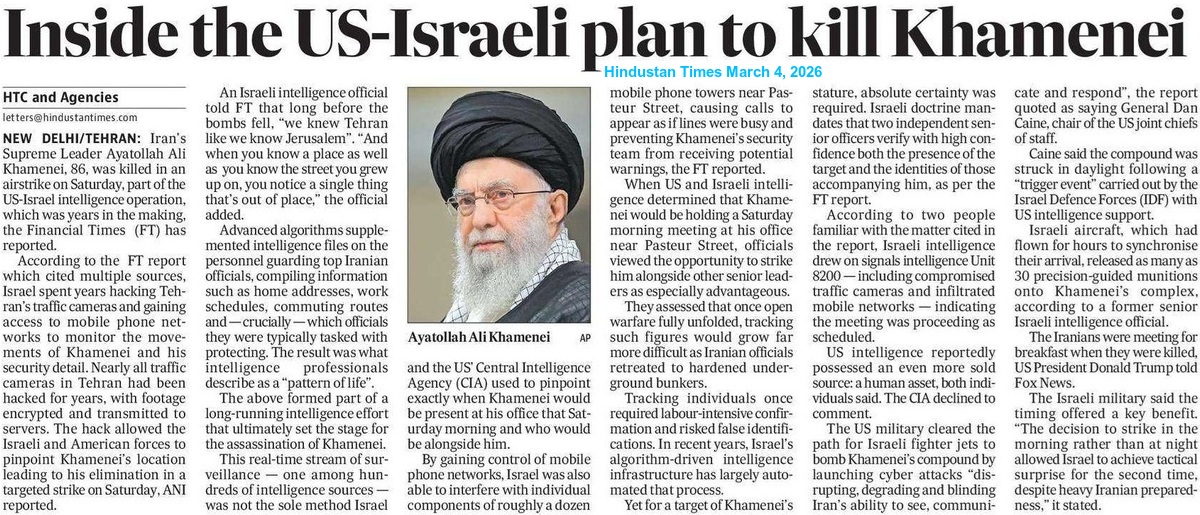
Despite the Pentagon‘s silence on ground operations, Open Source Intelligence networks, an independent analyst group which track forward-deployed military assets, radio traffic and special operations movements long before official admission, has indicated that coalition ground assets are already actively engaged in the theatre. The Hengaw Organisation for Human Rights, an independent Norwegian-registered NGO with an extensive network of informants documenting conditions on the ground inside Iran, has reported that the death toll has surpassed 1,500 people in three days, including over 200 confirmed civilian casualties. A girls’ elementary school in Minab was struck and destroyed, confirmed through remote geolocation by multiple organisations, including the Iranian fact-checking outlet Factnameh. Iranian Education Ministry spokesperson Ali Farhadi cited that 153 dead at the school alone.
Tankers On Fire & The Strait Of Hormuz
The final jaw of the trap is the energy chokepoint. Iran’s Islamic Revolutionary Guard Corps (IRGC) commander formally declared enforcement of a Strait of Hormuz closure, threatening to fire on any vessel attempting to transit, confirmed by USNI News on March 2, 2026. The IRGC transmitted warnings via VHF radio to every vessel in the Strait, stating that no ship would be allowed to pass, documented in full by Windward Maritime Intelligence, the maritime AI platform tracking vessel movement in real time. Within 36 hours of the strikes beginning, four commercial tankers were struck in the Strait and the Gulf of Oman. Windward‘s analysis has stated explicitly that the spread of targets – a sanctioned Iranian-linked tanker, a clearly Western-aligned commercial tanker, a neutral-flagged vessel and a tanker with mixed Western and Russian trade ties – is not precision targeting. It is area denial, designed to stop all commercial traffic regardless of nationality or cargo.
It worked. As of March 2, tanker traffic through the Strait was down 70%, according to Windward Maritime Intelligence. Over 150 freight ships, including oil tankers, are stalled and anchored outside the strait. War-risk insurance has been withdrawn entirely. Approximately 27 vessels, carrying an estimated 12 million barrels of oil, are drifting in the Arabian Sea with no confirmed discharge destinations.
The US Energy Information Administration has confirmed that the Strait of Hormuz carries roughly 20% of all oil and Liquefied Natural Gas (LNG) traded globally, about 20 million barrels per day. Ali Vaez, the Director of the Iran Project at the International Crisis Group, told Al Jazeera that the shock of a Strait closure “would reverberate far beyond energy markets, tightening financial conditions, fuelling inflation and pushing fragile economies closer to recession in a matter of weeks“. This is not a market fluctuation. This is a direct assault on the foundation of US economic power.
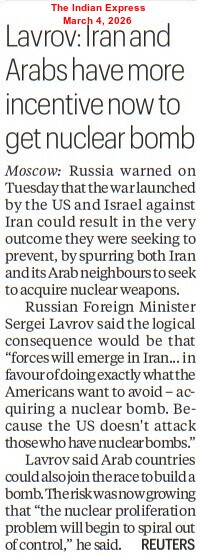
The entire American financial empire rests on the petrodollar, the long-standing global agreement that countries use US currency to buy and sell oil. When nations grow desperate enough to keep their power grids running, they will turn to non-Western sources and bypass the dollar to get what they need. Economic analysts at Brown University’s Costs of War Project – the major research initiative that has tracked the true financial and human cost of every US military operation since 2001 – have documented that if the world stops depending on the dollar to buy energy, US financial dominance does not weaken. It collapses. If the petrodollar falls, the US Treasury can no longer fund its own debt, including the USD 10 billion it just burned this weekend.
The Earth Is Being Poisoned
While the bodies are counted and the treasury bleeds, the land itself is being permanently damaged. Both sides are hitting this region with high-tech munitions that leave behind deep-soil chemical runoff. Environmental toxicologists and agricultural scientists who study ecosystem destruction have warned that this level of chemical saturation in the soil is effectively irreversible. When warhead toxins penetrate the deep earth, the soil does not recover on any human timescale. The region’s capacity to grow food and support life is being damaged for generations – long after the last missile falls.
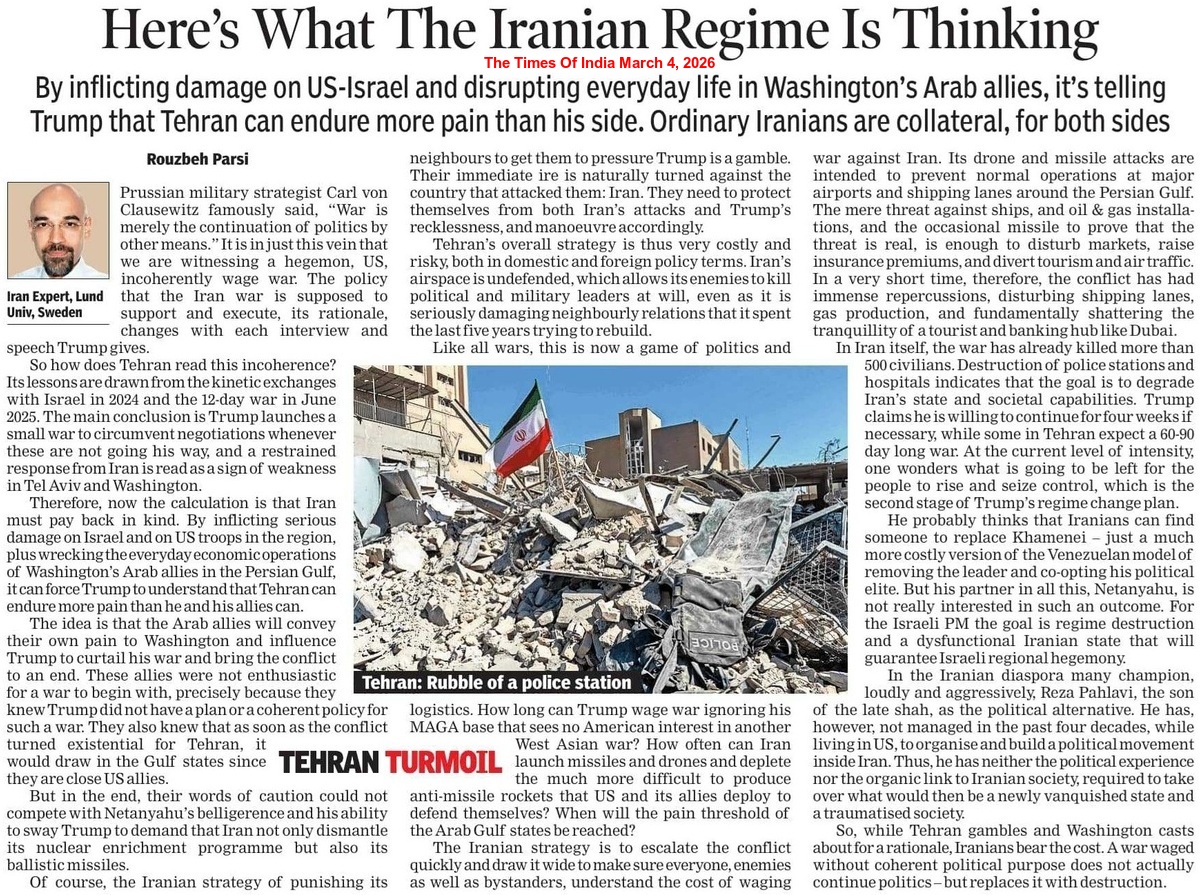
Here is what Hour 72 actually looks like:
A regime that knew it was falling decided it would rather burn the entire region down than fall alone. It is hitting airports, energy terminals and hotels across six countries simultaneously. It is systematically working toward the desalination plants that are the only source of drinking water for tens of millions of people. It is bleeding the US Treasury at a rate of USD 40 million a day while firing USD 35,000 drones into a USD 15 million shield. It has pulled Hezbollah off the sideline, restarted the Houthi Red Sea campaign, activated Iraq’s Shia militias and locked 150 tankers outside the Strait of Hormuz. The soil where the missiles land will not grow food again in our lifetimes.
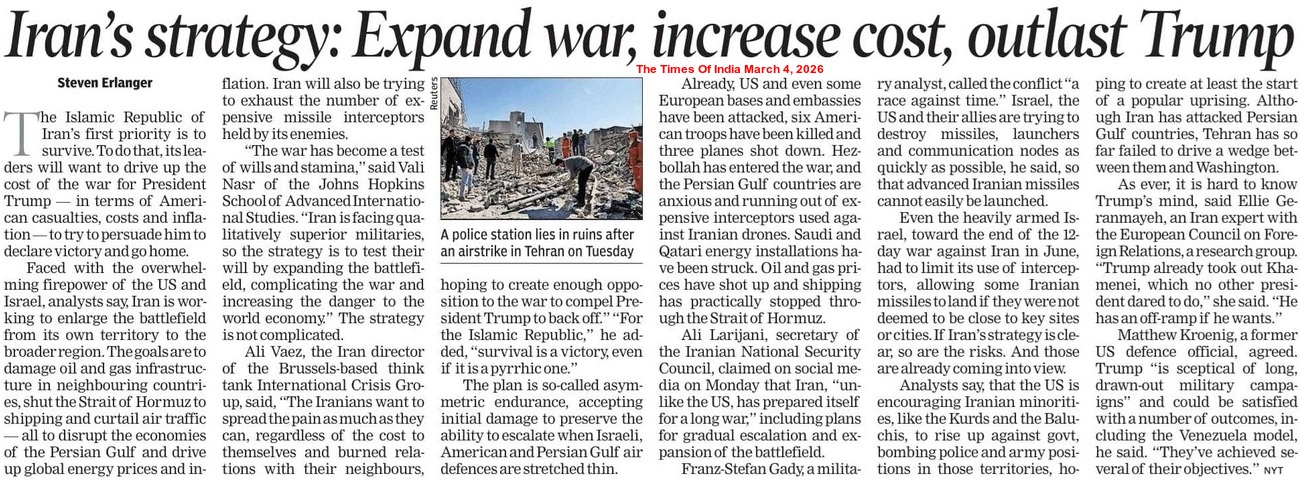
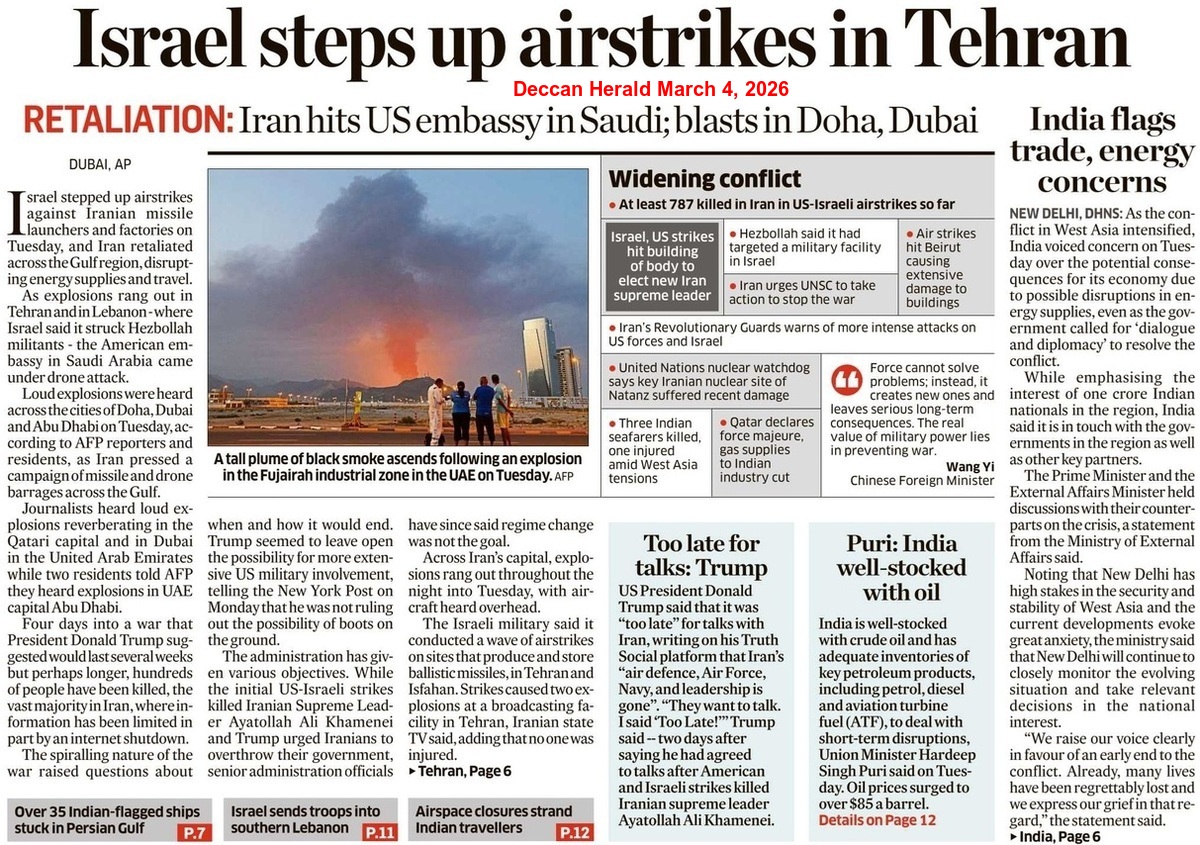
And in the middle of all of it, a nuclear-armed Israel is fighting for its survival on every border it has. This did not have to happen. The agreement was on the table February 27, 2026. Peace was, in the words of Oman’s Foreign Minister, within reach. What came instead was a Truth Social post and the opening of something that has no clean exit. That is what is actually happening at Hour 72.
Sources:
Jiang Xueqin: “Geo-Strategy #8: The Iran Trap / Why America Will Invade Iran and Lose”, YouTube channel Predictive History, recorded May 29, 2024; follow-up video recorded June 22, 2025.
Newsweek: “The Professor Who Predicted Trump’s Return and War With Iran”, June 24, 2025
The Online Citizen: “Jiang Xueqin’s 2024 lecture predicting US-Iran war and Trump’s return goes viral”, June 24, 2025
Grunge: “This Historian Predicted Trump’s US-Iran Conflict In 2024 And His Theories About WWIII Are Chilling”, June 28, 2025
Wikipedia: Jiang Xueqin biography
US Central Command (CENTCOM): Operational briefings, social media posts and expenditure estimates, February 28 – March 3, 2026
Centre for Strategic and International Studies (CSIS): Operation Epic Fury analysis and Missile Defence Project unit cost data, March 2026
Kristian Coates Ulrichsen, Rice University Baker Institute: Iran’s targeting of civilian infrastructure and the desalination plant threat, The Conversation, March 1, 2026
Al Jazeera: Iran’s military strategy shift to asymmetric endurance, March 2, 2026, citing defence analysts, including Tobias Borck
Windward Maritime Intelligence: Iran War Maritime Intelligence Daily, March 2, 2026
USNI News: IRGC formal Strait of Hormuz closure declaration, March 2, 2026
US Energy Information Administration (EIA): Strait of Hormuz factsheet and global oil flow data
Ali Vaez, International Crisis Group: Strait of Hormuz economic impact analysis, Al Jazeera, March 1, 2026
NPR: Hezbollah strikes Israel as American and Israeli planes pound Iran, March 2, 2026
CNN: Six US service members killed, Kuwait operations centre strike, March 2, 2026, reporting by Haley Britzky
CBS News: Three US troops killed, Trump confirms more deaths expected, March 1, 2026
SOF News: Operation Epic Fury Update, March 1, 2026
UAE Ministry of Defence: Confirmed civilian infrastructure strike damage
Iranian Red Crescent Society: Casualty figures and civilian conditions, March 2026
Hengaw Organisation for Human Rights: Ground-level documentation of casualties, March 2026
Factnameh (Iranian fact-checking outlet): Remote geolocation confirmation of Minab school strike, March 2026
Reuters: 40 Iranian officials killed in opening strikes, intelligence source confirmation, March 1, 2026
Brown University Costs of War Project: Middle East military expenditure and economic impact analysis
The War Zone: War With Iran Now In Its Third Day, March 2, 2026
This article, collected from Facebook, has been authored by Mark A Shryock. Shryock, from Joplin, Missouri, is a Georgia-based artist, speaker and writer. Copyright 2026 Mark A Shryock.

Meanwhile,

Boundless Ocean of Politics on Facebook
Boundless Ocean of Politics on Twitter
Boundless Ocean of Politics on Linkedin
Contact us: kousdas@gmail.com

 ISMC
ISMC Boundless Ocean Of Politics
1 Comment »