

‘Whimsicracy’
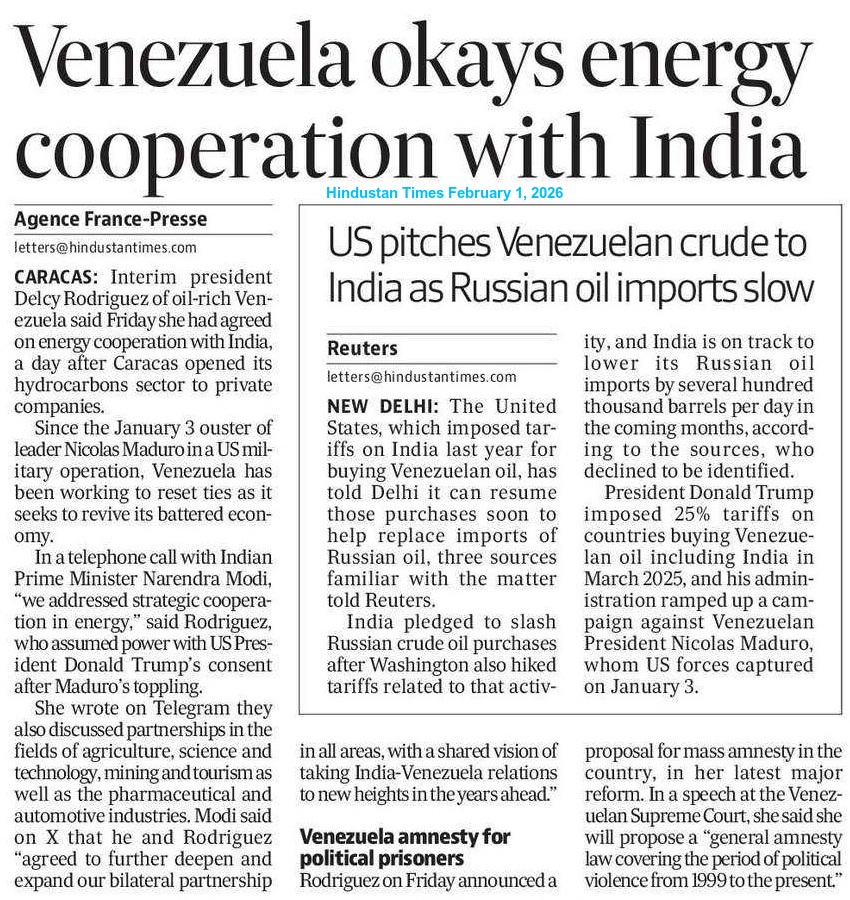
The beginning of the Year 2026 has been marked by several unexpected and, in some cases, dramatic events across the globe, ranging from political upheavals to international crises. First, US President Donald John Trump caused a stir across the globe by having Venezuelan President Nicolás Maduro Moros (and his wife Cilia Adela Flores de Maduro) captured from their residence at Caracas’ high-security Ft Tiuna military compound through a military operation, codenamed Operation Absolute Resolve, on January 3. Then, he unexpectedly revived and significantly escalated efforts to gain control of Greenland, a self-governing territory within the Kingdom of Denmark, posing a major challenge to European sovereignty, security and the NATO alliance.
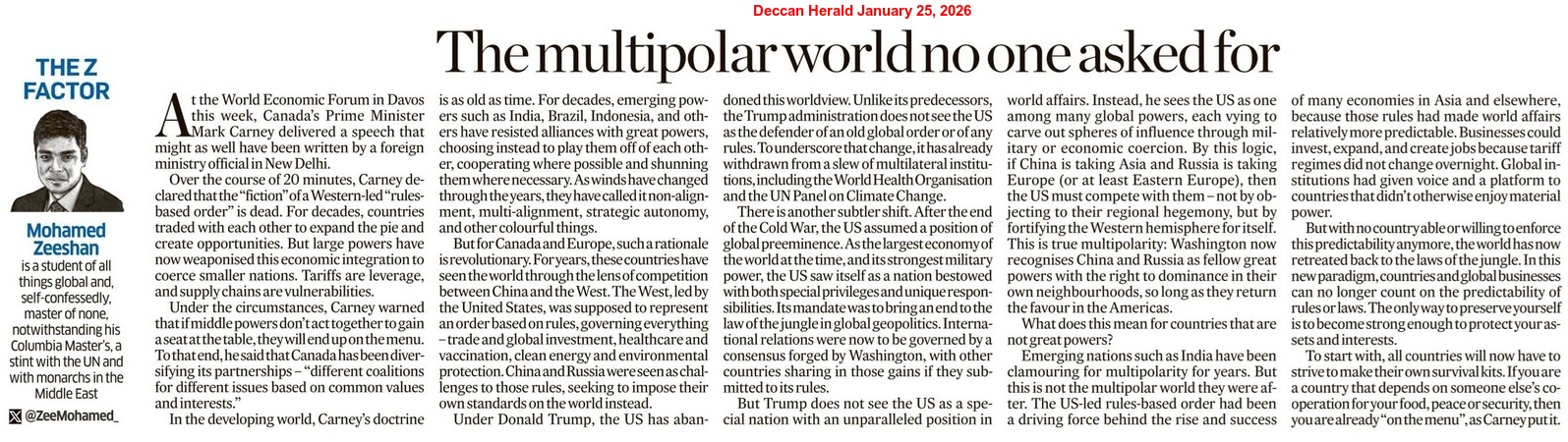
As expected, the US President’s announcement has shocked the European leaders. Since the end of the Second World War (more precisely, since the formation of the UN), there has hardly been such a major global diplomatic crisis.
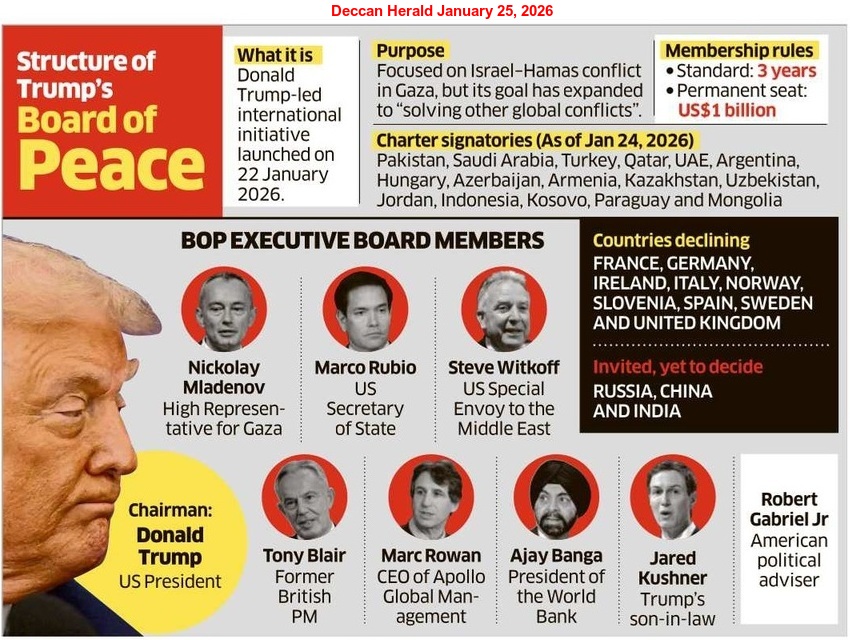
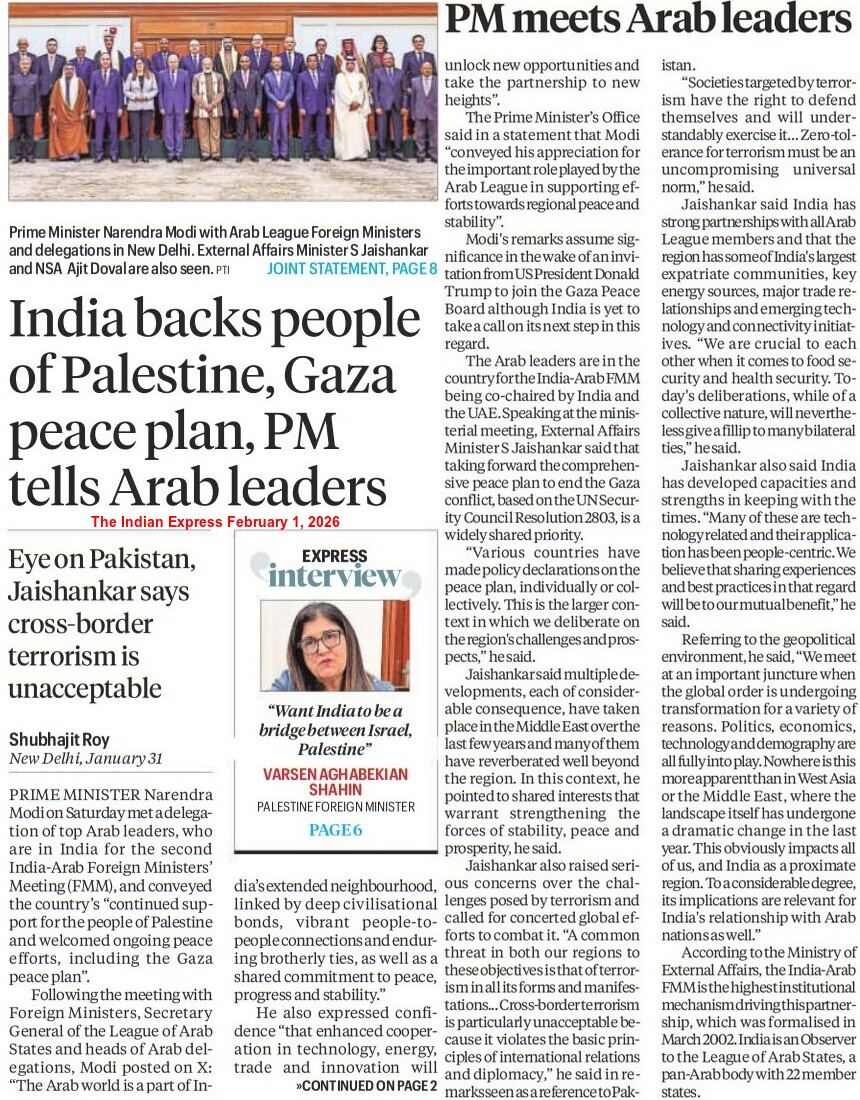
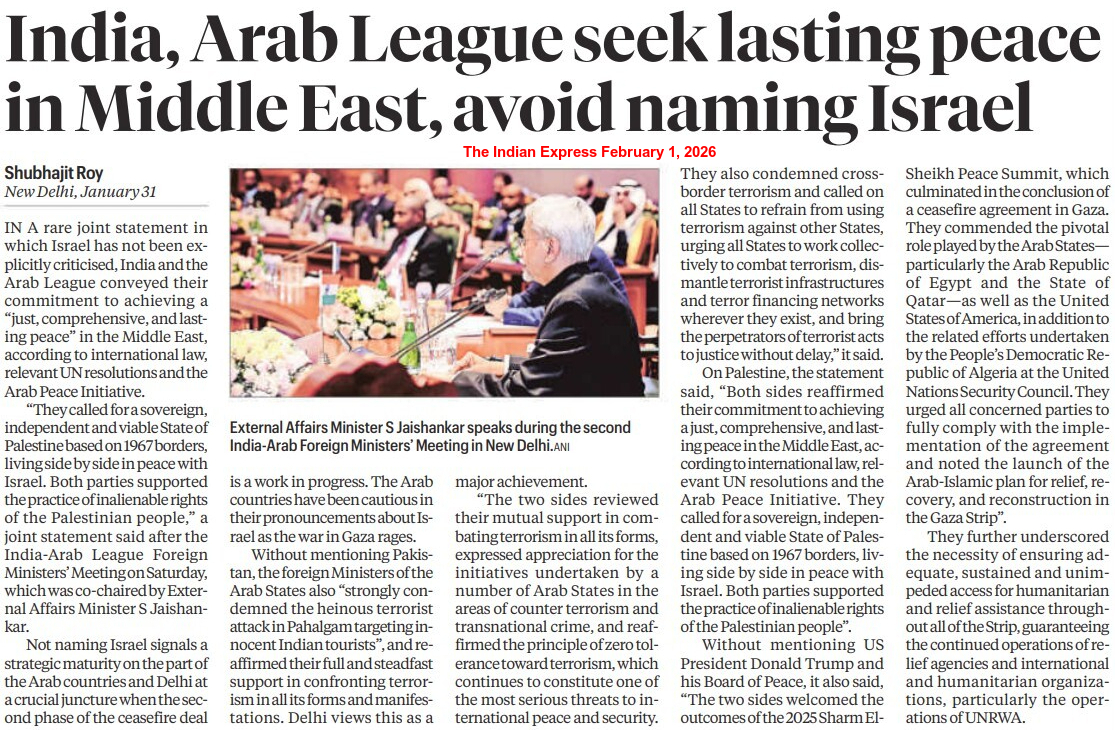
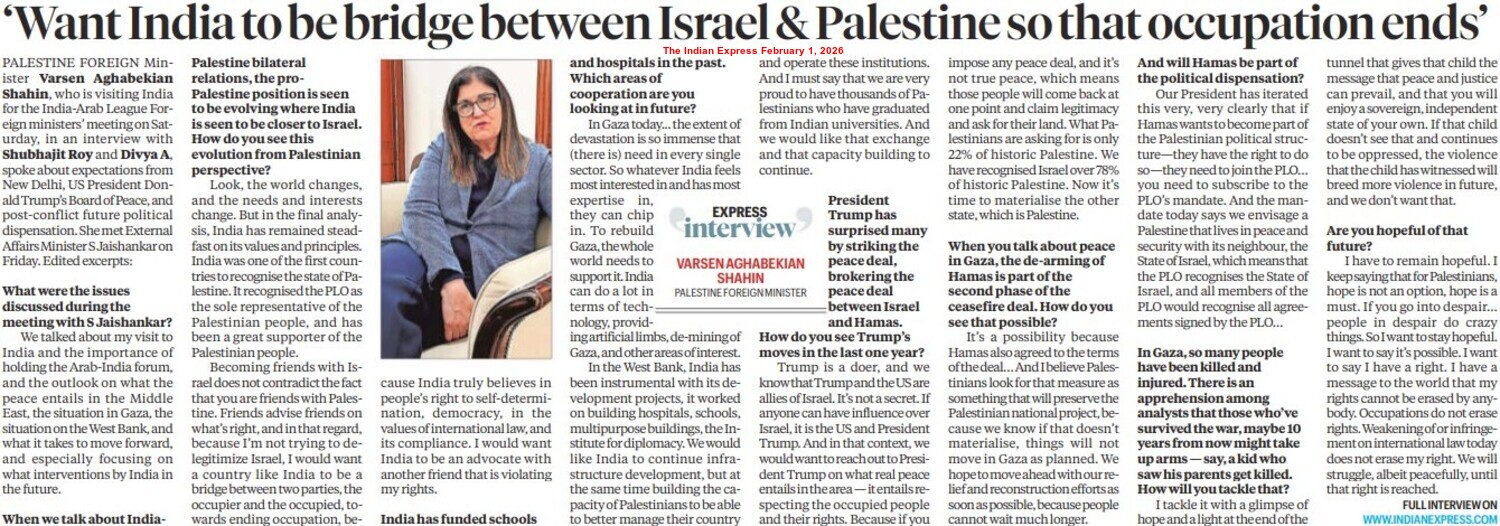
The Board of Peace (BoP), recently formed by President Trump to oversee peace and reconstruction in the Gaza Strip, too, throws a direct challenge to the UN as he wants to build an alternative institution for maintaining a different global order. Although the UN approved his plan in November 2025 by passing UN Security Council Resolution 2803, legal experts have warned that it is a breach of international law.
In the very first paragraph of its preamble, the BoP Charter declares that “durable peace requires pragmatic judgment, common-sense solutions, and the courage to depart from approaches and institutions that have too often failed“. While the UN is not mentioned by name, President Trump has repeatedly criticised the World Body, describing it as an organisation that has failed to take necessary actions many a times. Eliav Lieblich, an international law expert at Tel Aviv University, has stressed: “The charter is clearly intended as a challenge to the UN and a sign of mistrust toward this organisation.” Naturally, the major European countries, China and India are currently facing a huge diplomatic crisis.
Incidentally, leaders of some European countries have strongly opposed the US’ attempt to dictate terms of global geopolitics, emphasising the Sovereignty and Right to Self-determination of Greenland. They have also deployed troops in the world’s largest island that lies between the Arctic and Atlantic Oceans, east of the Canadian Arctic Archipelago, to protect the sovereignty of Greenland. However, the future is still uncertain.
In this context, President Trump’s message at the World Economic Forum (WEF) in Davos on January 23, 2026 is noteworthy. The US President stated that he would not use military force to acquire Greenland, adding that Washington DC “would be unstoppable” if such a situation arose. President Trump also called Greenland, which is a key strategic asset, “our territory“. Earlier, he announced 10% tariffs on products from Britain, France, Denmark, Norway, Sweden, Germany, Finland and the Netherlands to pressure them to support a US purchase of Greenland. He also threatened to raise the tariffs to 25%, if no deal is reached by June 1, sparking global condemnation. The US President made it clear that the tariffs would remain in place until a deal for Greenland’s purchase is finalised.
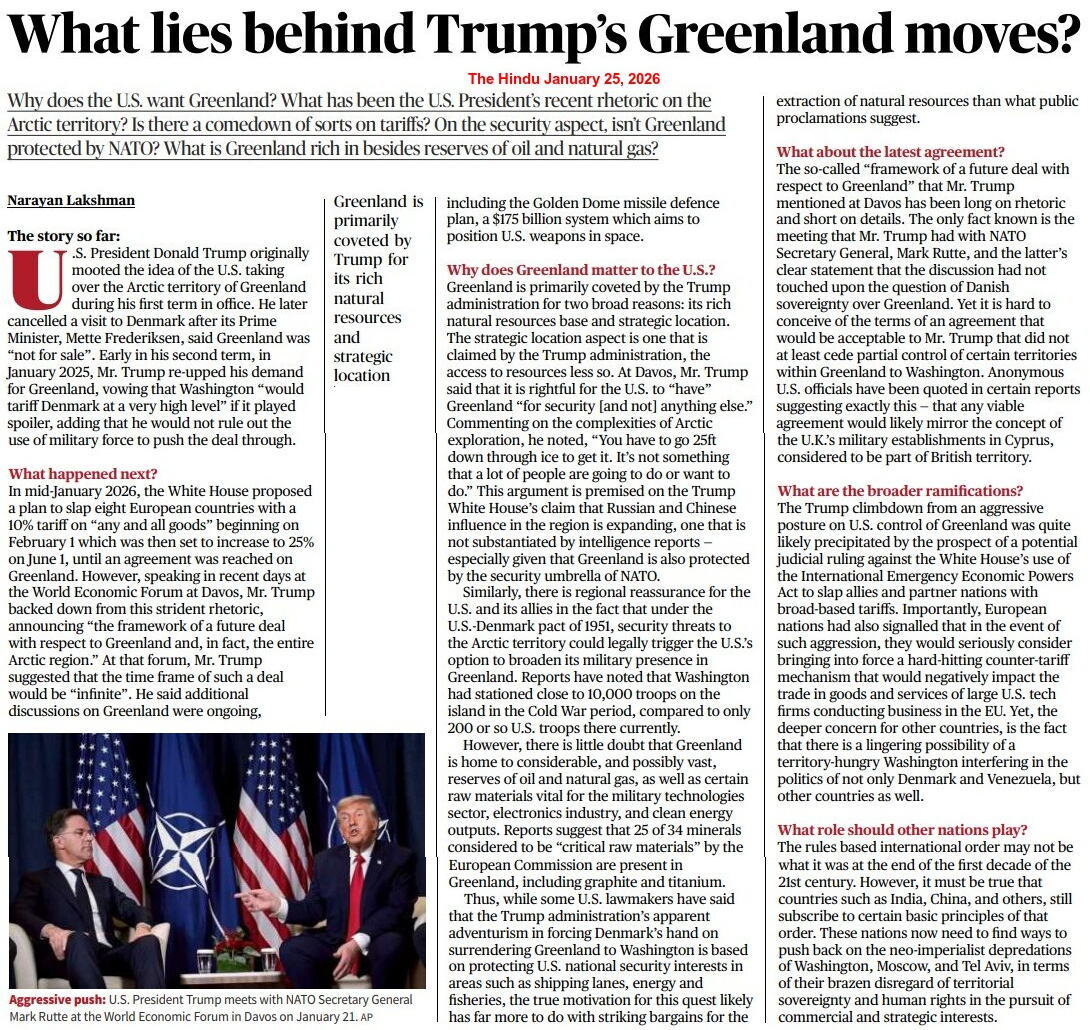
It may be noted that imposing tariffs is not a normal trade practice, but a standard, albeit controversial, instrument of trade policy. Tariffs are basically taxes imposed by governments on imported goods in order to achieve specific, often political, goals and a response to what they deem unfair trade practices by other nations. Tariffs function as taxes on imported goods, making foreign products more expensive and thus encouraging consumers to purchase locally-produced alternatives. However, President Trump is using tariffs as a weapon to win trade concessions and to get access to critical minerals, apart from settling conflicts in different parts of the globe. Meanwhile, Danish Prime Minister Mette Frederiksen has said: “I am pleased with the consistent messages from the rest of the continent: Europe will not be blackmailed.” She further stated: “The Kingdom of Denmark is receiving great support.” According to Frederiksen, she has been in “intensive dialogue” with Germany, France and the UK.
In fact, French President Emmanuel Jean-Michel Frédéric Macron urged the European Union (EU) on January 18, 2026 to activate Trade Bazooka (officially known as the Anti-Coercion Instrument or ACI), the powerful anti-coercion instrument of the 27-member bloc, on behalf of Paris, if the US went ahead with imposing tariffs on European countries. He made the proposal just a day after President Trump announced that he would impose 10-15% tariffs on goods from eight European countries for opposing his plan to acquire Greenland. The EU has never used Trade Bazooka, which allows the bloc to curb imports of goods and services or restrict access to its single market in response to economic coercion. After discussions with NATO Secretary General Mark Rutte in Davos, Europe decided to keep its trade countermeasures against the US suspended, but warned that they could be reactivated if necessary.
It seems that President Trump has decided to follow the Madman Theory of former US President Richard Milhous Nixon. However, there is a difference between the strategic use of unconventional foreign policy to gain an advantage over an opponent and betraying trust through reckless policy. Nixon had made an attempt to manage multiple internal and external pressures through this strategy. According to political analysts, applying this strategy in a chaotic global system would further complicate the situation.
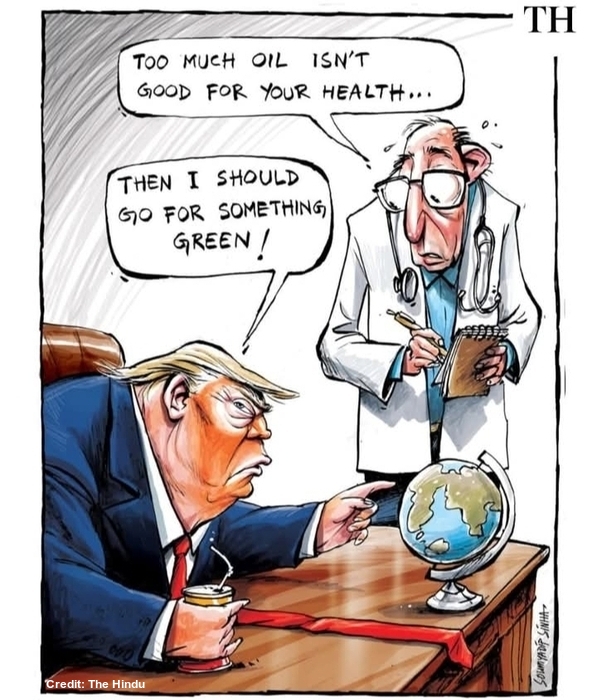
President Trump’s recent actions show that he believes in exerting influence through threats and the use of force as his foreign policy and approach to international relations frequently leverage threats, economic coercion and the potential for military force to advance his America First agenda. This approach, often described as transactional, frequently challenges established diplomatic norms and alliances, with experts noting a belief that the world is governed by strength, force and power. The global community is anxiously waiting to see how Europe will tackle the Greenland crisis.
Meanwhile,
Boundless Ocean of Politics on Facebook
Boundless Ocean of Politics on Twitter
Boundless Ocean of Politics on Linkedin
Contact us: kousdas@gmail.com

 ISMC
ISMC Boundless Ocean Of Politics