

Russell’s Reason
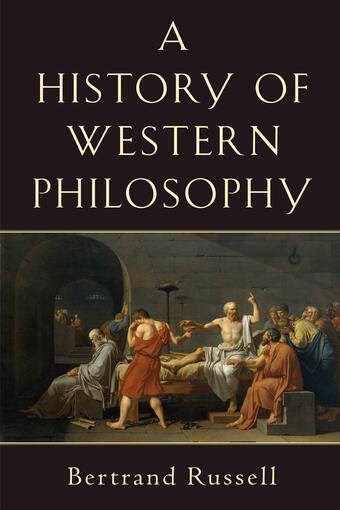
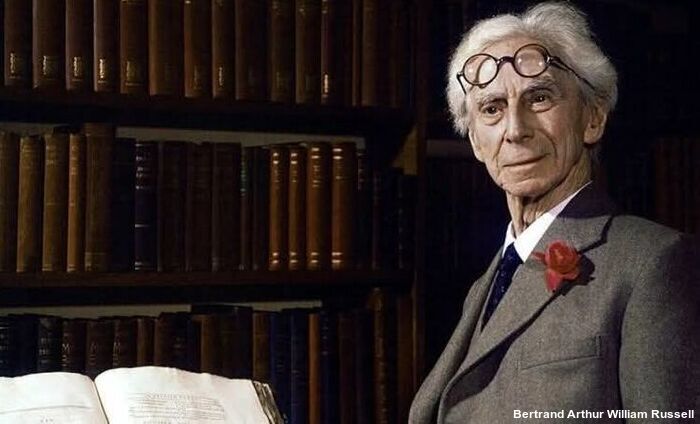
Bertrand Arthur William Russell‘s (May 8, 1872 – February 2, 1970) 1945 publication ‘A History of Western Philosophy‘ can help one gain in-depth knowledge about Western philosophy. Russell, the British philosopher, logician, mathematician and public intellectual, is often referred to as the Philosopher of Reason or the Philosopher of Logic.
The founding father of Analytic Philosophy and one of the greatest logicians of the 20th Century, Russell was once delivering a speech on astronomy at the Royal Albert Hall in London. All on a sudden, an old lady interrupted the philosopher, saying: “The Earth is not round, but flat, and it rests on the back of a giant turtle.” When asked what the turtle was standing on, the woman reportedly replied: “Turtles all the way down.” Although the old woman was ridiculed by others on that day, she stuck to her logic.
Institutional religion has always claimed the existence of God with will, mind and purpose. The question arises here: If God is an all-powerful entity, then how can it have a mind? The Sun, which is generally considered the centre of the solar system, is basically a part of the Milky Way galaxy. The Sun and the solar system are located approximately 27,000 light-years from the centre of the Milky Way which is 100,000 light years in diameter and is estimated to be around 1,000 light-years thick. The galaxy is also estimated to have between 200 billion and 400 billion stars. Although determining the age of the Milky Way is a complex process, it is thought to be around 13.6 billion years old, with the first stars forming shortly after the Big Bang. If just 1% of the 10 billion trillion stars in this universe are even Earth-sized planets, then one has to admit that our universe is full of life.
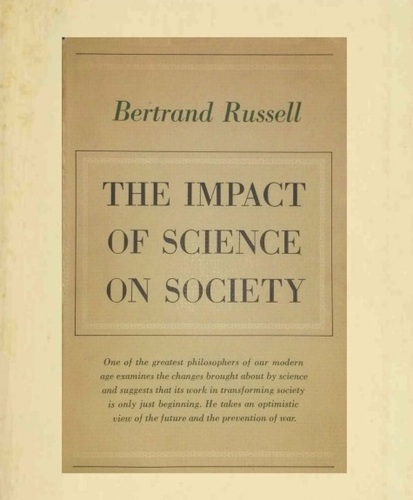
Hence, Russell stressed: “The Earth is not the centre of the universe, and probably Man is not its purpose (if any); moreover, purpose is a concept which is scientifically useless.” (Russell, Bertrand; The Impact of Science on Society, 1951, pp.7) He used to believe that the Earth is not the centre of the universe and humans, perhaps, are not even its purpose. He stressed: “There is a hidden purpose, could we but fathom it, and the purpose is good; for we must reverence something, and in the visible world there is nothing worthy of reverence.” In other words, there is no longer any room to consider the Earth the centre of creation as there are trillions of planets and stars. Interestingly, the Earth is at the centre of the main activities of all religions. It seems that religion does not exist anywhere else in the universe, except the Earth. Even if it exists elsewhere, it would certainly negate all the religions that exist on the Earth (at least theoretically).
Now, one can consider another important issue. Is it possible to assign a purpose to any object or force or energy in the universe? The answer is: No. Scientific observation does not typically assign purpose (whether it is a predetermined or a result of natural laws), but rather focuses on how objects, forces or energies interact based on natural laws. If an object or force or energy has a purpose, then it must have a mind, too. And if there is a purpose, then some kind of will must be imposed on that object or force or energy so that it can become conscious as one knows that there is no purpose without a desire. Purpose cannot be there without will or desire. The fact is that an object or force or energy can never have a mind or desire or will.
Fire is a visible manifestation of energy, specifically in the form of heat and light. However, fire does not occur because of the will of fire and it is also not the purpose of fire. Fire has indeed the power to burn things, but there is no will or desire in it. However, institutional religion claims the existence of a God with will, mind and purpose. Here lies a couple of fallacies: How does God, which is claimed to be all-powerful, have a mind? Again, if God does not have a mind and is not capable of thinking, then how can its existence be explained?
As mentioned earlier, Russell stated: “Purpose is a concept which is scientifically useless.” According to the British philosopher, purpose, when used in the context of explaining natural phenomena, is a concept that is unnecessary for scientific thought. He used to believe that scientific explanations should focus on identifying causal relationships and underlying mechanisms, rather than appealing to intentions or purposes. Hence, institutional religion has lost its basic meaning for people in countries that are advanced in knowledge, as well as science, and has also become useless in the contemporary world. There is also an internal conflict between the major institutional religions. The attempt to explain religion through Idealist Philosophy has created an anarchic situation. One can find that Traditional religions follow a certain pattern, while Abrahamic religions follow a different type of pattern.
Bertrand Russell was a Materialist Philosopher and his ‘A History of Western Philosophy‘ is a remarkable publication on Materialist Philosophy. In this book, he showed that “nothing can be absolutely certain“. The core principle of philosophical thought is to not rush into decisions. Instead, philosophy emphasises careful reflection, analysis and contemplation before making any choices.
Russell was awarded the Nobel Prize in Literature in 1950 “in recognition of his varied and significant writings in which he champions humanitarian ideals and freedom of thought“. Prior to that, he was imprisoned during the First World War for expressing anti-war views that aligned with his pacifist ideology. The development of the hydrogen bomb (also known as a thermonuclear bomb) in 1952 significantly escalated the potential for catastrophic consequences for human civilisation, prompting Russell to join the Anti-War Movement.
When the Campaign for Nuclear Disarmament (CND) began in 1958, Bertrand Russell became its first president as he was a vocal advocate for nuclear disarmament and the dangers of nuclear weapons. He was sentenced to prison for a week in September 1961 yet again, for his active role in organising anti-nuclear protests, particularly the Committee of 100‘s ban-the-bomb demonstration at the Ministry of Defence. Once, he reportedly stated: “It has been said that man is a rational animal. All my life I have been searching for evidence which could support this.“
Boundless Ocean of Politics on Facebook
Boundless Ocean of Politics on Twitter
Boundless Ocean of Politics on Linkedin
Contact us: kousdas@gmail.com

 ISMC
ISMC Boundless Ocean Of Politics