

The Danger Still Exists
It has been repeatedly mentioned for the past 80 years that the global community would never experience anything like the Second World War that ended in May 1945. Incidentally, Planet Earth was on the verge of complete destruction at that period of time. Hence, the civilised world thought that people should be guided by reason and should surely avoid another devastating war. Unfortunately, the confidence has noticeably waned eight decades later.
The contemporary world is witnessing intense violence as the situation along the most contested borders across the globe remains tense. Even the most influential global media outlets have started expressing fear of the Third World War! Everyone is well aware of the destructive power of nuclear weapons in the 21st Century. Yet, looking at the war preparations of various nations against other nations, it seems that they are willing to take the conflict to a different level, regardless of the danger. Perhaps, a worldwide frustration (or depression) has triggered such a situation. The concept of Rule of Order, which was promoted in the post-WWII world in order to ensure global peace, is no longer followed by the global community. Instead, efforts are constantly being made to destroy this order.

The questions arise here: Whether the root of the crisis lies in the self-centredness of the so-called Liberal Progressive world? Is the inherent weakness of the system that was considered tremendous potential eight decades ago responsible for today’s reactionary worldview? All these issues demand a deep introspection.
In his 1998 publication The Hitler of History, acclaimed Hungarian-born American historian John Lukacs mentioned: “We have brushed the problem of Hitler under the rug. If he was mad, then the entire Hitler period was nothing but an episode of madness; it is irrelevant to us, and we need not think about it further. At the same time, this defining of Hitler as ‘mad‘ relieves him of all responsibility, especially in this century, where a certification of mental illness voids a conviction by law. But Hitler was not mad; he was responsible for what he did and said and thought. And apart from the moral argument, there is sufficient proof (accumulated by researchers, historians and biographers, including medical records) that with all due consideration to the imprecise and fluctuating frontiers between mental illness and sanity, he was a normal human being.“
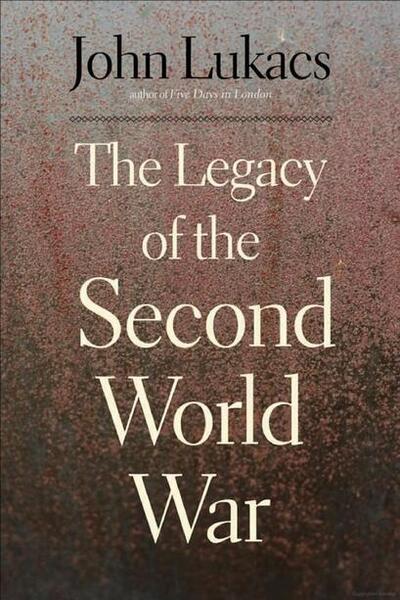
In his The Legacy of the Second World War (2010), Lukacs warned against thinking of or describing Hitler as insane, stating that he should not be judged solely on the basis of the madness of one particular individual. It would be a mistake to consider the Führer as a narrow-minded and power-hungry person. There is also no reason to consider his anti-Semitist activities as exceptionally ruthless. According to the author, there was a particular philosophy (or motive) behind all the beliefs and actions of Hitler’s German Reich. That philosophy might have been terrifying, but it should not be considered a crazy one. In that case, there may be a possibility of repetition of such a crisis in the future.

The current global geopolitical landscape and armed conflicts in different parts of the globe remind one of Lukacs’ warnings. It is no longer possible to dismiss Hitler or his Nazi ideology as incomprehensible or the activities of a madman. Today, one can find a similar ideology in different forms in various countries. In other words, a war ended in 1945, but the danger still exists. Therefore, there is a need for discussions on the failures of various decisions, as well as actions, at the end of the Second World War.
For example, the politics of Eastern Europe should be discussed on an urgent basis. The roots of fierce conflict between Russia and Ukraine that has been going on for the past three years could be traced in the Second World War. Russia’s reluctance to recognise the sovereignty of independent nations, like Ukraine, evokes memories of the Great Patriotic War of the erstwhile Soviet Union. It further reminds us that the greatness of the Soviet Army turned the wheel of history in Eastern Europe at a time when the rest of the continent was almost completely engulfed by Hitler’s military might.
On the other hand, the way NATO influenced Western Europe in an attempt to counter the Soviet Union was self-destructive in nature. The move gradually pushed Moscow towards a dangerous political isolation, making the Kremlin desperate to create an indirect sphere of influence in Europe.
It is quite impossible to resolve the ongoing crisis without reviewing the history of the Second World War. There has been too much liberal emotionalism about the Great War. Now, the event needs a fresh unbiased analysis.
Boundless Ocean of Politics on Facebook
Boundless Ocean of Politics on Twitter
Boundless Ocean of Politics on Linkedin
Contact us: kousdas@gmail.com

 ISMC
ISMC Boundless Ocean Of Politics