

Cat’s Out Of The Bag
Israel has decided to occupy the entire Gaza Strip in the near future! The Israeli Cabinet recently approved Prime Minister Benjamin ‘Bibi’ Netanyahu‘s plan to capture the Palestinian territories.
Two top Israeli officials recently informed the Associated Press (AP) that the Zionist Regime would soon occupy Gaza and establish its dominance in the region for an indefinite period of time. If Tel Aviv manages to implement the plan, then the Jewish Nation would be able to greatly expand its campaign in the Palestinian territories. Israel may face a strong global pressure, as well. Still, the Cabinet has approved the plan on the basis of majority voting.
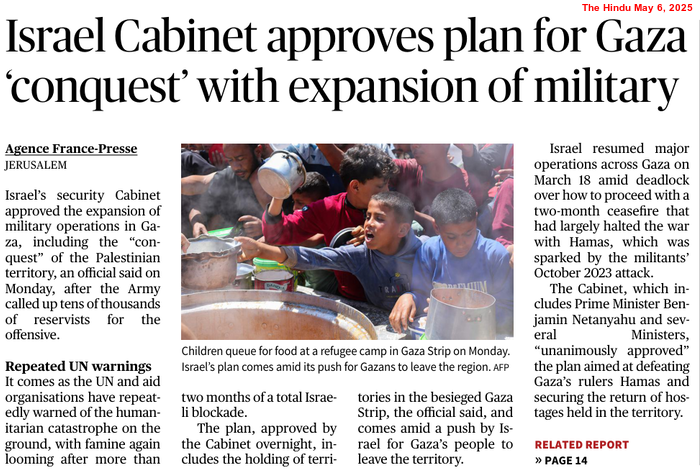
Interestingly, Israel approved the new plan to seize Gaza, hours after the Israeli military chief announced deployment of thousands of troops in the Palestinian territories. Defence analysts are of the opinion that the proposed move would help Tel Aviv to defeat the Palestinian Hamas Movement in Gaza and to free the Israeli hostages. Israel has already captured large parts of Gaza, as it currently controls nearly 50% of the Palestinian territories! If implemented, the plan would prompt millions of Palestinians to flee to southern Gaza where a dire humanitarian crisis is looming large. Hence, the Human Rights organisations have started criticising the Zionist Regime.
It may be noted that Israel Defence Forces (IDF) violated the ceasefire in early March (2025) and launched an anti-Hamas operation in Gaza after talks over the release of hostages collapsed. Hamas, later, agreed to return the Israeli hostages. However, the IDF still carry out military operations in the Gaza Strip. In its latest report, UNRWA (the UN agency responsible for Palestinian refugees) has mentioned that at least 100 children are reported killed or injured every day in Gaza since the strikes resumed on March 18, 2025. At the same time, a terrible crisis of food and drinking water has rocked Gaza.
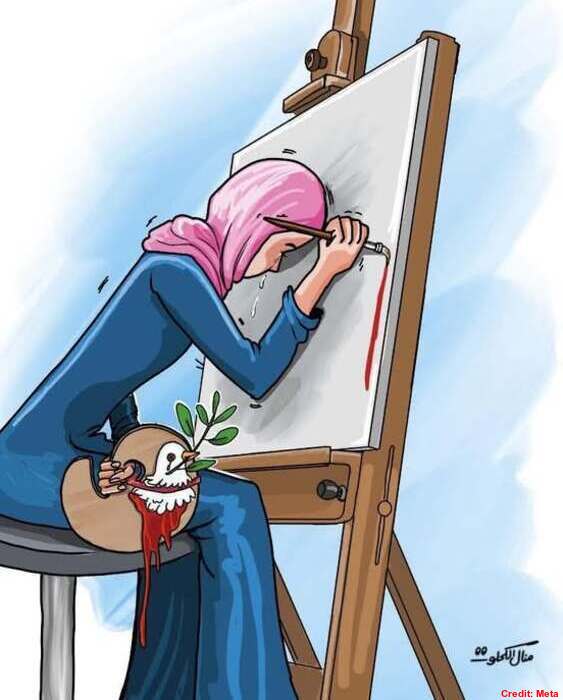
Rafah, located in the southern region of the Gaza Strip, has become the main target of the IDF. Israel has asked the Gazans to leave that area. The Israeli forces have also been accused of launching a direct attack on a ship, carrying humanitarian aid to Gaza, off Malta. Prime Minister Netanyahu has made it clear that no humanitarian aid would be allowed to reach the besieged Gaza Strip until Hamas fighters are eliminated.
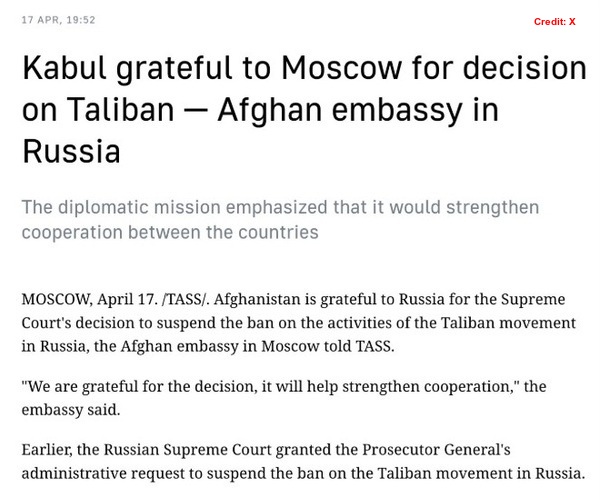
In a separate development, the Russian Parliament passed a law about four months ago. In accordance with that law, the Supreme Court of Russia lifted a ban on the ruling Taliban of Afghanistan on April 17, 2025.
The Kremlin had designated the Taliban as a terrorist outfit way back in 2003. Hence, having any contact with members of that group used to be considered as a criminal offence under the Russian law. The erstwhile Soviet Republic has a bitter history of intervening in the power struggle in Afghanistan and also engaging in the Afghan civil war in the 1980s. Moscow maintained a distance from Kabul after the withdrawal of Russian (Soviet) troops from the South Asian country in 1989. Now, Russia would be able to establish direct trade, as well as diplomatic, relations with Afghanistan, yet again.
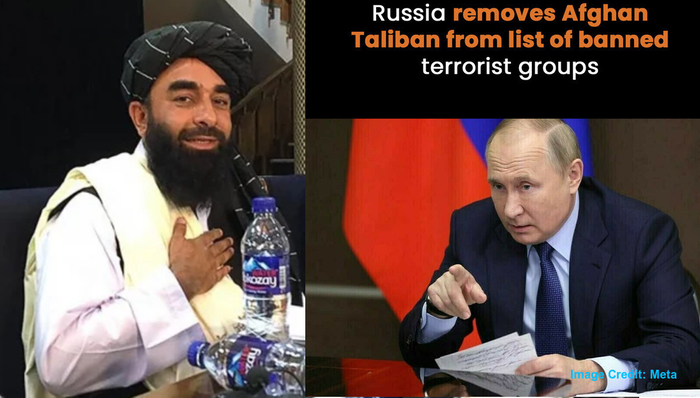
As per the new law passed by the Russian Parliament, the Supreme Court would be responsible for determining whether an organisation is a terrorist outfit. In May 2024, the Russian Foreign Ministry and the Ministry of Justice made a formal proposal to lift sanctions on the Taliban. The Prosecutor General’s Office submitted the proposal to the Supreme Court in the first week of April 2025. The Apex Court accepted that proposal and removed the Taliban from the list of terror outfits in the third week of April.
The Taliban seized power in August 2021, overthrowing an elected government through a civil war, immediately after the withdrawal of US troops from Afghanistan. However, most countries and the UN are yet to recognise the Taliban Government in Kabul. Political analysts believe that Russia’s move could herald the beginning of a new geopolitical landscape. Ibraheem Bahiss, a senior analyst with Crisis Group’s Asia Programme, has stressed that the listing of the Taliban as a terrorist group was a legal impairment for trade and diplomatic ties with Kabul. The lifting of the ban reflected Moscow’s desire to improve relations, he added. Bahiss told the press: “However, beyond making it easier for individuals and businesses to engage with Afghanistan, I am not sure what other major benefit this will have.”
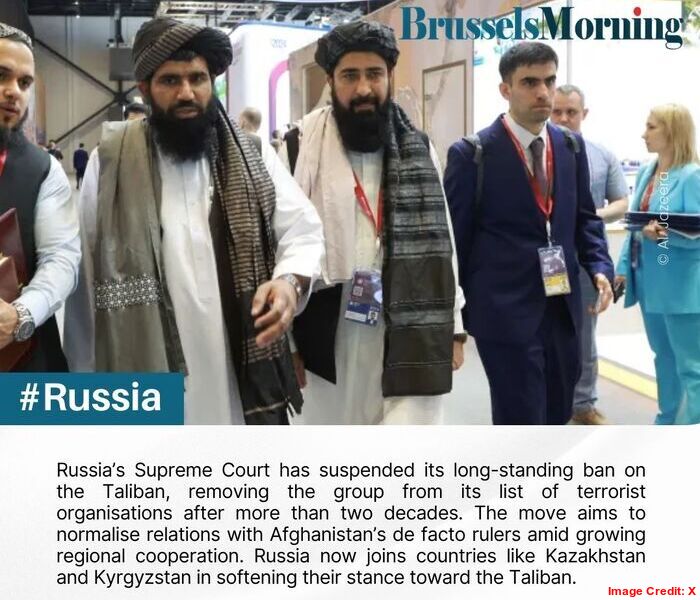
Others are of the opinion that the move made by the Russian Supreme Court is a diplomatic victory for the Taliban. It may be noted that Moscow softened its stand on the Afghan outfit in the past, allowing the Taliban delegations to attend various forums in Russia. According to analysts, Russia did so as it wanted to become a regional power broker. Meanwhile, the Russian officials have claimed that Moscow would engage with the Taliban in order to help stabilise Afghanistan.
Kazakhstan and Kyrgyzstan have also removed the Taliban from their lists of terrorist groups in recent times. Interestingly, Russia’s latest move also opens the possibility of lifting sanctions on Syria’s new ruling group, Hay’at Tahrir al-Sham (HTS).
Boundless Ocean of Politics on Facebook
Boundless Ocean of Politics on Twitter
Boundless Ocean of Politics on Linkedin
Contact us: kousdas@gmail.com

 ISMC
ISMC Boundless Ocean Of Politics