

Placing A Historic Demand
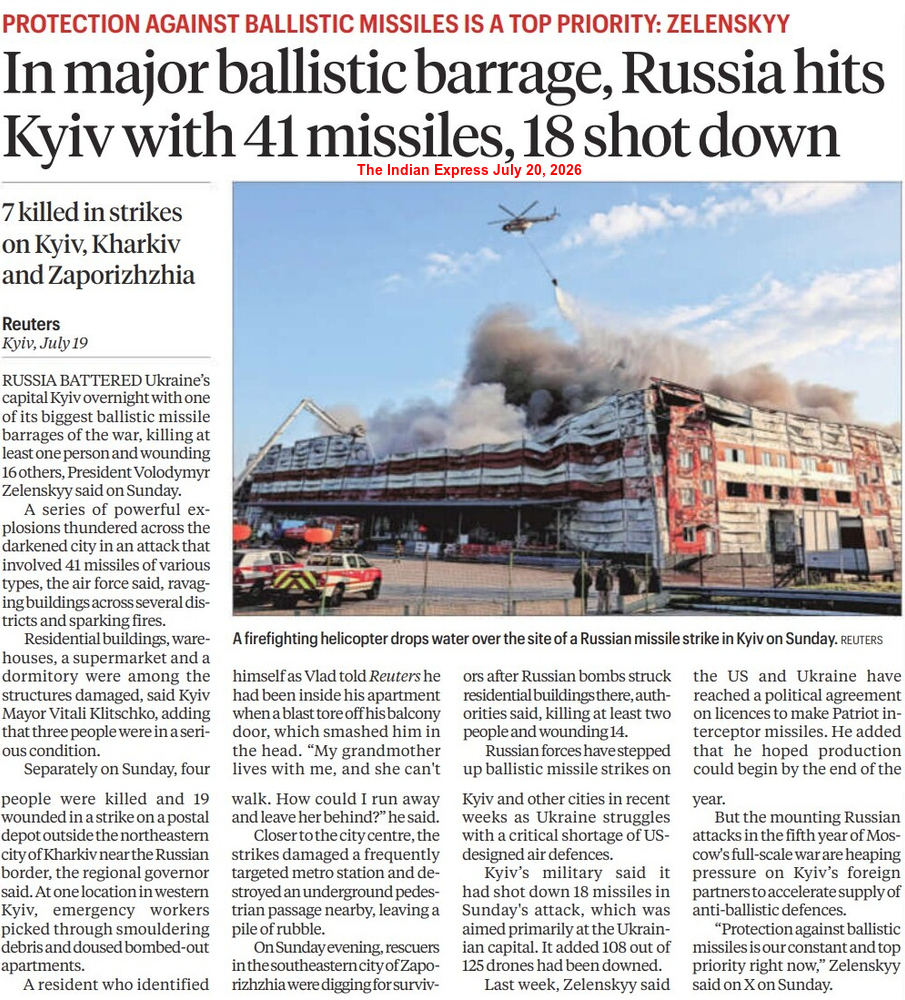
The profound silence following an explosion is a terrific one. War does not merely endanger human lives, but also Mother Nature. Bombings and military operations reduce lush forests to ashes, render fertile agricultural land unproductive and severely contaminate water resources with toxic chemicals. On February 24, 2022, Ukraine witnessed such a silence whose echoes are set to extend far beyond the confines of the present.
In a report, the Greenhouse Gas Accounting of War (IGGAW) has mentioned that the total greenhouse gas emissions resulting from Russia’s full-scale invasion of Ukraine amount to approximately 311 million tonnes of CO2 equivalent, while the economic climate-related damages have officially surpassed USD 57 billion. Now, Ukraine has set a historic global precedent by preparing a landmark claim of over USD 44 billion against Russia for climate and environmental damage caused by the war. In a rare first, a state has formally sought accountability and compensation from another for the greenhouse gas emissions (often called conflict carbon) resulting from an act of aggression.
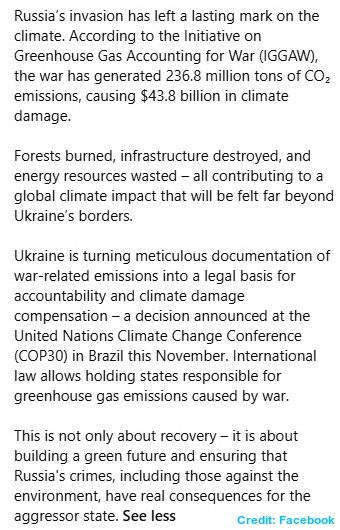
The historical significance of such a demand is not merely technical; as its impact is profound in the legal and political spheres, as well. This is the first time an affected country has demanded that the aggressor state be held accountable and pay compensation for greenhouse gas emissions resulting from an illegal war waged against it. The extensive use of gunpowder has contaminated the air, groundwater and soil with toxic materials. The problem is that this sort of pollution spreads even beyond the immediate conflict zones.
Ukraine is one of the world’s leading exporters of agricultural products as the former Soviet Republic is a powerhouse in global agriculture, frequently referred to as the Breadbasket of Europe because of its vast, fertile chernozem. It is not possible to safely carry out cultivation, research or rehabilitation activities on contaminated land. Hence, soil degradation is not just an environmental concern; it is bound to impact food security, economic stability and national income as well. Water resources have also been affected. According to experts, contaminated toxic materials would have a dangerous impact on marine ecosystems. In addition, there is a risk of the presence of vast quantities of explosives or mines in many areas and their removal could take decades.
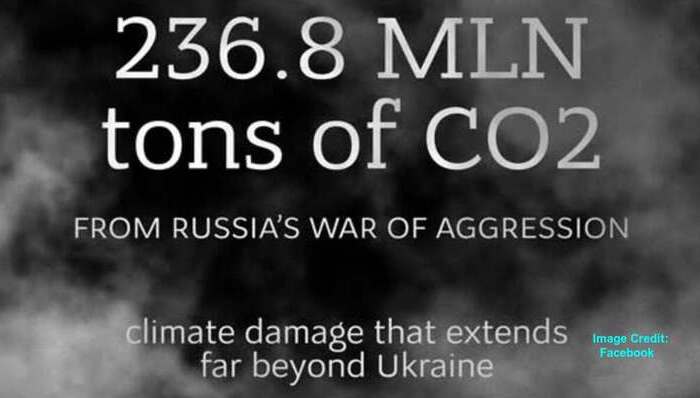
The environmental toll resulting from the war has already been documented. However, the real picture will become clear only after the full manifestation of its latent effects on water, soil, air and human health. It is not possible to restore infrastructure, like war-torn houses or damaged roads, within a single budget cycle. It takes centuries for a fertile layer of topsoil to form and decades to restore biodiversity, as well as complex ecological networks, while improving the quality of contaminated groundwater can, in some cases, prove practically and technologically impossible.
The environmental damage caused by the war in Ukraine will result in a severe, long-lasting scar, burdening the country with a toxic legacy long after the conflict ends. In such a situation, Ukraine’s claim is quite justified.
Meanwhile,








Boundless Ocean of Politics on Facebook
Boundless Ocean of Politics on Twitter
Boundless Ocean of Politics on Linkedin
Contact us: kousdas@gmail.com

 ISMC
ISMC Boundless Ocean Of Politics