

Peace Talks In Jeopardy As US Strikes Iran
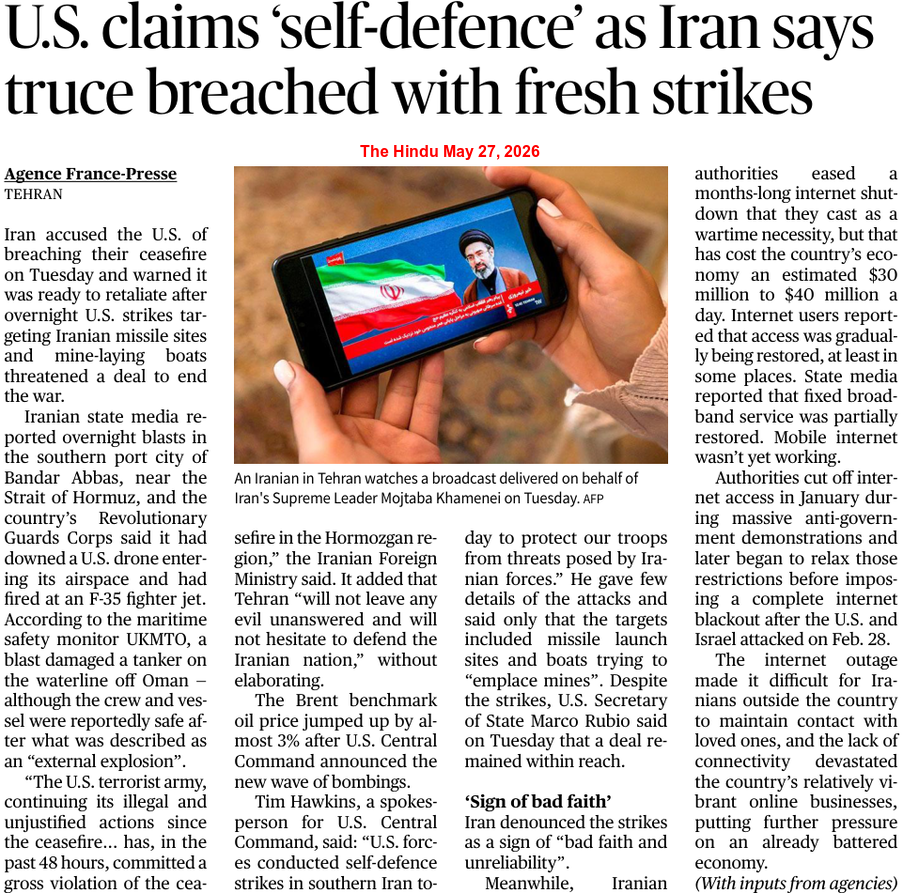
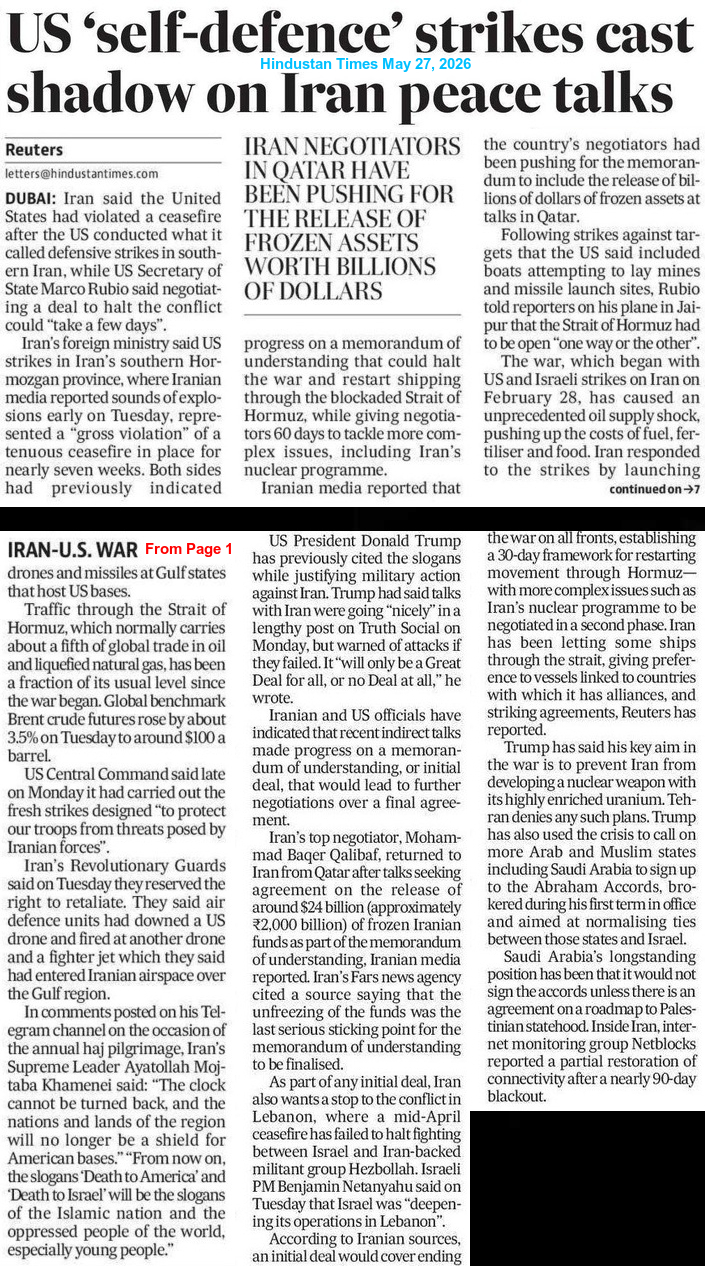
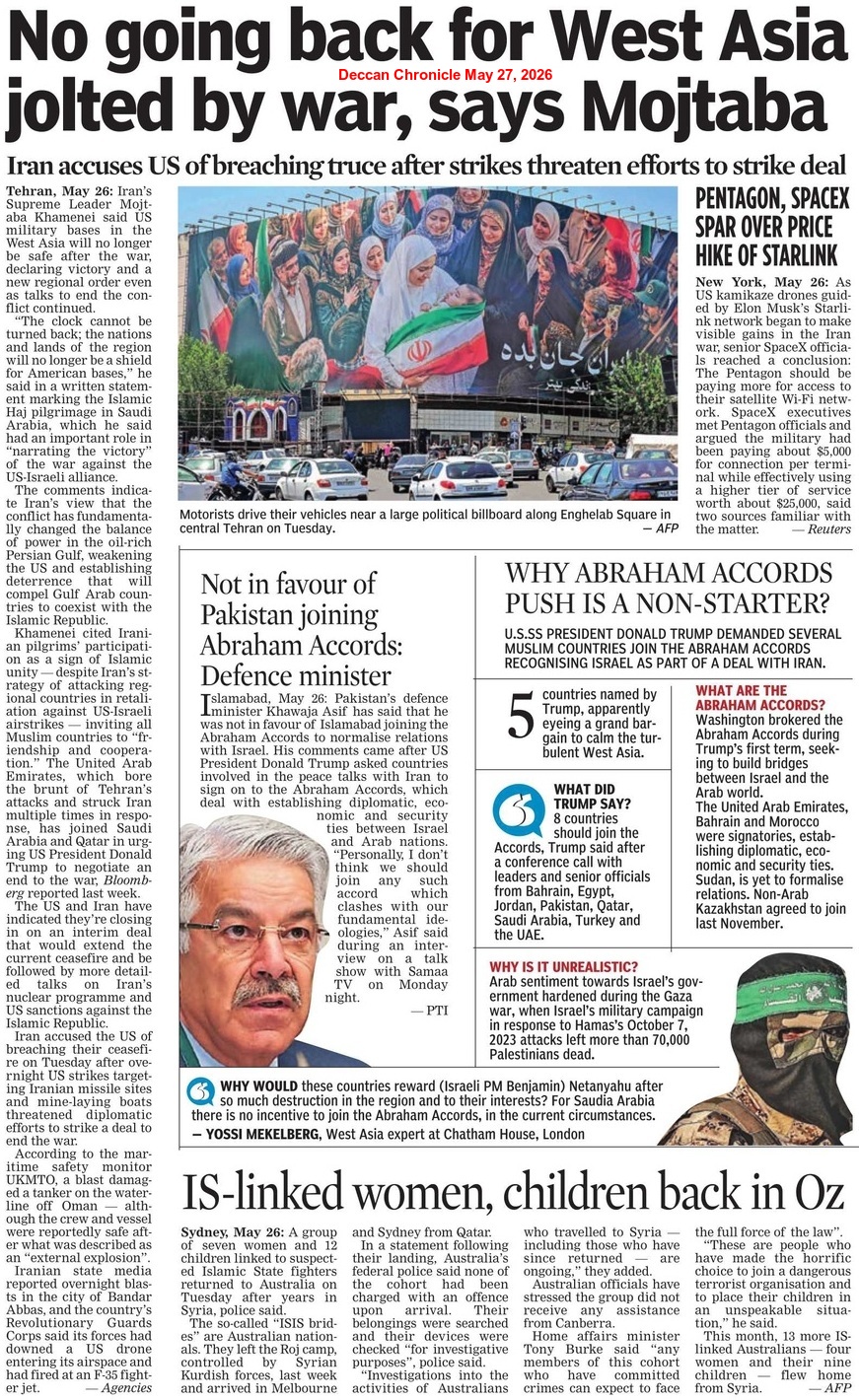
Amid uncertainty over the ceasefire agreement, US forces launched fresh attacks in Iran on May 25, 2026 night. The US Military confirmed that it launched self-defence strikes that included “missile launch sites and Iranian boats attempting to emplace mines” against Bandar Abbas near the Strait of Hormuz on Monday night. Captain Timothy ‘Tim’ Hawkins, the senior spokesperson for the US Central Command (CENTCOM), told CNN: “US forces conducted self-defence strikes in southern Iran today to protect our troops from threats posed by Iranian forces.” He stressed: “US Central Command continues to defend our forces while using restraint during the ongoing ceasefire.“
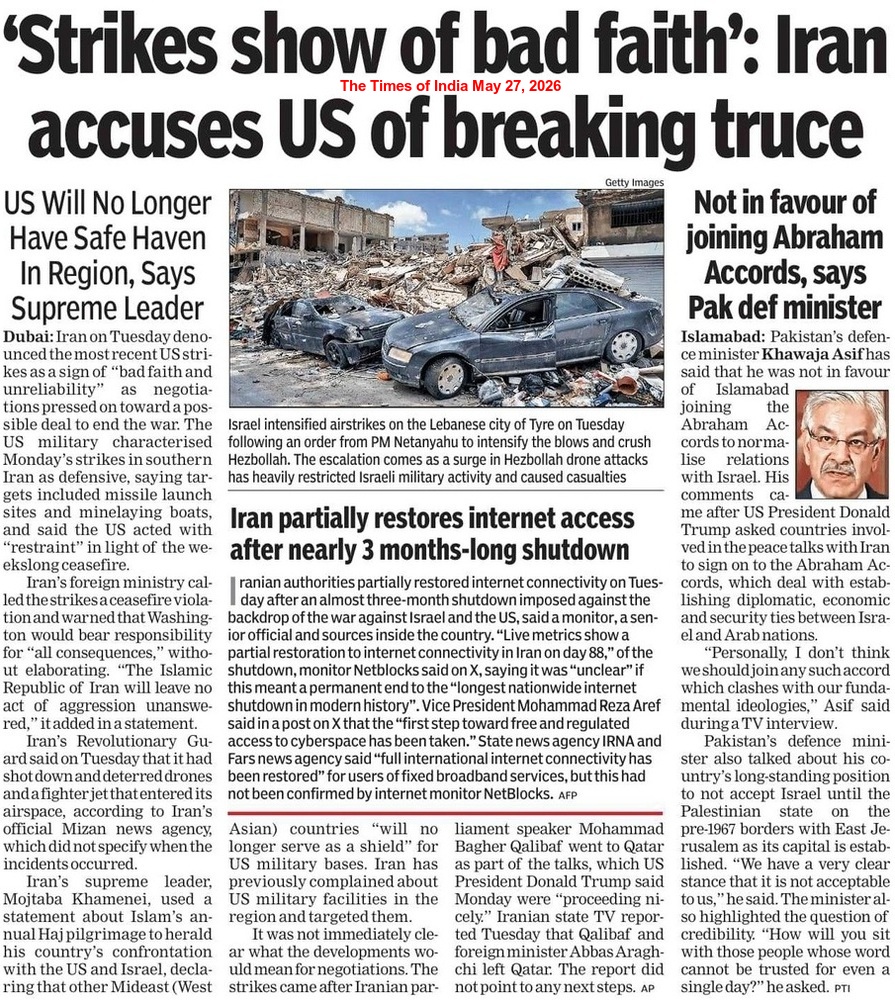
Immediately after the strikes, Iran accused the US of “a clear violation of the ceasefire”, stating that the Islamic Republic “holds the American regime responsible for all consequences arising from these hostile acts”. In a statement, the Iranian Foreign Ministry warned that “without any doubt”, it would “leave no act of aggression unanswered and will not hesitate in defending the dignity of Iran and its people”. By carrying out these “aggressive actions” while negotiations were ongoing, the US had “once again demonstrated the bad faith and unreliability” of its administration, both toward Iran and the international community, added the statement.
Meanwhile, the Islamic Revolutionary Guard Corps (IRGC) claimed that it downed a US drone, fired at a fighter jet and another drone that violated Iranian airspace on May 26. For his part, Supreme Leader Ayatollah Mojtaba Khamenei stated that the Middle East “will no longer serve as shields for US bases“, adding: “In addition to no longer having a safe haven for evil and establishing military bases in the region, America is moving away from its previous status day by day.“
Pakistan Rejects US Calls To Join Abraham Accords
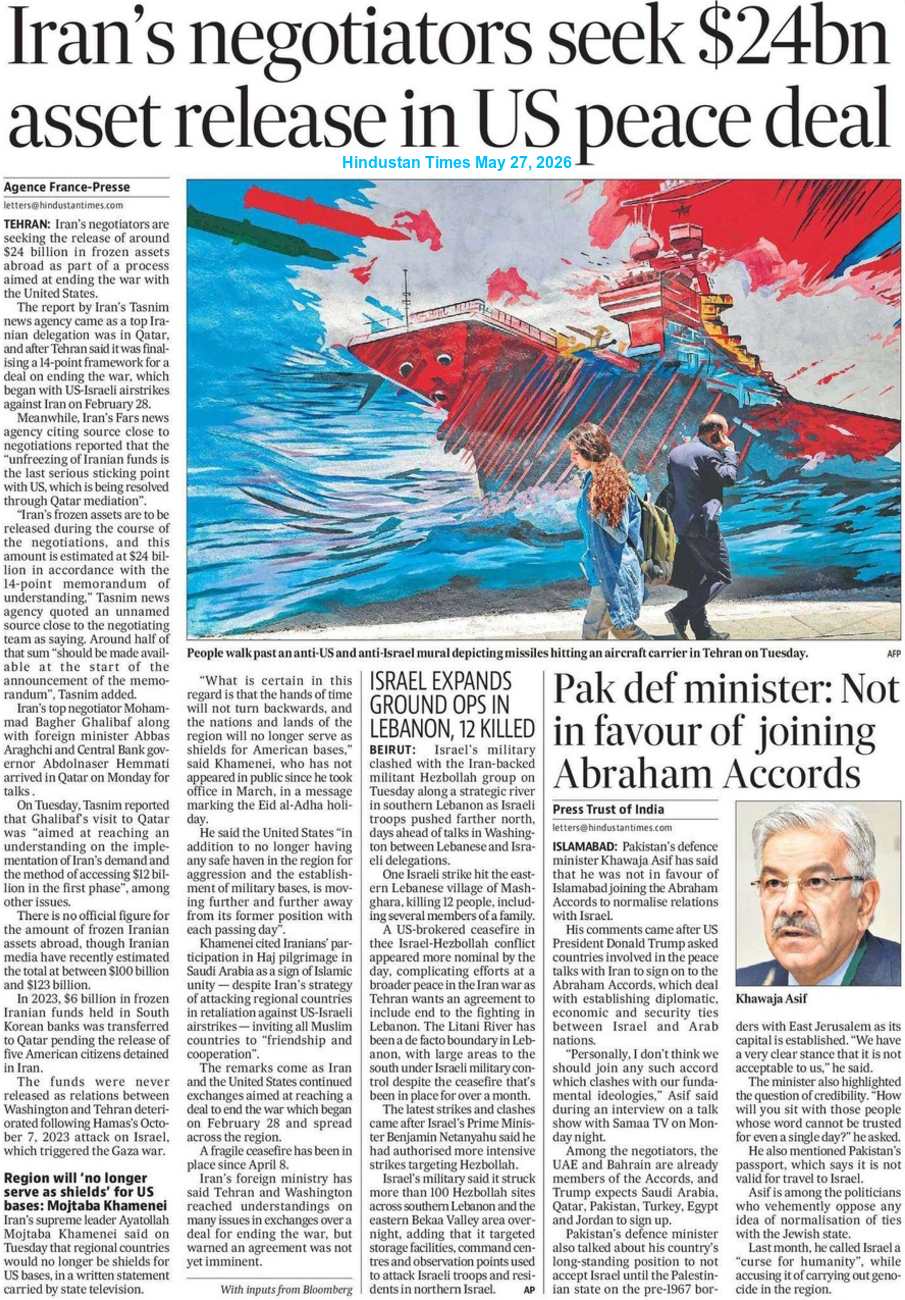
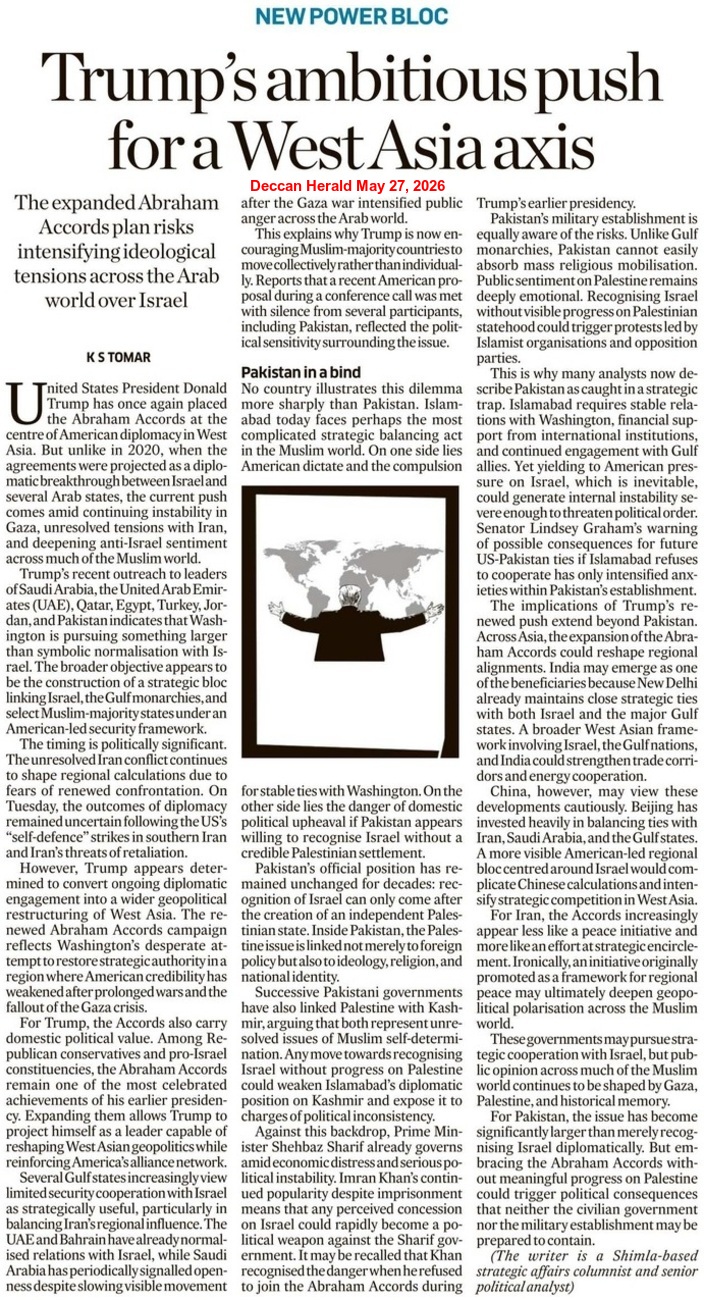
Just a day after President Donald John Trump pushed for an expansion of the Abraham Accords as part of a wider diplomatic settlement tied to a possible US-Iran agreement, Pakistan formally rejected US calls to join the Accords on May 26. Defence Minister Khawaja Muhammad Asif and Foreign Minister Muhammad Ishaq Dar made it clear that normalisation of ties with Israel would not be possible for their country because of Pakistan’s fundamental ideologies. According to the two ministers, joining the Accords without a Two-State Solution and an Independent Palestinian State is unacceptable.
During an interview with Pakistani broadcaster Samaa TV on May 26, Asif said: “Personally, I don’t think we should join any such accord that clashes with our fundamental ideologies.” The defence minister questioned the credibility of engagement with Israel, stressing: “How will you sit down with those people whose word cannot be trusted even for a single day?” He also reiterated the official position of Pakistan, stating: “We have a very clear stance that this is not acceptable to us.”
It may be noted that Pakistan’s relations with Israel have never been cordial. Islamabad has never recognised Israel as an independent, sovereign state in the past 78 years. The official Pakistani passport explicitly contains a printed clause, stating that the passport is valid for travel to all countries in the world, except Israel.
The Abraham Accords
The Abraham Accords are a series of US-brokered diplomatic agreements initially signed in September 2020 to normalise relations between Israel and several Arab and Muslim-majority countries. By prioritising strategic, economic and security cooperation, they marked a historic geopolitical shift in the Middle East. While Israel, the United Arab Emirates (UAE) and Bahrain signed the initial declaration at the White House on September 15, 2020, Sudan and Morocco agreed to normalise relations with the Jewish Nation in 2020, and Kazakhstan formally joined the grouping in 2025. Although Egypt and Jordan are yet to sign the Abraham Accords, they maintain diplomatic relations with Israel. As President Trump wants to include Saudi Arabia, Turkey, Syria, Qatar and Pakistan in the Abraham Accords, he said on May 25, 2026 that it should be mandatory for more countries to join the Accords as part of the Iran deal.
Iran Pushes For An Alliance
Ayatollah Mojtaba Khamenei, the Supreme Leader of Iran, has urged the broader Islamic World and Middle Eastern nations to form a united security and military alliance that explicitly excludes the US and Israel. The Iranian media reported on May 26 that the Supreme Leader further issued a warning that the Islamic Republic, together with the Arab World, would teach the US and Israel a lesson.
Mojtaba Khamenei called on Islamic nations to shape a new regional and global order without US influence. In a written message for the Hajj pilgrimage, he declared that Washington DC’s era of dominance in West Asia was ending and that regional lands would no longer serve as shields for US military bases. On his Telegram channel, the Supreme Leader mentioned that the Islamic countries should unite on the basis of shared interests in order to form a new regional order and to enhance cooperation for a greater cause. Meanwhile, he expressed hope that Iran, together with other Islamic nations, could shape the future of West Asia, without the involvement of the US.
Meanwhile,

Boundless Ocean of Politics on Facebook
Boundless Ocean of Politics on Twitter
Boundless Ocean of Politics on Linkedin
Contact us: kousdas@gmail.com

 ISMC
ISMC
