

The Cessation Of Existence
A conference of Nobel laureates and nuclear scientists was held in Chicago on July 14-16, 2025 to commemorate the 80th anniversary of the Trinity Test, the US’ first nuclear explosion. The event, titled The Nobel Laureate Assembly for the Prevention of Nuclear War, brought together prominent experts who discussed various ways to prevent nuclear conflict. Several books have been published on the Trinity Test in different languages around the world and they have shocked the global community. One has experienced a glimpse of that horror in Oppenheimer, a 2023 epic biographical thriller film written, co-produced and directed by Christopher Nolan. The US conducted the test of an atomic bomb in New Mexico on July 16, 1945. Following the successful test, it dropped two bombs on the Japanese cities of Hiroshima on August 6 and Nagasaki on August 9, 1945. With this, the Second World War (1939-45) came to an end.
In these two Japanese cities, the heat generated by the explosions resulted in temperatures reaching 3,000 to 4,000 degrees Celsius near the hypocentre. This extreme heat caused severe burns and contributed to the immediate deaths of approximately 70,000 people in Hiroshima and 40,000 in Nagasaki. Many of those who survived suffered long-term health issues as a result of radiation exposure. Those included increased rates of cancer, particularly leukaemia and other solid cancers, as well as non-cancer diseases, like cataracts, thyroid tumours and heart disease. The effects also included psychological trauma and genetic damage, with some studies suggesting potential impacts on the offspring of survivors.

The Second World War was undeniably a devastating one in terms of loss of life and property damage. Also, it was a fine example of “ultimate humiliation of human beings” as the war involved acts of extreme cruelty. As per a study, while estimates for military deaths range from 21 to 25 million, estimates for civilian deaths range from 40 to 55 million. The total death toll is estimated to be between 70 and 85 million. It may be noted that the First World War (1914-18) had resulted in approximately 10 million military deaths and roughly seven to 13 million civilian deaths. Around two million British soldiers returned home from the First World War with various physical disabilities and a significant number of returning soldiers needed urgent organ transplants.
You may also like: The Postmodern Architecture Of Genocide
There is evidence suggesting some level of conflict between modern humans and Neanderthals, although the idea of outright warfare between them is debated. Archaeological excavations have uncovered mass graves of the Warm Period containing skeletons with signs of violence, including deep injury marks. These findings suggest violent conflict or mass fatalities during the Warm Period. There is a plausible estimate that one billion people have been killed or seriously injured in wars and conflicts over the past 8,000 years. According to William Eckhardt‘s analysis of war records spanning from 3000 BC to 1991, the total number of war-related deaths is estimated to exceed 150 million. Of course, it is not possible to obtain documentation of all local, as well as regional, armed conflicts. Some studies estimate that 1% of the global population has perished in war throughout history. In prehistoric times, death rates were quite high, with life expectancy around 33 years, and many deaths were due to infectious diseases and violence. During the reigns of ancient emperors, life expectancy might have been higher than prehistoric times, but a significant portion still died violently.

War significantly contributes to various physical, as well as mental, disabilities, both directly and indirectly. The use of chemical and radioactive weapons in modern warfare carries the risk of long-term illness or disability. Also, there is a high risk of suffering from depression, anxiety and other mental illnesses because of war trauma.
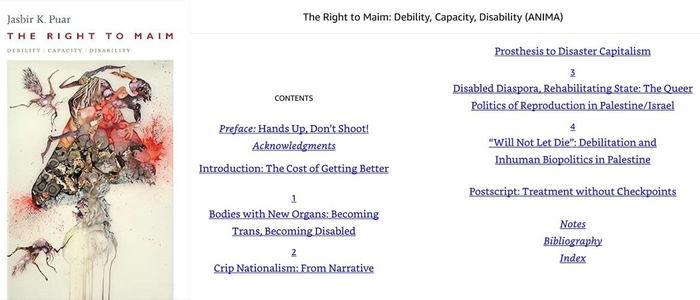
In the introduction of her 2017 publication The Right to Maim: Debility, Capacity, Disability, Jasbir Kaur Puar mentioned that the production of disability is tied to colonial violence, developmentalism, war, occupation and resource disparity. She claimed that social and political violence, as well as social inequality, also fuel the increase in numbers of disabled people. According to the author, ending war and inequality would significantly improve the lives of people with disabilities and reduce the prevalence of disability-related challenges.
At the moment, Asia and Europe are experiencing two deadly wars (the Israel-Hamas War and the Russia-Ukraine War, respectively), while civil wars and genocides are taking place in various African countries. According to the World Health Organisation, approximately 30,000 people in Syria are estimated to acquire disabilities each month due to the internal conflict. While 0.3 million people have been disabled in Gaza since October 7, 2023, nearly 3.9 million people are experiencing moderate to severe mental health conditions in Ukraine.
Most people with physical disabilities cannot protect themselves or escape during a conflict. It is not possible for them to quickly descend stairs or to take shelter in bunkers. Life is at risk in war zones because of various problems, such as individuals with hearing loss may not be able to hear sirens. Visual impairment, too, can significantly impact a person’s mobility and ability to move to a safer place, thus posing a safety risk in emergency situations. During and after conflicts, vulnerable populations frequently experience denial of fundamental Human Rights and essential resources, like food, water and nutrition. This sort of deprivation is often a direct consequence of conflict-related factors, including displacement, infrastructure damage and restricted access to essential services. Israeli attacks have targeted people trying to get food near distribution sites in Gaza. They often flee hunger and find themselves hungry and wounded.

UNICEF data indicates that nearly 240 million children worldwide have disabilities and the number is constantly increasing because of wars, as well as various conflicts. The lack of medicine, food and water make the scenario worse. The Israeli Armed Forces have struck health-care facilities and personnel in Gaza at least 1,844 times since October 7, 2023! UNICEF has delivered critical hearing aids, prosthetics, wheelchairs, etc., to Gaza children, provided psychological support to children in Ukraine and financial assistance to the victims of the civil war in Syria. However, these are not sufficient.
Once, Albert Einstein said: “So long as there are men, there will be wars.” Hence, the number of casualties and people with physical disabilities, too, will increase. The use of nuclear weapons has now become a matter of a momentary decision by a statesman. No one knows why the entire world remains silent even after witnessing the massacre in Gaza. The deceased have been buried. Unfortunately, there is hardly anyone left to think about the social status of those who survived war with disabilities.
Boundless Ocean of Politics on Facebook
Boundless Ocean of Politics on Twitter
Boundless Ocean of Politics on Linkedin
Contact us: kousdas@gmail.com

 ISMC
ISMC Boundless Ocean Of Politics