

The Rise & Fall Of A Great Power
The centre of power has shifted in West Asia in recent times as two Arab nations have emerged as the most powerful countries in the region. Another nation, too, is trying to increase its influence in West Asia. However, the scenario was completely different in the past. Unfortunately, an old empire, which did not allow the US to dictate terms even in the 20th Century, has lost its glory.
Iraq used to control of the West Asian politics in the post-Second World War period when the Arab nations used to respect the military strength of Baghdad. However, the country with fertile alluvial plains between Tigris and Euphrates has become somewhat irrelevant in the 21st Century as far as global geopolitics is concerned. Hence, the name of Baghdad has never been heard especially during the recent turning points in the regional history, such as the Hamas-Israel War or the fall of the al-Assad Regime in Syria. According to political analysts, Saudi Arabia, the United Arab Emirates (UAE) and Qatar have emerged as major regional players in the first quarter of the 21st Century. These three wealthy nations have made great progress in technological development and social reform, as well.
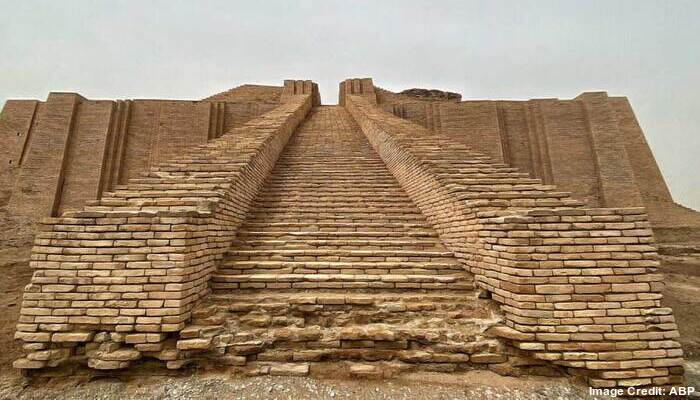
Iraq, the land of the ancient Mesopotamian Civilisation, used to enjoy a similar status in the 1980s and 1990s. However, historians are of the opinion that Iraq witnessed its real golden age from 9th Century AD to 15th Century AD. During that period of time, Abbasid caliphs (a line of rulers who led the Abbasid Caliphate from 750 to 1258) had ruled Baghdad and one of them was Hārūn al-Rashīd, the fifth caliph of the Abbasid Dynasty (ruling from 786 to 809) who is considered to be the most famous ruler of this dynasty and also an icon of the Islamic Golden Age. Baghdad emerged as the most prosperous city in West Asia in the 15th Century and also became one of the major global centres of knowledge practice. The Iraqi capital made remarkable progress in trade, culture, education and technology, too. Iraq surpassed almost all countries in the world in terms of GDP and average per capita income during the rule of the Abbasid Dynasty.
However, Iraq failed to hold this position mainly because of the rise of separatism and religious fanaticism. Taking advantage of the situation, the Ottoman rulers captured Baghdad in 1534. Britain conquered the Ottoman Empire during the First World War (1914-18) and took control of Baghdad. The colonial British power appointed Faisal I, the son of Sharif Hussein of Mecca and the brother of Abdullah who became the Emir of Transjordan, as the first King of Iraq in 1921. As expected, King Faisal I, a puppet ruler, faced mass protests. Iraq gained independence from British control on October 3, 1932 as the Hashemite Kingdom of Iraq became an independent state after 12 years of British rule. However, Iraq’s freedom did not last long.

The British forces returned to Baghdad after the beginning of the Second World War. As Iraq was facing a serious economic crisis at that time, it had to go through a political turmoil for the next 15 years. By that time, the British forces left the West Asian nation. Brigadier Abdul-Karim Qasim Muhammad Bakr al-Fadhli al-Zubaidi (popularly known as Abdul-Karim Qasim; November 21, 1914 – February 9, 1963) came to power in 1958 after the Iraqi monarchy was overthrown during the July 14 Revolution. He ruled the country as the Prime Minister until his downfall and execution during the 1963 Ramadan Revolution. However, Brigadier Qasim failed to resolve the internal political crises and Iraq moved towards modernity while experiencing the bloodshed.
Saddam Hussein (April 28, 1937 – December 30, 2006) managed to ensure stability in Iraq in 1979, although he is widely considered as a dictator. After becoming the fifth President of Iraq, he silenced all the dissenting voices. Hussein did not hesitate to execute some members of his Ba’ath Party for criticising his policies. Within a year of coming to power (1980), he engaged in a bloody war with neighbouring Iran. The eight-year-long war rocked the Iraqi economy. However, Iraq managed to increase its influence in West Asia during Hussein’s reign as Baghdad developed some deadly weapons.
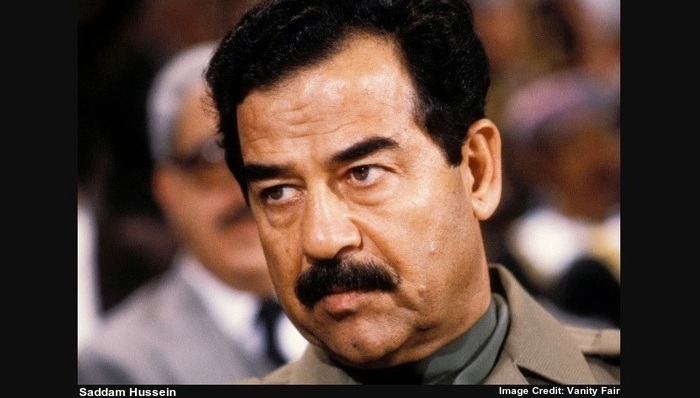
When Hussein invaded Kuwait in 1990, Iraq was yet to get rid of the economic crisis. Hence, his decision backfired. Hussein had no other option, but to withdraw his troops from Kuwait after the US and its Western allies launched Operation Desert Storm against Iraq. Later, Washington DC accused Baghdad of developing chemical weapons of mass destruction and launched a fresh attack on Iraq in 2003. As Hussein, financially crippled, failed to counter-attack the US forces, the Americans captured major Iraqi cities in just 20 days. On December 13, 2003, the President, himself, was captured from a secret bunker near a farmhouse in ad-Dawr, near Tikrit. The US forces handed him over to the Interim Iraqi Government to stand trial for crimes against humanity and other offences. On November 5, 2006, the former President was found guilty of crimes against humanity and sentenced to death by hanging. With his execution on December 30, 2006, an era came to an end in Baghdad. Iraq was never able to turn around after the demise of Hussein.
Meanwhile, Qatar has emerged as a major player in West Asia since 2003. The US withdrew its troops from Afghanistan in 2021, paving the way for the return of the Taliban to power in Kabul. Qatar played an important role in mediating between the two parties, as the US and the Taliban struck a deal in Doha. Qatar has also been playing the role of a mediator between Israel and the Palestinian Hamas Movement since the beginning of the Hamas-Israel War in October 2023. Doha has arranged the safe return of the US citizens kidnapped by Hamas.

On the other hand, Saudi Arabia and the UAE have taken progressive steps in various areas, from Women’s Rights to modern technology, in recent times. Saudi Crown Prince Mohammed bin Salman has not only recognised the Women’s Right to Drive in accordance with Sharia Law, but also allowed the concerned authorities to organise fashion shows! The UAE, too, has sought India’s help to set up an Institute of Technology.
Turkey, too, has emerged as a major player in West Asia. Ankara has made huge improvements in the defence sector in the past decade (2014-24) as its arms export has increased 11 times during this period! According to analysts, President Recep Tayyip Erdoğan has decided to achieve his dream of the rebirth of Ottoman Empire. If he succeeds, then Turkey would be able to control the entire West Asia.
Boundless Ocean of Politics on Facebook
Boundless Ocean of Politics on Twitter
Boundless Ocean of Politics on Linkedin
Contact: kousdas@gmail.com

 ISMC
ISMC Boundless Ocean Of Politics