

Fall Of The Ottoman Empire: Timeline & Reasons…
Once European powers used to rule the entire world. The growing demand for raw materials created by the Industrial Revolution increased the need for Britain and other European powers to maintain their colonies. The colonial powers adopted various policies, like Divide and Rule, to consolidate their authority. At that period of time, the Ottoman Empire was important to Britain, France and Russia. As Britain had colonised the Indian Subcontinent, losing control of the Mediterranean, the Dardanelles and the Bosphorus would have cut off easy access to India for Britons. Hence, Britain wanted to take control of this region.
The expansion of the Ottoman Empire in Europe began when Sultan Mehmed II (March 30, 1432 – May 3, 1481), commonly known as Mehmed the Conqueror, conquered Constantinople, the capital of the Byzantine Empire that had survived for a thousand years, and moved the Ottoman capital there. The Ottoman Empire gradually grabbed more European lands.

The greatest expansion of the empire took place during the reign of King Suleiman I (November 6, 1494 – September 7, 1566), popularly known as Suleiman the Magnificent in the West and Suleiman the Lawgiver in his realm. As expected, the Western Powers did not like it. It may be noted that Suleiman I was the longest-reigning Sultan of the Ottoman Empire from 1520 until his death in 1566. Under his administration, the Ottoman Empire ruled over at least 25 million people! As the Ottomans emerged as a major European power, the Western Colonial Powers started considering the Ottoman Empire as a serious threat to them. After the rule of Sultan Selim and Sultan Suleiman I, the weaknesses of the Ottoman Empire became evident especially after the defeat in the Battle of Lepanto, a naval engagement that took place on October 7, 1571. Later, the Treaty of Karlowitz (concluding the Great Turkish War of 1683-97) and the Treaty of Kuchuk-Kainarji (July 21, 1774) made the Ottomans extremely weak. Britain and other European powers had been conspiring against the Ottoman Empire in various ways mainly because of their geo-political and economic interests, as well as cultural and civilisational differences.

On Arab Nationalism
Arab Nationalism had taken a realistic shape in the 1860s due to Christian Arabs and some secret organisations. Later, Syrian author Abd al-Rahman al-Kawakibi (1849, 1854 or 1855 – 1902 or 1903) and Egyptian Salafist Sunni Islamic scholar Muhammad Rashid Riḍā (September 23 or October 17, 1865 – August 22, 1935) made the Arab Nationalism more influential. According to Bangladeshi Historian Abul Bashar Mosarraf Hossain, the colonial British and French powers pioneered the new libertarian holistic Arab Nationalism during the First World War. An attempt to implement the British and French plan to divide the Ottoman Empire between themselves in accordance with the Sykes-Picot Agreement (1916) fuelled the nationalist movement in the Arab World. While sharing power after the First World War, they hoodwinked the nationalist movement and colonised the Middle East (or West Asia). The anti-imperialist movement triggered by the Western powers spread to different parts of the Ottoman Empire and took the shape of the Freedom Movement.
Diplomatic Strategy Of Napoleon
French Emperor Napoleon Bonaparte‘s (August 15, 1769 – May 5, 1821) Army invaded Ottoman Egypt in 1792. England realised that if France occupied Egypt, then the former would lose its routes of communication with India. Hence, England got involved in the war and helped Egypt defeat Napoleon’s Army. However, some French soldiers settled in Egypt. Napoleon got interested in West Asia from French Philosopher comte de Volney‘s (born Constantin François de Chassebœuf; February 3, 1757 – April 25, 1820) writings. He realised that it would be difficult to rule this piece of land even if he managed to conquer it. Hence, Napoleon decided to understand the Islamic culture, instead of opposing it. He contacted various orientalist Islamic scholars and also established various institutions in order to communicate with Muslims.

Napoleon further started establishing himself as a friend of Islam. With the help of local scholars, muftis and imams, he also preached an interpretation of the Quran, making everyone think that the French people were friends of Muslims. This way, Napoleon made an attempt to Europeanise the Egyptian Army. Later, the rise of Ottoman Albanian Governor Muhammad Ali Pasha (March 4, 1769 – August 2, 1849) in Egypt further boosted French influence in the region. It may be noted that Pasha, the de facto ruler of Egypt from 1805 to 1848, is considered as the founder of modern Egypt.

The Rise Of Muhammad Ali Pasha
The Ottoman Sultan appointed Muhammad Ali Pasha as the Governor of Egypt in 1805 for his war prowess against the French in 1798. As a governor, he was highly impressed by the efficiency of the French forces, and also realised the weakness of the Ottoman Empire. Pasha established his dynasty by uniting the Egyptian beys of the Mamluk Period. He invited the French for development purposes, apart from forming an Army following the model of the French Army for his own benefit. Pasha even established bureaucracy, schools and colleges, and developed the economy in French style. At one point of time, he presented himself as an opponent of the Ottomans! It should be noted that Pasha did not give priority to Muslims or Turks in his Army, and replaced them with people of different religious beliefs. In fact, he started following the European model in various sectors. Pasha also waited for an opportunity to attack the Ottoman Empire.
The Rise Of Saudi Arabia
Taking advantage of the weakness of the Ottoman Empire, Muhammad bin Saud Al Muqrin (also known as Ibn Saud; 1687-1765), a tribal chief of Najd Province of Saudi Arabia, established tribal rule in Hejaz and Najd. He was highly influenced by the ideology of Muhammad ibn Abd al-Wahhab ibn Sulayman al-Tamimi (1703-1792), a Sunni Muslim scholar, theologian, preacher, activist, religious leader, jurist and reformer from Najd. Later, Ibn Saud conquered Mecca and Medina, and began to rule those areas. However, it was against the Ottoman ideals and defamatory to the empire. When the Ottoman forces defeated him, Ibn Saud took refuge in Kuwait. He took time to regain strength and to re-occupy those two Saudi provinces.
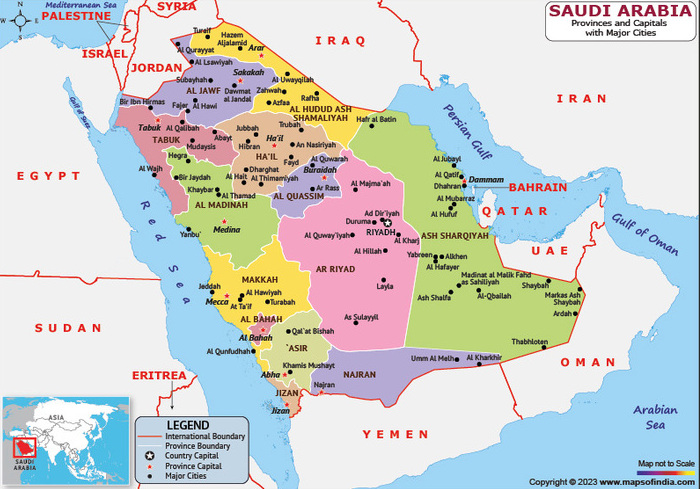
When Britain noticed the rise of the Saud family, it secretly communicated with Ibn Saud. However, Sharif Hussein ibn Ali (or Sharif Hussein) of Mecca and Madina stood in the way of the rise of Ibn Saud. Sharif Hussein was appointed as the ruler of Mecca and Madina by Sultan Hamid II as the former was a descendant of the Prophet Muhammad (PBUH). However, he was ambitious. Hence, Sharif Hussein began to interact with the great powers in order to establish a dynastic rule. Although Britain asked him to rebel against the Ottoman Empire during the First World War, the British kept in touch with both sides. When the Saud family re-invaded and occupied Mecca and Madina, the Britons were dismayed and they eventually supported the Saud family. When the Ottoman Empire collapsed after the Second World War, Britain recognised the rule of the Saud family. In fact, Britain used the Arab Nationalist Movement against the Ottomans.
Independence Movement In Greece
Once the Greek territory was under the control of the Ottoman Empire. When the Greeks launched nationalist movement, they received support from Russia, Britain and other Western powers. The French Revolution, too, encouraged the people of Greece. Various secret organisations were established in this southeastern European nation with thousands of islands throughout the Aegean and Ionian Seas. When a war broke out between the Ottomans and the Greeks, European powers backed the independence movement of Greece. Greece eventually gained independence with the help of Russia, Britain and France, and the development incited rebellions against the Ottomans in other regions.

It appears that when the Serbs started their nationalist movement in 1805, they did not receive any support from major powers. As a result, Serbia’s independence was delayed. In today’s world, major powers back various insurgent groups to fulfil their own political interests. International Politics is all about Power Politics. The behaviour of a modern state solely depends on its national interests. This is called Realism in international politics. In the contemporary world, every state supports various rebel groups and helps them form a separate state for its own interests. As the major European powers were preoccupied with expanding their global dominance by protecting their colonies, they used to consider the Ottoman Empire as a serious threat.
According to some analysts, Ottomans, themselves, were mostly responsible for the collapse of their Empire. There had been less emergence of such a competent ruler after King Suleiman I. Furthermore, the Ottomans could not build the capacity to keep up with the European powers. When Europe was developing because of the Industrial Revolution, the Ottoman Empire was lagging behind. Many are of the opinion that although various European powers were against the Ottoman Empire for their own interests, it was not the only reason for the fall of the Ottomans.
Boundless Ocean of Politics on Facebook
Boundless Ocean of Politics on Twitter
Boundless Ocean of Politics on Linkedin
Contact: kousdas@gmail.com

 ISMC
ISMC Boundless Ocean Of Politics