

A Sharp Spike In Radio Sales In Europe
As Europe is gripped by fears of potential conflict, hybrid warfare and shifts in global alliances, Britain, France and Germany have instructed their citizens to be prepared for emergency situations. Hence, radio sales are surging across the continent. The British Broadcasting Corporation (BBC) has reportedly started establishing a special broadcasting station, as well.
British electronics specialists Robert Dyas and Maplin have acknowledged this unusual surge in demand for radios. According to Robert Dyas, sales of their radios surged by 160% in the last week of October 2026, while sales of torches increased by 284% and sales of power banks rose by 106%. Maplin has reported a 92% increase in sales of its radios.
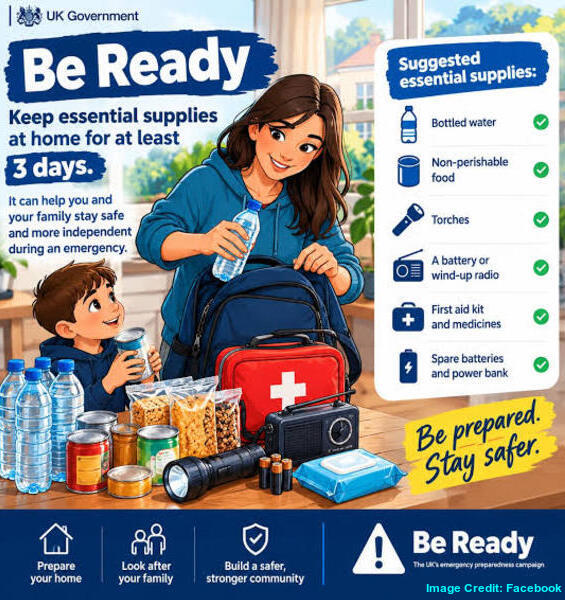
It may be noted that British Defence Secretary Wesley Paul William Streeting issued a warning for the nation on October 22, 2026, stating that Britons should be prepared for emergency situations. He urged his countrymen to keep a sufficient stock of food, medicines, drinking water and other essential items for at least three days. Immediately afterwards, there was a rush among common people to purchase items, like radios, torches and power banks.
Talking to the media, Ollie Marshall, the Managing Director and Mission Lead at Maplin Electronics, stressed: “Within hours of the ‘Be Ready’ announcement, we saw people reach for the basics – a torch, a wind-up radio, a power bank. Torch sales nearly quadrupled and radio sales almost doubled in three days.” He added: “These are simple, affordable products that keep a household connected and informed when the power goes out, and it’s encouraging to see people taking the advice seriously.” For his part, Professor Roger Kemp, an Emeritus Professorial Fellow in the School of Engineering at Lancaster University, said: “Radio has a great advantage. Regardless of whether the internet or other communication channels are working, the radio will continue to function. It remains operational even when there is no electricity.“
The British administration recently organised a forum on the subject of radio. During the event, some scientists warned that the infrastructure of any modern city could completely collapse if it were to face a prolonged loss of electricity. They termed this sort of chaos Black Sky. Scientists further claimed that radio waves would be the only means to counter this. According to sources, the BBC, keeping in mind the possible Black Sky scenario, is building a special broadcasting station. At least 100 people will work there in an emergency situation and they are currently undergoing training on how to disseminate essential information to the general public via radio waves for three-four consecutive days. The BBC is also setting up its office accordingly.
The local media have reported that this BBC station will broadcast only government directives in case of an emergency. Residents will be able to learn essential life-saving steps for any emergency through this station. At the same time, they will also know exactly where to go for administrative support. Meanwhile, the BBC is also making extensive preparations for the creation of this special broadcasting station. It is arranging accommodation and meals for those 100 employees within the station premises. The BBC is also making arrangements to operate generators so that radio services can remain functional during power outages. Nearly 40,000 litres of diesel are being stocked for this.
The BBC has further decided to use special satellite-based phones to maintain contact with its staff in such a situation. Initially, it decided to make preparations to broadcast emergency-related news for a period of about seven-eight days. However, it was later reduced to three-four days. The media outlet hopes that the British administration will be able to bring the situation under control within that time frame.
It may be noted that France faced a severe cyberattack in the second week of October 2026. A cyberattack also hit three regional cold storage facilities of France’s national blood service, the Établissement français du sang (EFS), on November 1, 2026. In fact, coordinated cyberattacks struck hundreds of supermarkets across Europe, remotely overriding internet-connected refrigeration systems and driving temperatures up to 50°C (122°F). These attacks ruined millions of Euros worth of fresh and frozen food, and even sparked electrical fires in several stores. Immediately thereafter, the administrations of several European countries stirred into action.
Britain, France, Germany and some Western European countries fear that Russia will soon launch major cyberattacks which could cause power outages in major European cities. The Kremlin has, in various ways, hinted that it has a plan for total destruction using nuclear weapons – a plan that would involve severing all forms of communication, including the internet. In 2025, the French administration issued special guidelines, urging people to prepare for a major war in near future. Special drills were conducted over an extended period in hospitals and health centres across urban, semi-urban and rural areas in France at that time. The government also arranged for food, drinking water, essential medicines and specialised training in medical care for wartime conditions.
The British government had also been heard saying much the same thing at that period of time. Now, the British Defence Secretary has advised his countrymen to take simple steps in case everyday services are disrupted, like keeping a three-day supply of cash, bottled water and tinned food at home. While emergency preparedness relies heavily on radio infrastructure, real-world effectiveness depends entirely on how well those systems hold up under extreme pressure.
Meanwhile,





Boundless Ocean of Politics on Facebook
Boundless Ocean of Politics on Twitter
Boundless Ocean of Politics on Linkedin
Contact us: kousdas@gmail.com

 ISMC

