

A Different Equation Altogether
Amidst intense geopolitical turbulence, the nuclear landscape of West Asia is poised for a reconfiguration – driven by a 30-year Civil Nuclear Cooperation Agreement between the US and Saudi Arabia. US Energy Secretary Chris Wright and Saudi Energy Minister Prince Abdul Aziz bin Salman signed the accord, featuring a 123 Agreement framework, on July 22, 2026.
In a way, the deal reflects President Donald John Trump’s transactional approach – large-scale nuclear deals for US companies, potential multi-billion-dollar trade in reactors and fuel, and a pledge to revitalise the US nuclear industry in the face of competition from China and Russia. Looking deeper, it is a strategy to keep Saudi Arabia permanently anchored within the US-centric sphere, particularly at a time when Riyadh has shown interest in nuclear proposals from Beijing and Moscow, apart from expanding the scope of its security partnerships.
On the other hand, it is a major success for Saudi Crown Prince Mohammed bin Salman Al Saud as he had long been seeking to sign a nuclear agreement with the US as part of a broader effort to strengthen ties with the Western World. Under his Vision 2030 plan, the Crown Prince aims to diversify the Saudi economy, reduce reliance on fossil fuels and cut carbon emissions. Nuclear energy will certainly help meet the growing energy demands of Saudi Arabia while allowing larger quantities of oil and gas to be reserved for export.
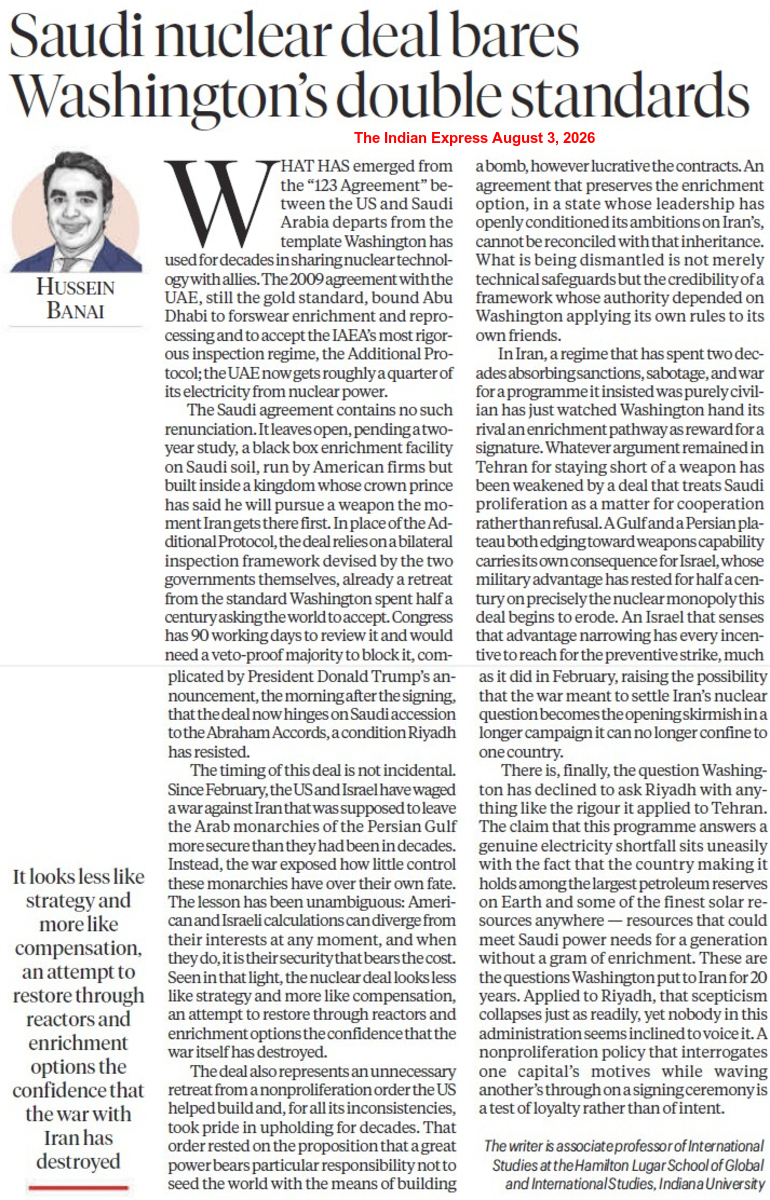
However, the concern lies elsewhere. For the past few decades, Washington DC has generally emphasised that countries adopting US nuclear technology must strictly adhere to nuclear non-proliferation commitments. At the same time, they must also remain under the supervision of the International Atomic Energy Agency (IAEA). Many are concerned because these two key conditions (strict “gold standard” renunciation of enrichment and facing a 90-day congressional review alongside normalisation debates) are absent from the agreement with Saudi Arabia. According to defence experts, such concessions would enable Saudi Arabia to acquire the capability to transform its nuclear programme into a weapons programme in the future. It may be noted that the Saudi Crown Prince explicitly stated that if Iran develops a nuclear bomb, Saudi Arabia would follow suit as soon as possible. This position serves as a core strategic deterrent for Riyadh against its regional rival.
Meanwhile, President Trump, facing criticism at home, has announced that the bilateral civilian nuclear cooperation deal with Saudi Arabia will proceed only if Riyadh joins the Abraham Accords and normalises relations with Israel. Interestingly, the core issue is not merely granting Israel the desired legal recognition, but also learning to coexist with its nuclear capabilities. The question arises here: Whether Saudi Arabia will agree to the terms of the deal in the wake of Israel’s campaign of destruction in Gaza.
If the US-Saudi Civil Nuclear Cooperation Agreement is ultimately concluded, it will not only undermine the global nuclear non-proliferation regime, but also encourage other countries to seek similar concessions and heighten the risk of a future nuclear arms race especially in unstable West Asia.
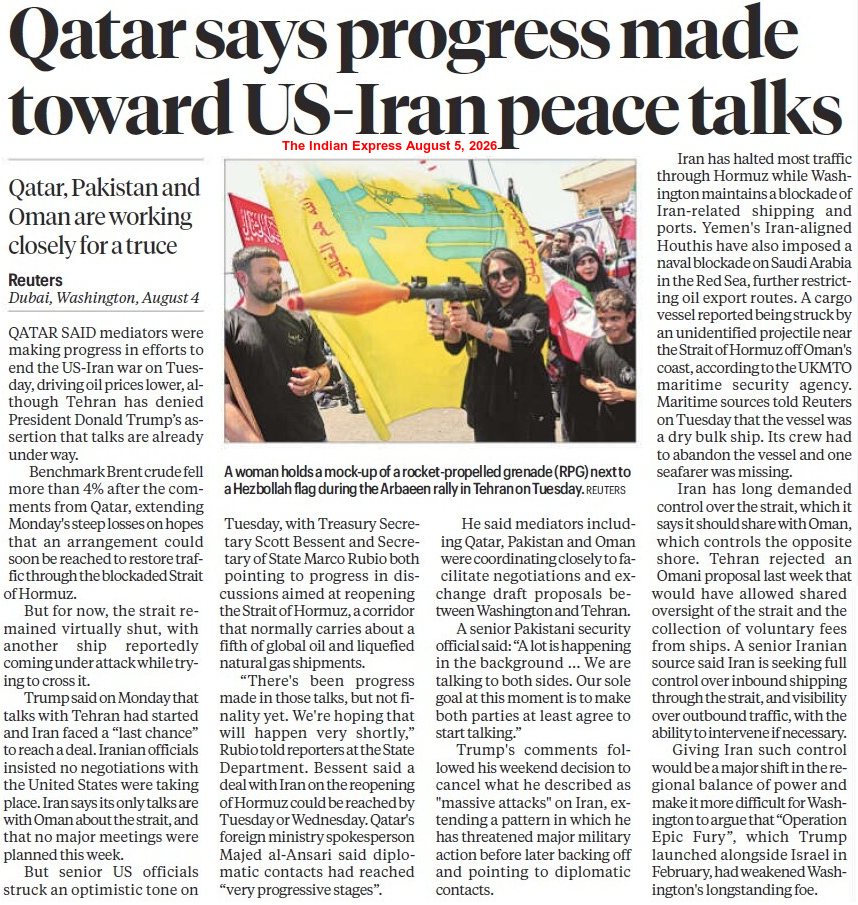
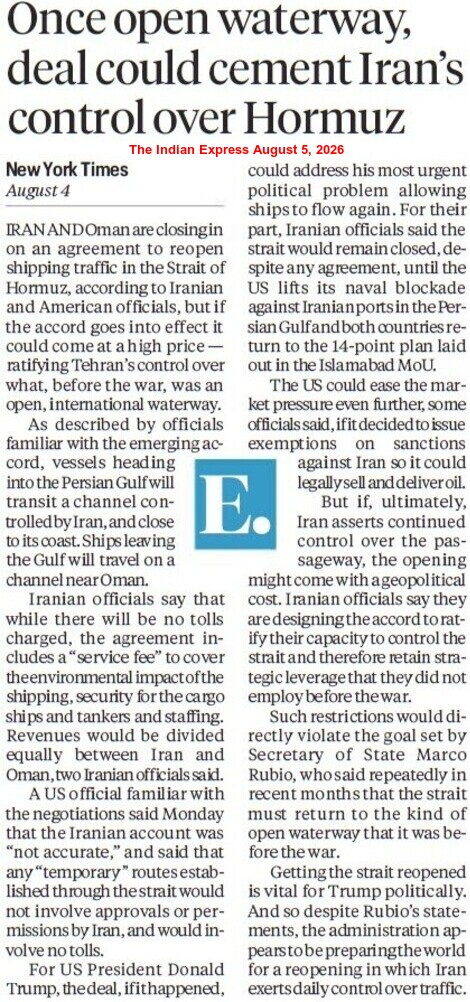
Meanwhile,





Boundless Ocean of Politics on Facebook
Boundless Ocean of Politics on Twitter
Boundless Ocean of Politics on Linkedin
Contact us: kousdas@gmail.com

 ISMC
ISMC
