

When War Is The Means Of Survival
The Parliamentary Elections are set to be held in Israel in October 2026. Experts are of the opinion that the Jewish Nation may launch a fresh attack on Iran ahead of the elections.
Iranian diplomats and officials have actively warned that Israel is seeking to draw the US into a wider regional war specifically to scuttle the Memorandum of Understanding (MoU) between Washington DC and Tehran. According to the Iranian officials, Israeli Prime Minister Benjamin ‘Bibi’ Netanyahu is trying hard to convince President Donald John Trump that the Islamic Republic has become a major threat to Washington DC, and that it is the right time to go to war and completely dismantle Iran’s strength. Tel Aviv argues that Iran is attempting to attack President Trump to avenge the assassination of its Supreme Leader, Ayatollah Ali Hosseini Khamenei.
Tel Aviv is well aware of the fact that an agreement between the US and Iran would directly challenge Israel’s core security strategy. The recently signed 14-point MoU has presented several issues that conflict with Israel’s security requirements. These include the Conflict in Lebanon, Unaddressed Threats, Sanctions and Economic Relief, and Loss of Strategic Leverage. In other words, if the MoU comes into effect, it will marginalise Israel in West Asia and increase Iran’s influence over other countries in the region. Israel is hostile towards this accord as it was excluded from the US-Iran deal.
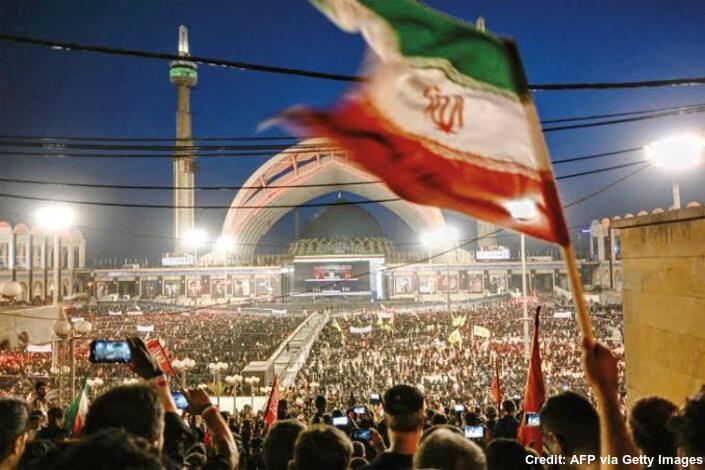
Netanyahu is facing severe political vulnerability in Israel, marked by ongoing corruption trials and intense public scrutiny regarding his leadership and security failures. As he also faces significant unpopularity and mounting political pressure, his electoral defeat is quite inevitable. Hence, old allegations of corruption against him will resurface and he might even have to go to jail.
On the other hand, if Israel goes to war against Iran jointly with the US, the Iranian economy will be in deep crisis. It could lead to social unrest in Iran and the Iranians might also take to the streets in protest against Mojtaba Khamenei, the current Supreme Leader. Such a scenario would be advantageous for both Washington DC and Tel Aviv. Israel currently holds a diplomatic advantage, as the agreement with Lebanon allows it to maintain a presence there until the Iran-aligned militant group Hezbollah is completely disarmed. Hezbollah is under pressure regarding its military presence in southern Lebanon and Israel is seeking to seize this opportunity to go to war with Iran.
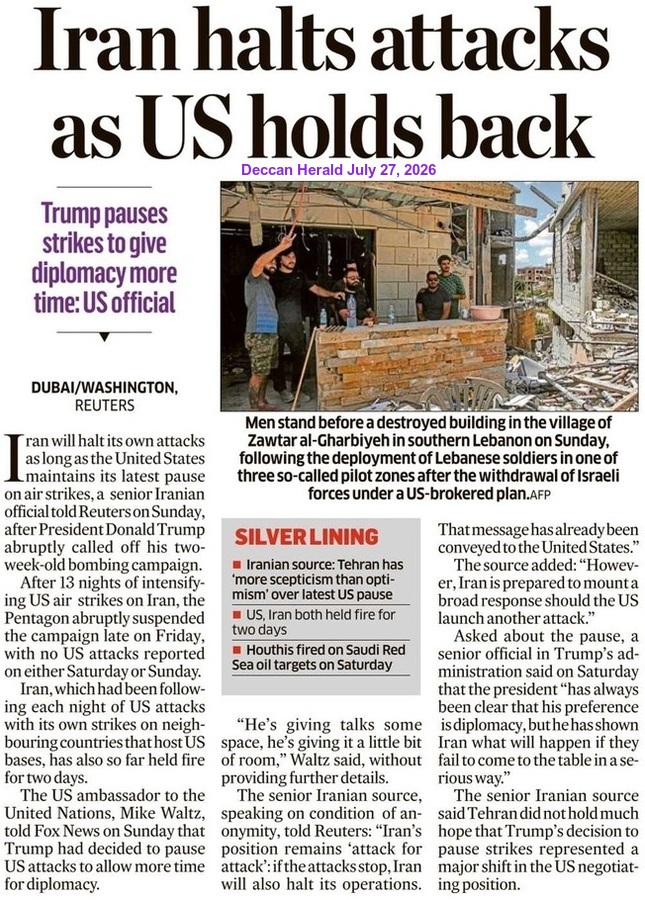
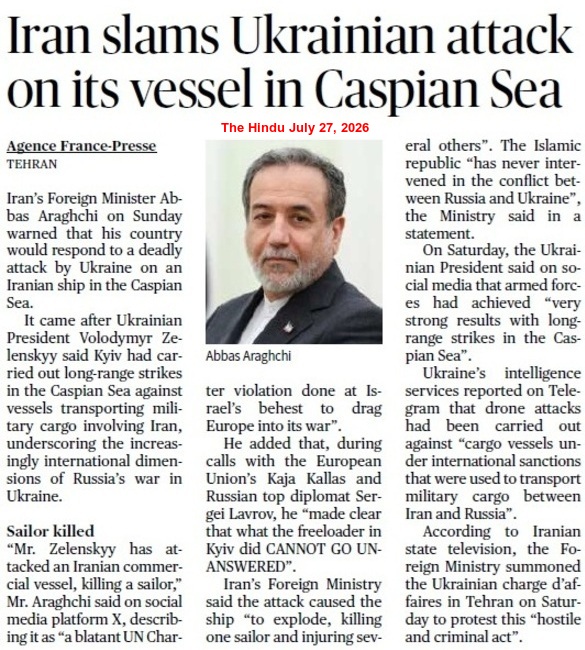
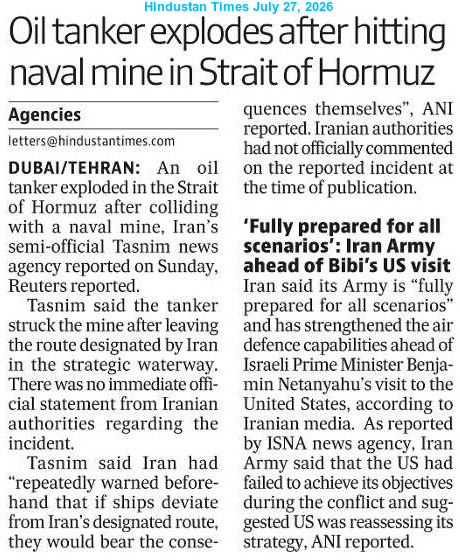
Meanwhile, Iran is confident that if the US can be kept out of the war, it will face no difficulty in confronting Israel. However, the MoU has already been violated twice. The US has interpreted the terms of the agreement in its own way, claiming that the US ships can pass through the Strait of Hormuz (off the coast of Oman) without Iran’s permission. Tehran views the move as an attempt to wrest control of the Strait of Hormuz from it. Hence, the Islamic Republic attacked unauthorised ships passing through the Strait on June 26, July 6 and July 12, 2026. In response, the US Air Force has attacked Iran while the US Navy has blockaded the Strait of Hormuz, prompting Tehran to attack several US military bases in the region.
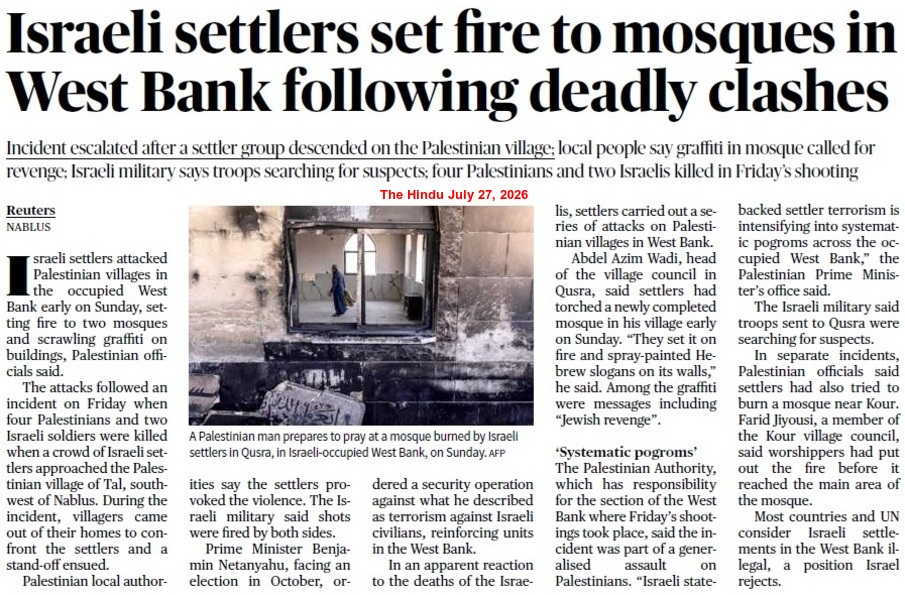
If a full-scale US-Iran war breaks out again, it could be prolonged, like the wars in Gaza or Ukraine. Fuel prices will rise again, driving up the prices of almost all commodities. The World Bank has explicitly warned that a worst-case scenario could pull global growth down to just 1.3%, with global inflation rising to 4.5%. President Trump, too, is under tremendous political pressure; as public opinion regarding him has hit rock bottom in the wake of the conflict with Iran. There is a strong possibility that the Republicans will suffer a crushing defeat in both chambers of the legislature in the November 2026 midterm elections.
The coming days are fraught with risk for Israel, as well. The October 27 Parliamentary Elections are being widely seen as a referendum on Prime Minister Netanyahu’s leadership. At the age of 76, he faces two major challenges: his own health issues and the military strength of his country. Therefore, Israel’s decisive victory and the restoration of national security have emerged as the key issues in this election. However, no definitive outcome of Israel’s war with Iran and Lebanon is visible as yet.
In Gaza, the Palestinian Hamas Movement has retreated, but has not been defeated. The Hamas leadership is making a serious attempt to reorganise the organisation. When the Trump Administration pursued diplomatic breakthroughs (with Iran), Netanyahu’s resistance was a source of tension. President Trump previously expressed personal frustration and resentment regarding the Israeli Prime Minister’s perceived lack of loyalty and actions that complicated his diplomatic efforts in West Asia.
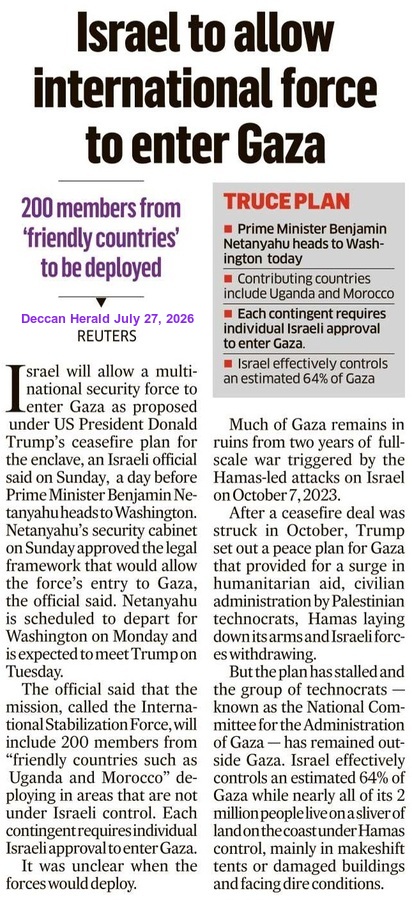
Recent surveys indicate that former Israeli Minister and IDF Chief of Staff Gadi Eisenkot‘s centrist Yashar Party has gained the lead over Prime Minister Netanyahu’s Likud Party. To form a government, a party must cross the 61-seat majority threshold by assembling a coalition of smaller factions in the 120-seat Israeli Parliament. Currently, no single party is in a position to do so. If, in the end, no party manages to form a government on its own, Netanyahu might well snatch victory from the jaws of defeat, thanks to his vast experience. His extensive political experience, survival instincts and coalition-building skills make him uniquely capable of navigating parliamentary stalemates.
Intense speculation will continue over the next few months as to whether Netanyahu will regain power or find his place in history.
Meanwhile,


Boundless Ocean of Politics on Facebook
Boundless Ocean of Politics on Twitter
Boundless Ocean of Politics on Linkedin
Contact us: kousdas@gmail.com

 ISMC
ISMC
