

Rivalry To Remain Intense
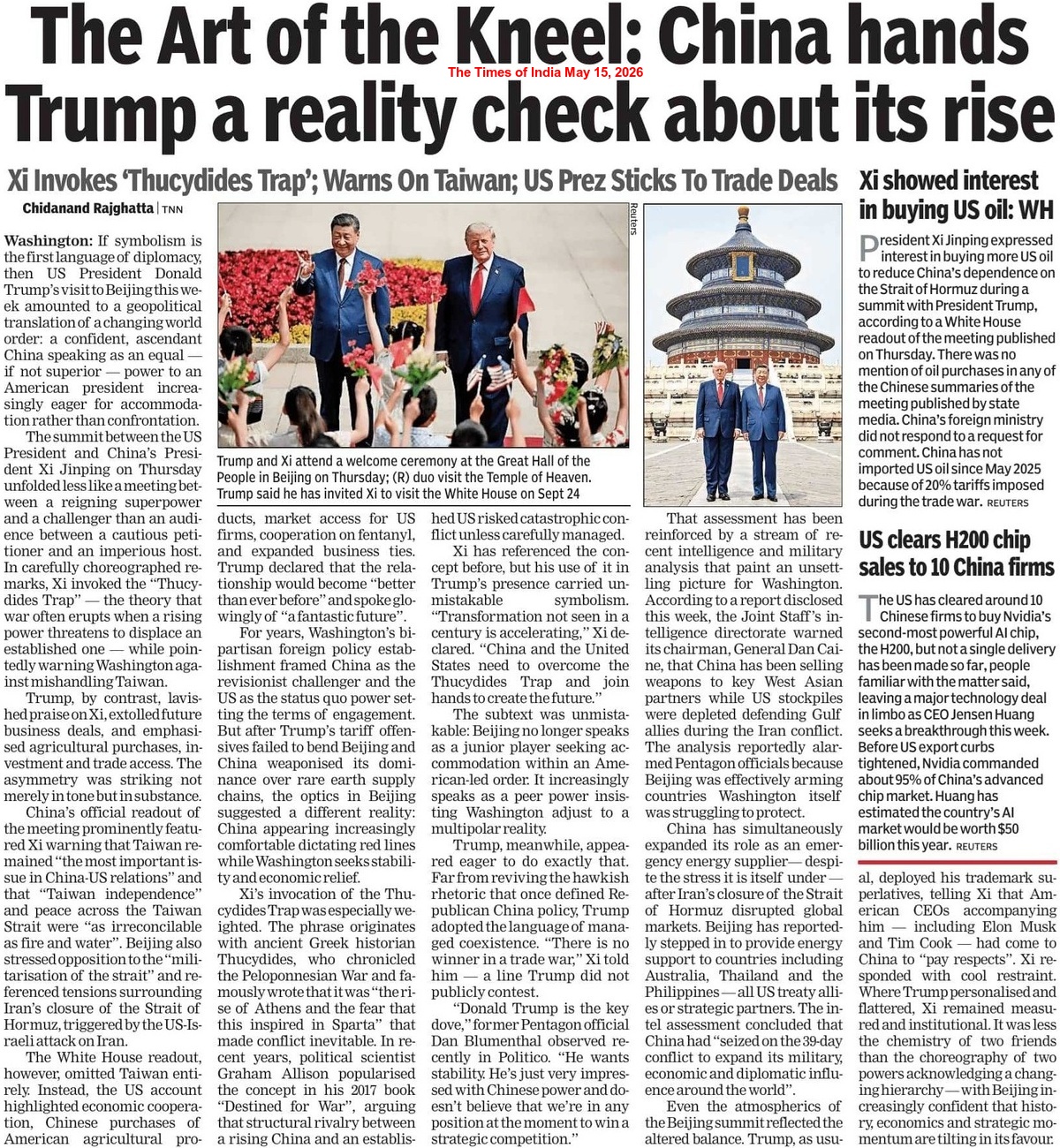
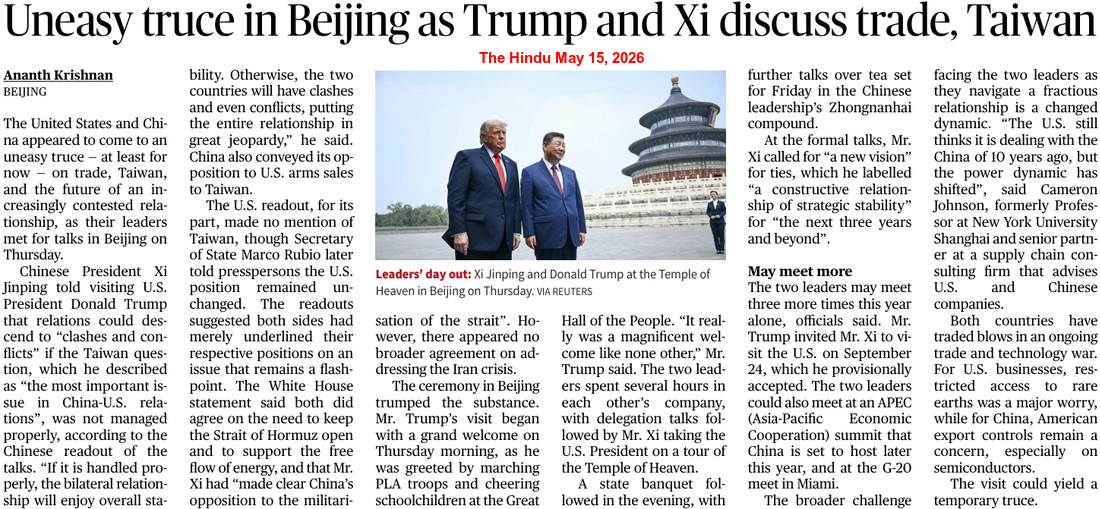
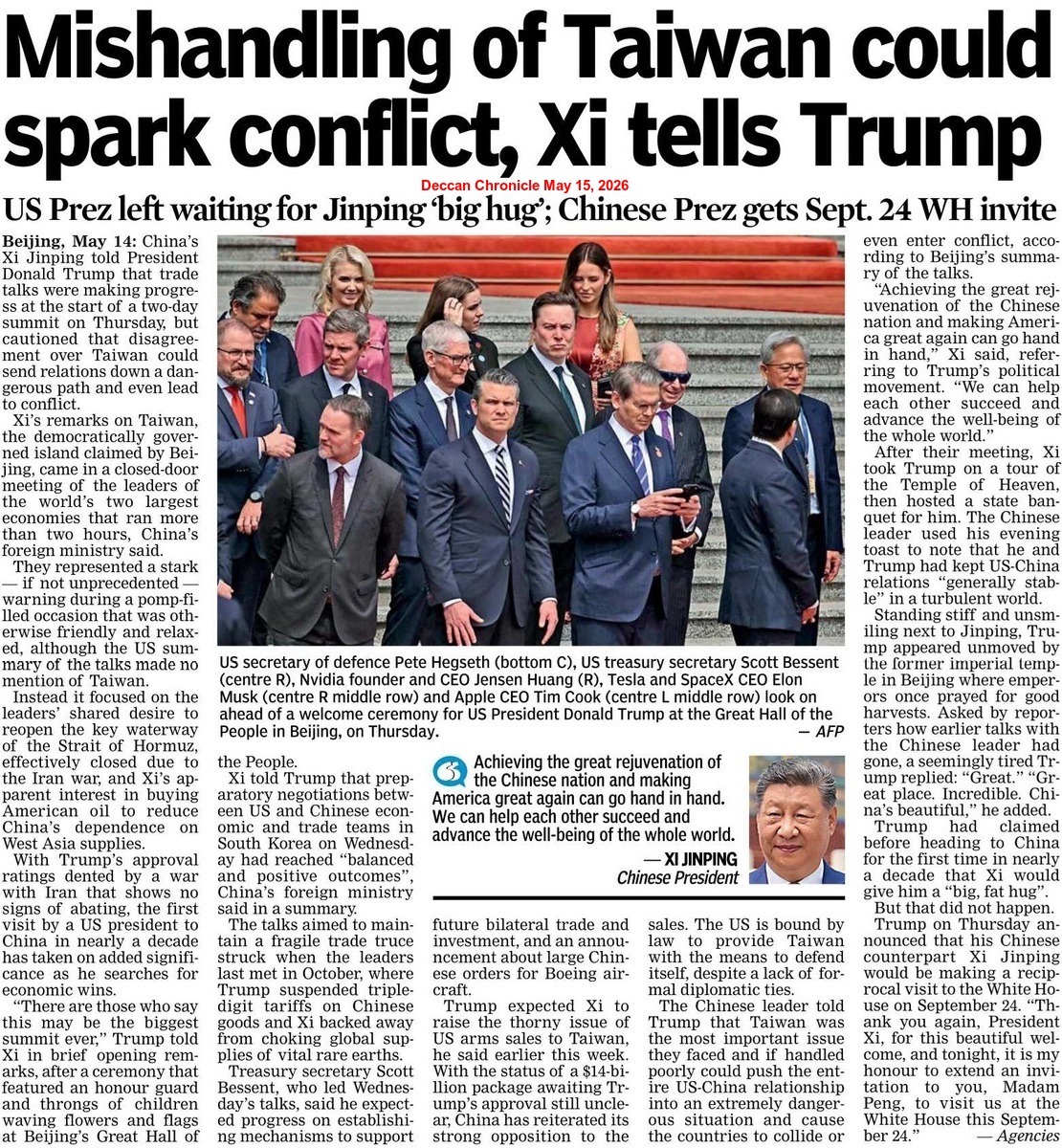
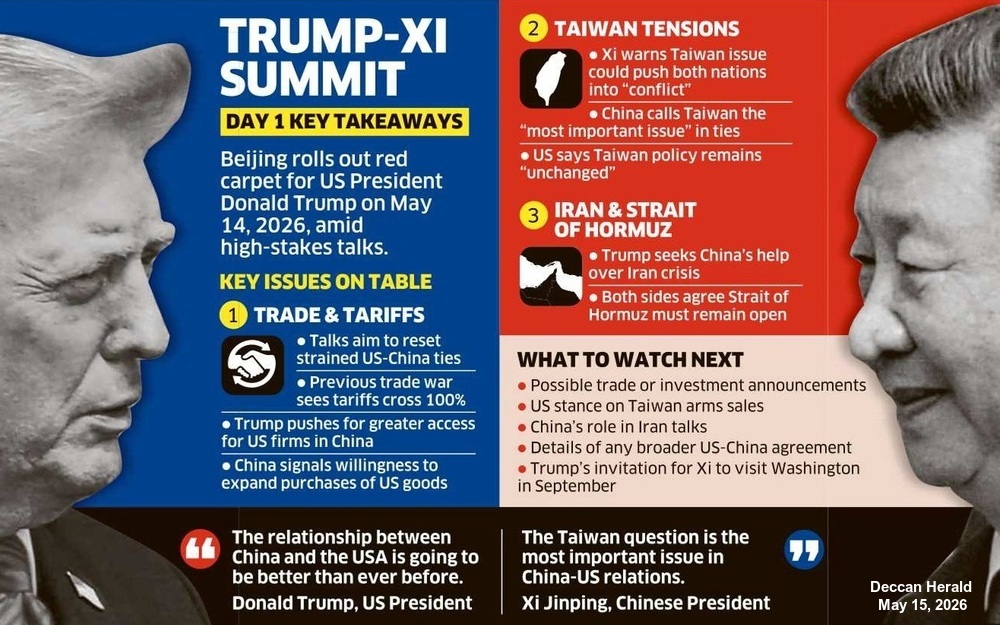
The global community is heavily focussed on a high-stake meeting between US President Donald John Trump and his Chinese counterpart Xi Jinping. President Trump arrived in China on May 13, 2026 to discuss various issues, including trade, technology and regional tensions, with President Xi on May 14-15. The leaders of two largest economies of the world are holding talks at a time when the Global Economy is experiencing significant volatility mainly because of extreme energy prices, supply-chain anxieties and disruption in global trade due to the Iran War, as well as tariffs imposed by the US President.
The situation was completely different when the two Presidents met in Busan, South Korea in 2025. Trump’s morale was at its peak at that time, as his America First tariff policy did cause widespread upheaval, prompting many countries to renegotiate trade terms. Now, his position is significantly weaker. It is mainly because his tariff policy backfired and the US’ senseless war with Iran continues with no definitive end in sight. Hence, the US President’s political standing has been shaken, with defence spending spiralling out of control. He is facing immense pressure from both a challenging international conflict and domestic economic anxiety. All these factors have already set the tone for the meeting.
Trump’s visit to China was originally scheduled for March 31 to April 2, 2026. However, he postponed the visit as the US (and Israel) initiated a major military campaign against Iran, targeting government, defence and nuclear facilities, on February 28. Driven by assessments from Israeli officials, the US President believed that the Islamic Republic could be easily defeated. Hence, he postponed the planned visit to China with a desire to remain in Washington DC to oversee the conflict and to enter Beijing from a position of strength. However, it did not happen.
The US President is now embarrassed, as well as disheartened. Although Iran’s military infrastructure has suffered substantial damage, the regime has not been brought to heel. Tehran still maintains regional influence and demonstrates resilience. While the Trump Administration has claimed success in damaging Iran’s military capacity and curtailing missile launches, observers suggest the strategy shifted from initial ambitious goals to more limited, “face-saving” achievements. Washington DC has enforced a naval blockade, which Tehran has challenged with sporadic, direct clashes, leading to risks of a broader conflict.
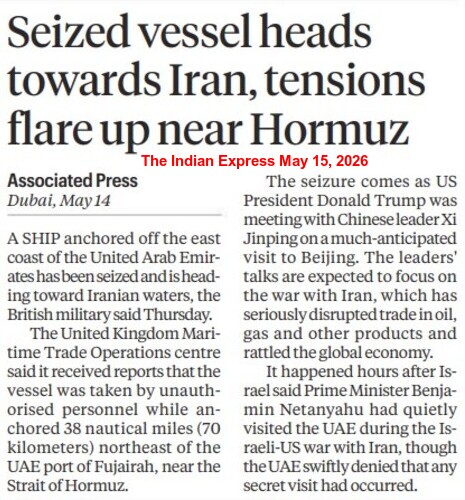
The Iran War has deeply affected China, too. The Asian giant’s crude oil imports dropped 20% in April 2026 compared to the previous year, reaching their lowest level in nearly four years. This sharp decline is driven by the closure of the Strait of Hormuz following the US-Israel attack on Iran. The situation in the Strait has created a complex strategic scenario where Beijing seeks the reopening of the vital waterway while simultaneously leveraging the crisis to challenge US influence. Interestingly, Beijing has positioned itself as a peacemaker, promoting a four-point peace proposal during recent high-level meetings (contrasting its approach with what it describes as US “military aggression“).
The Xi Administration is well aware of the fact that a government in Tehran that is fully aligned with Washington DC would significantly undermine China’s strategic goal of countering US influence, especially in West Asia. In that case, the strategic pivot of US military power would shift toward the Indo-Pacific Region. The ongoing conflicts in West Asia have provided China with strategic space to expand its influence across Asia as the US remains preoccupied. This distraction reduces US focus in the Indo-Pacific, allowing Beijing time to manage internal development and economic stability. In other words, Beijing gets an opportunity to strengthen its position in the region, with US resources being tied up elsewhere.
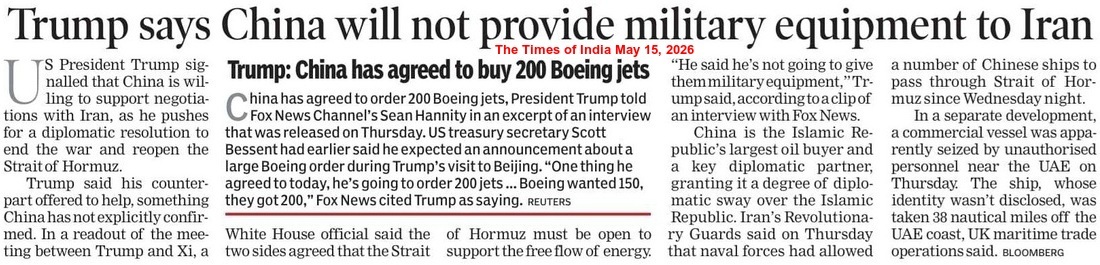
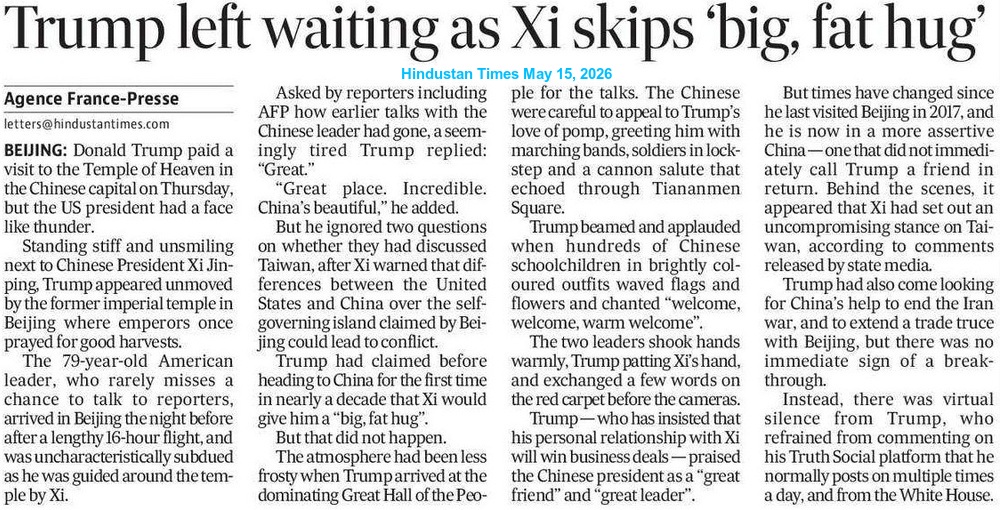
Now, President Trump has arrived in Beijing to seek China’s cooperation regarding the reopening of the Strait of Hormuz. Although the US President has publicly claimed that he does not need Beijing’s help and that the situation is “under control“, political analysts are of the opinion that the trip is a strategic, high-stakes effort to seek Chinese intervention because of rising domestic fuel prices and economic fallout in the US.
According to experts, a leader’s domestic standing directly shapes her/his bargaining power on the international stage, often restricting her/his flexibility or empowering her/his demands in a two-level game. On the other hand, the domestic weakness of a leader directly compromises her/his international bargaining power, especially when facing a centralising, assertive leader, like Xi Jinping, who views domestic political stability as a core component of state power. It may be noted that President Trump arrived in Beijing after the US Supreme Court ruled that his use of the 1977 International Emergency Economic Powers Act (IEEPA) to impose sweeping global tariffs was illegal.
Richard Milhous Nixon was the first sitting US President to visit the People’s Republic of China, with his historic trip taking place from February 21-28, 1972. The trip, often referred to as the week that changed the world, was a defining 20th Century geopolitical moment that ended over two decades of diplomatic isolation between Washington DC and Beijing. With diplomatic acumen, he had travelled to Beijing in order to capitalise on the conflict between China and the erstwhile Soviet Union. The main objective of Nixon was to secure some additional advantages through negotiations with the Soviet. Following this visit, the US granted diplomatic recognition to Communist China. In 1979, James ‘Jimmy ‘ Earl Carter, the then President of the US, formally recognised the People’s Republic of China and established diplomatic relations with Beijing, He also accepted Beijing’s One China Policy and terminated the 1954 Mutual Defence Treaty with Taiwan. However, no such expectations have built up surrounding Trump’s ongoing visit. Instead, expectations for the visit are low, tempered and focussed on managing tensions rather than achieving major breakthroughs.
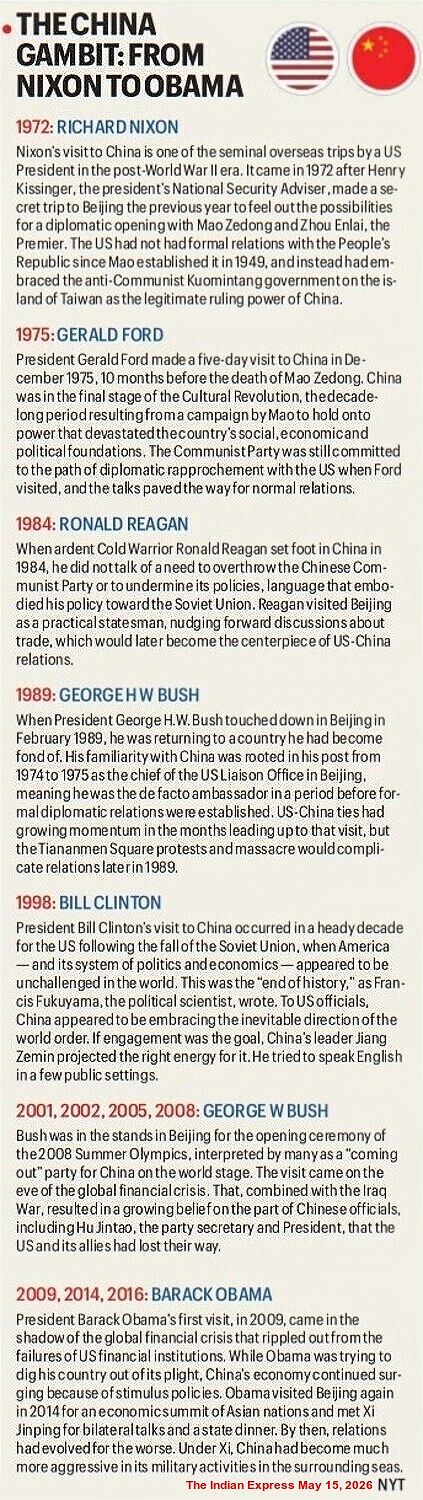
Despite all these, both China and the US can expect some positive developments, such as ending uncertainty in trade, boosting investment between the two countries, purchasing Boeing aircraft, importing beef and soybeans from the US, reducing tariffs, easing restrictions on the export of semiconductors (to the US) and establishing specific policies regarding rare earth minerals. China does not expect any major changes, but seeks a stable relationship with the US so that it can address domestic economic crises. If Trump creates a successful visit narrative after his return to the US, China is unlikely to object to that narrative as such a claim could not obscure the reality of his predicament.
Trump and Xi are scheduled to meet four times (in the next eight months) in 2026. As long as the two Presidents seek a solution through peaceful negotiations, there remains a possibility of avoiding global instability and Thucydides Trap, a term used by the Chinese President referring to the high risk of war when a rising power threatens to displace an established power.
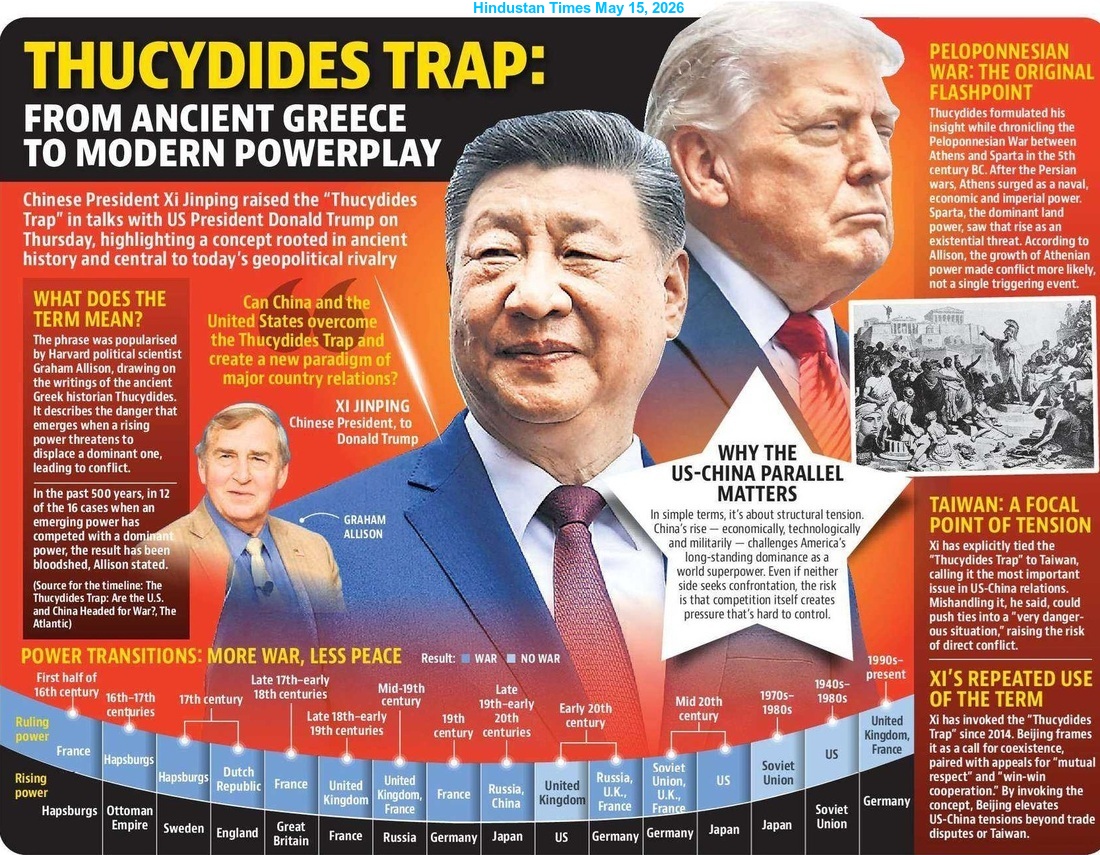
The rivalry between the two major world powers is expected to remain intense for the foreseeable future, functioning as a structural competition rather than a passing dispute.
Meanwhile,


Boundless Ocean of Politics on Facebook
Boundless Ocean of Politics on Twitter
Boundless Ocean of Politics on Linkedin
Contact us: kousdas@gmail.com

 ISMC
ISMC
