

A Shameless Display Of Neo-Colonialism
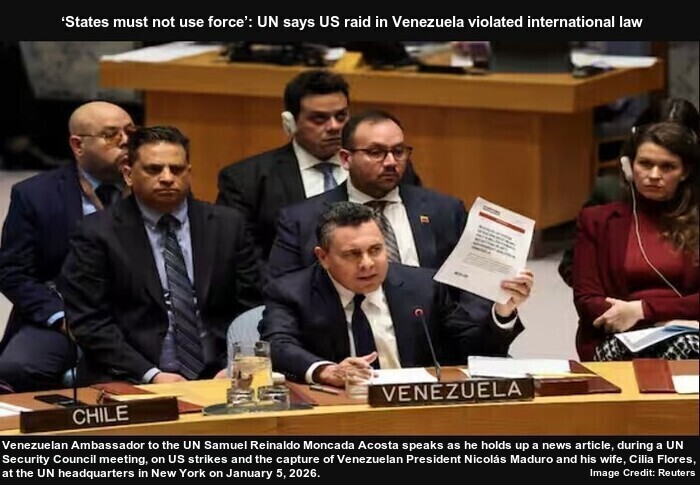
US President Donald John Trump abducted Venezuelan President Nicolás Maduro Moros on January 3, 2026, imprisoned him in New York and put him on trial. The entire matter is unprecedented even among various strange occurrences in recent times. This step is extremely worrying from legal, ethical, strategic and institutional perspectives, as well. In the interest of international justice, sovereignty and a rules-based global order, condemning this incident is seemingly the only appropriate response.
There is no single, coherent grand strategy behind the US’ intervention in Venezuela. One should try to understand this incident as a multi-layered combination of strategic, ideological and internal political issues. Venezuela has long been a challenge to the US dominance in Latin America. Since the era of Hugo Rafael Chávez Frías, Caracas has been a symbol of resistance against US influence. Venezuela has ideologically, as well as diplomatically, aligned itself with alternative power centres and put forward a narrative of sovereignty that effectively countered Washington DC’s traditional role stemming from the Monroe Doctrine.
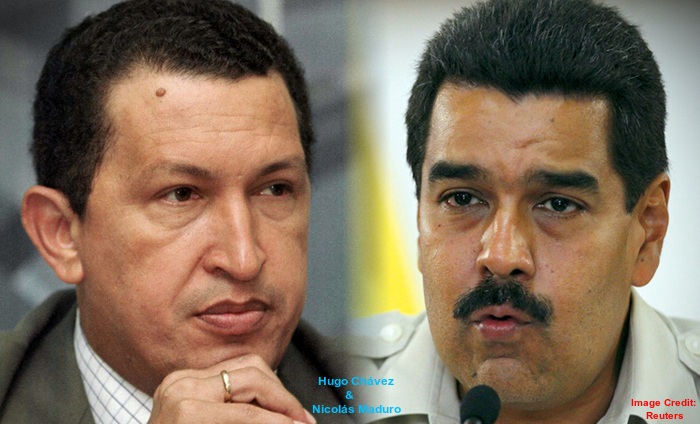
Therefore, the survival of the Nicolás Maduro Government was not merely a regional problem for the US, but also a test of Washington DC’s credibility, as well as ability, to stamp its authority in its backyard. For the US, it became an issue related to its reputation and prestige. According to political analysts, President Trump carried out Operation Absolute Resolve mainly to discourage other states from similar acts of defiance.

The US intervention (in the internal affairs of Venezuela) is also driven by geopolitical competition and domestic political compulsions. Although the importance of Venezuela’s vast energy resources may not be as significant as in previous decades because of various changes in the global energy market, its strategic importance has become a crucial factor in the context of current global uncertainty and supply disruptions. Most importantly, there is also a tendency to view Venezuela as a place for external intervention by rival powers, such as Russia and China. There are internal pressures, such as electoral politics, lobbying by diaspora groups and the rhetoric of promoting democracy, as well. Overall, President Trump’s move reveals the deep concern of Washington DC about losing strategic dominance in a competitive international system.
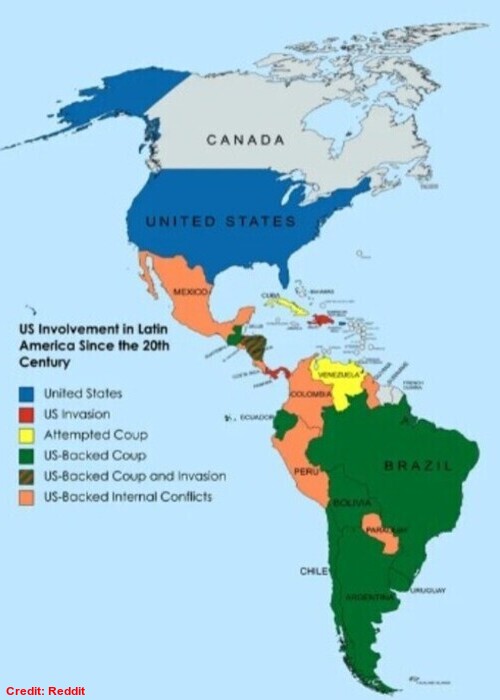
The recurring tendency of the US to intervene in Latin American politics stems from a complex and multifaceted interplay of geographical proximity, ideological differences and domestic political economy. The US has long viewed Latin America as its strategic backyard, where the influence of rival powers could directly challenge its dominance. On the other hand, analysts, highly influenced by the Liberal Ideology, have repeatedly attempted to legitimise the US intervention in Latin American countries from the aspects of democracy, stability and modernisation. This argument was presented in the context of anti-communism during the Cold War. In the post-Cold War era, governance, drug control or concerns about Human Rights violations have been framed in different versions of the same narrative.
It is also necessary to mention another structural dimension. The intervention of Washington DC has solidified a regional political economy that is favourable to the US capital and also capable of resisting redistributive or populist projects in Latin America. In other words, US interventionism in Latin America is not an isolated or exceptional event; but a kind of continuity, deeply rooted in hegemonic policies of Washington DC.
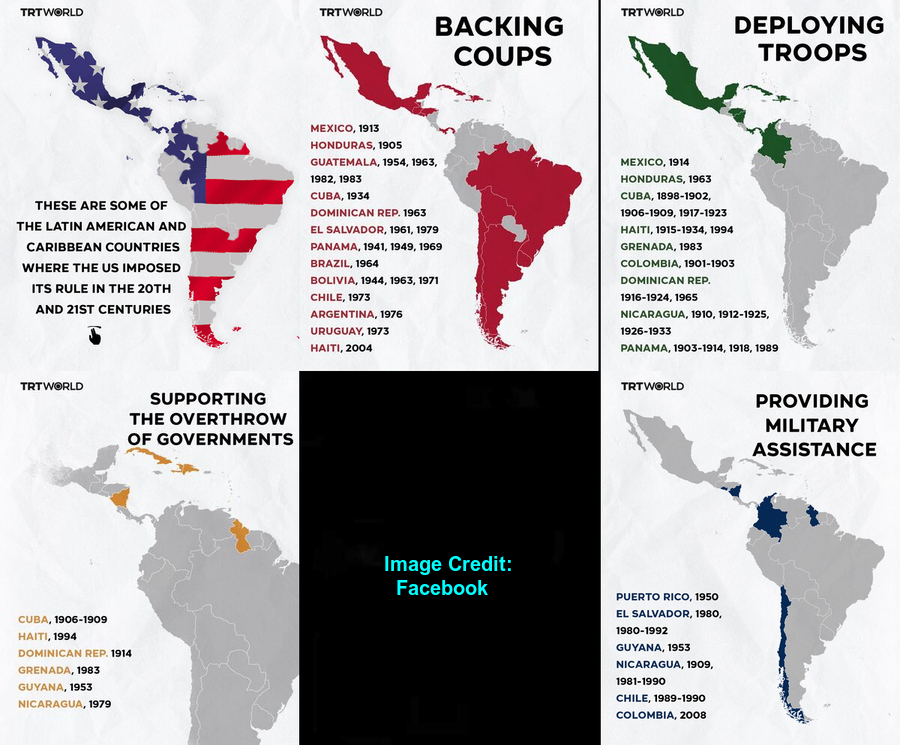
However, the 21st Century world has changed a lot. Intervention in the internal affairs of a sovereign state cannot be justified under any circumstances. The Operation Absolute Resolve has legitimised lawlessness and unilateral actions by powerful states, apart from encouraging those states to disregard international law and morality for various reasons. Not only a grave injustice has done to Venezuela, the credibility of the entire international legal system has also plunged into profound uncertainty.
Secondly, this move has revived the darkest memories of US neo-imperialism. In previous decades, such interventions were typically framed in terms of promoting democracy or addressing humanitarian concerns. Although those were false and flawed arguments, they at least conveyed a kind of belief in moral legitimacy. Today, that, too, has been abandoned. The US has declared with arrogance that it would virtually rule a country until it installs its preferred leader in office.
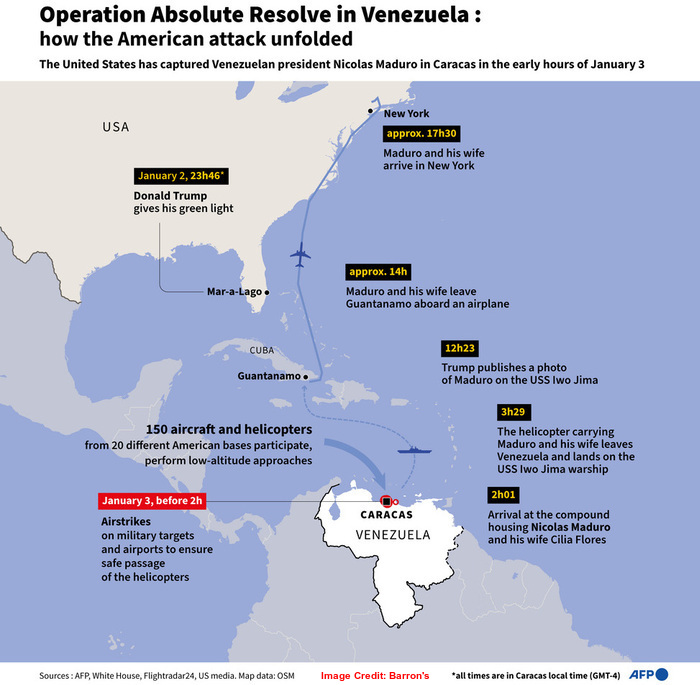
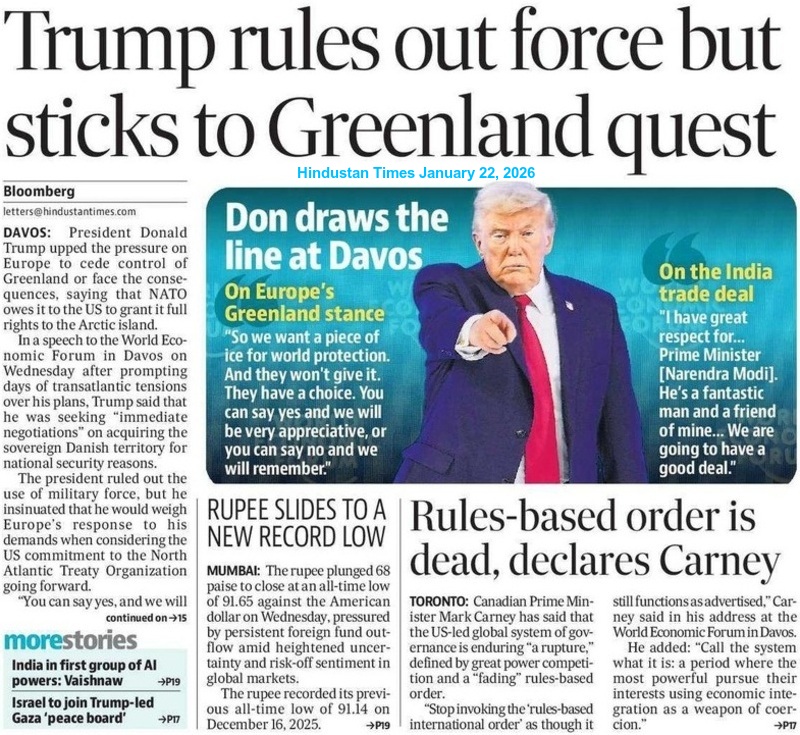
Thirdly, the Operation Absolute Resolve would further accelerate the breakdown of the so-called Liberal International Order. The erosion of free trade standards (protectionism, trade wars) and democratic commitments (the rise of populism/authoritarianism, democratic backsliding within Western countries) has significantly weakened that system. The Venezuela episode has shown the end of the basic foundations of the Liberal International Order and the Rule of Law. When principles are no longer binding on global powers, the system itself becomes a kind of void and a mask to conceal the use of force. Then, it is replaced by the legitimisation of anarchy, where power is the sole determinant of policy, with the effectiveness of international norms becoming merely a matter of convenience for the superpowers. This is not a mere chaos; rather, it is a process of normalising chaos through the application of governing principles.
Fourthly, this step is incomprehensible even by realistic standards, considering the foreign policy interests of the US. It seems that the intervention would not serve any clear geopolitical purpose. Suppressing weaker states is not only morally wrong; but also a strategically self-defeating move. Whenever great powers used force in their backyards in the past, they triggered regional resentment, resistance and long-term instability. Hence, it is important to show restraint.
Finally, this is a shameless display of competitive and exploitative imperialism. The previous world order was deeply flawed and often unjust; yet it had a commitment to restraint and deliberation. The events that are unfolding before the global community are far more brutal. This particular trend does not remain an isolated or limited one. The US’ move may encourage Russia and China to display even more unrestrained assertiveness in their respective neighbourhoods in the coming days. One should not forget the fact that moral decay is contagious.
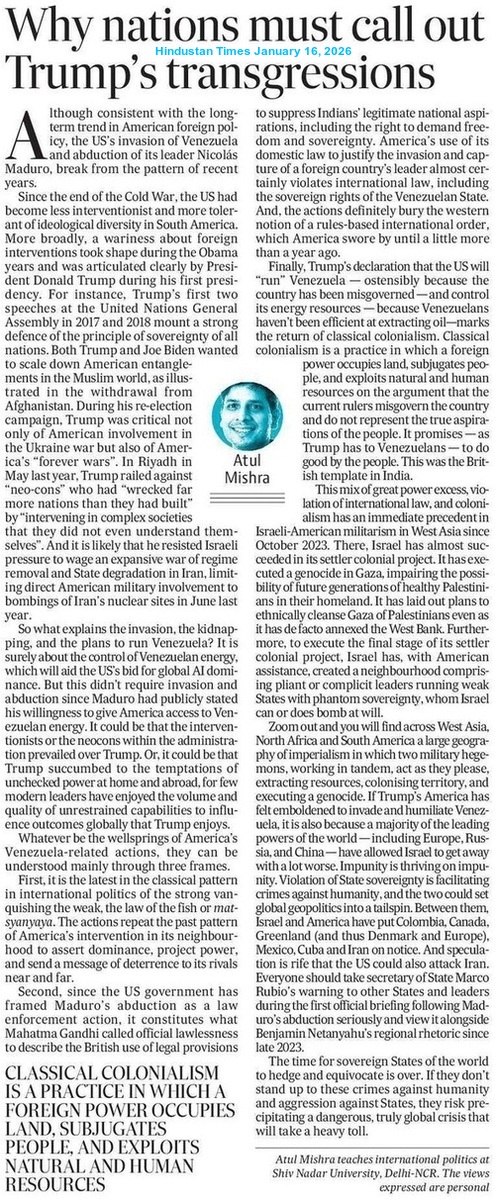
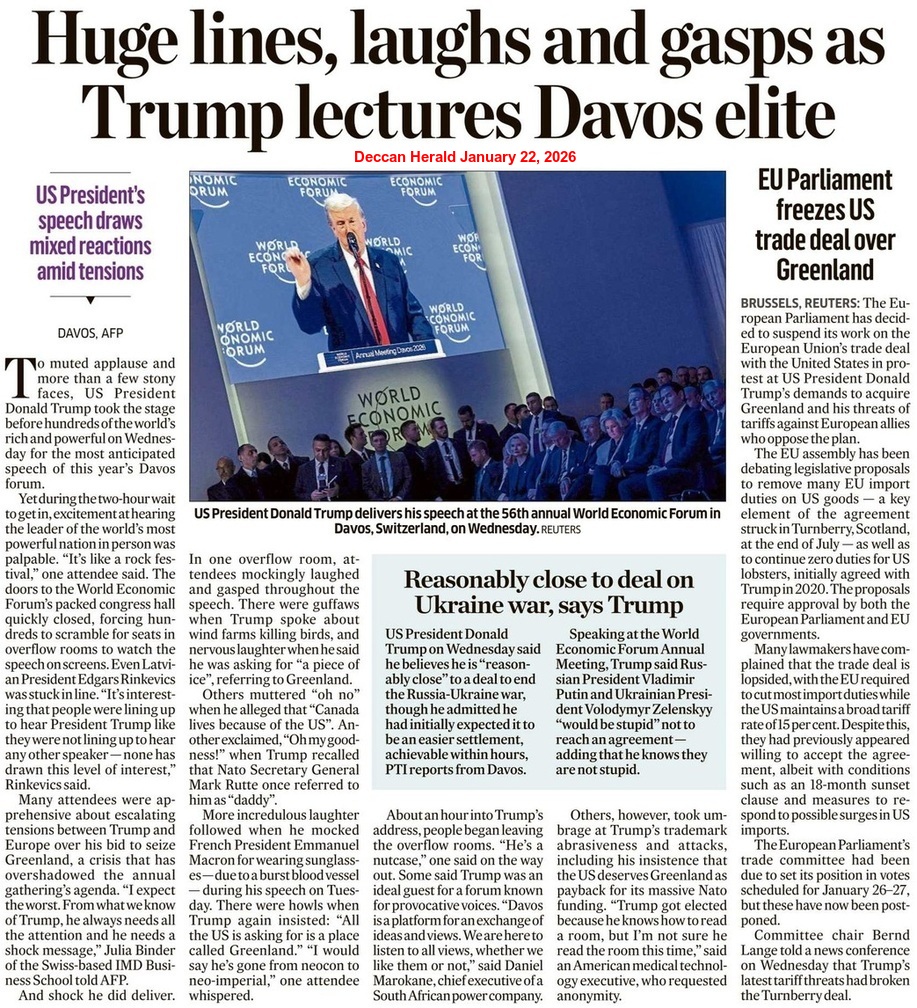
It is quite difficult to predict Donald Trump’s erratic behaviour. The global community is currently going through a transitional phase marked by significant challenges to the existing international order, leading to an environment of disorder and uncertainty. A strain of Political Realism Theory has started viewing an anarchic international system as the baseline reality in which states must operate. However, this horrific reality is completely contrary to the international rules and systems built on justice and morality. The real-world events have failed to align with the ideal principles enshrined in international rules and systems, such as Human Rights and humanitarian norms, in the first quarter of the 21st Century.
One has to admit that the current state of the world is a direct outcome of either our deliberate actions or our passive inaction.
Meanwhile,




Boundless Ocean of Politics on Facebook
Boundless Ocean of Politics on Twitter
Boundless Ocean of Politics on Linkedin
Contact us: kousdas@gmail.com

 ISMC
ISMC Boundless Ocean Of Politics