

Climate Change Helps China Explore New Sea Route
Arctic Sea ice is constantly melting because of Global Warming, with summer sea ice expected to disappear completely before 2050 under current emission trends. Climate Change has increased the frequency and intensity of natural disasters, like floods, storms, droughts and heatwaves across the globe, with devastating effects on human lives, as well as ecosystems. However, Global Warming has helped China to discover a new maritime route for transporting cargo to Western Europe. This route would also allow neighbouring India to bolster trade ties with Western European countries.
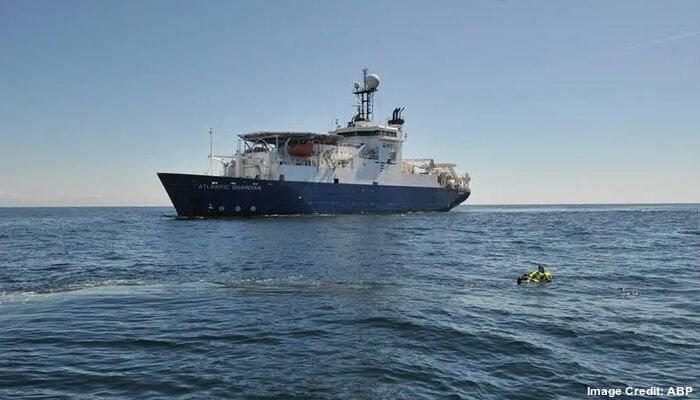
A Chinese container ship recently triggered a sensation by crossing the Arctic Ocean in just six days, as it sailed along the Northern Sea Route. The Chinese sailors have reportedly discovered this route because of the melting of Arctic Sea ice. According to analysts, this alternative route to reach Europe would fundamentally shift the international maritime trade equation in the coming days.
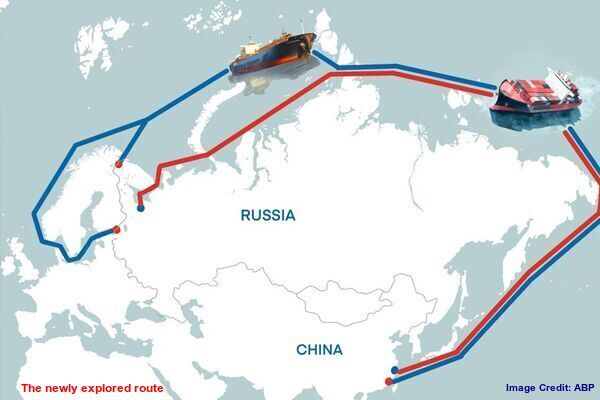
The Northern Sea Route begins in the Kara Strait between the Barents and Kara Seas, and concludes in the Bering Strait, the westernmost point of the route where it connects with the Pacific Ocean. The width of the Bering Strait, a narrow sea route between Russia and Alaska (the US), is just 85km. It is a relatively shallow passage, averaging 30-50mt (100-165ft) in depth. On October 3, 2025, CNN reported that “the container ship called the Istanbul Bridge set sail from China in the early hours of a late September 2025 morning. Instead of navigating south on a journey toward the Suez Canal, the ship pushed north to steer a course through the frigid water of the Arctic Ocean, using the Northern Sea Route. The journey is seen as a major step forward in China’s quest to build out a Polar Silk Road, an infrastructure and shipping corridor across the top of the world, and it’s only made possible by Climate Change“. The ship reportedly reached the Norwegian Sea after sailing through the Chukchi Sea, the East Siberian Sea, the Laptev Sea, the Kara Sea and the Barents Sea.
The discovery of this maritime route to Europe is considered a masterstroke due to various reasons. Firstly, using the Northern Sea Route can significantly reduce transport time between Asia and Europe compared to traditional routes, like the Suez Canal or going around the Cape of Good Hope. For example, a journey from Japan to Europe that takes about 22 days via the Suez Canal can be reduced to around 10 days via the Arctic route. Secondly, China and other Asian countries would be able to transport cargo to Europe at a much cheaper rate and with less fuel consumption through this route. Most importantly, the Northern Sea Route does not charge a single transit fee, unlike the Suez Canal. It only imposes mandatory payments and costs for essential services controlled by Russia. This route is also known to be free of pirate attacks, although the severe environment and strategic geopolitical context of the Arctic region present unique safety, environmental and military challenges for shipping.
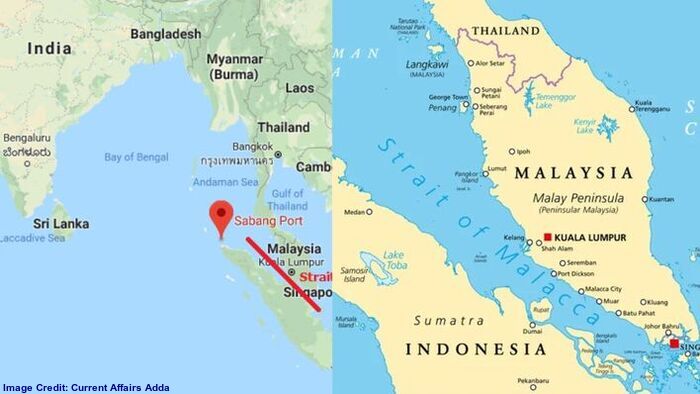
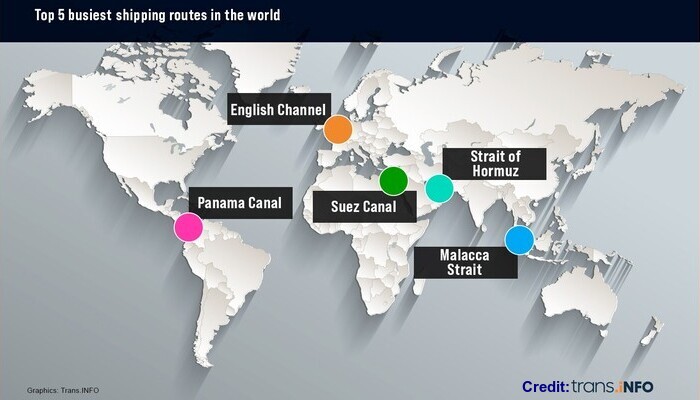
On the other hand, traditional maritime routes from Asia to Europe are facing increasing challenges mainly because of regional geopolitical instability. Hence, it is difficult to rule out the possibility of a potential closure of those maritime routes to Beijing due to escalating geopolitical tensions in the coming days. Analysts are of the opinion that the key to the Chinese economy lies in its foreign trade and the Asian Giant heavily depends on maritime trade. Multiple chokepoints in those sea lanes have caused problems for China in recent times. For example, one can mention the Strait of Malacca, adjacent to India’s Andaman and Nicobar Islands. China transports 70% of its crude oil to its ports through this maritime route. The Chinese economy would collapse if India decides not to allow the Chinese ships to use the Strait of Malacca. In September 2025, Singapore publicly acknowledged India’s interest in joining the Malacca Strait Patrol (MSP) as the two countries agreed to enhance maritime security.
The Strait of Hormuz is another critically important energy chokepoint for China. This strait, situated between the Persian Gulf and the Gulf of Oman, provides the only sea passage from the Persian Gulf to the open ocean. Although the Strait of Hormuz is a shared waterway between Iran and Oman, the Islamic Revolutionary Guard Corps (IRGC), also known as the Iranian Revolutionary Guards, have significant military assets and capabilities to disrupt or potentially block the strait. Iran’s deteriorating relations with Israel and the US have destabilised the region in recent times.

Defence analysts believe that the IRGC would close the Strait of Hormuz due to its strategic location in case of a direct conflict between Iran and Israel or the US. Then, the Chinese cargo ships would not be able to sail through the Strait of Hormuz. Such a move would also trigger a sharp increase in global crude oil prices as most of the West Asian nations supply the liquid gold mainly through this strait. The Bab-el-Mandeb Strait between Yemen on the Arabian Peninsula and Djibouti and Eritrea in the Horn of Africa, connecting the Red Sea to the Gulf of Aden and by extension the Indian Ocean, could also face a similar problem. This particular region is the most unstable because of armed conflicts between different countries. The Houthi rebels and Somali pirates are often seen targeting cargo ships here.
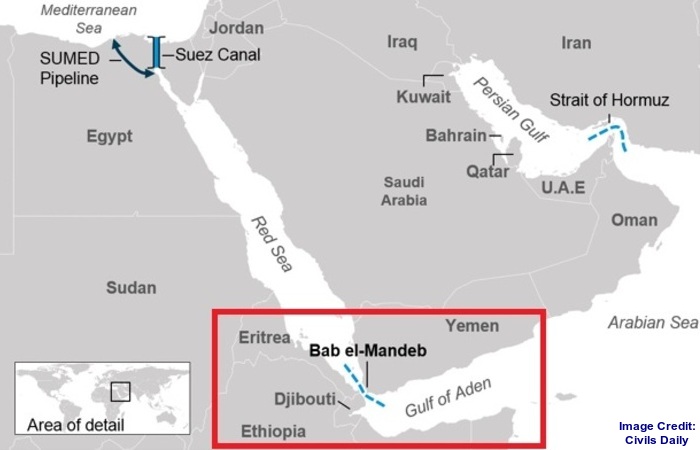
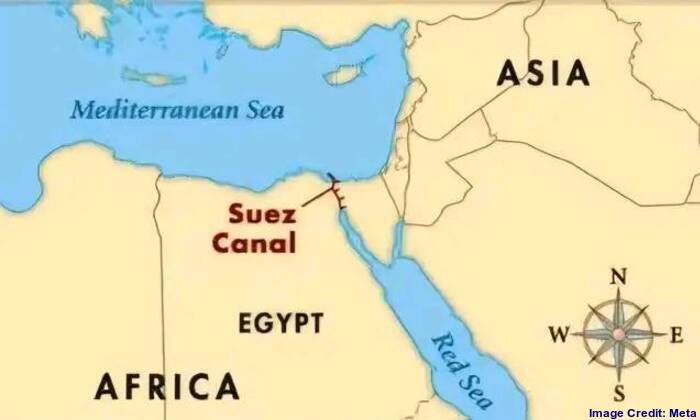
Meanwhile, the Suez Canal connects the Red Sea and the Mediterranean Sea as this man-made waterway is the shortest maritime route between Europe and Asia, bypassing the long sea route around the southern tip of Africa. Egypt, which controls the Suez Canal, used it as a focal point of conflict with Israel in the past, most notably by closing it during the Six-Day War and by using it as a launch point for the Yom Kippur War. There is another problem with the Suez Canal as ships often get stuck in this canal because of navigational problems caused by factors, like high winds, human error and the narrowness of the canal, particularly for large modern vessels. Then, the transport of goods on this maritime route is halted for several days, prompting Western Europe-bound ships to sail around Africa through the Cape of Good Hope and the Strait of Gibraltar.
Another option is the Panama Canal that connects the Pacific Ocean with the Atlantic. However, China wants to avoid this route due to its political tensions with the US. Although the Asian Giant is the second-largest user of the Panama Canal (after the US), recent events show that China is quite concerned about the US influence over this waterway and has begun investing in strategic alternatives to hedge against potential disruptions.
In such a scenario, the melting of Arctic Sea ice has helped China to discover the new maritime route. Beijing is currently buying a large amount of crude oil from Moscow. The Asian Powerhouse would have the opportunity to use this route in order to boost oil trade with Russia in the coming days. In that case, the Xi Jinping Administration would be able to save the Chinese economy by mitigating the risk of a Malacca Strait blockade. According to analysts, the commercially viable Northern Sea Route emerges as a year-round alternative to the Suez Canal as it would certainly weaken the power of traditional chokepoints, apart from reshaping global shipping, maritime trade patterns and strategic alliances.
Neighbouring India, too, can use the Northern Sea Route in the future. In November 2024, the South Asian nation announced the launch of the Chennai-Vladivostok Maritime Corridor, a new sea route connecting the eastern coast of India with Russia’s Far East. This corridor is designed to cut shipping time from over 40 days to approximately 24 days and reduce the overall distance by around 5,608km, providing an alternative to the traditional Suez Canal route. As the distance from Vladivostok to the Bering Strait is relatively short (1,134km) compared to other international maritime routes, India would like to use the Northern Sea Route for transporting cargo to Russia.
However, the US may not easily accept the passage of foreign cargo ships through the Bering Strait for security purposes. The proximity of the Bering Strait to Russia makes Alaska a strategically important state for defence, as it houses bases, like Clear Space Force Station, Fort Greely and Joint Base Elmendorf-Richardson. These installations play a critical role in North American defence and Arctic security, including early warning systems and air defence.
Meanwhile,

Boundless Ocean of Politics on Facebook
Boundless Ocean of Politics on Twitter
Boundless Ocean of Politics on Linkedin
Contact us: kousdas@gmail.com

 ISMC
ISMC Boundless Ocean Of Politics