

US May Collapse Like Soviet Union
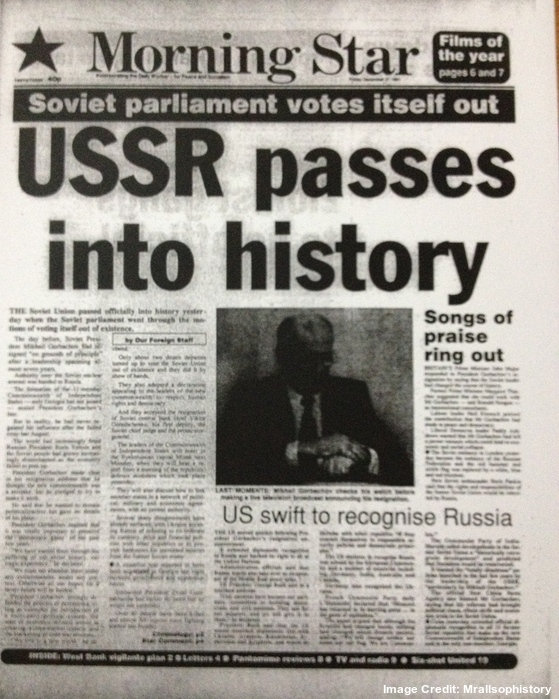
He has reduced the financial aid to various universities, triggered tariff wars with different countries, started maintaining a distance with European friends and threatened to carry out military operations in Afghanistan yet again. US President Donald John Trump‘s aggressive attitude has terrified his countrymen and shaken the global community. Some believe that it is the “beginning of the US’ decline” as the erstwhile Soviet Union made a series of similar moves 34 years ago.
The return of President Trump to the White House represents a significant moment for both the US foreign policy and geopolitics. Some analysts have found similarities between many of his decisions and several actions taken by Mikhail Sergeyevich Gorbachev, the last leader of the Soviet Union from 1985 to the country’s dissolution in 1991. Among them, the two most significant events are the withdrawal of troops from Afghanistan and loss of acceptance in Eastern Europe. As a result, the Soviet Union officially dissolved on December 31, 1991, leading to the emergence of 15 independent nations, including Russia, which had been a constituent republic within the Union of Soviet Socialist Republics (USSR). Analysts largely blame the economy as one of the major reasons for the collapse of the Soviet Union. They are of the opinion that the US is facing a similar crisis. As per official data, the US national debt has crossed the USD 37 trillion mark as of August and October 2025. It reflects the total outstanding debt, and not just the increase within the current financial year. In a rare first, the US’ annual interest expenses surpassed the USD 1 trillion-mark during the fiscal year that ended in October 2024. According to economists, this issue is quite worrying.
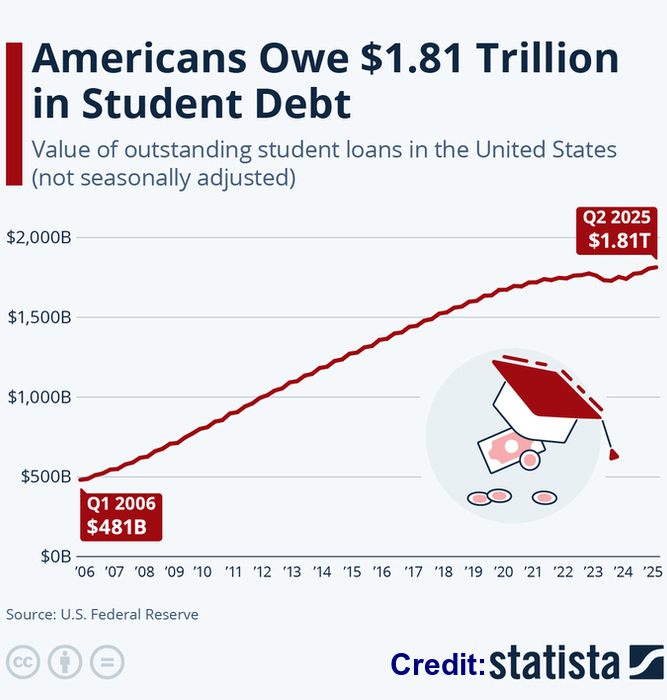
In its October 2025 report, the International Monetary Fund (IMF) has expressed a serious concern over the US economy as the global lender has predicted that the US debt-to-GDP ratio could reach 140% by 2030-32, if current trends continue! It may be noted that the pace of the US economy slowed throughout 2025 after stronger growth in 2024. As of late 2025, the total student loan debt is approximately USD 1.81 trillion and nine million students may not be able to repay their loans.
The American Society of Civil Engineers (ASCE) gave the US an overall C- grade for infrastructure in its 2021 Report Card, which assessed the condition of critical infrastructure across 17 categories. The report indicated that the nation was spending only about half of what was required to maintain its infrastructure, highlighting a significant funding gap and a need for bold, sustained action to improve roads, bridges, water systems and more. Since the early 2020s, the US has faced numerous Human Resource (HR) challenges exacerbated by the COVID-19 pandemic and subsequent shifts in the labour market. These issues range from widespread labour shortages and burnout to difficulties in recruiting, as well as retaining, top talent. A recent global assessment carried out by the Organisation for Economic Co-operation and Development (OECD) shows that the country ranked 25th in science and 34th in mathematics. At the same time, suicide rates and criminal activities have increased over the past two decades, while public discourse suggests that radical thinking is also on the rise, influenced by socio-political factors. Analysts have blamed alcohol, drugs and mental depression for this.
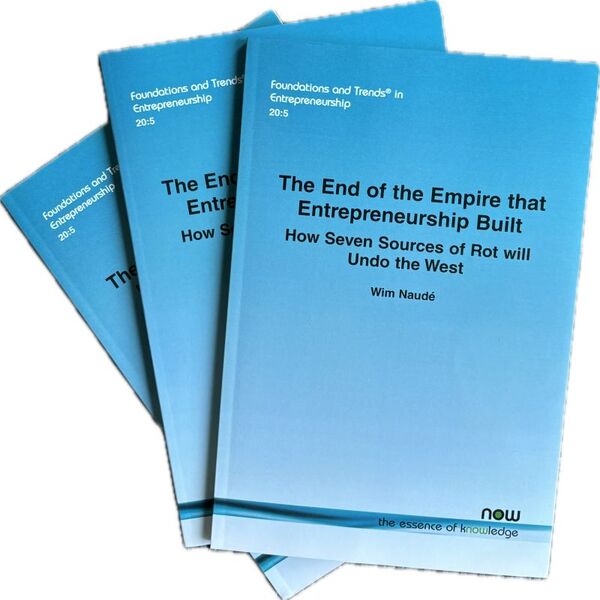
Dr Wim Naudé, the Professor of Business and Entrepreneurship at Maastricht University, has identified seven reasons for the possible collapse of the US, drawing comparisons with the Soviet Union. He has mentioned that the US war economy and arms trade play an important role in damaging the national economy. The US, which has the third largest Army in the world in terms of active personnel (with around 1.3 million active troops), spends between 3-4% of its GDP on its Armed Forces. Furthermore, the country has engaged in armed conflicts with various countries since the end of the Cold War and spent a huge amount of money.
Dr Naudé has explained that the US Army had to fight in Afghanistan for more than two decades for which Washington DC spent nearly USD 8 trillion. Apart from this, the Army and the Central Intelligence Agency (CIA) also carried out operations in Vietnam, the Korean Peninsula, Iraq, Syria, Yemen, Somalia and Pakistan. Hence, the debt has increased and the US citizens bear the burden.

The US has been openly backing Kiev since the beginning of the Russia-Ukraine War on February 24, 2022. Washington DC has provided the Eastern European country with a large number of weapons. According to Dr Naudé, the US will be in deep trouble if Ukraine collapses in the coming days or if a new government comes to power in Kiev and makes a deal with Moscow. In that case, Kiev may not agree to pay the price of weapons received from Washington DC. Then, the US Government would have to pay from the treasury to cover the losses suffered by the arms-manufacturing companies. The US launched military operations in Iraq in 2003. However, it has still not recovered from the wounds of that armed conflict. The US’ annual military budget for 2024 was about USD 997 billion, with outlays for defence projected to increase to approximately USD 1.07 trillion by 2034. The US Government could print trillions of Dollars to get out of this trap. However, it would not be a wise decision as several countries are desperately looking for alternatives to the US Dollar.
As the US Dollar is linked to crude oil, it is often called Petro-Dollar. China has pushed for de-dollarisation by promoting its own currency, the Yuan, and forming currency swap agreements with various countries. While India has already started trading with several countries in local currencies, Russia is trying to introduce a common currency for the BRICS, a grouping of major emerging economies, currently comprising Brazil, Russia, India, China, South Africa, Egypt, Ethiopia, Indonesia, Iran and the United Arab Emirates (UAE), with Saudi Arabia also a consideration for membership. In 2024, Saudi Arabia opted not to renew its 80-year Petro-Dollar Agreement with the US, originally signed on June 8, 1974. This agreement was considered a cornerstone of the US’ global economic influence. Dr Naudé is of the opinion that the value of US Dollar will fall, if an alternative currency comes to the market in the coming days. Then, it would not be possible for the US Government to cover the deficit by printing trillions of Dollars. Sensing the trouble, President Trump has decided to sell fossil fuels in an attempt to fill the treasury. Hence, he announced his intention to withdraw the US from the Paris Agreement, the global accord that implements the objectives of the UN Framework Convention on Climate Change, in January 2025.
With the global community gradually moving towards green energy driven by increasing concerns about climate change, significant technological advancements and economic opportunities, countries across the globe have started reducing the use of fossil fuels. Dr Naudé has claimed that President Trump deliberately ignores the reality as he is trying hard to tackle the fiscal deficit. The Soviet Administration made a similar move in the 1980s. The Kremlin focussed mainly on steel production and construction of dams at that period of time. On the other hand, the use of computers grew rapidly, fuelled by the personal computer revolution that brought affordable machines into homes and offices for the first time. In 1986, the Soviet Union did have only around 10,000 mainframes and minicomputers, while the US had about 1.3 million. This extreme disparity highlights the Soviet Union’s struggle to keep pace with the computer revolution of the 1980s.
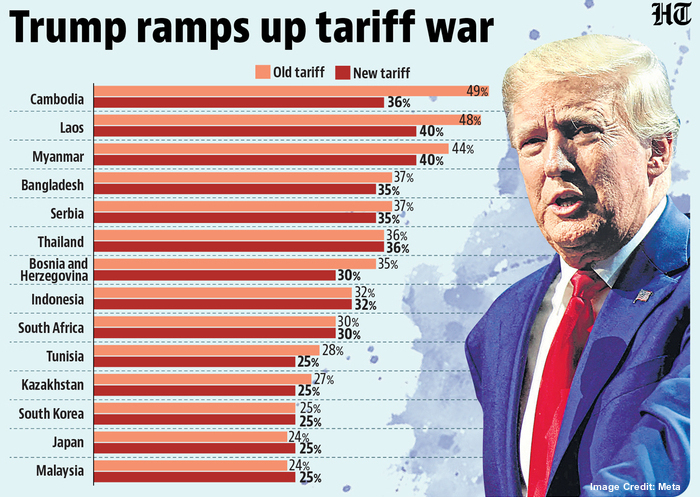
Most importantly, the US has neglected all the major industries due to its over-reliance on the war economy in recent times. Everything, from iPhones to electric cars, for the US market is made either in China or in India. As President Trump is trying to change this situation after his return to power, he has triggered a Tariff War with China, India and some other countries. His main aim is to develop industry on the US soil by setting up factories for producing all daily necessities. Dr Naudé has claimed that it would not be possible for the President to achieve his goal in the current situation as the US lacks everything, from raw materials to skilled workers. He has further claimed that while the hard work and brains of the Indians are behind the success of US tech giants, most electronic products come from China. According to Dr Naudé, relations between the US and both China and India have significantly deteriorated in 2025, largely due to escalating trade disputes under the second Trump Administration. The simultaneous strains would certainly create complex challenges for Washington DC in the coming days.
Interestingly, Moscow’s relations with its friendly nations in Eastern Europe began to deteriorate towards the end of the Soviet Era. The Kremlin had imposed various restrictions on them to cover its trade deficit. President Trump has made a similar mistake in the 21st Century. Hence, the US is losing acceptance among NATO members and other countries, including India, Japan, Brazil and China.
Finally, one should mention Afghanistan. Afghanistan is often called the Graveyard of Empires because foreign powers, including the British Empire and the Soviet Union, have failed to control the South Asian country and militarily conquer it, with many eventually retreating or withdrawing after facing fierce resistance. The Soviet Union had launched a major military intervention in Afghanistan in late December 1979, initiating the Soviet-Afghan War. The long and costly war exacerbated existing problems within the Soviet system that was already suffering from deep-seated economic, as well as political, issues. Despite a 20-year (2001-21) occupation, the US ultimately failed to prevent the Taliban from retaking control of the country, echoing the Soviet Union’s inability to defeat the mujahideen insurgents and establish a stable, allied government in Kabul. Dr Naudé has stressed that if President Trump decides to launch another operation in Afghanistan, then it will be a final nail in the coffin of the US foreign policy.
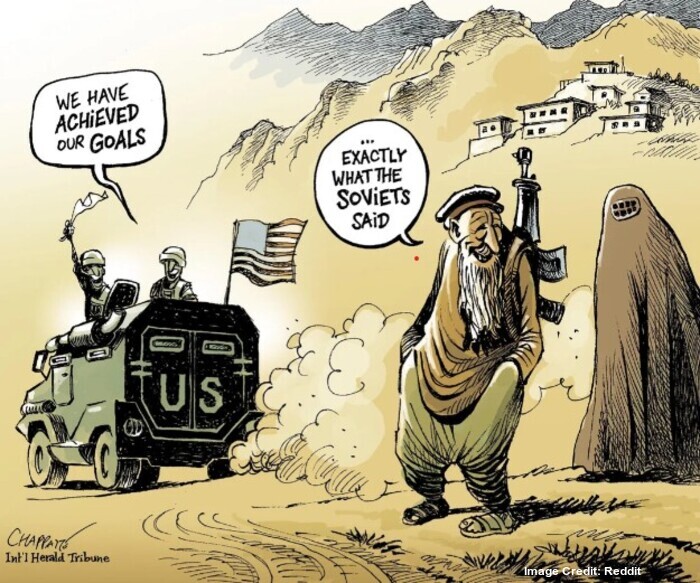
Meanwhile, a section of political analysts has claimed that the US holds the largest gold reserves in the world, with over 8,100 tonnes of gold as of 2025. It would help Washington DC to overcome an economic disaster and the US would never be in a position like the Soviet Union. They believe that the fundamental differences in political and economic structures (of the US and the Soviet Union) make it highly unlikely that the US would collapse in a similar fashion. The Soviet Union’s collapse was a result of systemic, long-term failures inherent to its command economy and totalitarian government. The US could avoid such a situation because of its market-driven economy and democratic political system.
Meanwhile,
Boundless Ocean of Politics on Facebook
Boundless Ocean of Politics on Twitter
Boundless Ocean of Politics on Linkedin
Contact us: kousdas@gmail.com

 ISMC
ISMC

1 Comment »