

The Remnants Of Consumerism
Once, renowned Bengali poet Sudhindranath Dutta wrote: “Will he end up eating himself out of hunger?” (Verse: Ostrich or Uthpakhi; উটপাখি in Bengali) Perhaps, it would be difficult to find a more appropriate phrase than this one to describe the real essence of capitalism.
Let’s make it clear that this article would neither criticise capitalism nor make any attempt to reject the idea of such a system. It is not possible for anyone to deny the fact that the global prosperity has reached its highest level in recent times due to capitalism. It seems that the most important reason for this unquestionable success of capitalism is its immense appetite. Human civilisation has made great progress due to the insatiable urge of capitalism to make profits, and not because of altruism. At the same time, this urge has created an unimaginable crisis. Production chains have triggered an increase in production across the globe, while advertisements constantly influence the buyers who seemingly forget the difference between necessity and desire.
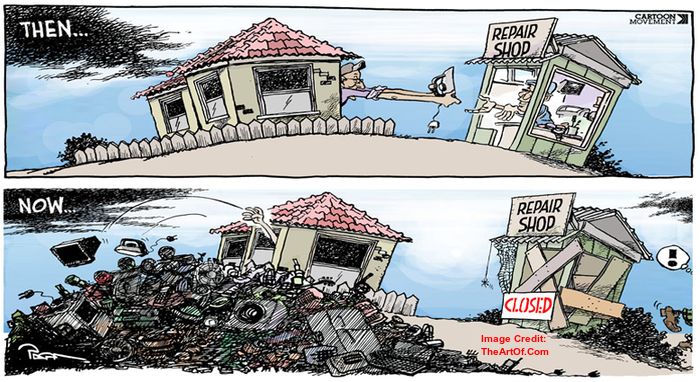
Simultaneously, the purchasing power of a section of people is gradually increasing in different parts of the world. Hence, sales have also increased steadily. Although the capitalist system has remained dynamic, the consumer goods (produced by capitalism) have gradually turned into mountains of waste. In fact, increased consumption directly leads to increased waste generation. A plastic soft drink bottle may become waste immediately after the drink is finished. Again, some products, like garments, cell phones, pens, cars, etc., become waste when their extended shelf life has passed. With increasing production, as well as consumption; the global scale of solid waste generation has reached staggering proportions.
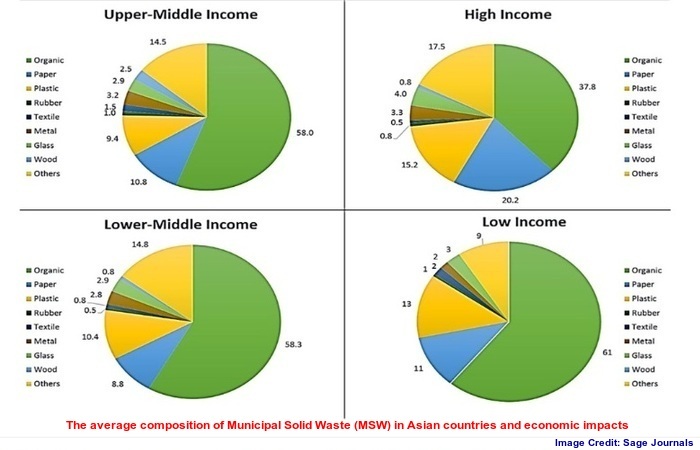
The increasing waste has become one of the biggest problems in the contemporary world. While discarded plastic items are entering the human body through food and drink, apart from affecting the global ecosystem; electronic waste, which contains radioactive substances, are polluting the environment. Unfortunately, waste generation is often disproportionately harmful to communities with fewer resources and smaller contributions to overall waste production. At international level, shiploads of waste from Developed Nations depart for Africa and Southeast Asia where the waste materials of Western consumerism are dumped. However, no one is spared as water and air cover the surface of the Earth. In fact, pollution has a global impact mainly because of water and air. The pervasive nature of pollution is evident as pollutants in the air, which can contaminate water sources and vice versa, creates a cycle of environmental degradation.
The global community has started taking various steps to rein in consumerism in an attempt to get rid of the problems related to pollution. The intention is noble, but the path is a deadly one. As the main driving force of the global economy is consumers’ desire for pleasure, the attempt to control consumerism would disrupt the production process, affect employment and slow down the pace of the global economy. It is also difficult to predict the impact of such initiatives on the environment.
On the other hand, if the global community allows consumerism to grow without caring much about waste management, then the world would have to take the burden of waste and to face a serious danger. Hence, Realism encourages people to adopt a middle ground approach. Modern Environmental Science, too, increasingly stresses on the same approach. Experts are discussing proposals to create a circular economy where nothing could be thrown away. A particular form of such an economy is a Zero Waste Society, where nothing becomes waste. Experts stress on the usage of biodegradable materials, instead of plastic that takes thousands of years to decompose. At the same time, emphasis has been given on recycling various items. Also, there are sincere efforts to promote waste segregation at the individual and household levels, aiming to utilise waste for energy generation or recycling.
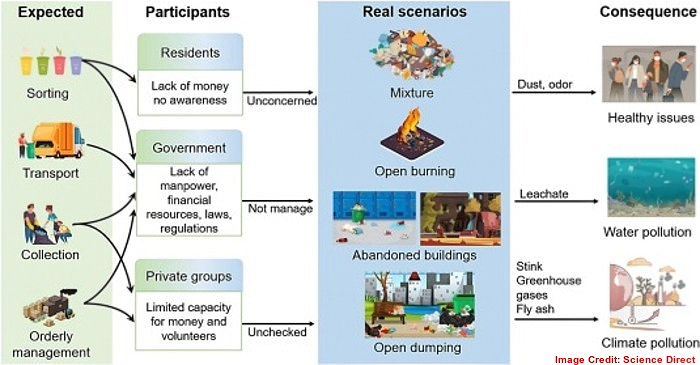
It has become crucial to address this particular issue in order to keep capitalism alive. The responsibility is not solely the government’s; it also rests on the shoulders of private sector organisations.
Boundless Ocean of Politics on Facebook
Boundless Ocean of Politics on Twitter
Boundless Ocean of Politics on Linkedin
Contact us: kousdas@gmail.com

 ISMC
ISMC Boundless Ocean Of Politics