

The Dream Is Over…
It seems that an independent Kurdistan would never be created in West Asia as Abdullah Öcalan (also known as Apo or uncle in Kurdish), the founding leader of the Kurdistan Workers’ Party (PKK), has hinted that his decades-long War of Independence would end soon. The jailed leader recently called on the armed fighters of the PKK to lay down their arms and integrate into Turkey. If the youths who dream of an independent Kurdistan respond to his call, then the politics of West Asia would move to a different direction.
Turkish intelligence officers kidnapped and imprisoned Öcalan in 1999. Since then, he has remained behind bars. However, his influence among the Kurdish people has not diminished in the past 26 years. On the contrary, the PKK rebels have continued their armed struggle against Turkey. On February 27, 2025, Öcalan requested his comrades to end the conflict that broke out in 1984 and to declare a unilateral ceasefire! Political analysts have expressed hope that Öcalan’s move might ensure peace in West Asia. At the same time, they consider the development as a major victory for Turkey.

According to official data, the decades-long conflict between Turkey and the PKK has claimed more than 40,000 lives. However, it is uncertain whether Öcalan’s call can restore peace as the Kurdish politics is quite complex and the PKK might not agree to resolve the crisis by giving up arms. Political analysts believe that it is difficult to redefine relations between Turkey and the Kurdish ethnic group. A series of events, with profound political and military implications, has unfolded after Öcalan’s call. Turkish lawmakers have claimed that the PKK has lost its historical, social and ideological relevance. Ankara has long been trying to isolate the armed rebel group internationally and it is believed the effort has tasted success.
It may be noted that the PKK initially accepted Öcalan’s call for peace and declared a unilateral ceasefire on March 1, 2025. According to sources close to the rebel outfit, members of the PKK’s Executive Committee had a long discussion on the issue. However, the Executive Committee accused Turkey of continuing to carry out attacks, mentioning in a statement: “We see the ceasefire we declared as an important practical step and as a way to put our leader Abdullah Öcalan’s historic call into practice. Of course, it is not possible to take such practical steps by unilaterally ceasing fire; in order to take practical steps, all weapons must be silenced.” The PKK has long been based in the Qandil Mountains in northern Iraq and they have pressed their decades-long guerilla war with Turkey from there. Although the PKK rebels have traditionally indoctrinated the ideology of Öcalan, the military leaders of the outfit have been waging a war against Turkey independently. Hence, there are differences of opinion within the party over the ceasefire decision.

Meanwhile, Turkish President Recep Tayyip Erdoğan has welcomed Öcalan’s move, stressing: “We have a historic opportunity to advance towards the objective of destroying the wall of terror.” He also said that Turkey would “keep a close watch” to make sure the talks to end the rebellion were “brought to a successful conclusion”. At the same time, the Turkish President warned against any provocations, stating: “When the pressure of terrorism and arms is eliminated, the space for politics in democracy will naturally expand.” President Erdoğan also expressed hope that both the parties would soon find a political solution of all the outstanding issues. Analysts are of the opinion that the Erdoğan Administration is trying to maintain two-pronged pressure on the PKK. The primary goal of Ankara is to weaken the PKK militarily. President Erdoğan is desperate to turn Kurdish politics towards electoral politics. Top Turkish officials have made several diplomatic moves in recent times to encourage the Kurdish political outfits to take part in elections.
If Öcalan’s call is fully implemented, then the borders of Turkey will certainly expand far beyond. In that case, there is a possibility of major changes in the map of West Asia. Disarmament of the PKK could take Turkey-Syria relations to a completely different level. In particular, there is a strong possibility of changing Ankara’s equation with the Syrian Democratic Forces (SDF) and the People’s Protection Units (YPG), a libertarian socialist US-backed Kurdish militant group in Syria and the primary component of the SDF. Turkey has always considered the SDF and the YPG as affiliates of the PKK. Ankara has a disagreement with Washington DC on this particular issue as the YPG has long enjoyed US support. In fact, the YPG helped the US to eliminate the ISIS militants in Syria and Iraq.

If Ankara changes its position on the Kurdistan issue in such a scenario, then another avenue would open up for the NATO alliance in terms of broader regional security. The number of Turkish military operations in Syria would also decrease, allowing the Syrians to get out of the humanitarian crisis. However, analysts believe that the region might experience a complex diplomatic turmoil in the coming days. Relations between Ankara and Baghdad would change, as well, with the disarmament of the PKK as the Kurdish outfit has taken control of the northern part of Iraq. Iraq has already sought Turkey’s support to safeguard its sovereignty. Hence, the Turkish Army has increased its operations in the neighbouring country. As expected, the Kurds have strongly criticised the top political leadership in Baghdad.
If the PKK dissolves itself, then the political, as well as military, balance of several countries, including Turkey, Iraq, the US and Israel, would change in West Asia. It may be noted that Israel has used Kurds several times in regional conflicts, especially against the armed groups backed by Iran. The Zionist Regime would have no other option, but to reconsider its strategy in the coming days. Political analysts have opined that there is a greater possibility of Kurds becoming politically, as well as socially, strengthened within Turkey in near future. The Kurds want to regain their cultural and economic rights. Hence, the most important thing is how Ankara conducts negotiations with the PKK after its disarmament. If negotiations fail, then the freedom-loving Kurds may take up arms again.
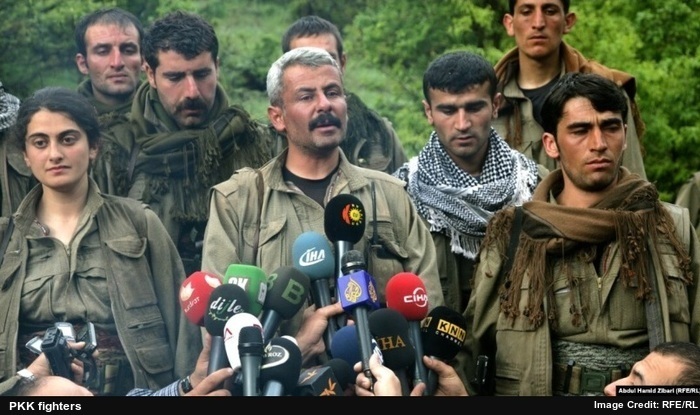
Turkey must find a permanent political solution to end the unrest over independent Kurdistan. Else, frustration among the Kurdish people could lead to another bloody conflict. It is quite difficult for Turkey to integrate the PKK fighters into mainstream Turkish society. Ankara would have to provide the affected Kurdish community with financial assistance. Experts are sceptical about whether Ankara would be able to afford the huge costs required for this. The biggest challenge for Turkey would be to grant Legal and Constitutional Rights to ethnic Kurds. Ankara might have to amend the Constitution. Furthermore, the political representation of Kurds in Turkish society is another sensitive issue. It is still not clear whether Ankara would officially grant this ethnic group the minority status. The Erdoğan Administration might have to accept demands, such as the use of the Kurdish language in education and governance, and political autonomy in specific areas.
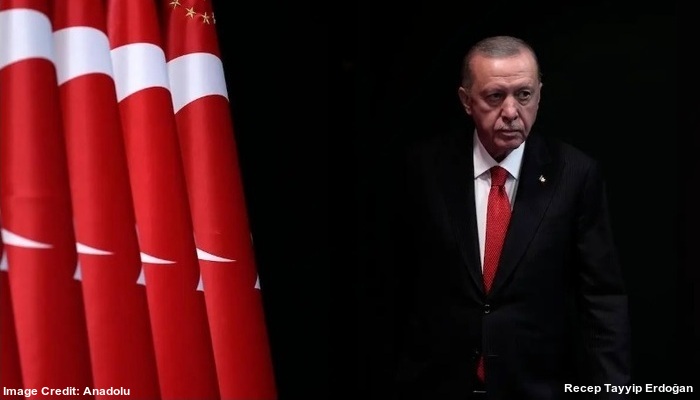
The attitude of Ankara towards the PKK military leadership, which is based in the Qandil Mountains, is the third important issue. Although the military leadership of the PKK accepts Öcalan as their leader, they have the power to decide how to conduct the war. Hence, the military leadership may not accept the disarmament process at all. Turkey is also accused of persecuting Kurdish people and political leaders. Ankara has reportedly weakened the Peoples’ Equality and Democracy Party (DEM, a pro-Kurdish political outfit in Turkey) by imprisoning its leaders. The Kurds are yet to forget those incidents.

The Kurdish people are spread across four regions: southeastern Turkey, northern Iraq, northwestern Iran and northern Syria. If the PKK agrees to lay down its arms, then a large part of Syria is likely to be annexed by Turkey. Analysts believe that it would not be possible for President Erdoğan to capture the remaining areas right away.
Boundless Ocean of Politics on Facebook
Boundless Ocean of Politics on Twitter
Boundless Ocean of Politics on Linkedin
Contact: kousdas@gmail.com

 ISMC
ISMC Boundless Ocean Of Politics