

Politics, Economy & Environment
The world is going through a phase of great confusion as it experiences intense geopolitical turmoil and unprecedented conflicts. At the same time, the economic crisis and trade wars have rocked the global community. The environment, too, is facing a serious crisis, with natural resources depleting rapidly. The world has changed in various ways in the first quarter of the 21st Century. In the Year 2024, different parts of the globe experienced extreme weather conditions, setting new records as far as heat waves and cold waves were concerned. Vulnerable communities got devastated as they were unable to cope with continuous disasters. The situation does not seem to change even in 2025.
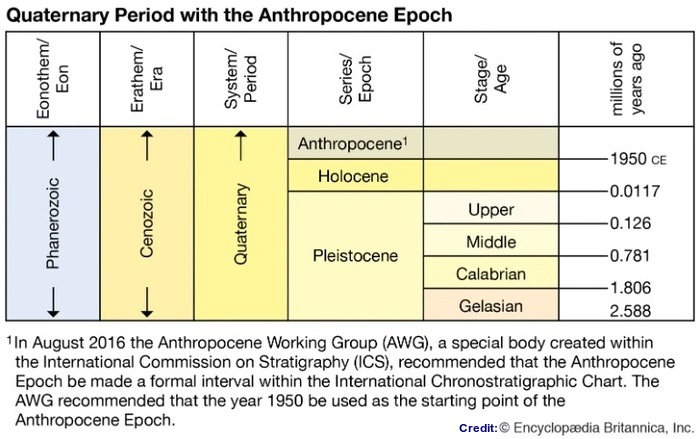
In fact, the global community has entered a different era, called Anthropocene Epoch, a proposed geological epoch that describes the period in the Earth’s history when human activities have had a significant impact on the planet. Everything human beings have done to advance civilisation for the sake of a better living and creating wealth has broken all the conditions for healthy living on Planet Earth. This period has already witnessed some stunning developments mainly because of scientific, as well as technological, advancement. Experts believe that Artificial Intelligence (AI) shall control human civilisation in the coming years. Human behaviour towards others, too, has changed a lot in recent times, along with the concepts of right and wrong.
Human beings still have immense faith in new age technology. The big tech companies have emerged as empires, as they have started influencing our daily lives by transcending national boundaries! The owners of those tech giants not only make changes in technology, but also influence the media, as well as politics. Big businesses want to become even more influential as they get an opportunity to strengthen their position when a government becomes weak. Most governments in the world have the misconception that they, as policy-makers, are protecting the public interests. In reality, governments have handed over this responsibility to large consulting firms, investment banks and private capital. Public spaces have been privatised, and people remain silent spectators. Although Democracy still survives, it has been radically changed by falling into the cycle of businesses and consumers. Interestingly, all these are taking place, along with Climate Change.
The 21st Century world is more anxious and insecure than ever because of these massive changes. We live in a world of increasing inequality where the rich gets richer, and the poor gets poorer! This division has widened since the COVID-19 Pandemic rocked the global economy in 2020-21. In the meantime, the Russia-Ukraine War and the Israel-Hamas conflict hit the world economy hard. Hence, it has become increasingly difficult for countries to overcome the economic crisis. Poor governance, Climate Change and insufficient resources make the situation even worse, triggering an increase in migration. As people are bound to find new opportunities for a better future, they have started leaving their own countries. With the scenario fuelling public anger and insecurity, multinational corporations have started creating troubles for democracy by polarising the world in an era of advanced technology controlled by the new class of business leaders and powerful authoritarian rulers.

The anger is not limited to the poor section of people as the rich people, too, have started feeling cheated! When the world liberalised economies in the 1990s, it was the poor people who were worried most about job losses. Farmers had taken to the streets to stage protests against a Free Trade Deal that could have hampered their livelihoods. Now, the situation is completely different, as the workers of the Developed World are left out of the liberalised economic system. They are pitted against the educated intellectuals and specialist classes who benefit the most from the existing economic system. The most terrifying aspect of this class-struggle is the rejection of new ideas! Now, the majority of people consider any information or knowledge biased and believe that it only protects someone’s personal (read vested) interest. Therefore, issues related to public interest, such as Climate Change, are viewed with scepticism, even as strong policies and public participation are required to overcome the ever-increasing disasters. The re-election of Donald John Trump raises fears that there should be an increase in rejection of knowledge!
This is where the issue of the Climate Crisis returns. This is the era of extreme Climate Disasters. However, the international community is not serious enough to resolve the crisis. Although the global community has accepted the fact, they are no longer shaping themselves to work together for a common good. That is why representatives of different countries failed to arrive at a consensus to build a joint cooperative world during the 29th Conference of the Parties (COP29) to the UN Framework Convention on Climate Change (UNFCCC) in Baku (from November 11-22, 2024). The Developed World (that is historically responsible for Climate Change) officially decided to allocate a little bit of funds as Climate Grants, claiming that the amount was sufficient to ensure zero-carbon development and to survive the shocks of losses (due to Climate Change).

Here Economy, Climate Change and Politics are intertwined. Globalisation had promised to create a prosperous and safer world where all the countries would co-exist peacefully on the basis of mutual cooperation. However, the real reason for relocating industry is to reduce expenditure for labour and environmental protections. The Developed World has reduced carbon emissions by shifting the manufacturing sector to the Developing World. As per the Carbon Dioxide Balance Sheet, China has become the top producer in the First World, followed by others. At a time when the world needs to follow an eco-friendly path, it is facing a new reality. The production cost of all eco-friendly items has become cheaper in China. However, the Asian giant has become the world’s largest emitter of greenhouse gases.
After winning the 2024 Presidential Election, Donald Trump promised a trade war with China (and also with BRICS), aimed at bringing businesses back home. However, it would increase costs, both financially and environmentally, as the world becomes increasingly interconnected in terms of trade. Hence, it is quite difficult for any country to snap trade ties with others. Furthermore, the journey towards a carbon-free economy shall become uneven because everything that is environmentally friendly is foreign product. In that case, one has to avoid all foreign products.

This is precisely why it has become important to think of possible alternative avenues to protect the environment at the onset of Climate Change. The world cannot be held captive by the past. It would have to protect the environment at any cost.
Boundless Ocean of Politics on Facebook
Boundless Ocean of Politics on Twitter
Boundless Ocean of Politics on Linkedin
Contact: kousdas@gmail.com

 ISMC
ISMC Boundless Ocean Of Politics