

Exploring The Four-Dimensional World…
Human beings love to travel. Homo habilis, an extinct species of archaic human from the Early Pleistocene of East and South Africa about 2.3 million to 1.65 million years ago, belonged to the hunter-gatherer community. They used to travel far in groups on foot 2.5 million years ago and often changed their settlements! They left some evidence of their habits for the historians in the Serengeti region of Central Africa (now a protected archaeological site in Tanzania). Researchers are of the opinion that the Homo habilis left their original settlements for the jungles full of wild animals mainly to explore new places.
Fossils discovered in Africa have helped researchers to realise that the evolution of human beings took place in narrow canyons within the Great Rift Valley which runs from the southern Turkish Province of Hatay in Asia, through the Red Sea, to Mozambique in southeast Africa. Volcanoes, freshwater and saltwater lakes, vegetation, forests, wildlife… everything is there in this vast region! Here, the ancestors of modern human beings got familiar with various diverse landscapes as they learned to adapt themselves to the new environment and changing climate.

Following the course of evolution, Homo erectus, another extinct species of archaic human from the Pleistocene, arrived on the Earth about two million years ago. They no longer confined themselves to Africa as they were well aware of collective life and communication strategies. The water in the Red Sea, too, decreased a lot by that time. Hence, Homo erectus stepped out of Africa, and reached Europe and Asia! A completely new environment and natural formations re-educated them as they started using stones to make weapons for hunting, as well as self-defence. Then, they began their world tour! Homo sapiens or modern humans emerged much later… around 300,000 years ago in Africa, evolving from Homo heidelbergensis or a similar species. Several other species had come and settled on the Earth, built houses and learnt to wear animal skins before the emergence of modern humans. They even travelled all over the world!
Humans with advanced brains also toured the world, but for a different purpose. As they learned to enjoy the beauty of nature, the discovery of new places enriched them. They wanted to enjoy themselves without being afraid of anything new. In modern times, humans move on anything… soil, water and sky! The advancement of science and technology has made man’s journey smooth everywhere in a few centuries.

With this, tourism has emerged as a big industry in almost every country. The COVID-19 Pandemic has helped one to realise that the economy of several countries is heavily dependent on this particular industry. Tourism had been at a standstill for nearly three years, triggering an economic crisis for those countries. The tourism agencies, too, faced the heat in 2020-23. They took time to overcome the crisis. People have started visiting foreign countries, yet again! As per a study, road and air travels fell by 50% during the COVID-19 Pandemic, while the world’s top 10 cities saw 80% fewer cars (because of lockdown).
International tourism is expected to fully recover to pre-pandemic levels in 2025. Initial estimates point to a 2% increase over 2019 levels. However, inflation, Climate Change and geopolitical tension in different parts of the globe have made it difficult for the tourism industry to experience growth. Although the demand for travel has increased, travel has become quite expensive. One must plan for tourists-friendly spending to save the tourism industry. Air fares for foreign travellers have almost doubled in the last couple of years. Hence, partial discount on air fares can be a welcome move.
While travel is an optional choice, there is disagreement about how reasonable it is. Many believe that the thirst for travel can be quenched by reading books or watching television or vlogs these days. No one can deny that travelling with a book feels like nothing else. Factors, like financial solvency and physical condition, keep many away from the pleasurable experience of travelling. It is best to bridge the gap between geographical and political fences in case of travel. Nature is one… it has diversity, but no boundaries. Nature has no value without people as each individual’s ability to perceive nature and the way to describe it are different.
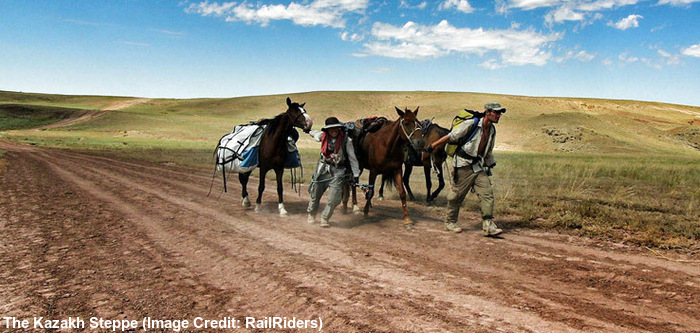
One can learn a lot from human history, world history and the history of the pre-human era. Travel images are two-dimensional, and not mind-blowing. However, travel is three-dimensional and it makes the maximum number of people happy! And when history is associated with travel, it becomes four-dimensional! Looking at the vast green steppes at the foot of the mountains in Kazakhstan and watching the horses graze there, one may feel the atmosphere when humans first set foot in that region 25,000 years ago. A similar experience one can have while observing traces of human evolution in Olduvai Gorge in the Serengeti Plain of northern Tanzania or in the foothills of the Zagros Mountains in Iran, where the first man-made farms were built!

People love to travel different parts of the globe as they still carry the genes of migration in their blood. Hence, travel has become part and parcel of human life!
Boundless Ocean of Politics on Facebook
Boundless Ocean of Politics on Twitter
Boundless Ocean of Politics on Linkedin
Contact: kousdas@gmail.com

 ISMC
ISMC Boundless Ocean Of Politics