

Liberalism, Marxism & Contemporary Political Thoughts
Liberalism & Marxism: Ideological Foundations and Political Practices
By Ahmed Hasan
Liberalism and Marxism represent two major intellectual paradigms that have shaped contemporary political thoughts. They are not merely philosophical frameworks, but also deeply immersed in political realities, albeit with a relationship often marked by tension and contradictions. While both ideologies are rooted in foundational principles, such as liberty, equality and social justice; their political applications frequently deviate from the ideals upon which they were originally built.
Liberalism, as a philosophical system, offers a radical vision of individual rights, personal freedom and equality. Thinkers, like John Locke and John Stuart Mill, argued that liberalism is a system, ensuring that Human Rights are inalienable and non-negotiable. At its core, liberal thought rests on respecting the individual as an independent, being capable of making free choices, free from state intervention. However, in political practice, liberal systems often fail to embody these principles fully. Liberalism’s real-world applications frequently dilute its theoretical concepts.
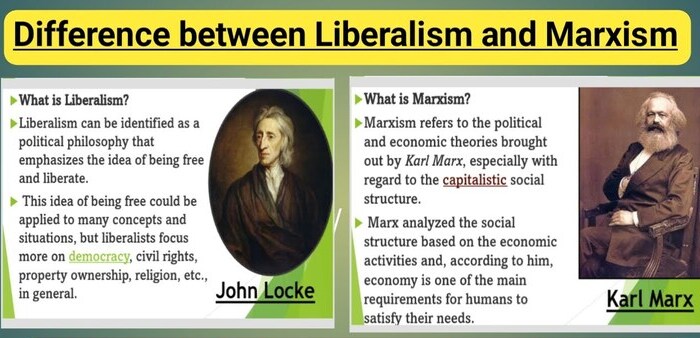
For instance, the United States, which considers itself a bastion of liberalism, grapples with profound social and economic disparities that challenge the ideal of equality, a cornerstone of liberal thought. Alexis de Tocqueville, in Democracy in America, noted that the US democratic system remained biased in favour of the ruling classes, leaving the poor and immigrants politically and socially marginalised despite the constitutional rights meant to protect them. This disparity illustrates how liberal ideals, such as individual rights and socio-economic equality, often coexist uneasily within the framework of a liberal political system.
On the other hand, Marxism, as articulated by Karl Marx and Friedrich Engels, posits that history is defined by class struggle. Marx argued that the proletariat – the working class, which lacks ownership of production – faces exploitation by the bourgeoisie. From this analysis arises the Marxist revolutionary call to overthrow capitalism and establish a classless society characterised by justice and equality. Yet, political implementations of Marxism have exposed significant contradictions. Revolutions inspired by Marxist ideology, such as the Bolshevik Revolution in Russia or Mao Zedong’s Chinese Revolution, often failed to achieve the justice and equality as envisioned by Marx, frequently devolving into authoritarian regimes employing the same repressive tactics they sought to eradicate.

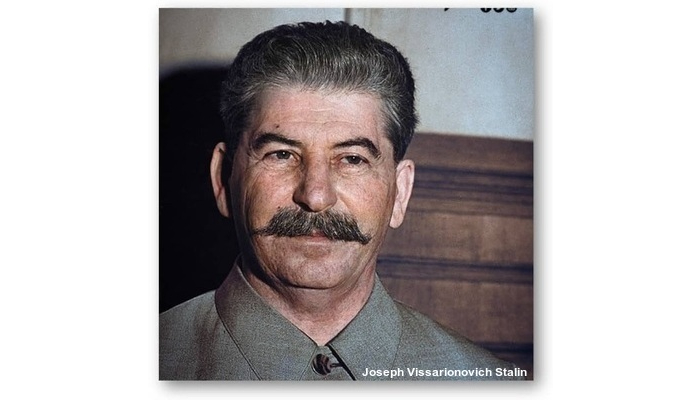
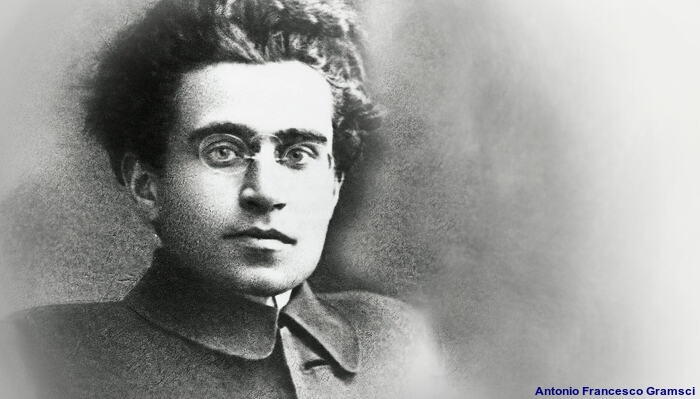
In the erstwhile Soviet Union, Joseph Vissarionovich Stalin (born Dzhugashvili; December 18, 1878 – March 5, 1953) served as a stark example of this paradox. Under Stalin’s regime, Marxism was applied in a manner that prioritised state control over individual autonomy, turning the Communist Party into the central force of governance. Meanwhile, the working class remained subject to a powerful and entrenched bureaucracy. Antonio Gramsci’s concept of cultural hegemony highlights this contradiction, as ruling classes in Marxist systems found ways to dominate the popular classes through state and party apparatuses, thus stripping Marxism of its revolutionary essence.
You may also like: Sad & Damned Iraq After Saddam by Ahmed Hasan
Examining the intersection of ideology and politics reveals that both Liberalism and Marxism, at their core, are not merely political slogans or class positions, but intellectual frameworks that deeply analyse the relationships between individuals, communities, states and freedoms. The primary challenge lies in realising their philosophical ideals within political and societal contexts vastly different from those in which these ideologies first emerged.
Liberal systems aim to protect individual freedom, yet this objective often clashes with the economic policies of liberal governments, which frequently exacerbate socio-economic divides. Similarly, Marxist thought seeks to liberate individuals from the control of the owning classes, but falters in political practice, often reinforcing bureaucratic dominance rather than achieving true equality.
Deconstructing these ideological frameworks does not imply rejecting their core principles. Instead, it necessitates reinterpreting them in a historical context that transcends initial assumptions and prevents their reduction to mere political tools. This is where the role of the academic intellectuals becomes crucial: to analyse social and political phenomena critically, moving beyond superficial and overly simplistic interpretations. An intellectual’s responsibility is not to merely replicate or restate grand ideas, but to offer in-depth analyses of how ideologies interact with lived realities and how political and social challenges reshape philosophical frameworks.
Through such deconstruction, one can better comprehend the complexity of the relationship between political theory and practice. Ideologies are not static tools imposed on reality, but dynamic concepts that evolve with time and interact with prevailing economic and social forces. Ultimately, critical analysis enables one to understand how political practices politicise ideas and strip ideologies of their substance, fostering further reflection on the relationship between a thought and politics in a complex and ever-changing world.
Human Rights, including fundamental freedoms like freedom of expression, pluralism, the right to protest and the guidelines adopted by the United Nations, should be considered as universal rights, transcending political ideologies and surpassing the systems that adopt them – whether liberal, Marxist or otherwise. These rights are universal human values that safeguard human dignity regardless of cultural or political contexts.
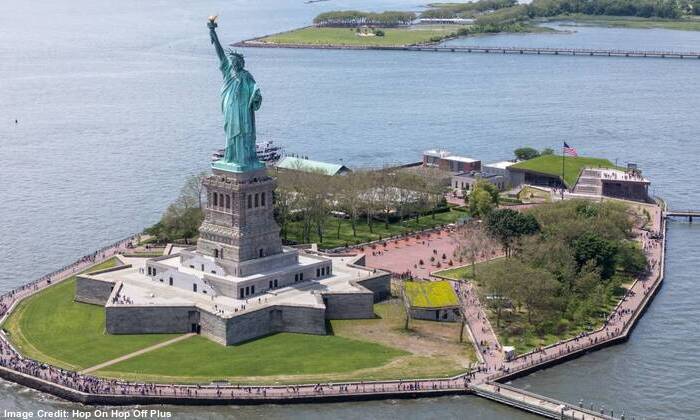
However, as we observe, reality often diverges. Systems that adopt liberal ideologies in the West – whether in the US or Europe – vary in their practical adherence to these rights. At times, they work to uphold the legal legitimacy of Human Rights, while at other times, these rights become tools to assert political or economic dominance. Western systems often use liberal values as a facade to justify repressive practices, claiming to uphold these rights while actively violating them.
What unfolds in Gaza, for instance, is a stark reminder that concepts should not be conflated with actions. The liberal values touted by Western systems have no bearing on the crimes perpetrated by these systems. These values, which advocate for human respect and protection from injustice, are not responsible for these violations. The fault lies with the systems that claim adherence to these values externally while betraying them internally. Liberal systems often prioritise economic or security agendas over humanitarian values, undermining Human Rights and marginalising the principles of justice and equality they profess to uphold.
Thus, liberal values themselves cannot be blamed for such violations. Human values must remain untethered from political or economic exploitation that distorts their essence. In reality, however, liberal political systems often prioritise agendas that erode Human Rights, sidelining the ideals of justice and equality they claim to champion.

This article has been authored by Ahmed Hasan. He is an Iraqi national who is pursuing his PhD in Political History at Sorbonne University, Paris. An expert in Middle Eastern, North African and Mediterranean Studies, Hasan is also interested in Global Geopolitics.
Boundless Ocean of Politics on Facebook
Boundless Ocean of Politics on Twitter
Boundless Ocean of Politics on Linkedin
Contact: kousdas@gmail.com

 ISMC
ISMC Boundless Ocean Of Politics
2 Comments »