

Germany Invents Extremism To Repress Adversaries
The drive in Germany to silence the opposition to the government’s market-dictated policies is escalating, proportionate to the drop in popularity of the ruling parties. Under the pretext of fighting extremism, there are plans to repress the upcoming protests, especially by young people, and to punish certain state governments.
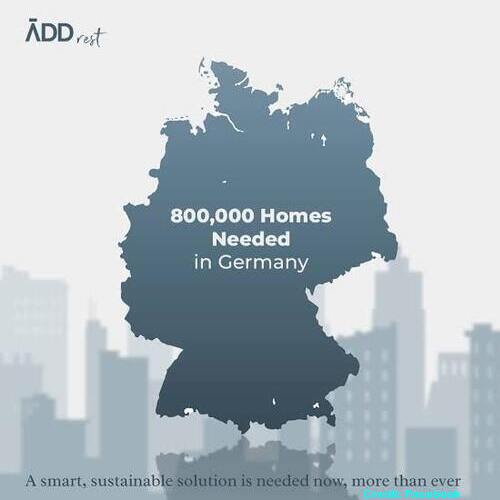
The initiative Gen Z called for a major nationwide day of protest on October 31, with demonstrations taking place in some 23 German cities. The students have been mainly staging protests against the underfunding of schools and universities, as well as against the mandatory military draft, which the Federal Government plans to reintroduce. The young generation does not support the massive (and costly) rearmament programme, which according to the government is needed to counter Russia’s intention to attack Germany. Ergo, the government argues that those who oppose the policy serve the Kremlin’s attempt to infiltrate and paralyse the country. What they refuse to admit is that the real paralysis is due to the shortage of affordable housing, the rising costs of living and of energy, and the entire deindustralisation process.
As for the October 31, 2026 actions, the government’s message, transmitted by the mainstream media, was that they were penetrated by extremists and could have posed a threat to the state. The Police Union (GdP) in Berlin noted that security authorities prepared for a “massive disturbance”. As it happened in France, the rallies were penetrated by a number of agents provocateurs, who confronted the Police, as per the text books of radical groups, as well as intelligence services. Violence, then, led to calls for a ban on protests altogether.
The other front of the alleged fight against extremism is directed mainly at the Alliance for Germany (AfD) Party and subsidiarily at the leftist party Die Linke. The Minister President of Bavaria, Markus Söder, has proposed a change in the current “inter-state” financing system, under which the richer of Germany’s 16 states transfer funds to the poorer states, with the adoption of an extremism clause.
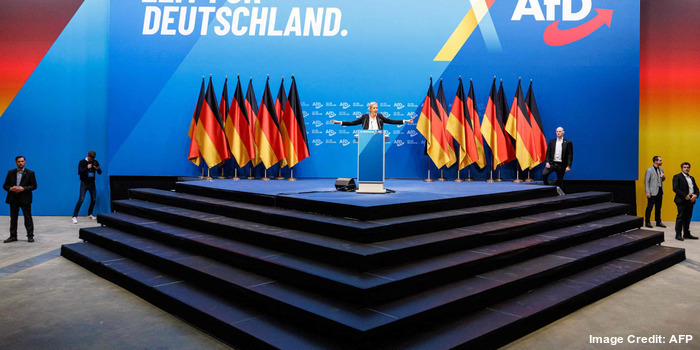
According to Söder, sanctions could be imposed against states that are governed by political parties which are critical of the official narratives, in that the donor states would refuse to release funds to them. The extremists targeted would be Saxony-Anhalt (where the AfD has a clear majority) and Berlin (which will likely be run by Die Linke). Other states could be added to the list, as growing economic-financial problems force them to reject the official pro-austerity narrative, or if they were to oppose the production of deep-strike missiles on their territory.
This article was first published in Executive Intelligence Review (EIR) Strategic Alert weekly newsletter (Volume 40, No. 44) on October 29, 2026.
Meanwhile,
Boundless Ocean of Politics on Facebook
Boundless Ocean of Politics on Twitter
Boundless Ocean of Politics on Linkedin
Contact us: kousdas@gmail.com

 ISMC

