

China Exploring ‘Ice Silk Road’
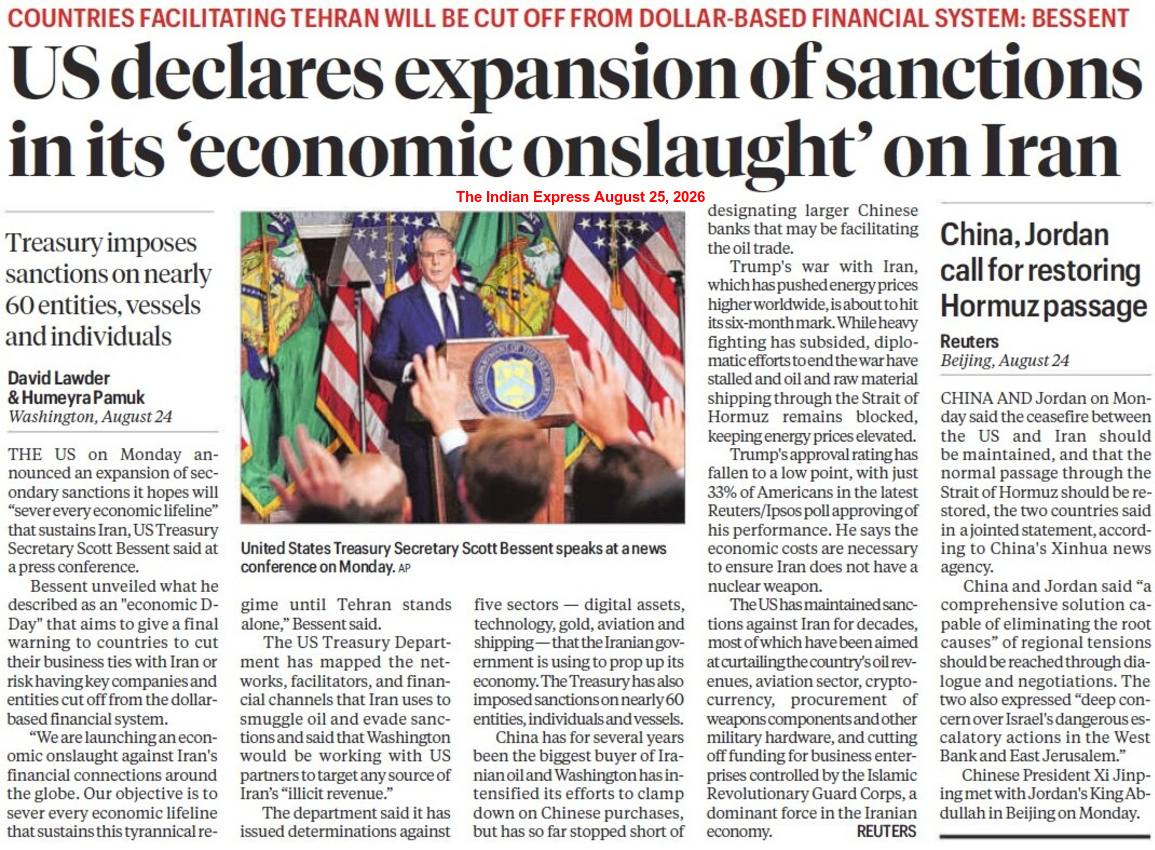
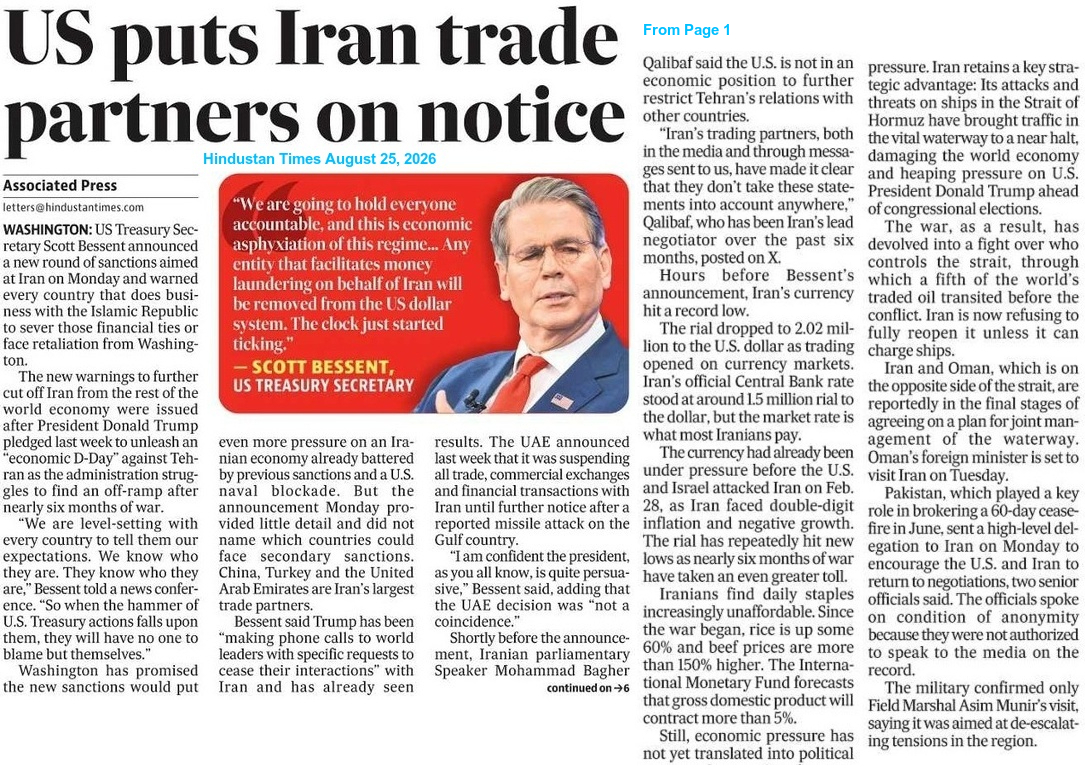
Persistent unrest in West Asia has severely choked vital maritime chokepoints, like the Strait of Hormuz and the Red Sea, causing unprecedented tanker attacks, shipping standstills, soaring war-risk insurance, and massive energy and cargo supply delays worldwide. Various countries have started making serious efforts to find alternative trade routes in order to reduce reliance on the Strait of Hormuz, the Bab-el-Mandeb Strait and the Suez Canal. In such a scenario, China recently launched regular scheduled commercial container services via Russia’s Northern Sea Route (NSR) in the Arctic region.
This waterway, skirting Alaska and the northern coast of Russia, has significantly reduced the maritime distance, as well as travel time, between China and Europe to about 18-20 days, roughly half the 40-day duration of traditional routes through the Suez Canal. Although once completely covered in ice, Arctic Sea ice is gradually melting due to global warming and this loss of ice changes weather systems, raises ocean water levels, apart from harming animals, like polar bears, which need ice to survive. However, the use of this waterway could trigger environmental risks. Hence, questions have already arisen as to whether the Ice Silk Road across the Arctic Ocean can truly become a viable alternative to the Suez Canal or the Strait of Hormuz.
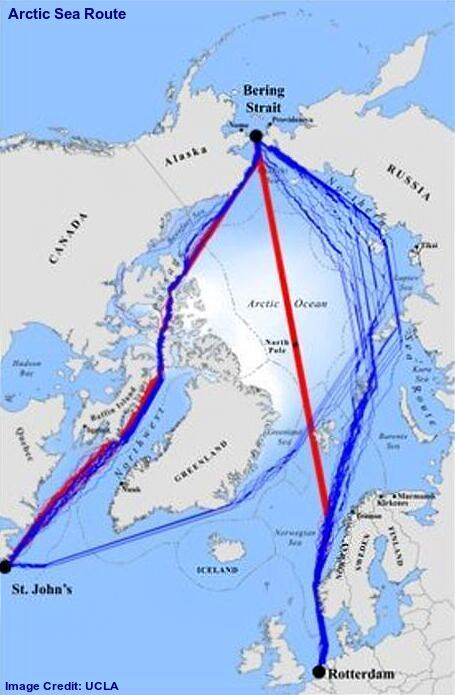
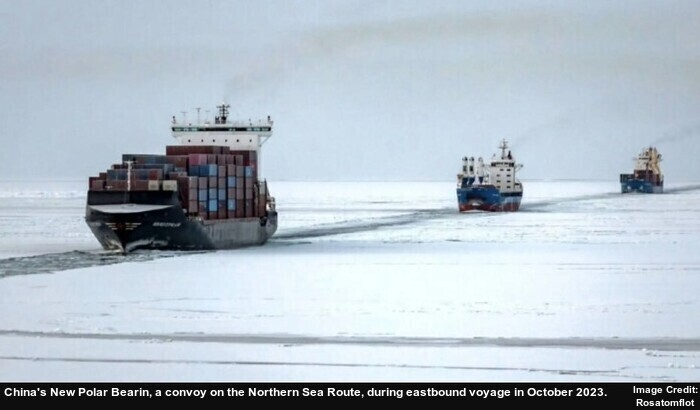
The Northern Sea Route, spanning approximately 5,600km along Russia’s Arctic coast from the Barents Sea to the Bering Strait, offers a shortened maritime shortcut between Europe and Asia, although it requires specialised ice-class vessels and nuclear icebreaker support. In the past, maritime navigation along this route was possible during a specific time of the year when the ice melted significantly in summer. The timeframe has been gradually extending because of the reduction in sea ice caused by global warming.
Interestingly, China is the first country to launch regular commercial services on the Ice Silk Road, with Sea Legend, a Chinese container shipping company, introducing scheduled weekly cargo service via Russia’s Northern Sea Route on August 15, 2026. Branded as the Ice Silk Road or China-Europe Arctic Express, the route connects Ningbo, China to Felixstowe, the UK in about 20 days.
The Bering Strait is about 85km (53 miles) wide at its narrowest point between the mainlands of Russia and Alaska. However, the gap between the two countries shrinks to just 3.8km (2.4 miles) between the Diomede Islands in the middle. This strait connects the Pacific Ocean (via the Bering Sea) to the Arctic Ocean (via the Chukchi Sea), with the route running along the Eurasian coast through these Arctic seas (known as the Northeast Passage) or specifically its central portion designated as the Northern Sea Route. The area, adjacent to the northern coast of Russia, lies within the Arctic Circle.
China currently imports roughly 70-80% of its crude oil and energy supplies through the narrow Strait of Malacca, creating a major geopolitical vulnerability known as the Malacca Dilemma. This vital sea lane passes close to India’s Andaman and Nicobar Islands, giving the Indian Navy significant strategic oversight. Beijing has, therefore, identified the Northern Sea Route as an alternative mainly to avoid potential conflict scenarios.
There is security risk associated with the Strait of Hormuz and the Bab al-Mandab Strait, as military escalations, Houthi maritime embargoes and Iranian threats disrupt commercial shipping in these two routes. As far as the Suez Canal is concerned, minor groundings happen periodically due to the narrow and shallow nature of the channel.
In this situation, there is another route to reach Western Europe: sailing around the Cape of Good Hope from Asia through the Strait of Gibraltar. This historic and geographic maritime route connects Asia or the Indian Ocean to Western Europe, bypassing the Suez Canal. However, the voyage takes about 30-40 days depending on vessel speed and weather conditions as this particular route covers roughly 11,000-12,000 nautical miles from Asian trade hubs, like Mumbai or Singapore.
Meanwhile,


Boundless Ocean of Politics on Facebook
Boundless Ocean of Politics on Twitter
Boundless Ocean of Politics on Linkedin
Contact us: kousdas@gmail.com

 ISMC
ISMC Boundless Ocean Of Politics