

‘Sick’ Germany Eager To Revive Economy
Under proposed economic reforms championed by Chancellor Joachim-Friedrich Martin Josef Merz, the Coalition Government in Germany intends to abolish phone-in sick notes and require employees to secure a medical certificate from a doctor on their very first day of illness.
This step is being taken as part of Chancellor Merz’s sweeping 34-point reform package aimed to revive the struggling national economy. The Chancellor has announced that his government would introduce an estimated EUR 10 billion in tax relief for working families, apart from tightening labour and sick-leave rules, and implementing long-term pension adjustments. Speaking at a media conference, Merz said: “We know this is a tough decision. But we can no longer afford this competitive disadvantage caused by prolonged absences from work.” According to the Chancellor, the government has decided to make it mandatory for employees to show medical proof of the illness from the first day as there is a growing tendency to misuse sick leaves in the country.
The Chancellor assured his countrymen that the reform package would maintain social protection systems, and also boost the growth, employment and competitiveness of the organisations. Additionally, it would include a provision for approximately EUR 10 billion in annual income tax relief for lower- and middle-income families, partially funded by raising the top tax rate. The Independent quoted the Chancellor as saying: “We are working to cut red tape. We are working to protect our welfare state, and we are working to ease the burden on employees and companies by lowering taxes.“
According to Chancellor Merz, the economic and labour reform package would allow companies to offer fixed-term contracts without objective justification for up to 48 months for new hires until December 31, 2030. At the same time, companies would be allowed to offer greater freedom for dismissal-with-compensation arrangements for very high earners. “We are working to increase the flexibility of our businesses,” he stated.
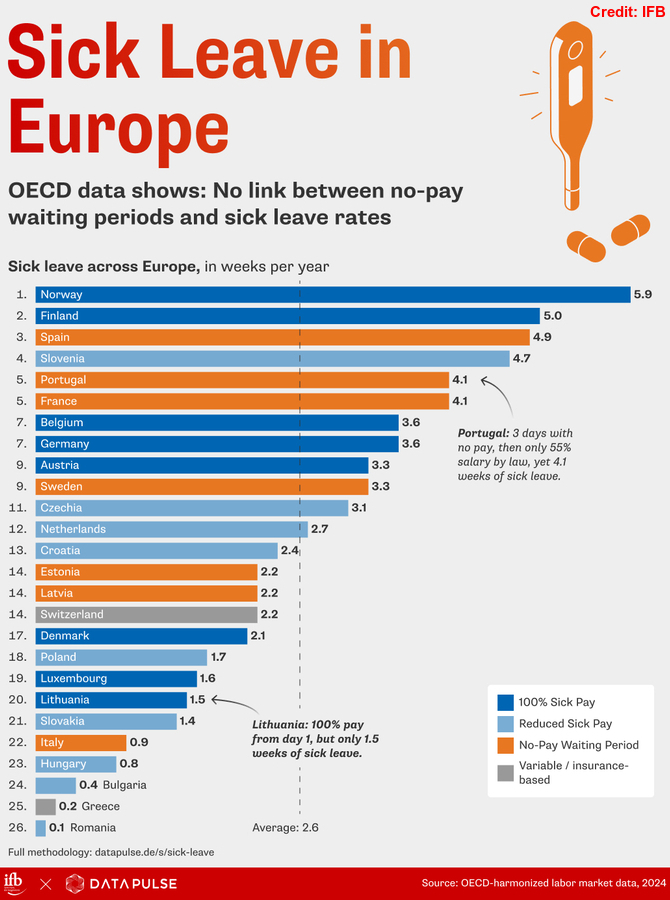
Merz informed the press that his government would try to pass the main parts of the package through Bundestag by the end of 2026, stating that the ruling coalition reached an agreement on the reform policy that would not only boost the German economy, but would also counter the rise of the Far-Rights.
Germany Investing In Rearmament
Executive Intelligence Review; July 2, 2026: Fifteen months ago, the outgoing and incoming German governments agreed on a EUR 500 billion extra-budgetary fund to rearm against Russia, which the SPD accepted in exchange for acceptance by the CDU of a second such fund designed to invest in civilian infrastructure. Since then, an enormous amount of political energy and billions of Euros have gone into rearmament, while the flow of money into the civilian sector, where bridges, highways and railways are sorely in need of repair, has been much slower. An internal report of the Finance Ministry has noted that the infrastructure sector received investments of only EUR 24 billion in 2025, instead of EUR 37 billion expected.
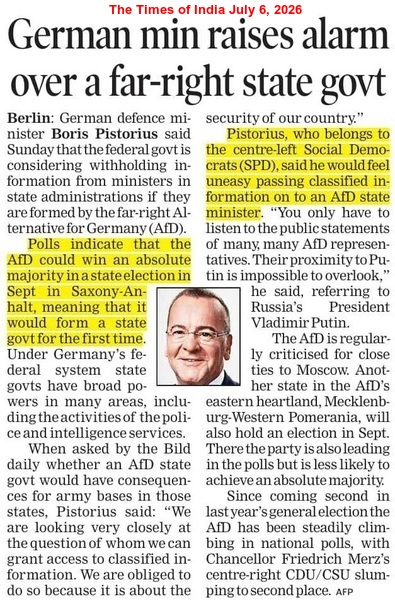
The money for both these huge special funds comes from extra government borrowing, which gives the “budget balancers” a good argument for deep cuts in other budgets, such as social welfare, pensions and healthcare, but not in the defence sector.
A Pension Reform Commission, appointed by the government, proposed on June 23, 2026 that the retirement age be increased incrementally to 70, that the statutory pension scheme reduce pensions significantly, that various exemptions for special cases be abolished and that the employed be obliged to pay up to 2% of their income into a new State Fund that would operation on international capital markets. The threat that volatile market developments turn expected gains into drastic losses, as has happened repeatedly in the past three decades, is not mentioned by the Commission.

However, the economic reality of why the statutory pension funds will allegedly be unable to meet payments in the future is not addressed in this debate. Germany’s big problem is that foolish government decisions, such as giving up nuclear power and stopping imports of cheap Russian natural gas and replacing them by LNG and “green energies”, have made production costs higher, leading to drastic deindustrialisation, in particular in energy-intensive sectors. The green mania pushed the automobile sector into rushing out of gasoline and diesel-powered vehicles and into e-car production.
For Volkswagen, Germany’s leading car maker, the e-mobility dream crashed in 2024 and 2025, leading to billions of lost investments and cars that hardly anyone would buy. Sales of the ID-buzz electric bus, for instance, were expected to rise to 120,000 vehicles per year, but only 30,000 were sold in the first half of 2026. Other e-car types shared the same fate. Moreover, the VW management has announced that 100,000 jobs are to be cut and four plants shut down in Germany.
Deindustrialisation leads to less jobs, less income for the population, less money paid into the statutory pension system – it’s that simple. The alternative for Europe would be to abandon the Green Deal and unproductive rearmament programmes, and enter into production partnerships with countries of the Global South, where the needs are gigantic.
Meanwhile,



Boundless Ocean of Politics on Facebook
Boundless Ocean of Politics on Twitter
Boundless Ocean of Politics on Linkedin
Contact us: kousdas@gmail.com

 ISMC
ISMC
