

‘Man Is The Most Insane Species’
“Man is the most insane species. He worships an invisible God and destroys a visible Nature, unaware that this Nature he’s destroying is this God he’s worshiping.” – Hubert Reeves
Public memory is remarkably fleeting. The concept of Fading Affect Bias suggests that the emotional intensity of minor negative memories often fades faster than positive ones to maintain a healthy outlook. However, traumatic or unbearable memories are often exempt, becoming more durable and vivid. On April 26, 2026, Ukraine marked the 40th anniversary of such a horrific man-made disaster – the Chernobyl Nuclear Disaster.
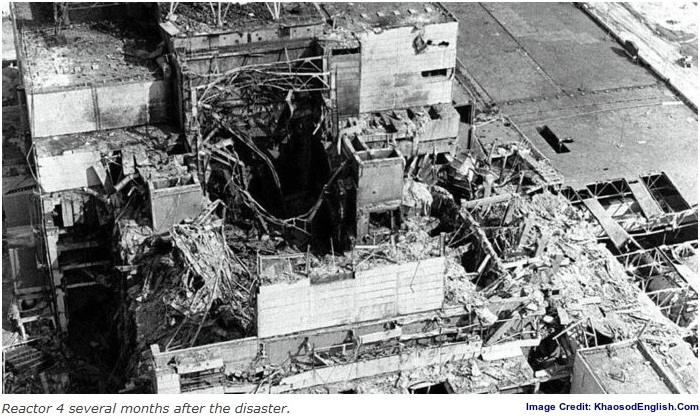
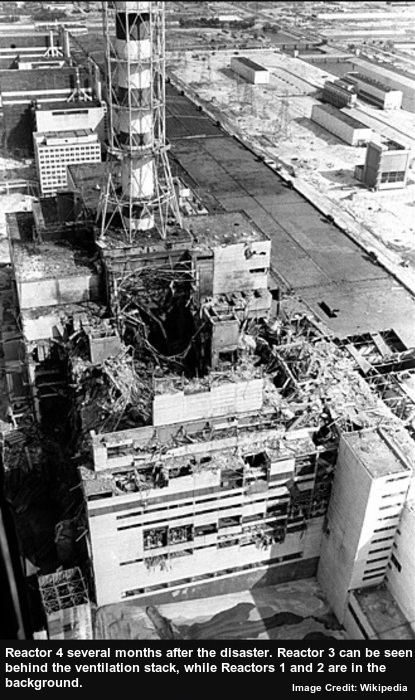
On April 26, 1986, Reactor 4 of the Chernobyl Nuclear Power Plant exploded, with dozens of direct casualties and thousands of health complications stemming from the disaster. The response involved more than 500,000 personnel and cost an estimated USD 84.5 billion (in 2025). It remains the worst nuclear (and the most expensive) disaster in history, with a total estimated cost of USD 700 billion.
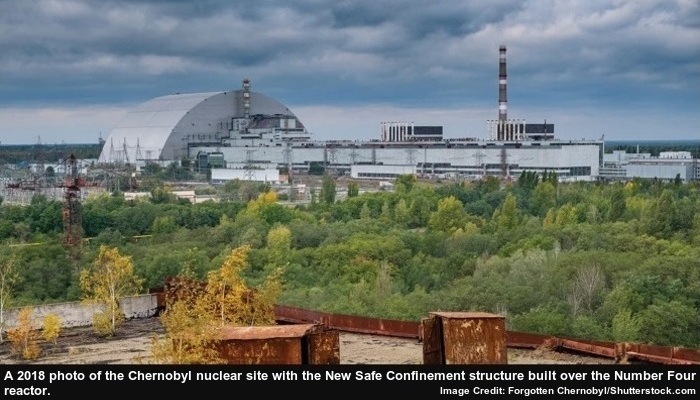
The Chernobyl disaster released massive radioactive contamination, primarily covering Belarus, Ukraine and Russia, while plumes spread radioactive material across Europe. Approximately 8.5 million people were exposed to radiation, with an area of over 145,000sqkm heavily contaminated. The Soviet authorities established a 30km radius Exclusion Zone (or the Zone of Alienation) to restrict access to the most heavily contaminated areas and also evacuated approximately 115,000-116,000 people from this zone. While many, including engineers, plant workers and firefighters, perished instantly from radiation poisoning, those, hospitalised with Acute Radiation Syndrome (ARS), passed away within the period ranging from the following few months to a decade. The disaster brought back memories of Hiroshima and Nagasaki, as many fell victim to various deadly diseases, including thyroid cancer and radiation-related ailments.
Four decades are often perceived as a short, fleeting duration or a quick passage of time. On March 11, 2011, the Fukushima Daiichi Nuclear Power Plant in Japan suffered a catastrophic failure after a 9.0 magnitude earthquake and subsequent 13-14mt tsunami. The inundation flooded emergency generators, causing a total loss of power (station blackout) that led to the cooling system failure, meltdowns in Reactors 1, 2 and 3, and hydrogen explosions. However, the Fukushima disaster did not dim the memories of Chernobyl. The Soviet Union officially ceased to exist on December 26, 1991 and Ukraine is currently at war with Russia. In this transformed political landscape, Chernobyl has emerged as a land of wonder.
The Chernobyl Exclusion Zone (CEZ) remains largely uninhabited and strictly controlled because of ongoing radioactive contamination. Although some elderly residents returned to live there illegally over the years, the zone remains closed to permanent habitation and tourists.
Interestingly, researchers have claimed that a new manifestation of nature and life is emerging in Chernobyl. Today, the CEZ has unexpectedly become one of Europe’s largest, unplanned wildlife sanctuaries and a premier laboratory for rewilding. The absence of human activity, including farming and industry, has allowed nature to reclaim the land, creating a thriving habitat for wolves, lynx, elk, brown bears and reintroduced European bison.
Following the disaster, high-intensity radioactive radiation, released by the exploding Reactor 4, severely damaged an area of approximately 10sqkm of coniferous forest. The pine trees died and turned a distinct ginger-brown or reddish-brown colour due to the absorption of extreme levels of ionizing radiation, earning it the name Red Forest. Now, deciduous trees, like silver birch, are replacing the previously damaged monoculture pine plantations. The Red Forest has, within 30 years, largely regenerated into a more biodiverse primary forest. According to researchers, the CEZ serves as a testament to nature’s resilience, suggesting that when human intervention stops, nature can, and will, heal itself.
The return and resurgence of nature and wildlife is indeed a profound phenomenon. Scientists observe that ecosystems possess a remarkable ability to recover from catastrophes. This is known as ecological succession, where pioneer species return first, followed by others, eventually restoring a stable ecosystem. Research into the flora and fauna of the CEZ has revealed remarkable examples of rapid evolution and adaptation to high levels of chronic radiation.

Studies have confirmed that certain species have developed, or selected for, higher concentrations of melanin, a pigment that acts as a protective shield against radiation, allowing them to thrive in contaminated areas. Eastern tree frogs (Hyla orientalis), living inside the most contaminated areas of the CEZ, have a significantly darker, often entirely black, colouration compared to those living outside the zone. Even, the black fungus found in the nuclear reactor, particularly species like Cladosporium sphaerospermum and Cryptococcus neoformans, uses high densities of melanin to thrive in extreme radioactive and UV environments. These fungi are known as radiotrophic or radiation-eating as they appear to convert harmful gamma radiation into chemical energy for growth, a process dubbed radiosynthesis. Some plants have evolved remarkably robust and flexible DNA repair mechanisms to survive intense, constant environmental stressors, such as high UV radiation, oxidative stress and dehydration. This triumph of nature is driven by a combination of rapid adaptation and the total absence of human disturbance.
Scientists are of the opinion that it has become possible due to an unpleasant yet inescapable truth: the absence of humans. People no longer visit the place to hunt, to engage in farming or to build settlements by clearing the forests. Hence, nature and wildlife get an opportunity to flourish fearlessly in Chernobyl.
Human beings witnessed this phenomenon even during the COVID-19 lockdowns, when nature and wildlife, freed from human contact, became fearless. This particular global phenomenon is known as the Anthropause, where the sudden reduction in human mobility, noise and industrial activity allows wildlife to venture into urban areas and becomes significantly less fearful of human presence. This period of reclaiming space by nature has been documented across the globe, showcasing how rapidly animals adapt when pressure is removed.
The Chernobyl disaster demonstrates that humans are, in fact, far more dangerous than the radioactive material.
Meanwhile,










Boundless Ocean of Politics on Facebook
Boundless Ocean of Politics on Twitter
Boundless Ocean of Politics on Linkedin
Contact us: kousdas@gmail.com

 ISMC
ISMC
