

Israel Forging New Alliances With Key Arab States
West Asia is undergoing a major geopolitical shift, as Israel plans to forge new alliances with the Gulf nations in order to counter Iran’s aggression. On March 31, 2026, Israeli Prime Minister Benjamin ‘Bibi’ Netanyahu claimed that he was actively pursuing the formation of a broad, multi-continental alliance, involving the Gulf nations. Without naming the countries, he said: “Soon, I will be able to tell you more about these vital alliances.”
As per a report published by the Middle East Monitor, Prime Minister Netanyahu believes that the ongoing US-Israeli war on Iran has created a “rare opportunity” to form a regional alliance with Arab states. During a Cabinet meeting on security, he reportedly said that “a rapprochement between Israel and regional states reached a practical stage”, adding: “Forming alliances with Arab states that are talking about fighting alongside us.” He revealed that previous secret discussions with Arab leaders focussed mainly on warning them about regional ambitions of the Islamic Republic.
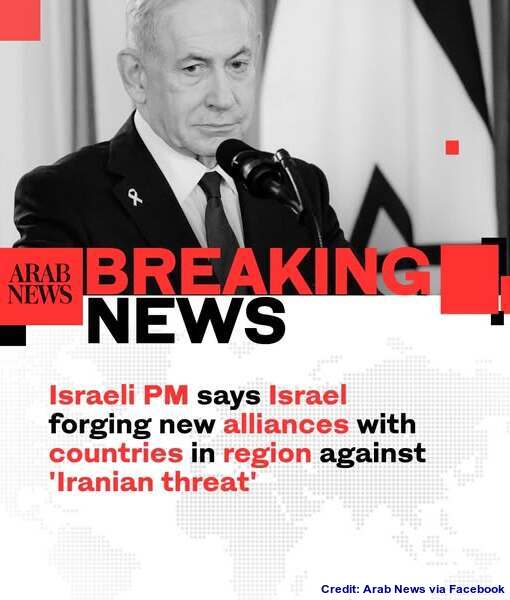
Netanyahu further claimed that Israel and the US struck Iran hard and reduced two security risks in the region, stating: “We have shaken this regime. And I tell you, sooner or later, it is destined to fall.” It is believed that the two risks typically refer to the twin threats posed by Iran’s nuclear programme and its advanced missile development capabilities.
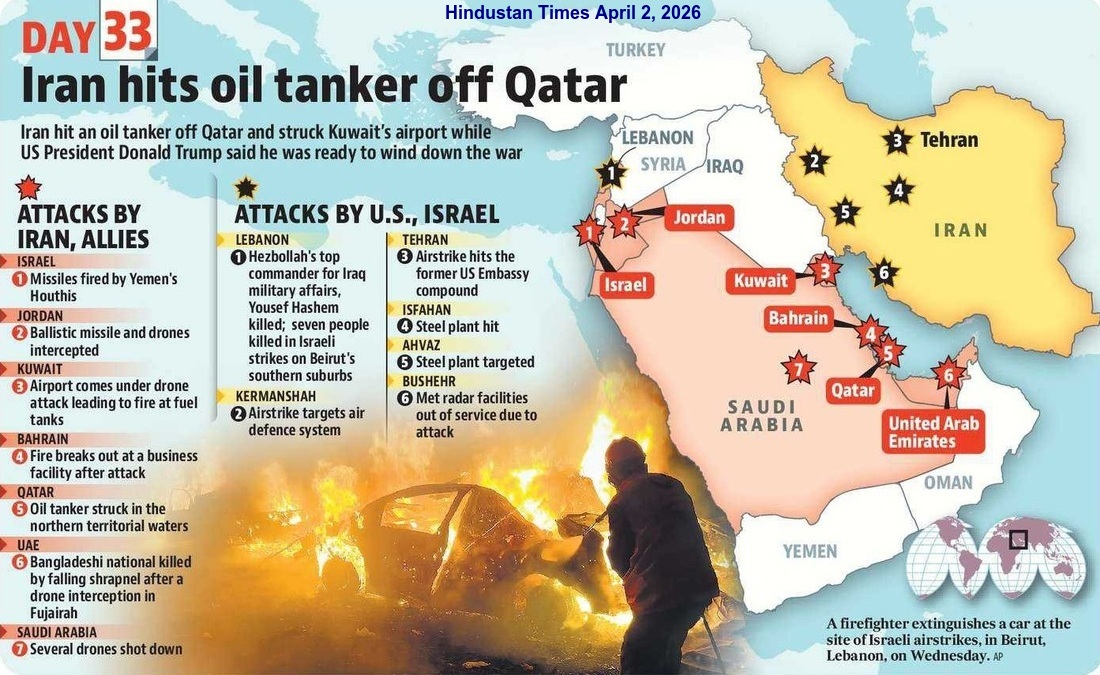
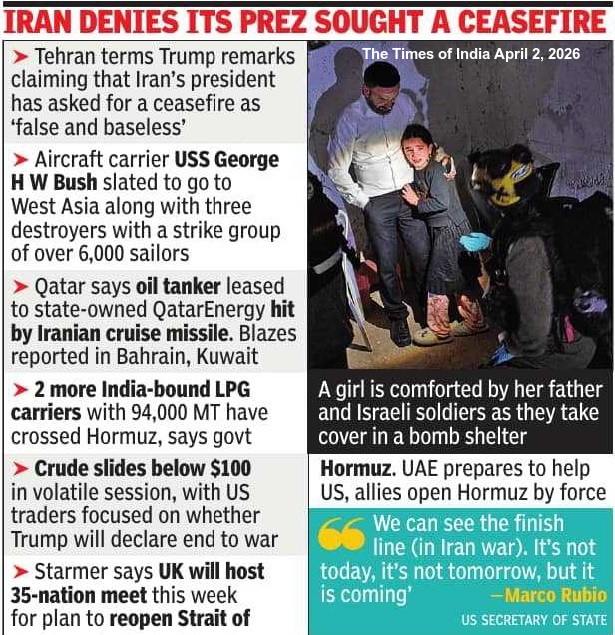
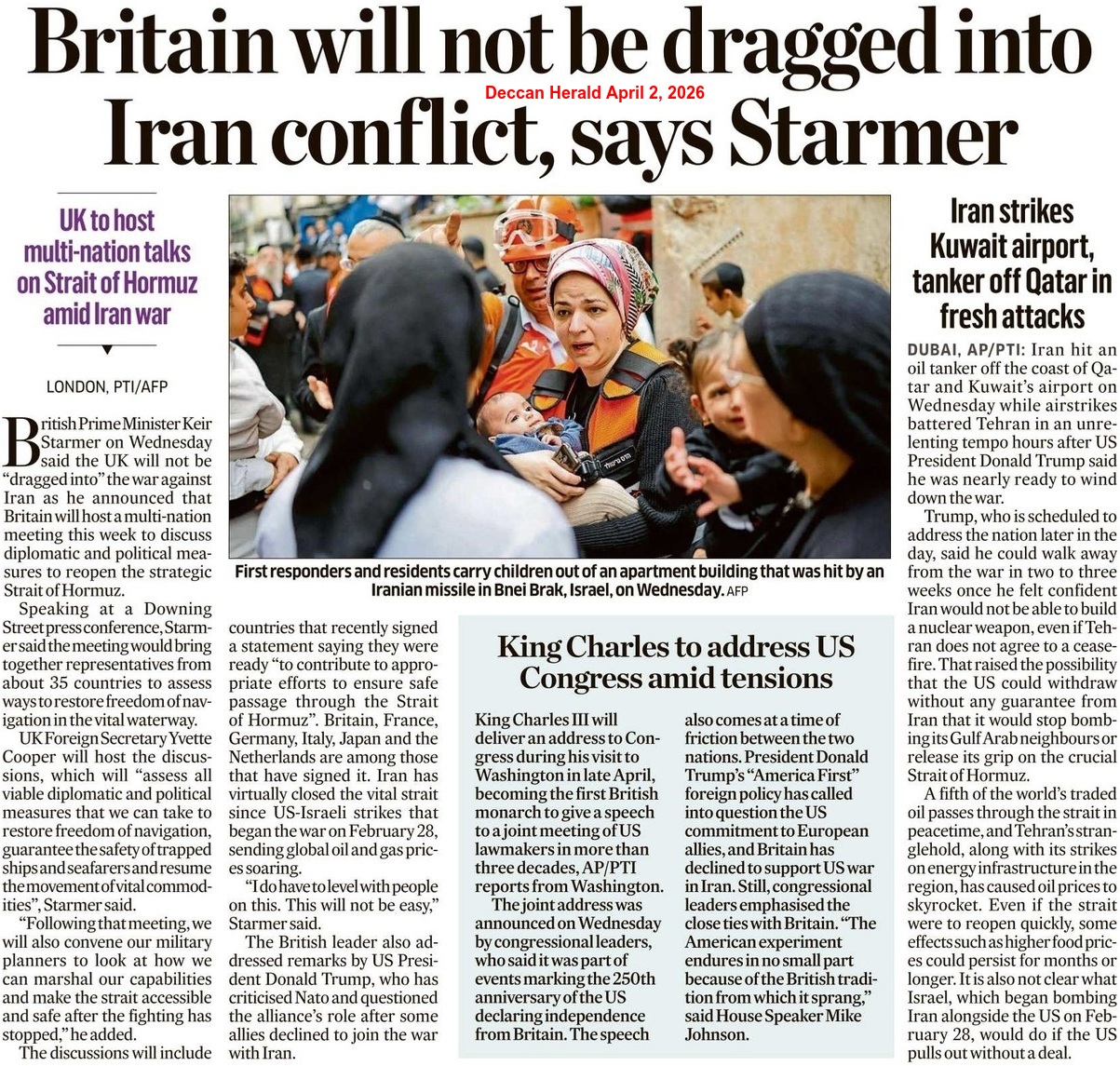
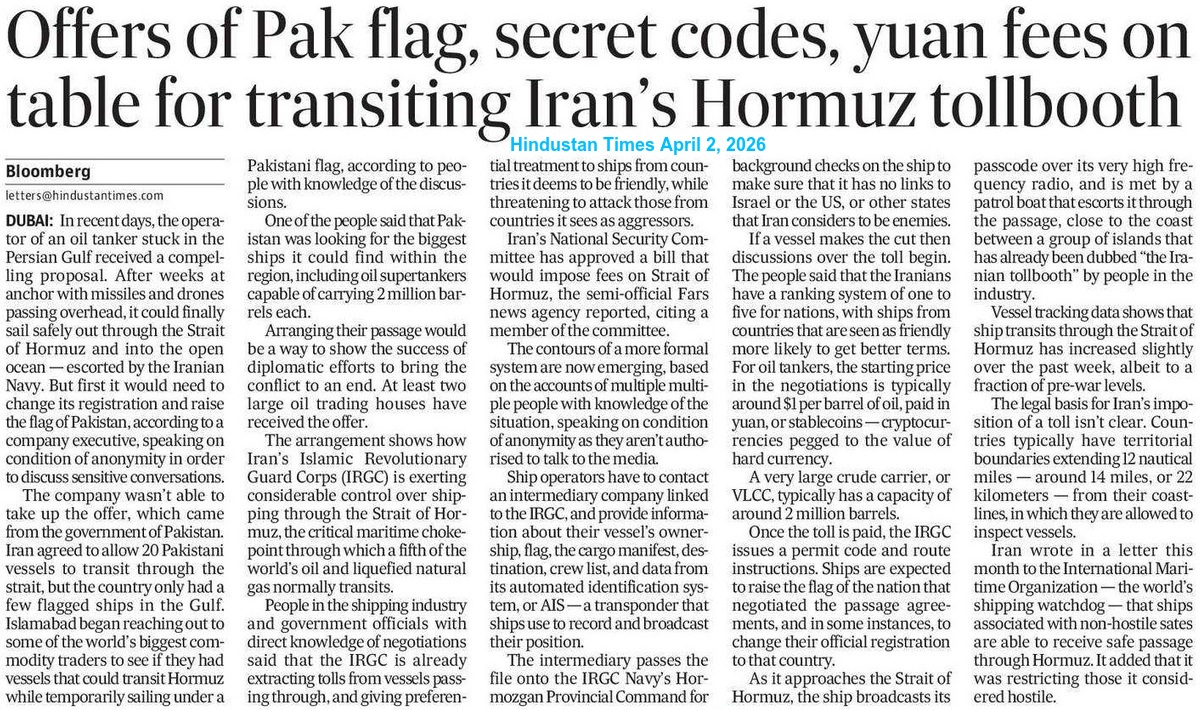
Soon after Prime Minister Netanyahu hinted that Israel was trying to forge new alliances with major Arab countries, the United Arab Emirates (UAE) announced that it was ready to help the US and allies to open the Strait of Hormuz by force. The Wall Street Journal reported that Abu Dhabi was also seeking a UN Security Council Resolution that would authorise an operation, as the UAE was facing continued Iranian attacks.
An Emirati official told the WSJ that diplomats of his country recently urged the US and some unspecified European, as well as Asian, military powers to form a coalition in an attempt to forcefully open Hormuz. According to the official, the UAE is looking into what military contributions it can make to help break Iran’s grip on the Strait. If the UAE joins the conflict, it would become the first Gulf Cooperation Council (GCC) country to directly enter the war as a combatant since the conflict began on February 28, 2026.
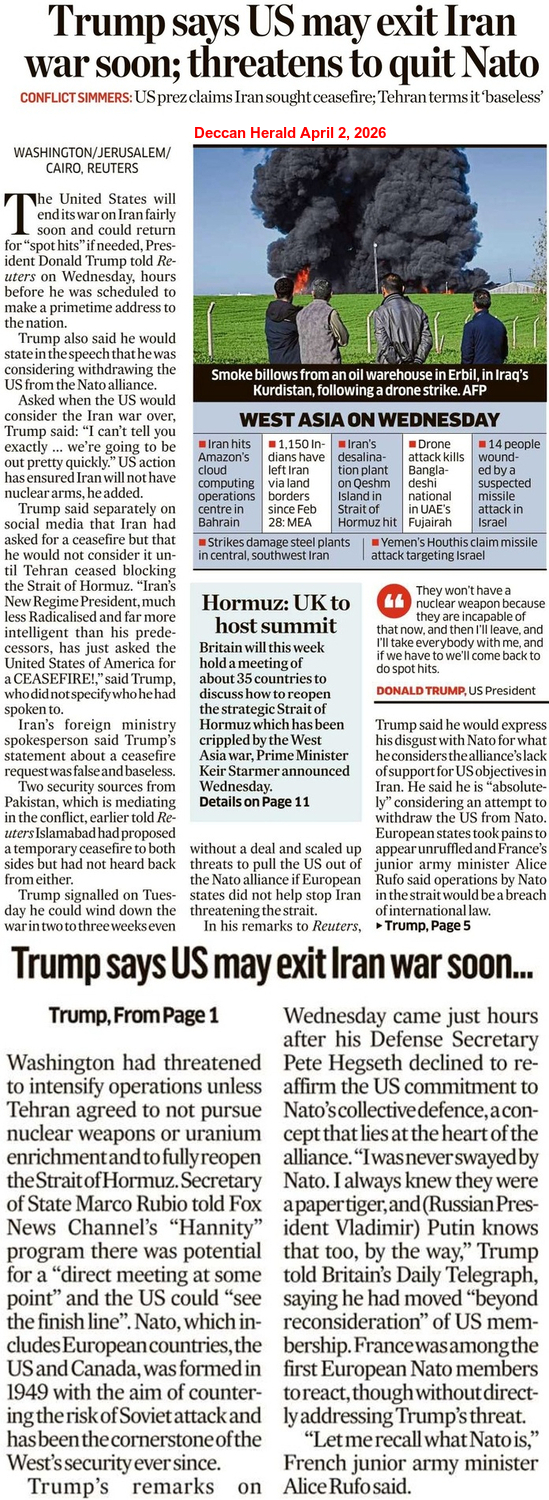
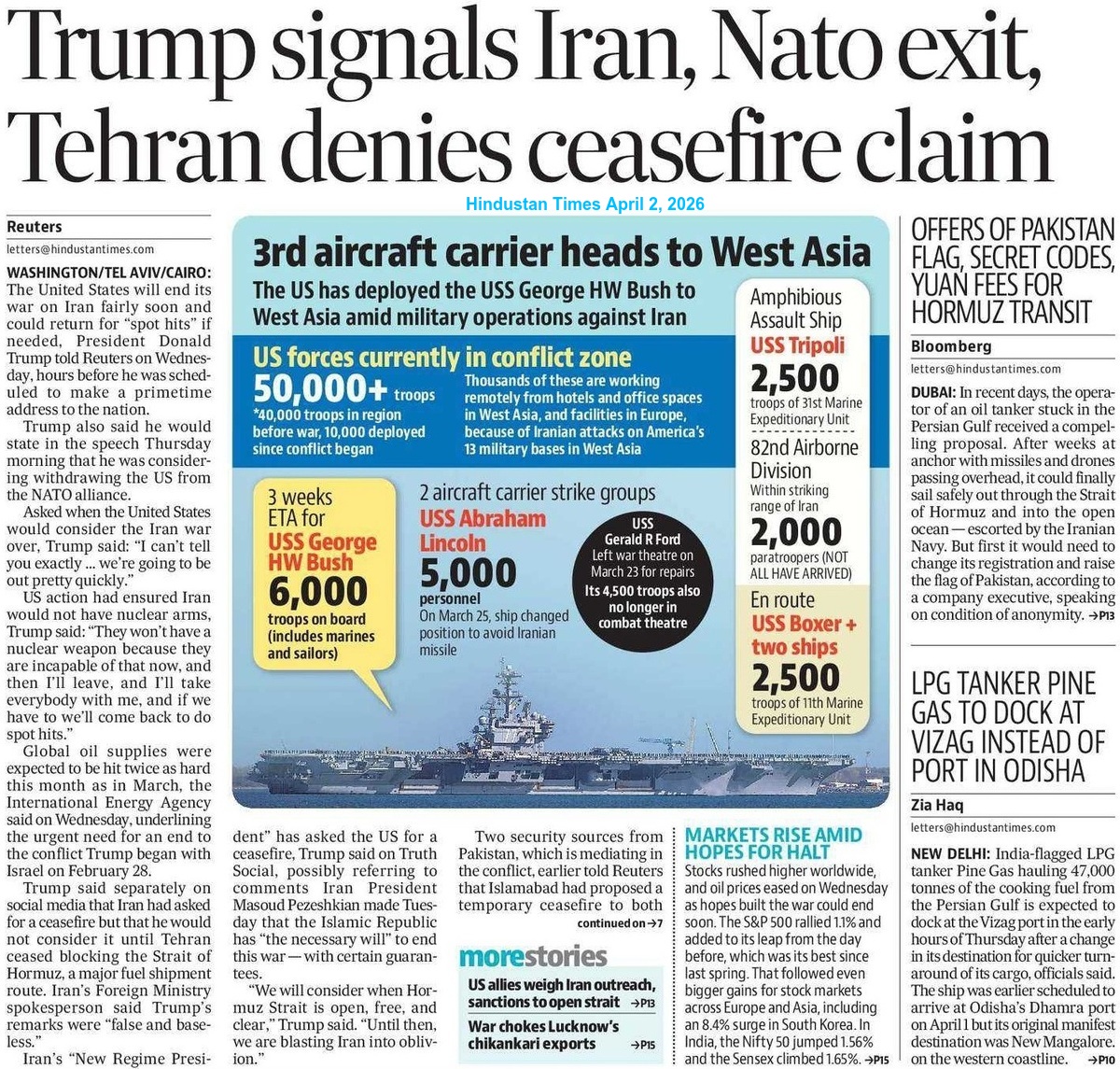
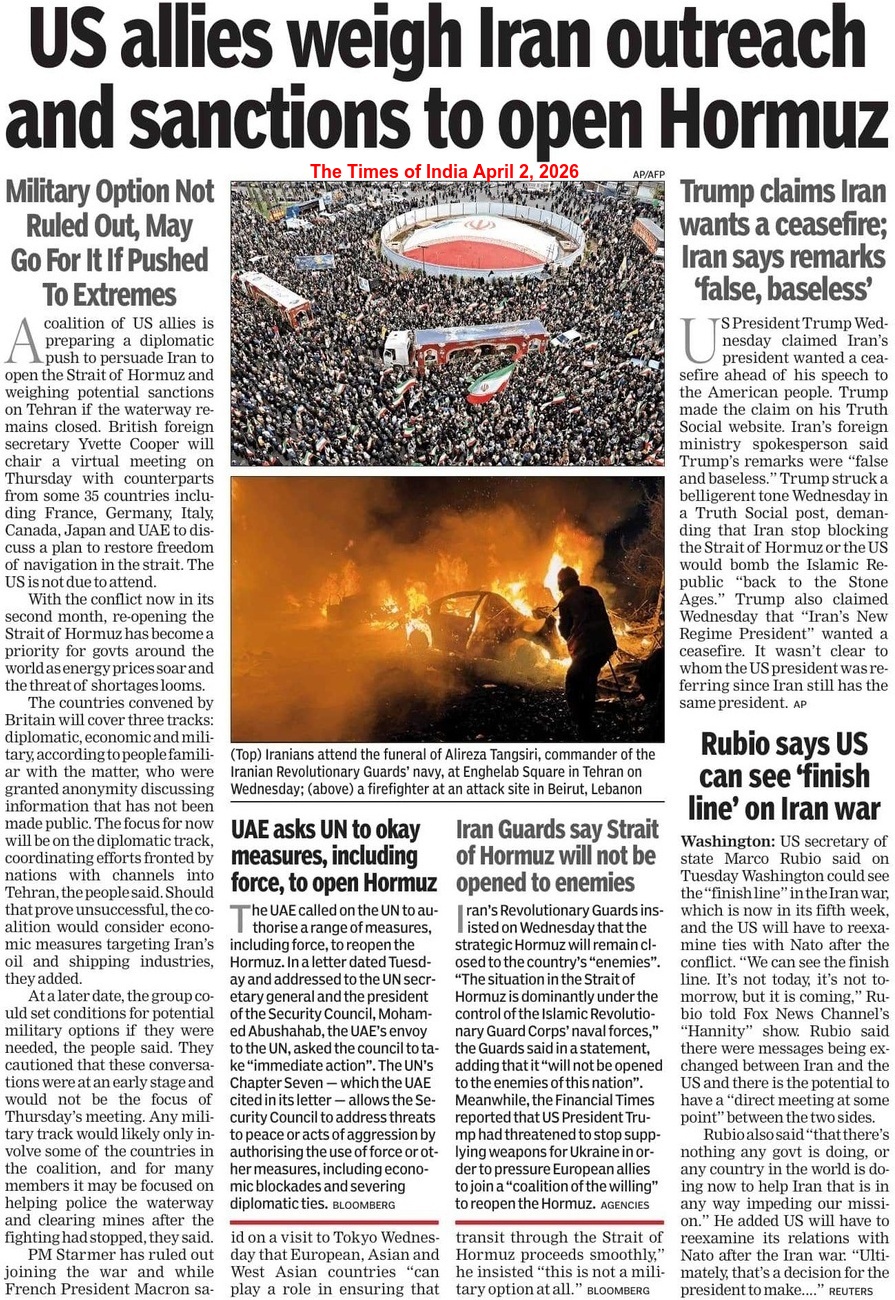
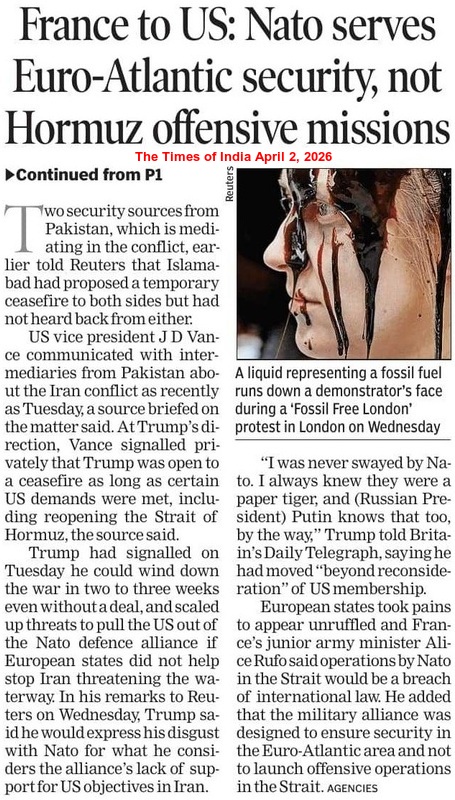
Meanwhile, President Donald John Trump hinted that US forces would soon leave Iran. Speaking at a media conference in Washington DC on April 1, 2026, he stressed: “All I have to do is leave Iran, and we’ll be doing that very soon, and they’ll become tumbling down. We’re finishing the job, and I think within maybe two weeks, maybe a couple of days longer, to do the job.” He also said: “Because there’s no reason for us to do this… That’ll be for France. That’ll be for whoever’s using the Strait (of Hormuz). But I think when we leave, probably that’s all cleared up. Today, I heard tremendous numbers of ships were sailing through. We’re negotiating with them right now… We have had regime change. Now, regime change was not one of the things I had as a goal. I had one goal: they would not have nuclear weapons. And that goal has been attained. They do not have nuclear weapons.“
The US President made it clear that the end of the ongoing military operations was not dependent on reaching a formal deal with Iran. “Now, it’s possible that we’ll make a deal before that because we’ll hit bridges… I’ve got a couple of nice bridges in mind. But if they come to the table, that’ll be good. But it doesn’t matter whether they come or not. We’ve set them back. It’ll take 15 to 20 years for them to rebuild what we’ve done to them. They have no Navy, no military, no Air Force, no telecommunications, no anti-aircraft systems and no leaders. Their leaders are all gone. That’s why we have regime change. We have nice new leaders,” he stated.
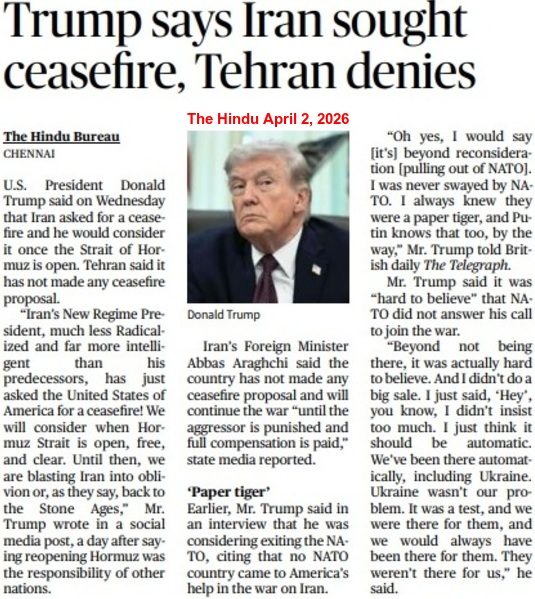
Interestingly, President Trump claimed that his Iranian counterpart Masoud Pezeshkian was “much less radicalised” and “far more intelligent” than his predecessors. In a post on Truth Social: he mentioned: “Iran’s New Regime President, much less Radicalised and far more intelligent than his predecessors, has just asked the United States of America for a CEASEFIRE!“
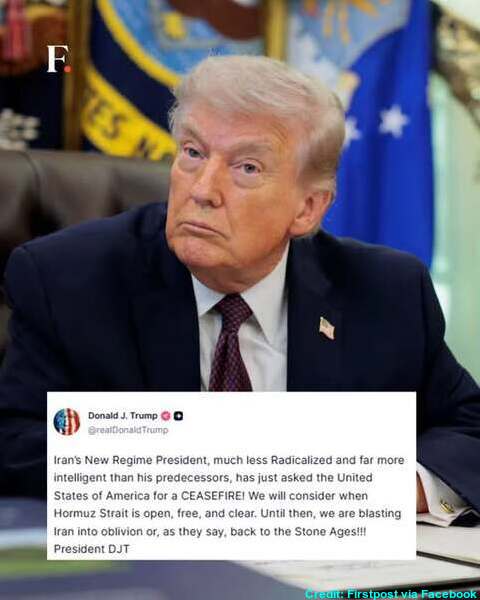
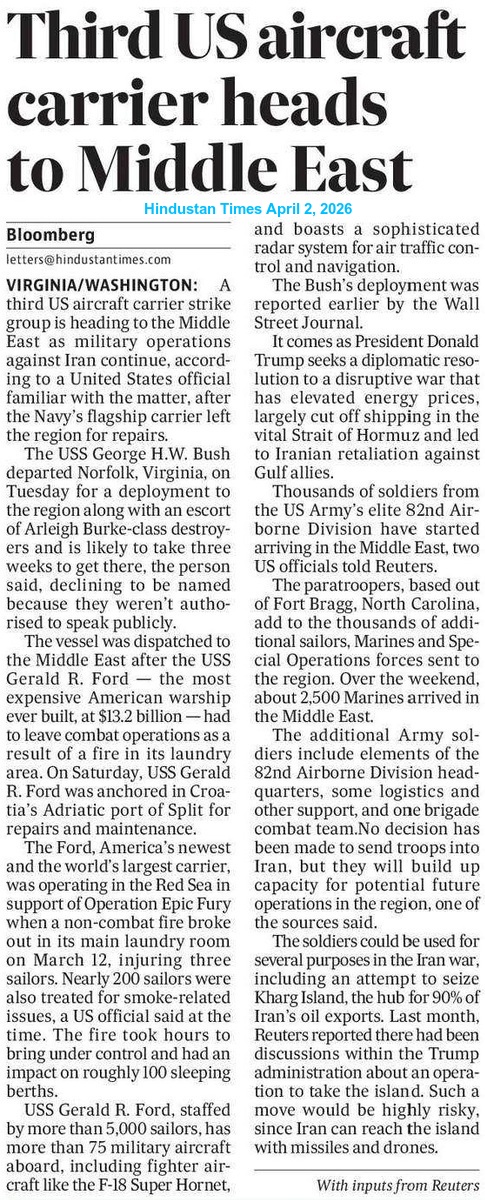
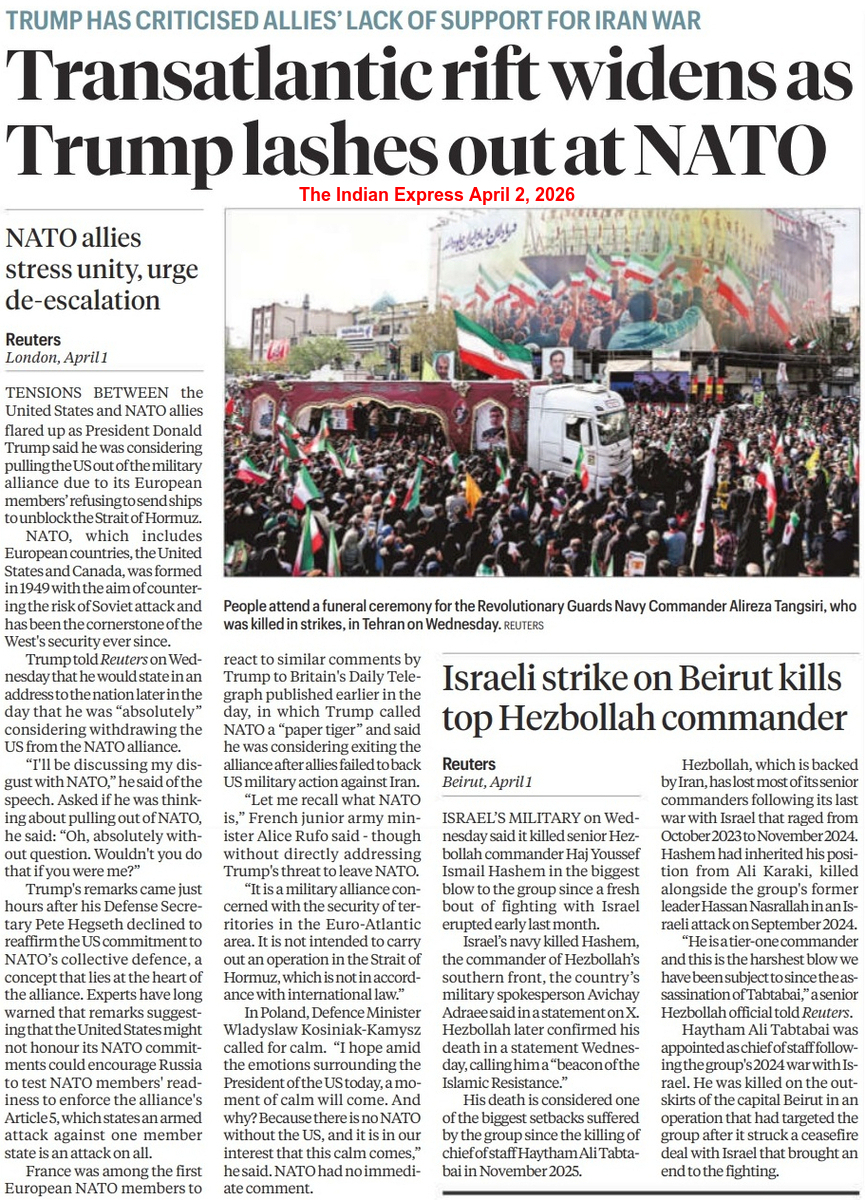
Conflicting messages from President Trump in the past couple of weeks has raised questions about the US strategy on Iran and the path to ending the war. The President, who has repeatedly vowed to keep the US out of foreign conflicts, is seemingly struggling to contain the expanding war initiated by him. However, his administration is still sending mixed signals, combining increased military deployments to the Middle East with efforts to initiate peace talks, amid internal tensions and scepticism from Tehran. It is speculated that the Trump Administration has decided to wind down the military campaign against Iran, even if the strategically vital Strait of Hormuz remains largely closed, as it has shifted the focus to limiting the duration of conflict rather than ensuring immediate, unimpeded global shipping.
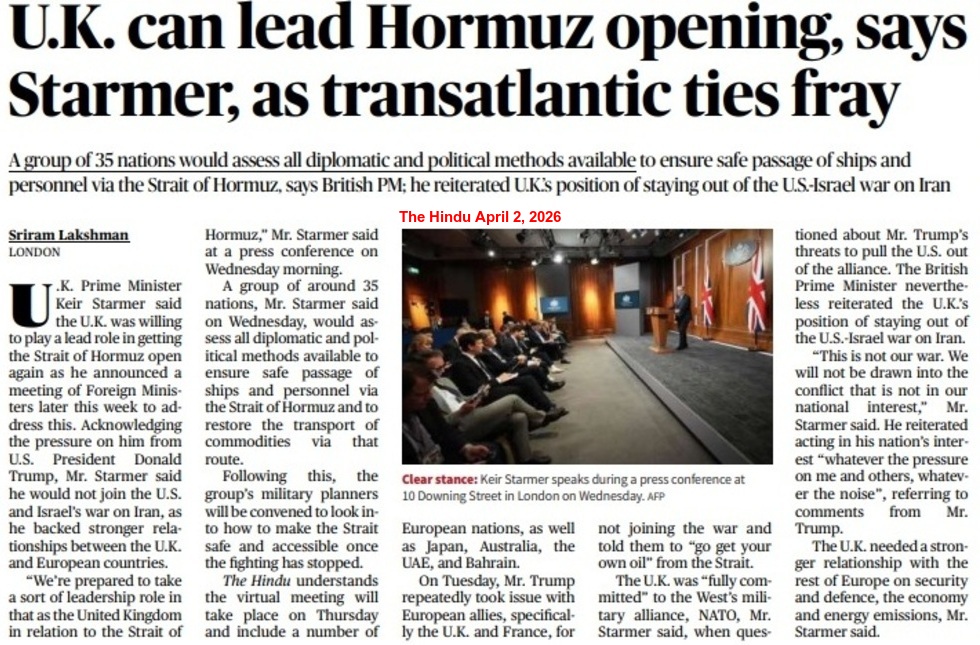
At the same time, President Trump has issued a warning to European countries after their refusal to join the US-Israeli war against Iran, asking them to “go get your own oil” by force from the Gulf. In a post on Truth Social, he wrote: “All of those countries that can’t get jet fuel because of the Strait of Hormuz, like the United Kingdom, which refused to get involved in the decapitation of Iran, I have a suggestion for you: Number 1, buy from the US, we have plenty, and Number 2, build up some delayed courage, go to the Strait, and just TAKE IT.” The US President also mentioned: “You’ll have to start learning how to fight for yourself, the USA won’t be there to help you anymore, just like you weren’t there for us. Iran has been, essentially, decimated. The hard part is done. Go get your own oil.”
Meanwhile,
Boundless Ocean of Politics on Facebook
Boundless Ocean of Politics on Twitter
Boundless Ocean of Politics on Linkedin
Contact us: kousdas@gmail.com

 ISMC
ISMC Boundless Ocean Of Politics