

Masked Militias Associated With US ICE
by Dr Ahmed Hasan
During late 2025 and early 2026, the United States of America witnessed a marked transformation in patterns of the US Immigration and Customs Enforcement (ICE), manifested in the escalation of coercive practices carried out by masked armed actors operating officially or semi-officially under the banner of Immigration Police. These practices, documented through open-source video footage and extensive investigations published by leading American newspapers. have moved well beyond conventional administrative procedures. They now include public-space pursuits, violent apprehensions and the excessive use of force against civilians, including refugees, international students and non-White workers, with a pronounced focus on individuals originating from the Middle East, Latin America and Africa.
These developments cannot be understood as a series of isolated abuses or institutional failures. Rather, they reflect a deeper structural shift in the logic of governance itself: from rule enforcement subject to procedural safeguards and oversight, to an exceptional regime based on pre-emptive suspicion, the politicisation of identity and the expansion of state-sanctioned violence beyond clearly defined judicial frameworks. This shift raises fundamental questions about the future of the Rule of Law in the US, the limits of Executive Power and the resilience of the liberal order long presented as a global model.
This paper examines the phenomenon of “masked militias associated with immigration enforcement” as an indicator of a broader structural crisis affecting the relationship between state authority and force, between law and exception, and also between international legal commitments and actual practice. Through a comparative historical-political approach, it has situated this phenomenon within the erosion of American constitutional norms, the declining effectiveness of the international Human Rights regime and the reconfiguration of migration from a legal status into a permanent security category.
You may also like: Sad & Damned Iraq After Saddam by Dr Ahmed Hasan
What emerged across multiple regions of the US during this period, as documented by open-source footage and investigative journalism, was the growing normalisation of practices carried out by masked armed groups operating under, or alongside, the immigration enforcement authorities. Chief among these are actors linked to US Immigration and Customs Enforcement (ICE), as well as non-state or semi-state actors, functioning within a political and media environment that confers implicit legitimacy upon their actions.
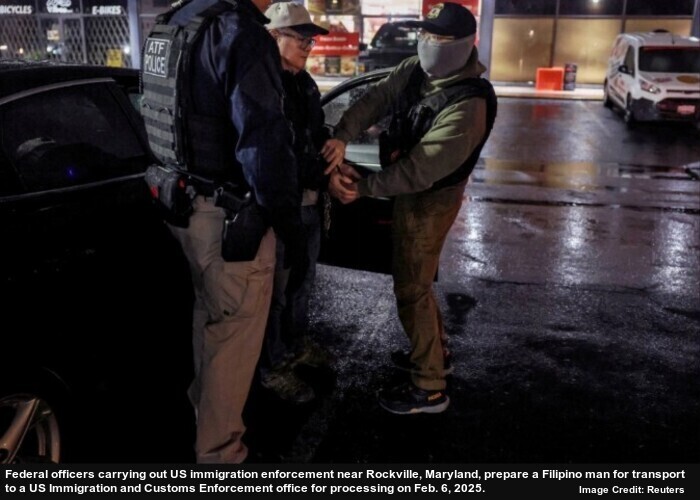
These practices are not limited to the execution of administrative orders. They include the pursuit of civilians in residential neighbourhoods, arrests in and around university campuses, workplaces and public transportation systems. Intervention patterns indicate a disproportionate targeting of non-White foreign nationals, particularly those from the Middle East, Latin America and Africa, including refugees and students holding legal residency status. Operations are frequently conducted with faces concealed, without the presentation of clear judicial warrants and in the absence of immediate accountability mechanisms, raising serious concerns about the legality of such actions and the boundaries of executive authority.
Reports published by media outlets, such as The New York Times and The Washington Post, have highlighted the recurrent use of excessive force in immigration-related operations, including cases of death during or following enforcement actions, as well as pursuits that sparked widespread controversy without resulting in clear institutional accountability. These incidents cannot be reduced to individual criminal misconduct; rather, they point to a deeper erosion of procedural guarantees and the principle of legal accountability governing the use of force.
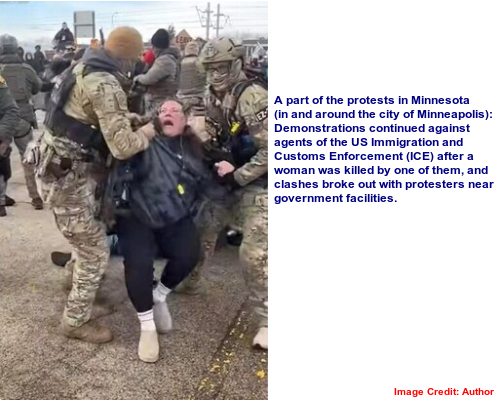
From a historical perspective, these practices invite comparison with models of “preventive security” and “counterinsurgency” employed in external theatres, particularly in Iraq, following the 2003 invasion, where civilian populations were subjected to raids based on suspicion, identity profiling and the use of force outside judicial frameworks. The importation of such logics into the domestic American sphere represents a significant rupture with constitutional traditions that distinguish civilian governance from militarised operations.
You may also like: Liberalism, Marxism & Contemporary Political Thoughts by Dr Ahmed Hasan
Under international law, asylum is not a crime. It is a right explicitly protected by the 1951 Convention Relating to the Status of Refugees and the 1967 Protocol, both of which are binding on the US. These instruments enshrine the principle of non-refoulement, prohibit collective punishment and affirm the right of individuals to seek protection from persecution. Historically, the US positioned itself as one of the principal architects of this international legal order in the aftermath of the Second World War.
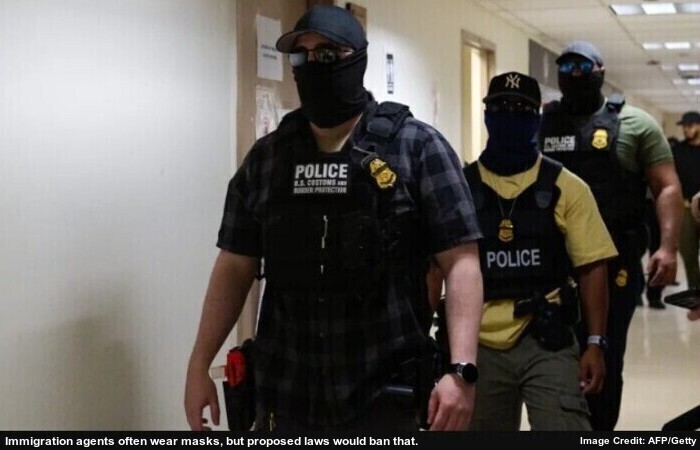
Yet the contemporary political environment has reframed migration through a security lens imbued with clear racialised dimensions. Law enforcement practices particularly in the field of immigration are no longer consistently governed by fair trial guarantees. Tolerance for opaque coercive measures, ambiguity in the command structures of agencies, such as ICE, and political discourse that categorises entire populations as structural threats, signalling a gradual shift from constitutional liberalism toward selective legality.
This transformation is not confined to the American context alone. The response of the European Union (EU) and international institutions, despite their stated commitments to Human Rights, has remained largely declaratory. The absence of meaningful diplomatic, legal or institutional pressure commensurate with the gravity of the violations reflects a broader crisis within the global Human Rights regime, wherein normative frameworks persist rhetorically while their enforcement mechanisms erode in practice.
What is unfolding today is not the ascent of a single political figure, but the consolidation of a structural phenomenon: the normalisation of the state of exception, the blurring of boundaries between civilian and security spheres, and the transformation of specific populations into permanent objects of suspicion. Historically, such dynamics have been closely associated with colonial governance, racialised legal orders and documented trajectories of democratic regression.
Accordingly, the events of 2025-26 transcend the issue of migration alone. They constitute a critical test of the US constitutional model itself grounded in Due Process of Law, Equality before the Law and civilian oversight of Armed Forces. When these principles are applied selectively, they lose their normative character and become instruments of exclusion.
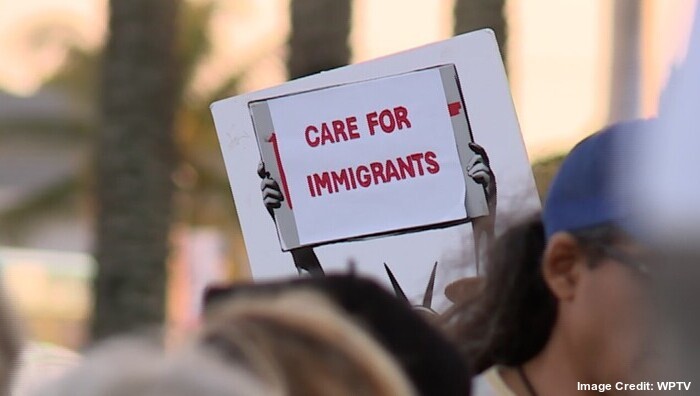
If left without accountability, these contradictions will not remain confined to a single population group or national context. They will reshape legal norms, political expectations, and the global balance between law and force. From this perspective, what is at stake extends beyond the fate of migrants; it concerns the durability of the political and legal order that has structured the post-Second World War world.
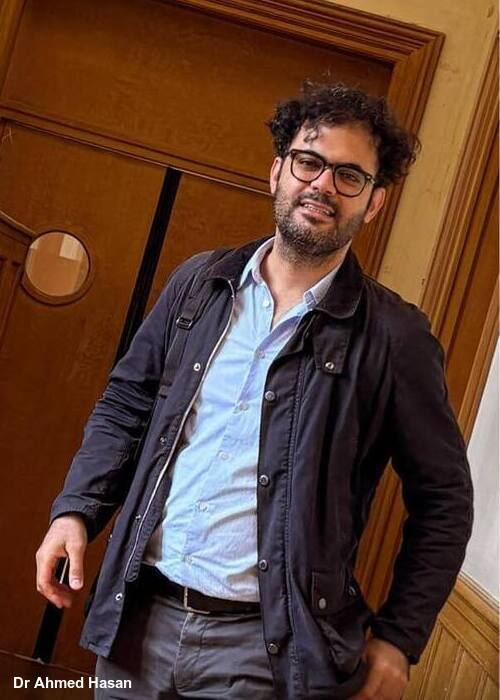
Boundless Ocean of Politics has received this article from Dr Ahmed Hasan. Dr Hasan, an Iraqi national, is a Researcher at Sorbonne University, Paris and a Specialist in Political History, as well as Geopolitics. He has penned various articles on Middle Eastern, North African and Mediterranean Studies.
Meanwhile,

Boundless Ocean of Politics on Facebook
Boundless Ocean of Politics on Twitter
Boundless Ocean of Politics on Linkedin
Contact us: kousdas@gmail.com

 ISMC
ISMC Boundless Ocean Of Politics