

Kabul Facing Acute Water Crisis
The city is situated near the Hindu Kush Mountain range that features snow-capped peaks. Also, the Kabul River flows near the Afghan capital. Still, the water crisis has gradually become quite severe in Kabul over the past few years. According to an article recently published in the New York Times, nearly six million people could be without water in Afghanistan, especially in Kabul, by 2030.
Kabul is drying up quickly, as groundwater reserves are being depleted. Experts are of the opinion that the water crisis is worsened by the combination of melting mountain snow, insufficient rainfall and excessive groundwater extraction. Furthermore, the population of Kabul has increased steadily over the past 25 years, along with the number of houses and factories. However, no sustainable steps have been taken regarding water management. Mercy Corps, a global non-governmental, humanitarian aid organisation, has claimed that Kabul is all set to become the first capital city in modern times to run out of groundwater. The financially strapped Taliban Government in Afghanistan is struggling to address the water crisis due to lack of resources for implementing water management projects, like bringing water from nearby rivers or dams. Hence, many residents of Kabul lack access to safe drinking water.
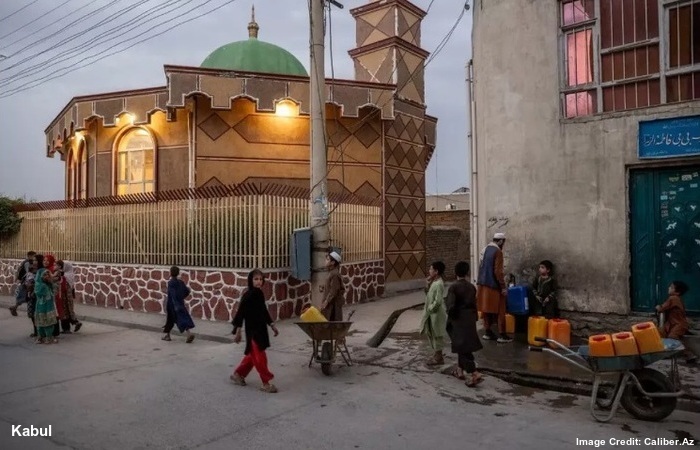
In a report, the United Nations has mentioned the significant impact of drought and Climate Change on displacement in Afghanistan, stating that nearly 700,000 people left the country in 2021 due to conflict, drought and Climate Change. Furthermore, one third of Afghanistan’s 42 million people do not have access to clean drinking water. Earlier, some international donors used to finance various dam projects and initiatives to connect Kabul’s homes to a reliable pipe system. However, they stopped working on those projects in 2021 when countries across the globe refused to recognise the Taliban Government. Najibullah Sadid, an expert on water resources, stressed: “Kabul has been struggling with water issues for two decades, but it has never been a priority for the governments. Now the wells are drying up and it’s an emergency.”
Some companies currently deliver water to each and every home in Kabul. However, those who cannot afford to buy water from them have to rely on water sources provided by mosques and charitable organisations. Many collect water in drums from mosques after returning from work in the evening. Residents of Kabul have been digging more and more boreholes in courtyards and in basements, puncturing a city drained by unregulated water extraction. In a 2021 report, the US Aid mentioned that just one-fifth of Kabul’s residents have access to piped water.
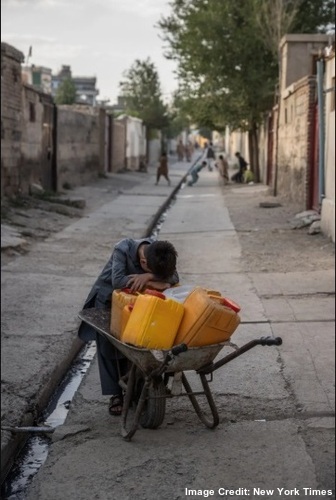
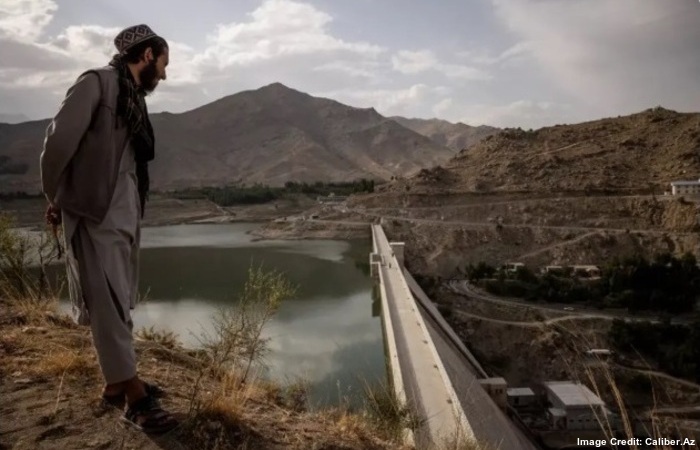
As per the article published in the New York Times, only four dams have been built in Afghanistan since 2021. One of them is located about 32km from Kabul. It would be possible to deliver water to thousands of families by connecting the capital city to that dam with a pipeline. However, the project has not been completed yet. Another plan to draw water from the Panjshir Valley awaits top-level approval.
Matiullah Abid, the spokesperson of Afghanistan’s Ministry of Water and Energy, has said: “Our projects are big and we can only provide half of the funds.” According to the spokesperson, the war-ravaged South Asian nation is facing a couple of major challenges in dealing with the water crisis. Most of the taps run dry due to lack of foreign investment and private investors are scarce. Abid has claimed that the Taliban Administration is looking for a solution to these two problems.
Aman Karimi, a Kabul resident, told the New York Times: “We are increasingly fighting because water is like gold for us.” Karimi, a tailor by profession, has recalled that Kabul was once a city nourished by rivers and mountain snow. Unfortunately, it becomes reliant on aging Soviet-era trucks and makeshift deliveries of water. Experts have opined that the failure of basic infrastructure in Kabul reflects a broader crisis unfolding across climate-stressed cities in the Developing World where the consequences for public health, hygiene and human dignity are immediate, as well as compounding.
Boundless Ocean of Politics on Facebook
Boundless Ocean of Politics on Twitter
Boundless Ocean of Politics on Linkedin
Contact us: kousdas@gmail.com

 ISMC
ISMC Boundless Ocean Of Politics