

NPT Losing Effectiveness
Israel carried out intense airstrikes on the Iranian nuclear and military sites on June 13-24, 2025. The US, which defended the Jewish Nation against Iranian missiles and drones, took offensive action on June 21 by bombing three Iranian nuclear sites: Fordow, Natanz and Isfahan. Immediately after the attack, US President Donald John Trump, in his inimitable style, announced that “Iran’s key nuclear enrichment facilities have been completely and totally obliterated”.
Indeed, Iran’s nuclear infrastructure has suffered significant damage. However, experts are of the opinion that Israel and the US have failed to completely destroy the nuclear facilities in Iran. According to Director General of the International Atomic Energy Agency (IAEA) Rafael Mariano Grossi, much of Iran’s nuclear activities, particularly those involving uranium enrichment, are housed in underground bunkers reinforced with concrete. These bunkers are designed to withstand even powerful bunker-busting bombs, making it difficult to assess the extent of damage and the fate of centrifuges and enriched uranium. He believes that the Islamic Republic‘s estimated 400kg (882lb) stockpile of enriched uranium, which is just short of weapons-grade, still remains intact.
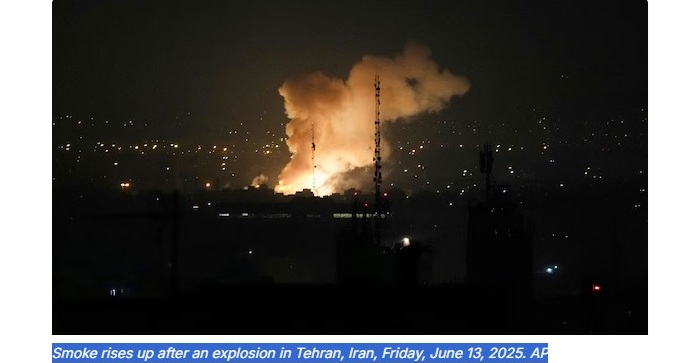
Although Israel and the US have failed to harm Iran that much, they have shattered Tehran’s trust and intention to move towards transparency. In fact, the joint US-Israeli aggression has prompted the Administration of President Masoud Pezeshkian to move to a significantly more extreme diplomatic position. With this, Iran’s obligations to comply with the Treaty on the Non-Proliferation of Nuclear Weapons (NPT) have ended. One can describe the situation between Iran and the IAEA as “one step forward, two steps back” only because of Israel and the US.
At the same time, the recent developments have also exposed the futility of the NPT. The Treaty, signed in 1968 and entered into force in 1970, aims to prevent the spread of nuclear weapons, promote peaceful uses of nuclear energy and achieve nuclear disarmament. It has been extended indefinitely and has 191 state parties, including the five nuclear-weapon states. The NPT supports the right of signatory states to use nuclear technology for peaceful purposes, but also stipulates that the use must be under the supervision of the IAEA. Article 10 of the NPT outlines the procedure for a state party to withdraw from the Treaty. A state can withdraw if it feels that “extraordinary events, related to the subject matter of this Treaty, have jeopardised its supreme interests”. This withdrawal requires a three-month advance notice to all other parties to the Treaty and the UN Security Council. The notice must also include a statement, explaining the “extraordinary events” that led to the decision to withdraw. Therefore, Iran now has every reason to withdraw from the NPT.
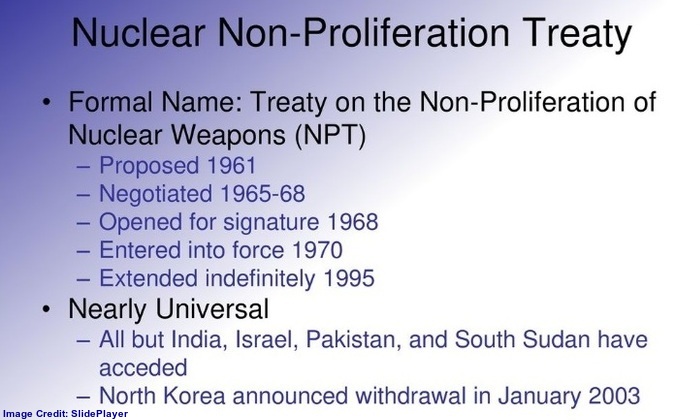
Israel is the only country in West Asia with nuclear capabilities, but it has neither officially declared it, nor signed the NPT. The Zionist Regime has maintained the policy of nuclear ambiguity for decades, with Israeli officials neither confirming nor denying the existence of a nuclear arsenal. On the other hand, Iran has been a signatory of the Treaty since 1968. Also, the Iranian nuclear programme has been under the surveillance of the IAEA for many years. So far, no one (including the CIA) has any evidence that Iran is trying to develop nuclear weapons.
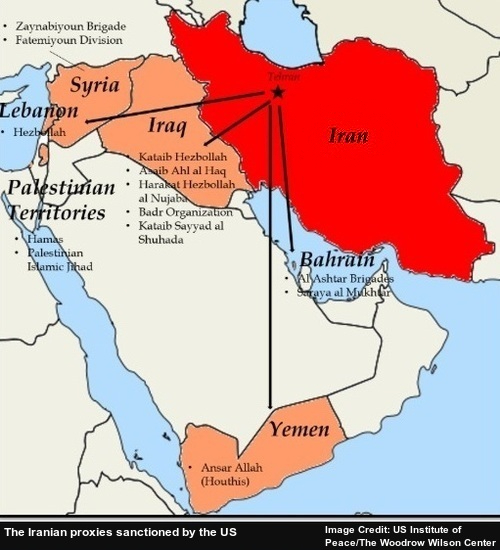
Despite all these, the US has long characterised Iran as a dangerous state that poses a threat to international stability and challenges the existing global order. It may be noted that George W Bush, the then President of the US, designated Iran, along with Iraq and North Korea, as part of an Axis of Evil in 2002 and also expressed a serious concern about Tehran’s pursuit of missiles and weapons of mass destruction, as well as its alleged support for militant groups abroad. It is a fact that the Islamic Republic sponsors various regional outfits, like the Houthis, Hezbollah and the Palestinian Hamas Movement, to undermine the influence of the US and Israel in West Asia.
Israel, as the only country in the region with a nuclear arsenal, does not want Iran to develop nuclear weapons. In that case, the Jewish Nation would have to accept nuclear deterrence. Also, its regional dominance will no longer exist. Tel Aviv had made a similar mistake in the past. Following the 1981 attack on Iraq’s Osirak nuclear reactor, Israel publicly stated that the raid had successfully prevented Baghdad from developing nuclear weapons. While some supported this claim, others, including non-proliferation experts, argued that the reactor, built by France, was not the most likely path for Iraq to acquire nuclear weapons. Experts further claimed that Iraq would have had to divert the reactor’s fuel or extract plutonium from the fuel rods that would have been difficult to do without detection by the IAEA. This time, the joint attacks could further strengthen Tehran’s resolve to develop nuclear weapons. The Iranian Parliament has already passed a Bill, suspending all sorts of cooperation with the IAEA. The move has made it difficult for independent experts to assess the degree of damage inflicted on the three key nuclear sites by the joint US-Israeli bombing.
Needless to say, Iran would not be obligated to abide by the NPT rules if it withdraws from the Treaty. Then, the rest of the world, including the UN inspectors, would not be able to monitor the Iranian nuclear programme. At the same time, it would be easier for the Islamic Republic to secretly develop nuclear weapons. Neighbouring Saudi Arabia has warned that it would do the same, if Iran emerges as a nuclear power. It may be noted that North Korea withdrew from the NPT in 2003 and subsequently developed nuclear weapons.
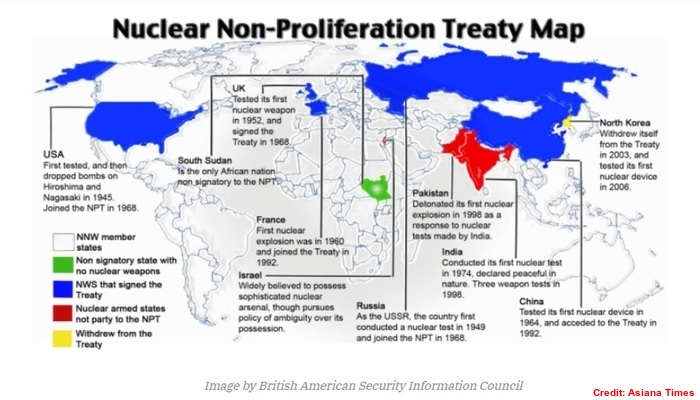
The US and Israel’s unprovoked and illegal attacks on the Iranian nuclear facilities have made a point clear to non-nuclear weapon states: Cooperation with the IAEA does not guarantee absolute protection against all potential threats. They may think that nuclear deterrence could only serve as a pillar of reliable security. It is a fact that the US has not attacked North Korea since Pyongyang sent a clear message about its nuclear weapons to the international community. The recent attacks on Iran have reinforced North Korea’s belief that nuclear weapons are indispensable for (its) survival.
Iran has not yet formally withdrawn from the NPT. The Iranian envoys, too, are in favour of a peaceful solution. However, they have hinted that any future sanctions could change their decision. The situation has become quite complicated. The US and its Western allies should consider re-negotiating with Iran. The global community should not forget that compliance with important international agreements is a shared responsibility, and not solely Iran’s. The NPT should be upheld and strengthened through legal, as well as diplomatic, means; rather than resorting to military force or threats.
Boundless Ocean of Politics on Facebook
Boundless Ocean of Politics on Twitter
Boundless Ocean of Politics on Linkedin
Contact us: kousdas@gmail.com

 ISMC
ISMC Boundless Ocean Of Politics