

On Endangered Childhood
Violent conflicts are going on in different parts of the world. The UN has claimed that the global community has not seen so many conflicts in the last three decades. In addition to the Russia-Ukraine War, Iran-Israel Conflict and Israel-Hamas War, at least 110 armed conflicts are taking place across Africa, Asia, Latin America and Europe. As expected, children are the worst victims of these geopolitical conflicts.
The UN Secretary General Annual Report on Children and Armed Conflict highlighted that 11,649 children were killed or maimed, while 8,655 children were recruited or used for various purposes, 4,356 were abducted and 1,470 children were victims of sexual violence in 2023 alone! UNICEF has reported that an estimated 473 million children live in countries that experience war or other conflicts. This represents more than one in six children globally, a figure highlighting the severe impact of armed conflict on children worldwide. These children face numerous challenges, including displacement, disruption of education, and increased risk of violence, abuse and exploitation. They are not safe sleeping in their homes or playing outside, learning in school or seeking medical care at hospitals. Even after the end of a war, they carry its wounds for a lifetime.
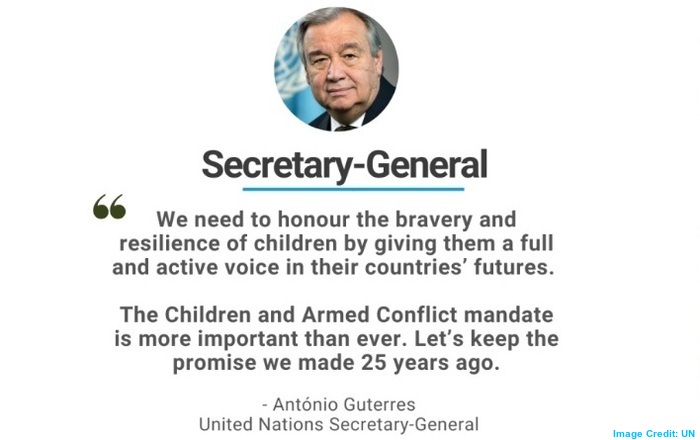
The war is destroying cities, ports and densely populated civilian areas; as drone attacks are being carried out on schools, hospitals and children’s shelters. According to experts, children are the ones who are disproportionately affected by this. War causes permanent changes, as well as impacts, on their brain development. The most cases of Human Rights violations have taken place in Israel, the occupied Palestinian territories, Congo, Nigeria and Sudan in recent times. With 41,370 incidents, the highest number of grave violations against children in armed conflict since the inception of the Children and Armed Conflict Mandate almost 30 years ago was verified in 2024. According to the UN, it marks a 25% increase compared to 2023 and the third consecutive year with alarming figures.
The direct impact of war is undoubtedly physical, as children living in war zones become a target. Attackers sexually assault some of them. Hence, children often experience significant psychological distress that can manifest as a range of emotional and behavioural problems. In a report, UNICEF has mentioned that the Ukrainian children in frontline areas have spent 5,000 hours – the equivalent of seven months – sheltering from Russian attacks, often underground! It stated: “Try and imagine spending what would be 200 days over the past two years, confined to a basement, bunker or a hole in the ground. This has been the reality for many children on Ukraine’s frontlines. Seeking safety from the missiles and drones is coming at a great cost for these children.” “According to survey data, half of 13-15-year-olds have trouble sleeping, and one in five have intrusive thoughts and flashbacks – typical manifestations of post-traumatic stress disorder. Three-quarters of children and young people aged 14 to 34 have recently reported needing emotional or psychological support,” added the report. Furthermore, approximately 40% of children in certain regions are not attending school and it would have dire consequences. According to mental health support experts at the United Nations Children’s Fund, the effects can be long-lasting because of the exposure to further deprivation and violence in refugee situations. Millions of adults could face mental health issues in the future.

Developmental abnormalities in children have already been observed in war-torn Ukraine. Social workers are of the opinion that the war is seriously delaying the physical, as well as mental, development of children. A professor of neuroscience at Columbia University has said that childhood stress can lead to abnormalities in neural circuit function during adulthood. According to him, childhood trauma triggers changes in the amygdala (a small, almond-shaped structure in the brain) as a response to stress and fear, preparing the brain to be more sensitive to potential stress in adulthood. At the same time, stress hormone release becomes more frequent. A child, who goes through such experiences, is at increased risk of developing anxiety, depression, clinical depression or diseases, like Alzheimer’s, later in life.
Early childhood experiences, like family separation, lack of social and emotional stimulation, or trauma, like war shelling, can lead to changes in brain structure and function in adulthood, potentially due to altered stress hormone responses. These experiences can trigger excessive release of stress hormones, like cortisol, which can affect brain plasticity and behaviour. No matter how mature or thoughtful one becomes, a person does not have an effective way to reverse the effects of childhood trauma.

The horrors of war weaken children’s individual, family and social relationships. They not only fall behind in education, but their definition of satisfaction at personal level also changes. Research suggests that girls and women tend to experience certain emotional problems, like depression and anxiety, more frequently than boys and men. On the other hand, boys tend to be more hyperactive and impulsive than girls.
War disrupts supply chains, apart from halting agricultural production. Besieged populations are at high risk of both acute and chronic malnutrition. According to the World Health Organisation (WHO), acute malnutrition, often a result of inadequate food intake over a short period, can lead to wasting and potentially death, while chronic malnutrition, stemming from prolonged undernutrition, can result in stunting and long-term developmental issues. As armed conflict disrupts vaccination programmes, the immune system of children weakens. Once, polio was on the verge of being eradicated from the world. However, the 2024 Gaza Strip polio epidemic is an ongoing outbreak of circulating vaccine-derived poliovirus type 2 (cVDPV2) in Gaza, first discovered on July 16, 2024 and officially declared an epidemic by the Gaza Health Ministry on July 29, 2024.
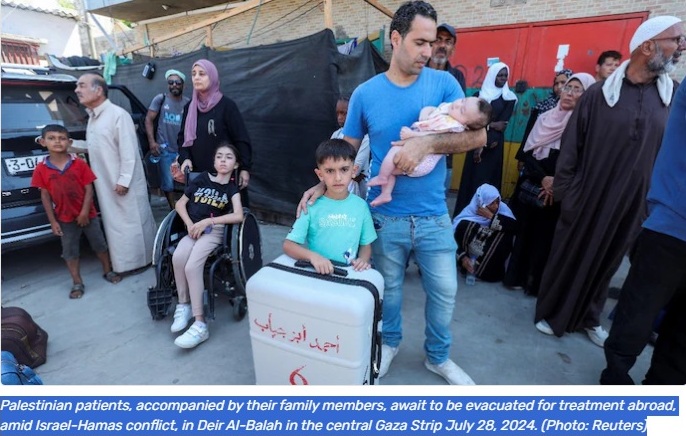
Children often flee war zones or take refuge elsewhere because of bombings. The stress associated with war can significantly impact parenting, leading to an increased risk of child abuse and neglect. Studies suggest that physical and emotional abuse of children in American military families has increased, particularly during and after deployments. The increase is often linked to the stresses associated with military life, including frequent deployments, reintegration challenges and potential exposure to combat trauma.
You may also like: Lost Forever
The physical, as well as mental, trauma, terror and nightmares experienced during wartime can have lasting impacts on a child’s development and well-being, even after the restoration of peace.
Boundless Ocean of Politics on Facebook
Boundless Ocean of Politics on Twitter
Boundless Ocean of Politics on Linkedin
Contact us: kousdas@gmail.com

 ISMC
ISMC Boundless Ocean Of Politics