

Critical Minerals Shaping Geopolitics In 21st Century
India has signed accords with Zambia, Congo, Tanzania and Australia to boost the supply of critical minerals, like lithium, as the South Asian nation is trying hard to become self-reliant in the energy sector. The Narendra Modi Government in New Delhi has also involved the Coal India Limited (CIL, an Indian public sector undertaking and the largest government-owned coal producer in the world), the National Mineral Development Corporation (NMDC, an Indian public sector undertaking involved in the exploration of iron ore, rock, gypsum, magnesite, diamond, tin, tungsten, graphite, coal etc.) and the Oil and Natural Gas Corporation Limited (ONGC, an Indian central public sector undertaking which is the largest government-owned oil and gas explorer and producer in the country) in the exploration work in those countries. New Delhi has rightly realised that the role of such minerals is crucial in the transition from fossil fuels to renewable energy.
Petrol and natural gas, which largely influenced the geopolitics in the 20th Century, are still shaping the global geopolitics in the 21st Century. The vast mineral resources of Latin American and African countries drive international relations across the globe. Political analysts are of the opinion that the search for minerals, required to produce environmentally friendly energy, has emerged as one of the driving forces behind wars, alliances and even foreign aid. US President Donald John Trump recently hinted that Washington DC would help Kiev to prevent Russian aggression if a suitable agreement could be reached on mineral resources of Ukraine. Such a proposal is a fine example of contemporary Mineral Politics.
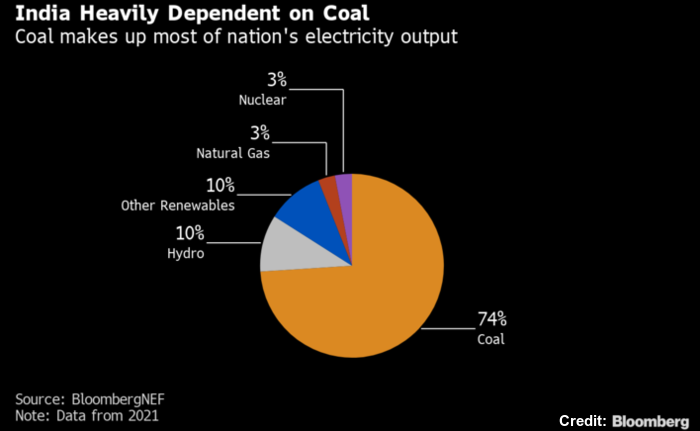
All the countries usually follow two policies as far as the mineral geopolitics is concerned. Western countries, including the US, are more interested in exploiting the mineral resources of the Global South than their own as it allows them to control environmental pollution by reducing domestic emissions. Recent research has revealed that the Western European countries have vast deposits of cobalt, lithium and other valuable minerals. Instead of exploring those minerals, they import critical minerals from foreign countries.
On the other hand, China not only explores its own mineral resources, but also forms strategic alliances with countries rich in critical minerals in order to ensure a steady supply. One can mention Beijing’s dominance over cobalt mines in the Republic of Congo. Meanwhile, the Western countries are unable to match China’s expertise in developing mineral resources, as well as in their processing and refining.

India has not taken appropriate steps in this regard so far. Hence, it lags behind in minerals, as well as energy, geopolitics. Now, the Modi Administration has decided to stabilise India’s energy security as New Delhi is largely dependent on Beijing for various minerals, like bismuth, lithium, silicon, titanium, tellurium and graphite.
In fact, India, too, has failed to make much progress in domestic mineral exploration. It has become important for India to know whether there are really reserves of such minerals or rare earth elements in the country. Else, it would be difficult for the energy-hungry South Asian nation to create proper infrastructure and to allocate funds for their exploration, as well as extraction. Also, India needs to formulate proper policies regarding their use. India has no other option, but to become self-reliant in terms of energy security in order to reduce its dependence on foreign countries.
Boundless Ocean of Politics on Facebook
Boundless Ocean of Politics on Twitter
Boundless Ocean of Politics on Linkedin
Contact us: kousdas@gmail.com

 ISMC
ISMC Boundless Ocean Of Politics