

Airstrikes On Pak: A Testament To Indian Military Might
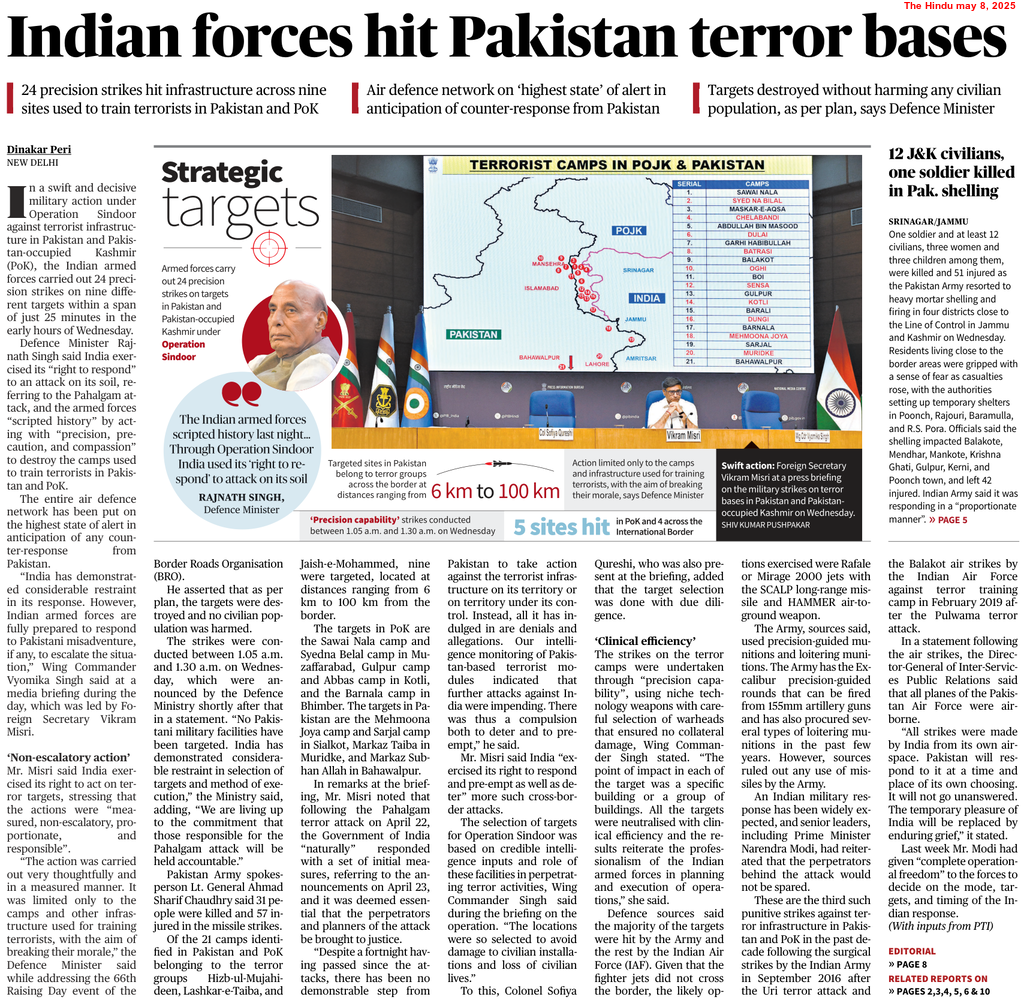
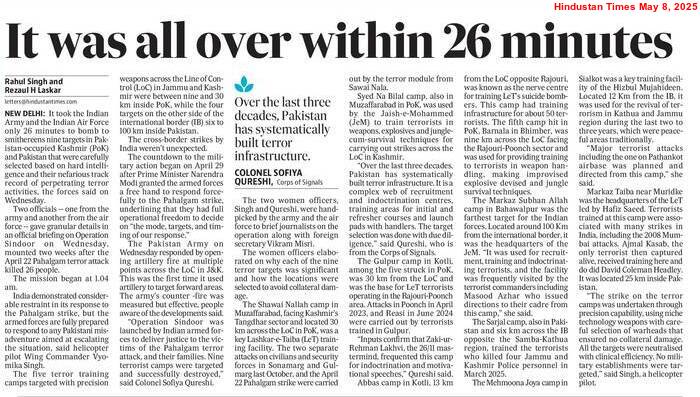
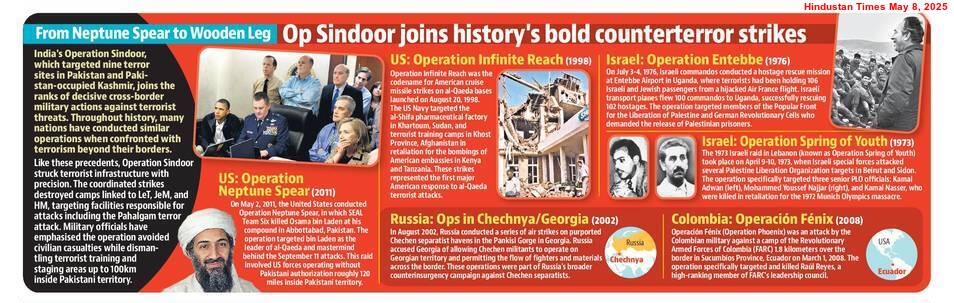
The May 7 (2025) Indian airstrikes on terror camps in Pakistan (14 days after the April 22 Pahalgam terror attack), codenamed Operation Sindoor (Operation Vermilion), may be the starting point of another full-scale war between India and Pakistan, similar to that of the Operation Gibraltar six decades ago. It may also be just a limited military operation. Right now, the entire Indian Subcontinent, as well as the international community, is busy analysing the real character of the Indian airstrikes on terrorist bases in Pakistan on May 7.
The world has changed radically and also experienced many ups and downs since 1965, with both India and Pakistan becoming fully-fledged nuclear powers. In the changing global geopolitical landscape, the international community has reminded the two South Asian neighbours of the terrible outcome of a full-scale war between them. UN Secretary-General António Manuel de Oliveira Guterres has rightly said: “The world cannot afford a military conflict between India and Pakistan.“
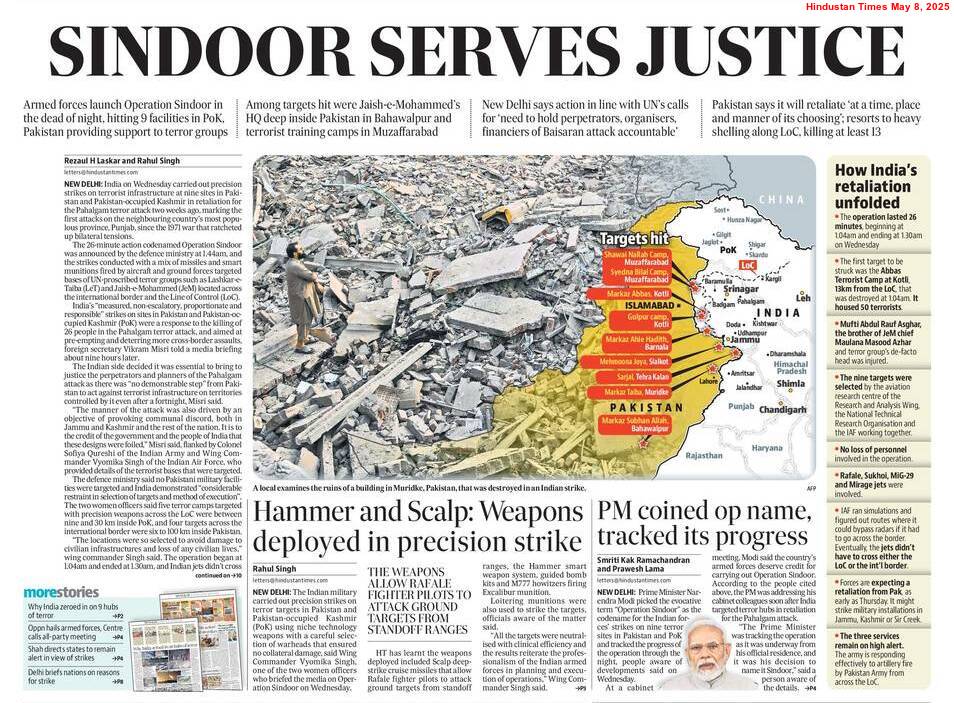
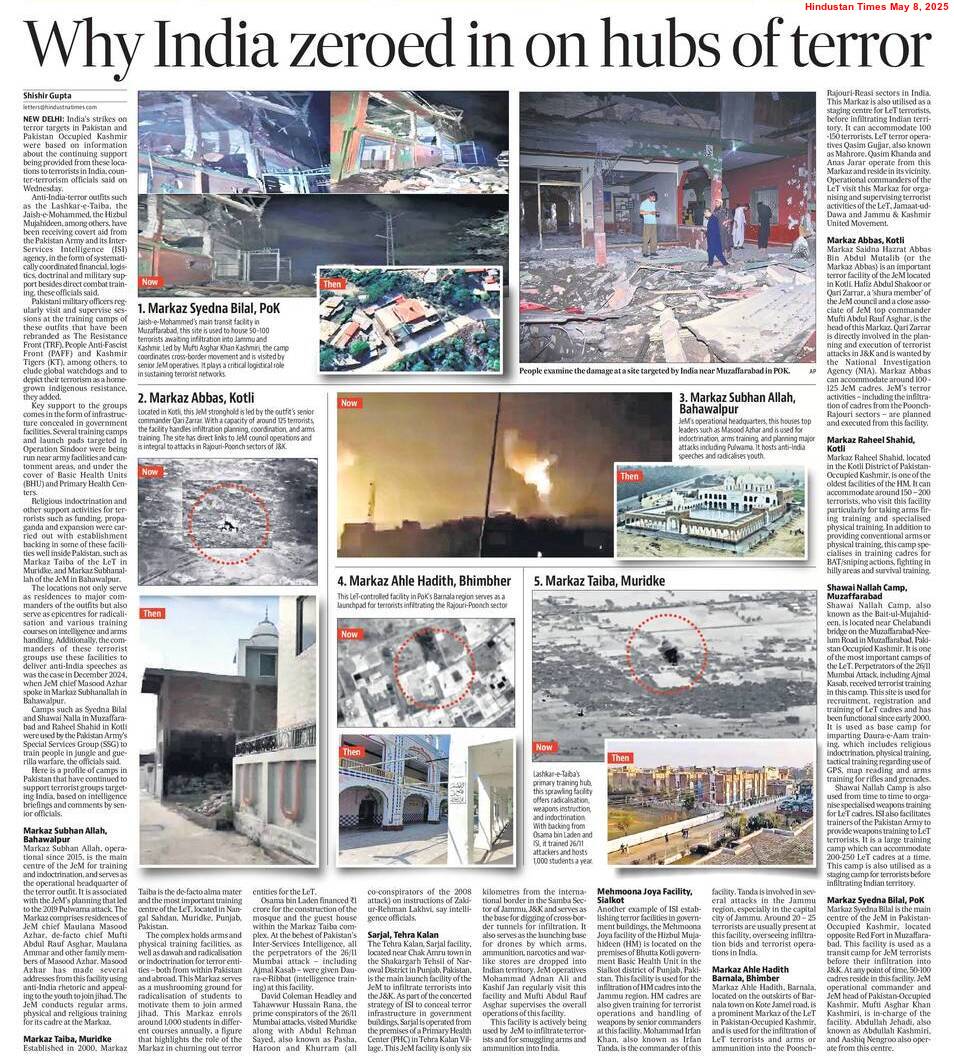
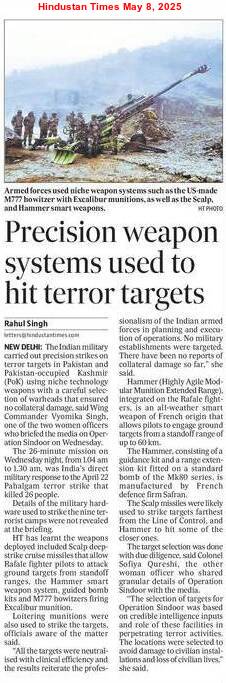
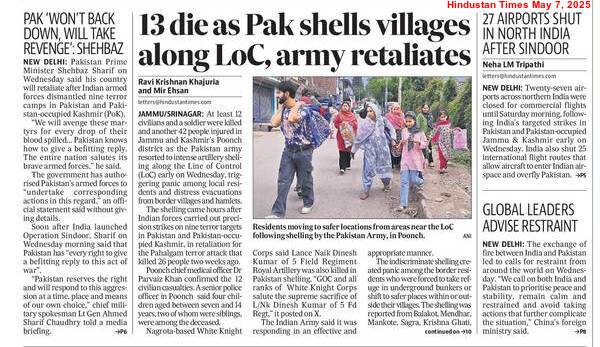
The Indian Defence Ministry made it clear on May 7 that the Indian Armed Forces carried out the airstrikes only on those nine places where there were terror camps, and not on any military bases or civilian targets. New Delhi made this announcement to assure the common Pakistani citizens, as well as the global community, that India would never strike outside the specified targets. However, the fear of a full-fledged war has become more intense, especially after the Operation Sindoor, as Pakistan has threatened to retaliate.
Neither India nor Pakistan is ready for a war as both the parties are well aware of the fact that they would have to pay a heavy price in that case. Yet, both the countries may take an aggressive (or wrong) step only to satisfy their respective civil societies (at home). And, aggression could make the civil society a vengeful one. The fear of war is growing stronger on both sides of the border mainly because of the various advertisements for war preparations. No wonder, such advertisements can create a frenzy in civil society.
Perhaps, the time has come for the thinking citizens to consider the outcome of a war, instead of backing their government to take a drastic step against an enemy. Countless innocent civilians often pay the price of war, while decision-makers stay safe. Terror attacks are condemnable. However, one has to keep in mind that if military attacks by a state are directed at defence or civilian targets of an enemy state, then it would certainly trigger a bigger crisis. Efforts to counter terrorism should not initiate the carnage of war.
Undoubtedly, the Pahalgam terror attack is an unprecedented incident even in Kashmir which has been ravaged by violence for the past eight decades. Whether Pakistan backs this sort of horrific attack on innocent civilians of a neighbouring country or not, it should take responsibility for nurturing terrorists and sponsoring terrorism. On April 25, 2025, Defence Minister of Pakistan Khawaja Muhammad Asif admitted that his country has been sponsoring terrorism for three decades. However, he blamed the US and the Western World for forcing Pakistan to do the “dirty work”, stressing: “We have been doing this dirty work for the US for the past three decades, including the West and the United Kingdom.” He also said that Pakistan suffered a lot because of that mistake.
In spite of intense international pressure, no significant success has been achieved so far as Pakistan continues to sponsor terrorism. However, just because it has not happened till date does not mean that it will never happen, and there is no reason to think so. Considering the reactions of various global powers, especially the US and Russia, after the Pahalgam incident, there was enough reason to hope that India should put Pakistan under tremendous pressure this time on the issue of terrorism.
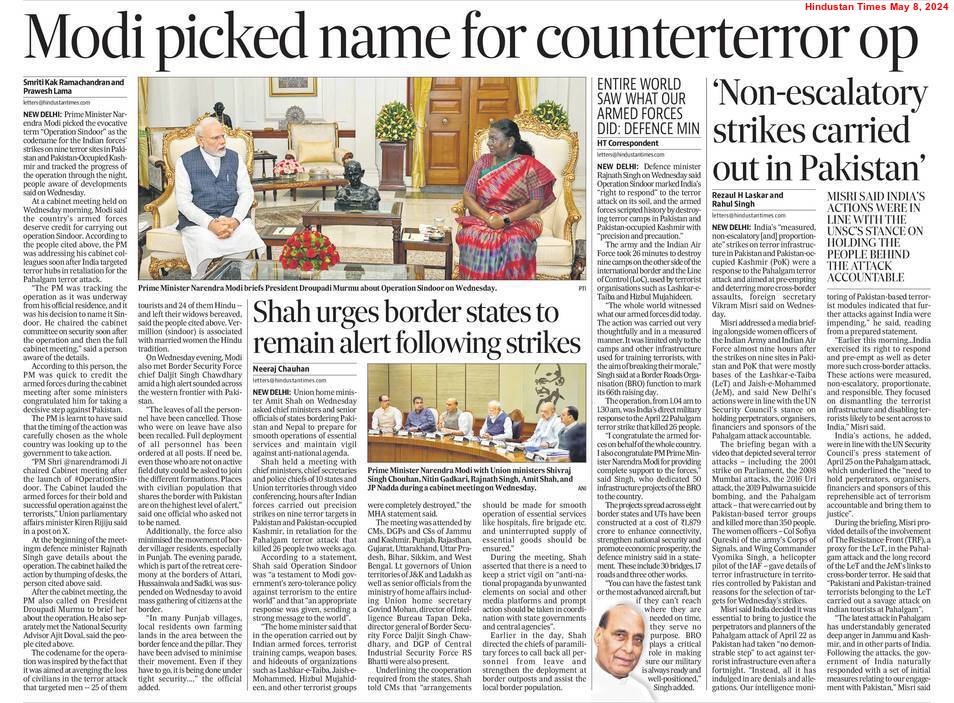
Indian Prime Minister Narendra Modi has seized this great opportunity. Instead of turning the global community against India by waging a war, he has exploited the current anti-Pakistan sentiment to destroy the bases of terrorist outfits on Pakistani soil. Operation Sindoor is definitely a testament to the Indian military might.
Now, it has become important for Indian diplomacy to show its skills and tactics. Pakistan must be forced to do more in order to tackle the terror threat within its own borders.
Boundless Ocean of Politics on Facebook
Boundless Ocean of Politics on Twitter
Boundless Ocean of Politics on Linkedin
Contact us: kousdas@gmail.com

 ISMC
ISMC Boundless Ocean Of Politics