

The Neoliberalist Bids Adieu
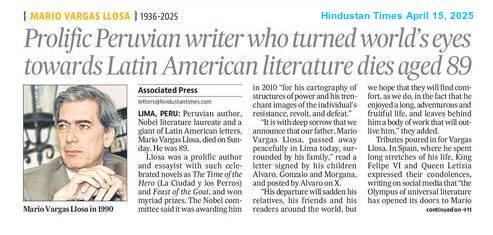
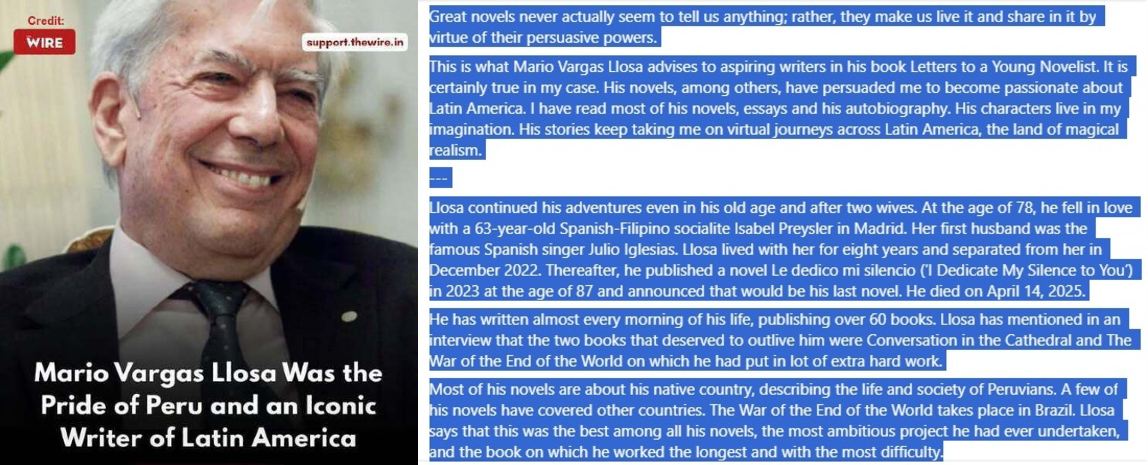
He was a controversial, but popular figure. In fact, controversy played an important role in his stardom. However, the strength of his words has never been questioned. Jorge Mario Pedro Vargas Llosa (commonly known as Mario Vargas Llosa; March 28, 1936 – April 13, 2025), the Peruvian novelist, journalist, essayist and politician, took his last breath at his residence in Lima on April 13, 2025 at the age of 89.
The most significant Latin American novelists and essayists is considered as one of the leading authors of his generation who won the Nobel Prize in Literature “for his cartography of structures of power and his trenchant images of the individual’s resistance, revolt and defeat” in 2010. Llosa penned more than 50 novels, including The Time of the Hero, Conversation in The Cathedral, Aunt Julia and the Scriptwriter, The War of the End of the World and Death in the Andes.
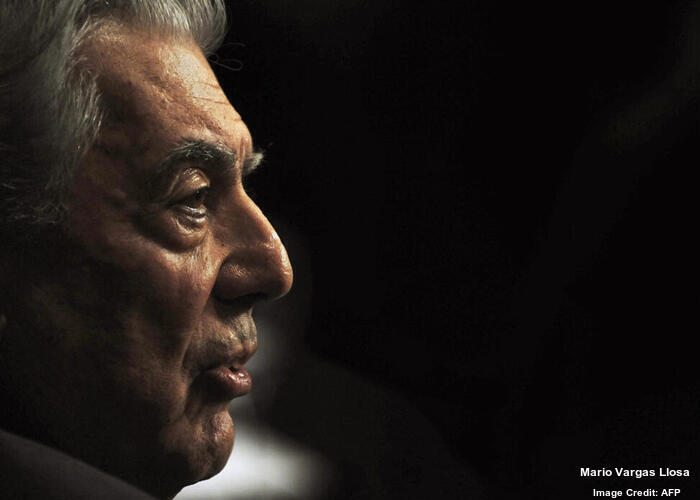
Born in Peru, Llosa spent his early days in Bolivia and Spain. He also spent a long time in Paris. The Leftist ideology influenced young Llosa who became a follower of Fidel Castro. Later, he detached himself from the Cuban revolutionary and also started maintaining a distance with his friend, as well as literary rival from Colombia, Gabriel José García Márquez (March 6, 1927 – April 17, 2014).
Llosa reportedly punched Marquez in a Mexican theatre in 1976. They did not even talk to each other until 2007. Although Llosa claimed that they fought over Castro, some were of the opinion that the fight between the two Nobel laureates was a personal matter as the Peruvian author did not like Marquez’s friendship with his second wife Patricia. Interestingly, the Nobel Prize in Literature returned to Latin America in 2010 through Llosa (after Marquez won the Prize in 1982).
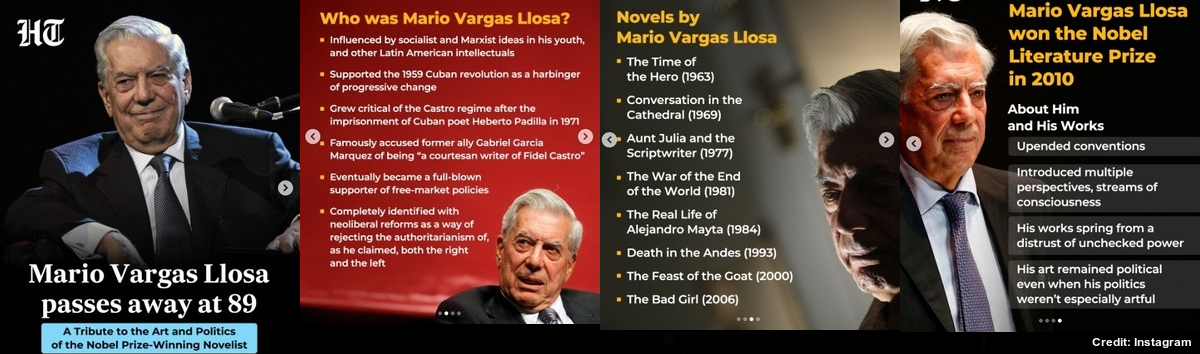
Llosa’s life was shrouded in controversy. Despite being a Leftist, he gradually moved towards Rightist Politics. His role in the Commission of Inquiry into the murder of eight journalists in Peru in 1983 was widely condemned. He also contested the Presidential Election in 1990, but failed to become the Head of the State. Once, Llosa openly declared that feminism was the enemy of literature. Again, he took a clear stance against State Terrorism and Abuse of Power through his literary works throughout his life.
Indeed, Llosa’s journey from a socialist ally of Castro to a supporter of neoliberalism is an interesting one. He became a full-blown supporter of free-market policies in the 1990s as he opposed Peruvian President Alan Garcia’s bank nationalisation programme and also backed neoliberal reforms. Llosa used to believe that neoliberal reforms could reject the authoritarianism (both Rightist and Leftist). His political shift also reflected in his fictions. While Llosa portrayed the hierarchy and oppression in a Peruvian military academy in his early works, such as The Time of the Hero (1963), he rejected absolutism in The War of the End of the World (1981). He also emphasised on individual freedom and the dangers of populism in The Real Life of Alejandro Mayta (1984) and Death in the Andes (1993). In these publications, he contrasted both state and revolutionary violence with civilised order.
Llosa dismissed Marquez’s use of magical realism as escapist. Instead, he took a realist approach. In his newspaper columns, he praised policies of British Prime Minister Margaret Hilda Thatcher and US President Ronald Wilson Reagan, privatisation, globalisation and free-market doctrines.
In the 21st Century, Llosa triggered a fresh controversy by supporting figures, like Jair Bolsonaro and Javier Milei. Such a move seemed to be at odds with his earlier anti-dictatorial stance.
Boundless Ocean of Politics on Facebook
Boundless Ocean of Politics on Twitter
Boundless Ocean of Politics on Linkedin
Contact us: kousdas@gmail.com

 ISMC
ISMC Boundless Ocean Of Politics