

The Tragic Tale Of Minik & 5 Other Inuit
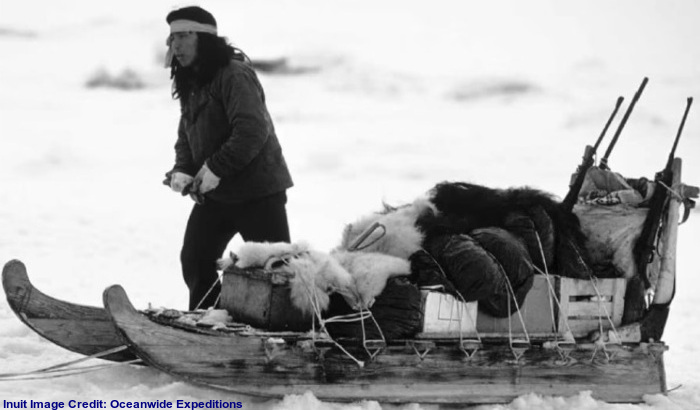
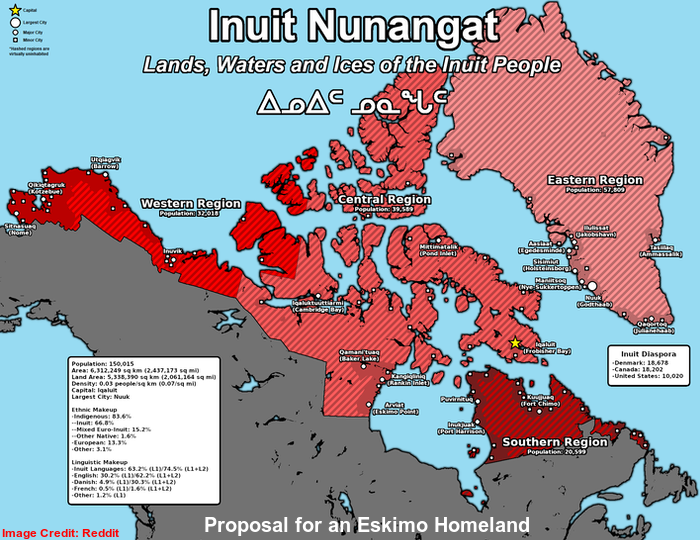
The Inuit or Eskimos are basically warriors whose resilient attitude helps them survive on the Earth. Inuit are a group of culturally and historically similar Indigenous peoples traditionally inhabiting the Arctic and subarctic regions of North America, including Greenland, Labrador, Quebec, Nunavut, the Northwest Territories, Yukon, Alaska and Chukotsky District of Chukotka Autonomous Okrug, Russia. As the Inuit constantly deal with adverse nature in the remote areas of the world, their tenacity to never give up makes them a unique race.
In AD 980, Erik the Red (born Erik Thorvaldsson in Rogaland, Norway) was banished from Iceland for manslaughter after killing two men in a feud with their families. His criminal act eventually earned him an exile in Greenland. It is widely believed that the global community came to know about Greenland only because of Erik. According to Icelandic sagas, it was during his exile from Iceland that Erik discovered Greenland and also became the first permanent European settler in the Nordic country. At a place where survival is quite difficult because of bitterly cold weather conditions, Erik found a group of people once known as the Eskimos! Later, Europeans called them Inuit. After learning about the amazing physical ability of Inuit to survive in hostile environments, a number of European and US organisations tried to find the reasons behind their extraordinary physical abilities. Researchers set out to analyse the power (or physical strength) that the Inuit had gained over thousands of years of evolution.
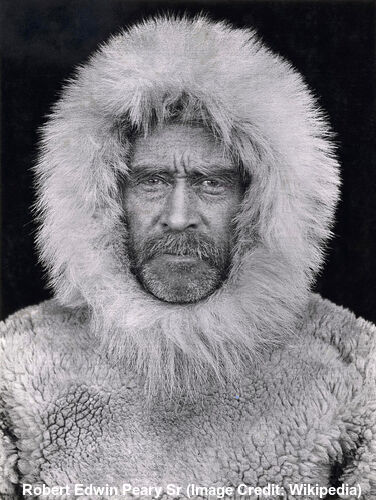
Once, the New York-based American Museum of Natural History contracted with Robert Edwin Peary Sr (May 6, 1856 – February 20, 1920), an explorer and a Commander of the US Navy, to bring some Inuit to the US. The sole purpose of the museum was to conduct research on physical abilities of the Inuit. It may be noted that many Americans and Europeans became increasingly interested in polar expeditions in the 19th Century because of this. Peary was the first to succeed in bringing the Inuit to the US for research purposes. He reportedly befriended the local Inuit and learned their language, as well as culture, during his expeditions to the Arctic in the late 19th and early 20th Centuries.
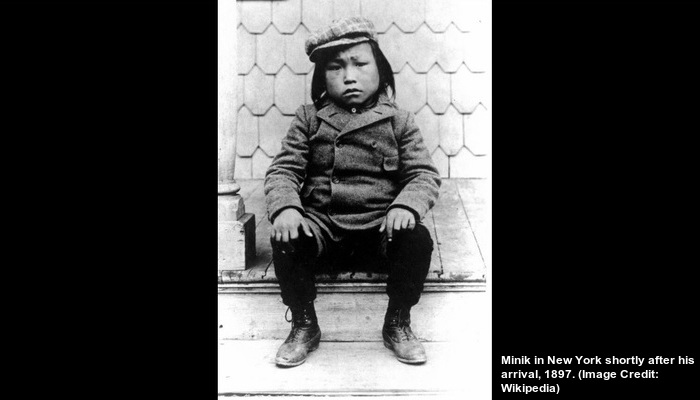
Peary brought a total of six indigenous individuals, including renowned Inuit hunter Qisuk (1858 – 1898) and his son Minik Wallace (also called Minik or Mene; 1890 – October 29, 1918), to the US in 1897 by persuading them in various ways! The US naval officer assured all of them that he himself would bring them back to their homeland after a year. Thousands of people flocked to see them when the ship, carrying the Inuit, reached Brooklyn. As Peary wanted to make money, people had to purchase tickets to see the Inuit! Around 20,000 people reportedly bought tickets on that day.
Peary set out on the North Pole expedition after handing over the Inuit to the American Museum of Natural History. And then, their plight began! The museum authorities accommodated the six Inuit in an underground chamber. They could not adapt to different weather conditions and soon fell ill. While four Inuit, including Qisuk, died of tuberculosis; one young man was returned to Greenland by ship in 1899. However, Qisuk‘s seven-year-old son Minik remained in the US! The museum authorities informed the little boy that his father and other Inuit died and their bodies were buried! Minik had no idea that the five bodies, including that of his father’s, were used for scientific experiments. In fact, researchers decapitated Qisuk‘s body and images of his head were published in a scientific journal!
Later, the American Museum of Natural History urged William Wallace, the curator of the museum who had prepared Qisuk for exposition, to adopt Minik, the son of Qisuk and his wife Mannik. The Wallace family accepted the request and changed Minik‘s name after the adoption. After growing up, Minik came to know about his past. In 1906, New York-based dailies published an article, mentioning that Qisuk‘s skeleton was on display at the museum. Minik was shocked to know this from his classmates. In 1907, he requested the American Museum of Natural History to return his father’s body. However, the museum rejected his request. Then, Minik wrote to Peary, requesting that he be sent back to Greenland. Peary, too, ignored his request.
Compelled, Minik approached the media. Speaking as a teenager to the San Francisco Examiner about Peary, Minik said: “At the start, Peary was kind enough to my people. He made them presents of ornaments, a few knives and guns for hunting and wood to build sledges. But as soon as he was ready to start home his other work began. Before our eyes he packed up the bones of our dead friends and ancestors. To the women’s crying and the men’s questioning, he answered that he was taking our dead friends to a warm and pleasant land to bury them.” He added: “Our sole supply of flint for lighting and iron for hunting and cooking implements was furnished by a huge meteorite. This Peary put aboard his steamer and took from my poor people, who needed it so much. After this, he coaxed my father and that brave man Natooka, who were the strongest hunters and the wisest heads for our tribe, to go with him to America.” Minik stressed: “Our people were afraid to let them go, but Peary promised them that they should have Natooka and my father back within a year, and that with them would come a great stock of guns and ammunition, and wood and metal and presents for the women and children… We were crowded into the hold of the vessel and treated like dogs. Peary seldom came near us.” (Petrone, Penny (January 1992); Northern Voices: Inuit Writing in English; University of Toronto Press; ISBN 9780802077172)
There was a huge public outcry against Peary after all the major broadsheets published the tragic tale of Minik. Peary was heavily criticised for the injustice he had done to the Inuit. The criticism prompted the naval officer to take Minik to Greenland where the latter tried his best to reintegrate into the mainstream Inuit society.
Minik returned to the US in 1917 to retrieve the body of his father. Eventually, he got a job in a lumber camp in North Stratford, New Hampshire. His employer, Afton Hall, invited Minik to stay with his family. The Hall family treated him much like a son. Unfortunately, Minik died of influenza on October 29, 1918 during the 1918 Flu Pandemic! He was buried in the Indian Stream Cemetery in Pittsburg, New Hampshire. In 1986, Kenn Harper penned a book, titled Give Me My Father’s Body, on Minik and his tragic life.
In 1993, the American Museum of Natural History, under public pressure, handed over the bodies of Qisuk and five other Inuit to the Government of Greenland. In Qaanaaq (formerly known as Thule, the main town in the northern part of the Avannaata Municipality in northwestern Greenland), Harper attended the Inuit funeral ceremony for the remains of Qisuk and the three men that had been taken to Greenland from New York.
Boundless Ocean of Politics on Facebook
Boundless Ocean of Politics on Twitter
Boundless Ocean of Politics on Linkedin
Contact: kousdas@gmail.com

 ISMC
ISMC Boundless Ocean Of Politics