

Cotton Route: A Strategy To Counter Silk Route
All roads lead to Rome… This time, India has decided to create such a trade route. The proposed route from India to Italy through the Mediterranean Sea is called Cotton Route. Political analysts are of the opinion that the proposed Cotton Route might be a game changer as it would counter China’s Silk Route.
A year after becoming the Prime Minister of India in 2014, Narendra Modi made a special decision on foreign trade as he directed senior government officials to look into whether the ancient international trade routes of the South Asian country could be re-opened. Later, New Delhi planned to revive the Cotton Route. On the other hand, Chinese President Xi Jinping had announced the Silk Route project in 2013 in an attempt to connect Beijing directly with Europe, Africa and different parts of Asia through infrastructure development. Experts have claimed that Xi is dreaming of China-centric trade expansion through this mega project.
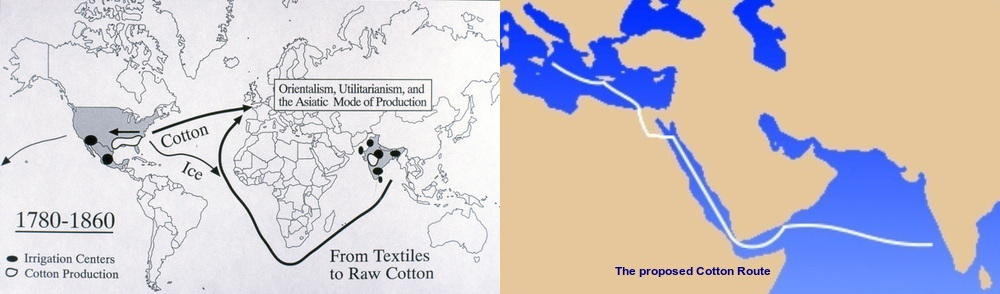
China has been working on the Belt and Road Initiative (BRI) project since 2013 to make the Silk Route operational. This project includes the China Pakistan Economic Corridor (CPEC). The Asian Giant believes that the Silk Route would help it to boost trade ties with other countries and to replace the US as the most influential nation. As India has rightly realised the real intention of China, New Delhi has decided to implement the Cotton Route project in an attempt to counter the Chinese hegemony. The Modi Administration prepared the blueprint of this project in 2016 and started implementing it after the G20 Summit in 2023.
According to historians, India has been exporting high-quality cotton to Central Asia and Europe via Red Sea ports since the 1st Century AD. The route through which the cotton trade had taken place in ancient times was called the Cotton Route. A senior official of the Indian Ministry of Commerce and Industry, who wished to remain anonymous, recently said that there were several fundamental differences between China’s Silk Route and the Cotton Route. “We want to increase communication with West Asia and Europe through the Cotton Route. Our aim is to fulfil the commercial interests of India and Italy, and not to establish dominance,” he added.
It may be noted that Italy has welcomed India’s decision to create the new trade route. As the European country with a long Mediterranean coastline wants to be India’s third-largest trade partner in the European Union (EU), it has expressed hope that the Cotton Route would play the role of a game changer. It shall allow ships loaded with Indian cargo to directly reach Rome, the Gateway of Europe, through the Mediterranean Sea. The Cotton Route, which extends through Gulf countries, like Saudi Arabia and the UAE, on its way to Europe, shall connect a number of important ports, including the Chabahar Port of Iran. The route shall also have railway service.
India has also decided to conduct deep-sea drilling and to lay undersea data cables in order to improve connectivity with countries along the Cotton Route. According to sources close to the Indian Ministry of Commerce and Industry, Israel shall play a crucial role in implementing this project. The ministry official stressed: “The Cotton Route has great potential for expansion. However, we are planning to take it to Italy initially. Renewable energy, green hydrogen pipelines and port infrastructure improvements are currently being looked at.” He further said that the route would boost defence trade between India and Italy.
Italian Minister of Industry and Enterprises Adolfo Urso, who visited India in the last week of November 2024, told Bloomberg that the two countries agreed to enhance collaboration on port infrastructure, shipbuilding and yacht manufacturing sectors. He claimed that both India and Italy would benefit financially from the Cotton Route. According to the visiting minister, New Delhi agreed to help Rome in various sectors, such as space research, cyber security and submarine technology. It may be noted that Prime Minister Giorgia Meloni launched the Made in Italy 2030 project to improve the industrial sector. Urso believes that India’s Cotton Route would be helpful in fulfilling the dream of Prime Minister Meloni.
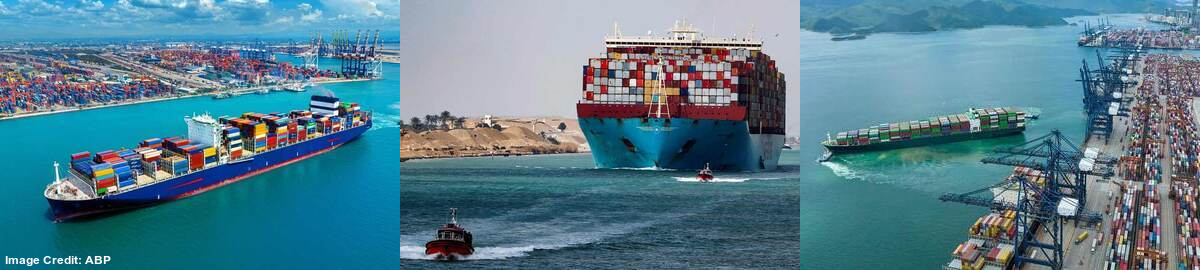
India shared the blueprint of the Cotton Route with G20 nations in 2023 and got the India-Middle East-Europe Economic Corridor (IMEC) approved. The IMEC project is aimed at improving economic growth by enhancing connectivity and integration between India, Middle East and Europe. Apart from Italy, India shall be able to easily send trade items to France and Germany through this corridor. However, India had to delay the project due to the Israel-Hamas conflict and the Russia-Ukraine War. Commenting on the issue, Urso said: “War is all around us in Europe. An alternative is needed since Russia’s war in Ukraine has disrupted continental routes and to help alleviate pressure on the Suez Canal.“
Although the US has promised to spend a lot on the construction of the IMEC, it is not clear whether President-elect Donald Trump would be enthusiastic about this project. When asked whether the IMEC would find support under the Trump Administration, Urso stated that the corridor would meet the strategic needs of both the US and Europe. “I do not think Trump will turn away,” he added. Meanwhile, Indian Minister of Ports, Shipping and Waterways Sarbananda Sonowal claimed that New Delhi and Rome decided to boost maritime trade.
Incidentally, India and Italy face similar challenges in the Mediterranean Sea and also in the Indo-Pacific Region. The proposed Cotton Route would connect these two regions. China’s Silk Route project has made great progress so far. However, most of the countries where the BRI project is being implemented are in debt. On the other hand, the Cotton Route would be built with the cooperation of developed countries. Hence, the Cotton Route might create serious trouble for China in the coming years.
Boundless Ocean of Politics on Facebook
Boundless Ocean of Politics on Twitter
Boundless Ocean of Politics on Linkedin
Contact: kousdas@gmail.com

 ISMC
ISMC
