

The Abraham Accords, And…
The Six-Day War, also called June War or Third Arab-Israeli War or Naksah, had taken place on June 5-10, 1967. Israel’s decisive victory included the capture of the Sinai Peninsula, Gaza Strip, West Bank, Old City of Jerusalem and Golan Heights, 56 years ago. The status of these territories subsequently became a major issue in the Arab-Israeli conflict.
Prior to the beginning of the war, fledgling Palestinian guerrilla groups, based in Syria, Lebanon and Jordan, conducted attacks against Israel, leading to costly Israeli reprisals. The Six-Day War was a brief conflict fought by Israel and neighbouring Arab nations in June 1967. Israel launched a pre-emptive strike against Egypt, Jordan and Syria, resulting in a decisive Israeli victory. The war lasted only six days, but it had far-reaching consequences; as Israel gained control of the Sinai Peninsula, Gaza Strip, West Bank, Old City of Jerusalem (including East Jerusalem) and Golan Heights. The war reshaped the political landscape in the Middle East, leading to increased tensions and ongoing Israeli-Palestinian conflicts. It also had implications for the status of Jerusalem.
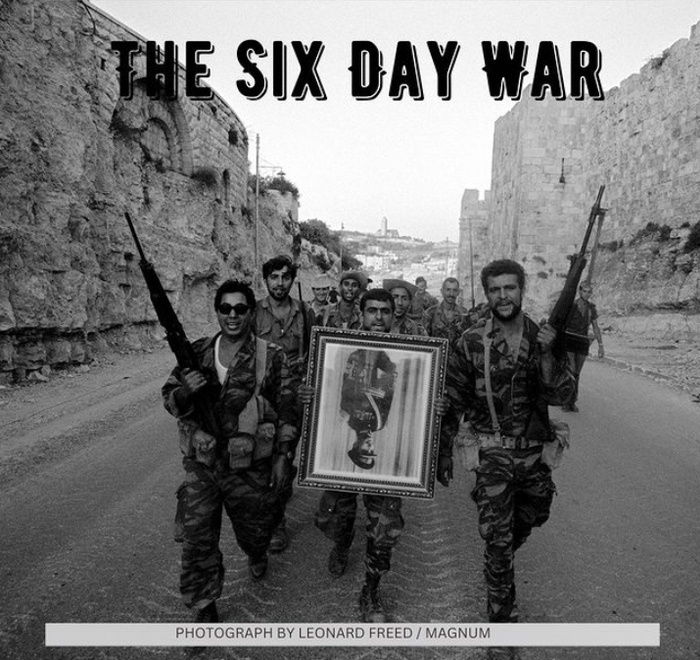
By claiming the West Bank and the Gaza Strip, the State of Israel also absorbed over one million Palestinian Arabs. Later, several hundred thousand Palestinians fled Israeli rule, worsening a refugee crisis that had begun during the First Arab-Israeli War in 1948 and laying the groundwork for the ongoing political turmoil and violence in the region. Since 1967, the lands, seized by Israel during the Six-Day War, have been at the centre of efforts to end the Arab-Israeli conflict.
Israel returned the Sinai Peninsula to Egypt in 1982 as part of a Peace Treaty, and then withdrew from the Gaza Strip in 2005. However, it has continued to occupy and settle other territories claimed during the Six-Day War, most notably the Golan Heights and the West Bank. The status of these territories continues to be a stumbling block in Arab-Israeli peace negotiations.

The scenario has changed quite a lot in the last 56 years, as four Arab nations currently account for nearly one-fourth of the Israeli arms sales. Without naming specific clients, the Israeli Defence Ministry recently confirmed that defence exports hit an all-time high of USD 12.5 million in 2022, with Arab countries accounting for nearly a quarter of purchase contracts.
The Ministry further said that 24% of the defence exports were to Abraham Accords countries that recently established ties with Israel. The United Arab Emirates (UAE) and Bahrain were signatories to those accords, and Israel often counts Morocco and Sudan as part of them as well. The Abraham Accords of 2020 saw Israel normalising ties with the UAE, Bahrain, Morocco and Sudan. Though named a Peace Treaty, it completely sidelined the Palestinians in favour of other priorities.

The Israeli Defence Ministry, which oversees and approves the exports of Israel’s defence industry products, stressed that one-quarter of the deals were for drone systems, making up another 19%. The Ministry further said that the Russia-Ukraine War and global stability increased the demand for Israeli-made air defence systems, drones, Unmanned Aerial Vehicles (UAVs) and missiles in Europe.
Source: TRTWorld (Instagram)
Boundless Ocean of Politics on Facebook
Boundless Ocean of Politics on Twitter
Boundless Ocean of Politics on Linkedin
Contact: kousdas@gmail.com

 ISMC
ISMC Boundless Ocean Of Politics