

Lula Beats All The Odds
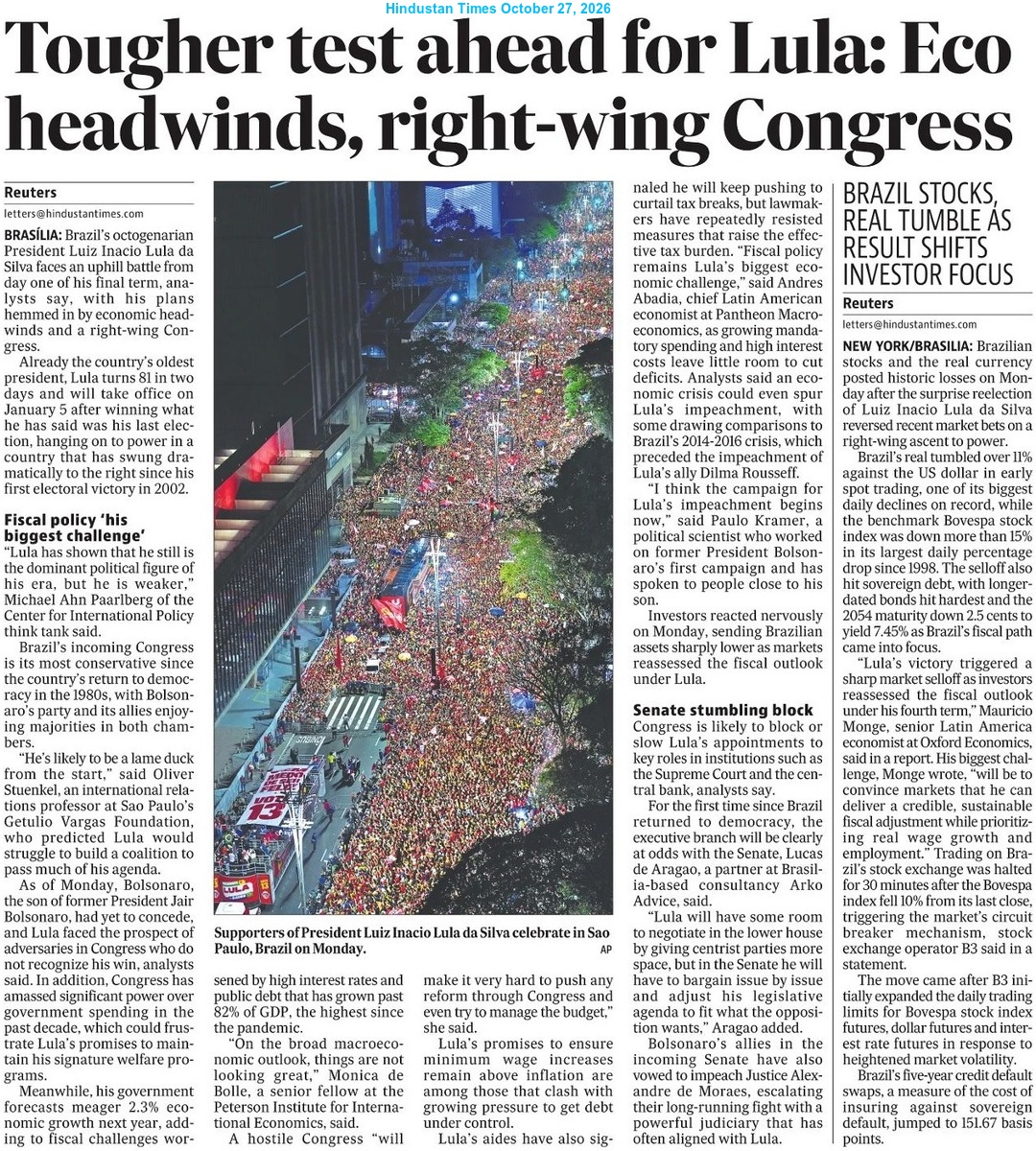
Luiz Inácio Lula da Silva, the octogenarian President of Brazil, pulled off a stunning victory in the Presidential Elections on October 25, 2026, winning a contest that had all but slipped from his grasp. While the incumbent President won 51.8% of the votes, his rival Flávio Nantes Bolsonaro – the son of former President Jair Messias Bolsonaro – bagged 48.2%, with Lula pulling around 4.4 million more votes. With a final masterstroke, Lula is set to become the President for the fourth time. Previously, he had won the Presidential Elections in 2002, 2006 and 2022.
Lula defeated Flávio’s father, Jair Bolsonaro, in the 2022 Presidential Elections. Later, Jair Bolsonaro was sentenced to 27 years and three months in prison by the Supreme Federal Court of Brazil for participating in an armed criminal organisation, attempting to violently abolish the democratic order, organising a coup and plotting attacks/assassinations against his political rivals, including Supreme Court Justice Alexandre de Moraes.
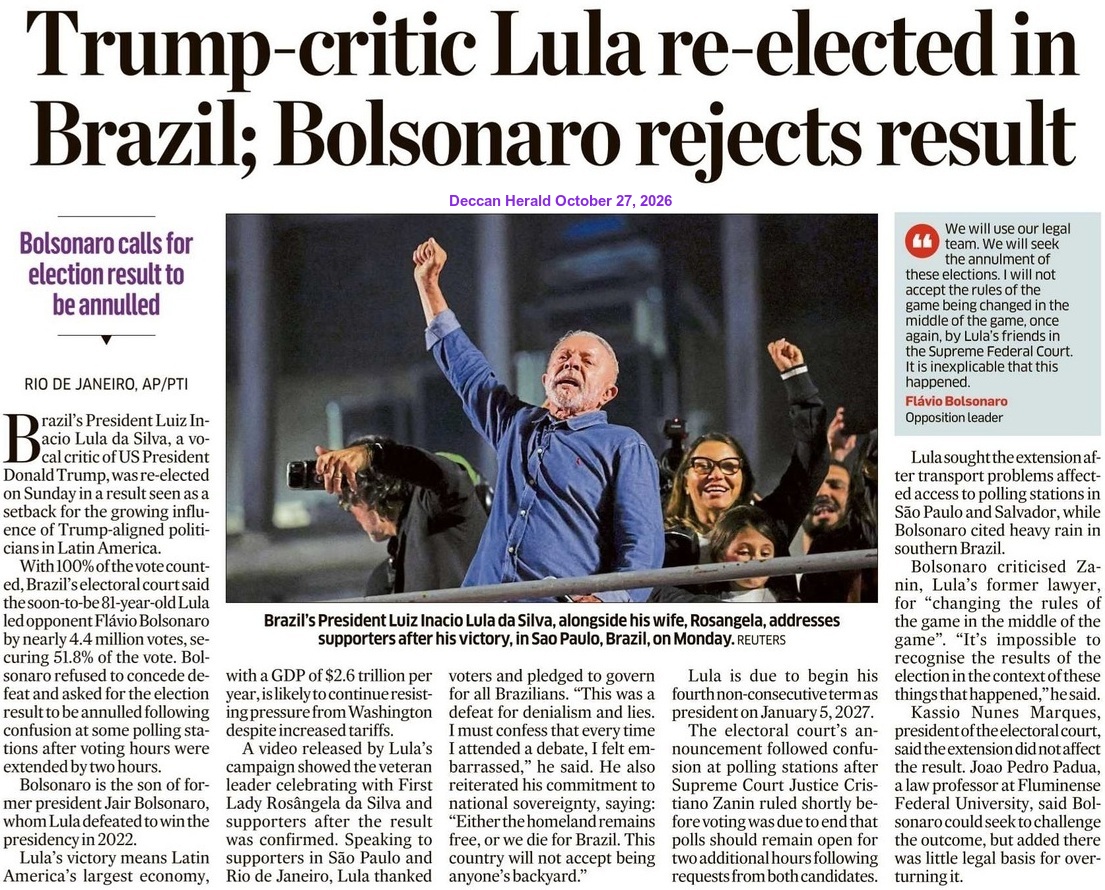
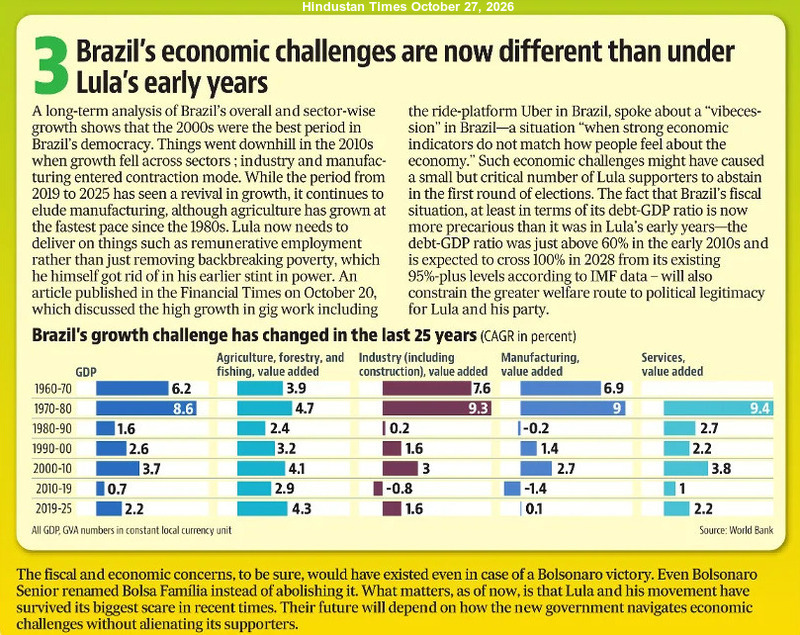
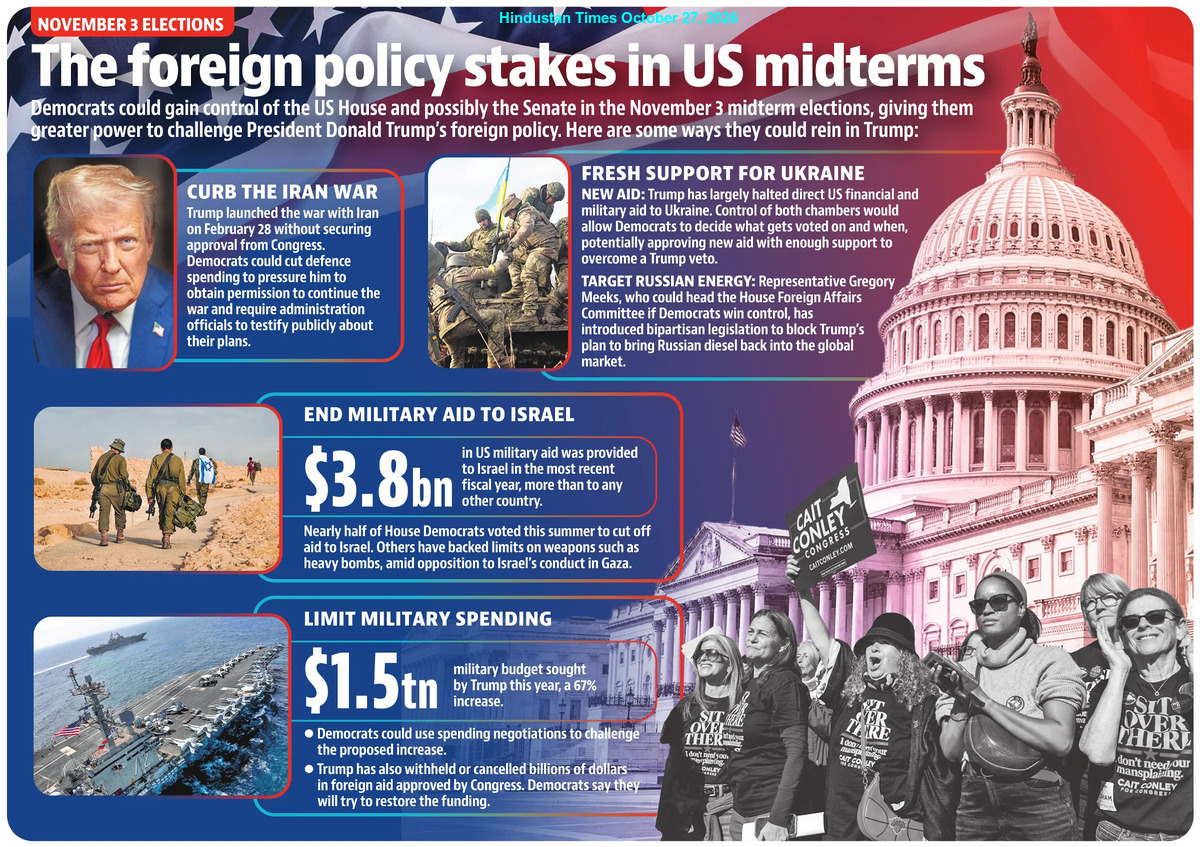
Often dubbed the Trump of the Tropics, Jair Bolsonaro shared similar nationalist, anti-socialist and populist platforms with the US President. They also built a strong political, as well as personal, alliance during their time in office. President Donald John Trump imposed a 50% tariff on most Brazilian imports and issued Global Magnitsky Act sanctions against Supreme Court Justice Moraes, demanding that Brasilia drop the criminal trial against the former President. The US further imposed a 25% Section 301 tariff on a broad range of Brazilian imports on July 22, 2026, following a yearlong investigation by the Office of the US Trade Representative (USTR). Washington DC alleged that Brazil was engaging in illicit trade practices. On the other hand, the Lula Administration accused President Trump of meddling in the internal affairs of Brazil. Hence, Lula’s victory has put the US President in a difficult position.
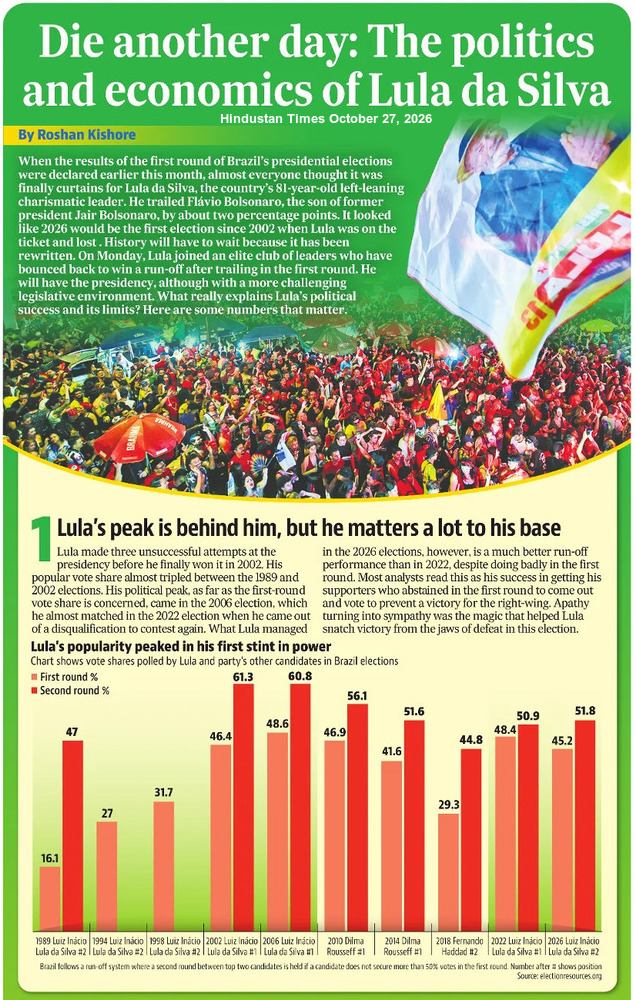
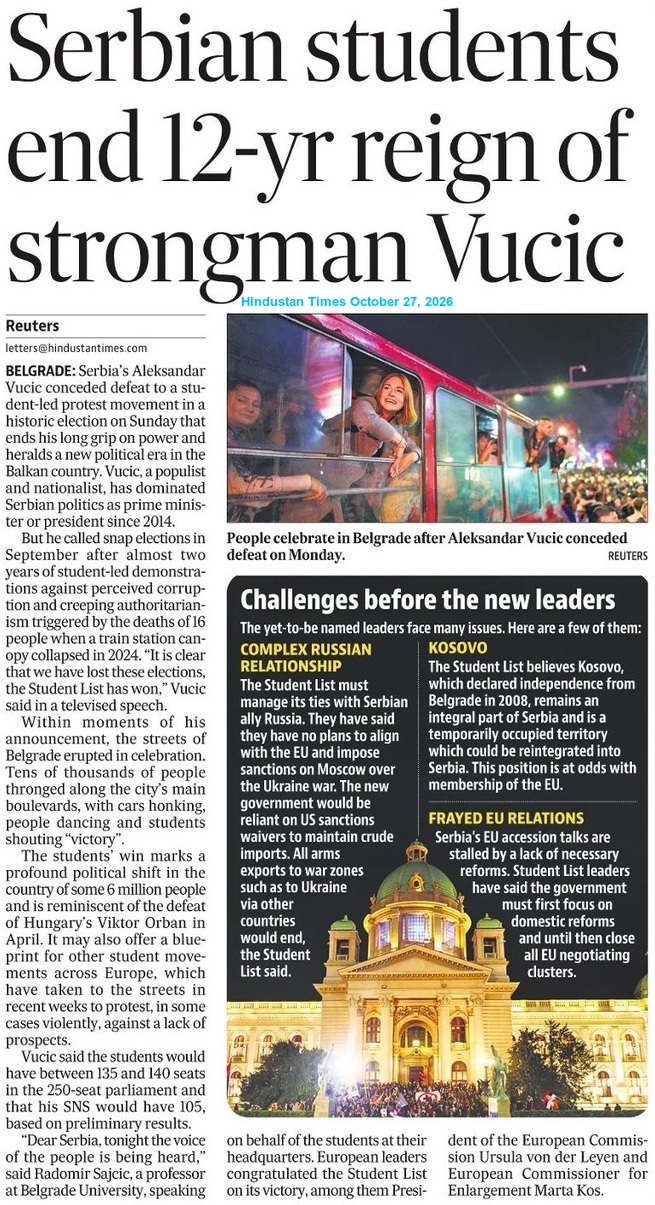
Lula has not only become President for the fourth time at the age of 80, but also set a precedent by becoming the first presidential candidate since Brazil’s return to democracy in 1985 to win a Runoff Election after finishing second in the first round. Although neither candidates received 50% of the vote in the first round (required for victory), Flávio – the candidate of the Right-wing Liberal Party – was ahead of Lula. After the first round, all signs pointed to a Lula defeat as no first-round winner had ever lost the runoff. Hence, Lula’s victory on October 25, 2026 was instead the result of the massive, youth-led mobilisations that swept the country in the lead-up to the election.
A dramatic situation unfolded once the counting began. Both camps had requested an extension to voting times. While Lula’s Workers’ Party had argued that voters in São Paulo and Bahia could not get to the polling stations because of a lack of buses, Bolsonaro’s campaign cited heavy rain in some areas in the southern part of the country and in São Paulo as their reason. The Supreme Court moved to extend voting time in the Presidential Elections until 7pm (local time), just minutes after polls were to close at 5pm (2000GMT).
Meanwhile, Flávio has stirred up a controversy surrounding the results. It may be noted that Supreme Court Justice Cristiano Zanin, who granted the request from the Workers’ Party to extend voting hours, was once the personal lawyer of Lula. Therefore, Flávio has got an opportunity to reignite doubts about transparency of the electoral process. He has also refused to accept the election results.
After finishing behind Flávio in the first round, Lula completely overhauled his campaign strategy and made an attempt to reach out to students and the youth. Lula, who had never used a smartphone before, was seen mingling with a crowd of young people and taking selfies. During his campaign, the incumbent President also pointed out that Flávio’s father had failed to handle the COVID-19 Pandemic and destroyed the Amazon rainforest. According to political analysts, it helped him to pull off a historic runoff comeback.
On the other hand, Flávio was banking on a hardline crackdown on crime to win over independent voters and shore up his base. He also launched a public safety plan centred on 12 priority measures, including treating Brazil’s criminal factions as terrorist organisations, a move that found a receptive audience in Washington DC. Flávio promised to lower the prices of essential commodities, as well.
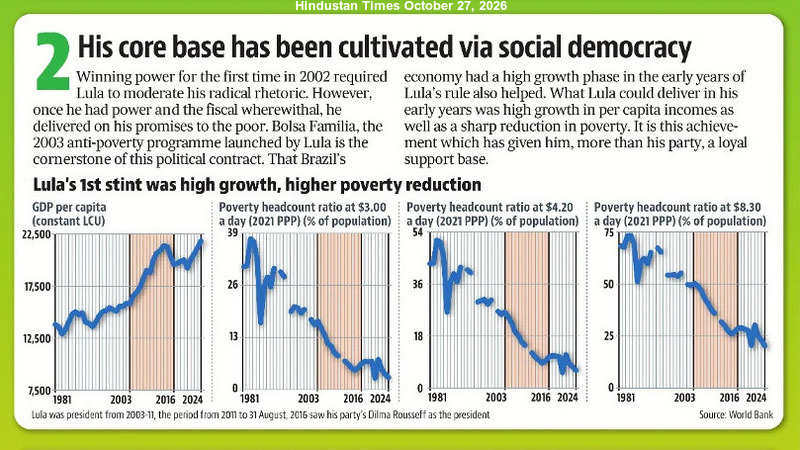
However, voters have ultimately re-elected the experienced Lula, highlighting deeply divided perspectives on the country’s future. Observers have noted that Lula’s victory represented a vote for democratic stability, expanded social protections and environmental preservation; particularly concerning the protection of the Amazon rainforest. For these voters, electing the experienced 80-year-old statesman was the only way to safeguard democratic institutions and counter the return of far-right leadership.
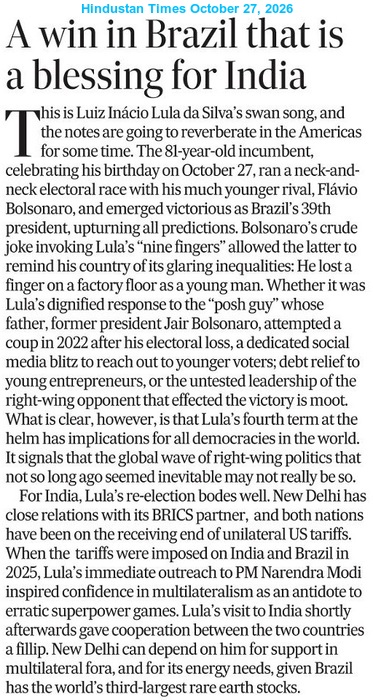
Meanwhile, Lula’s fourth term as President will begin on January 5, 2027.
Meanwhile,


Boundless Ocean of Politics on Facebook
Boundless Ocean of Politics on Twitter
Boundless Ocean of Politics on Linkedin
Contact us: kousdas@gmail.com

 ISMC

